Saves instantly, no account needed. Already a member? Sign in.
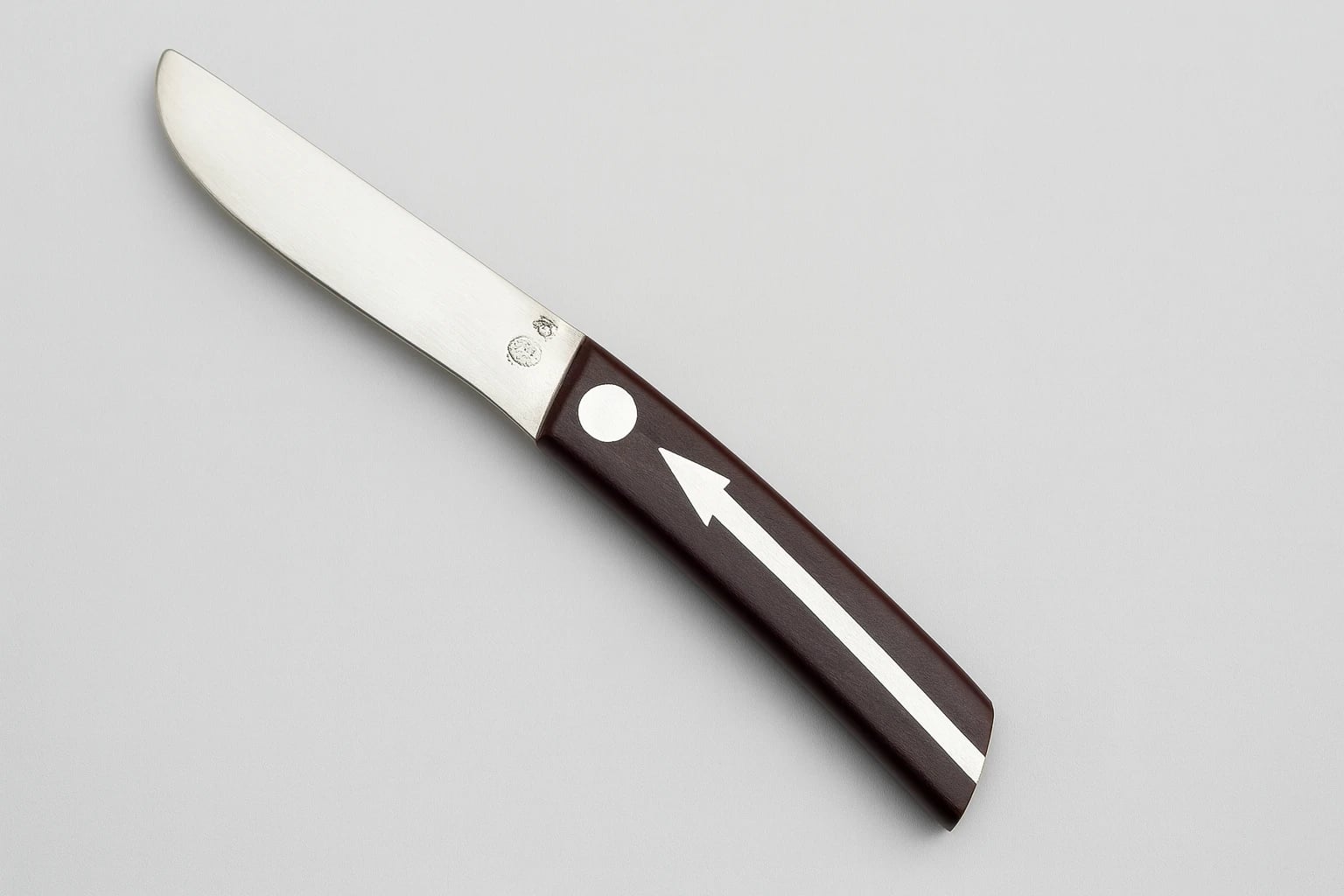
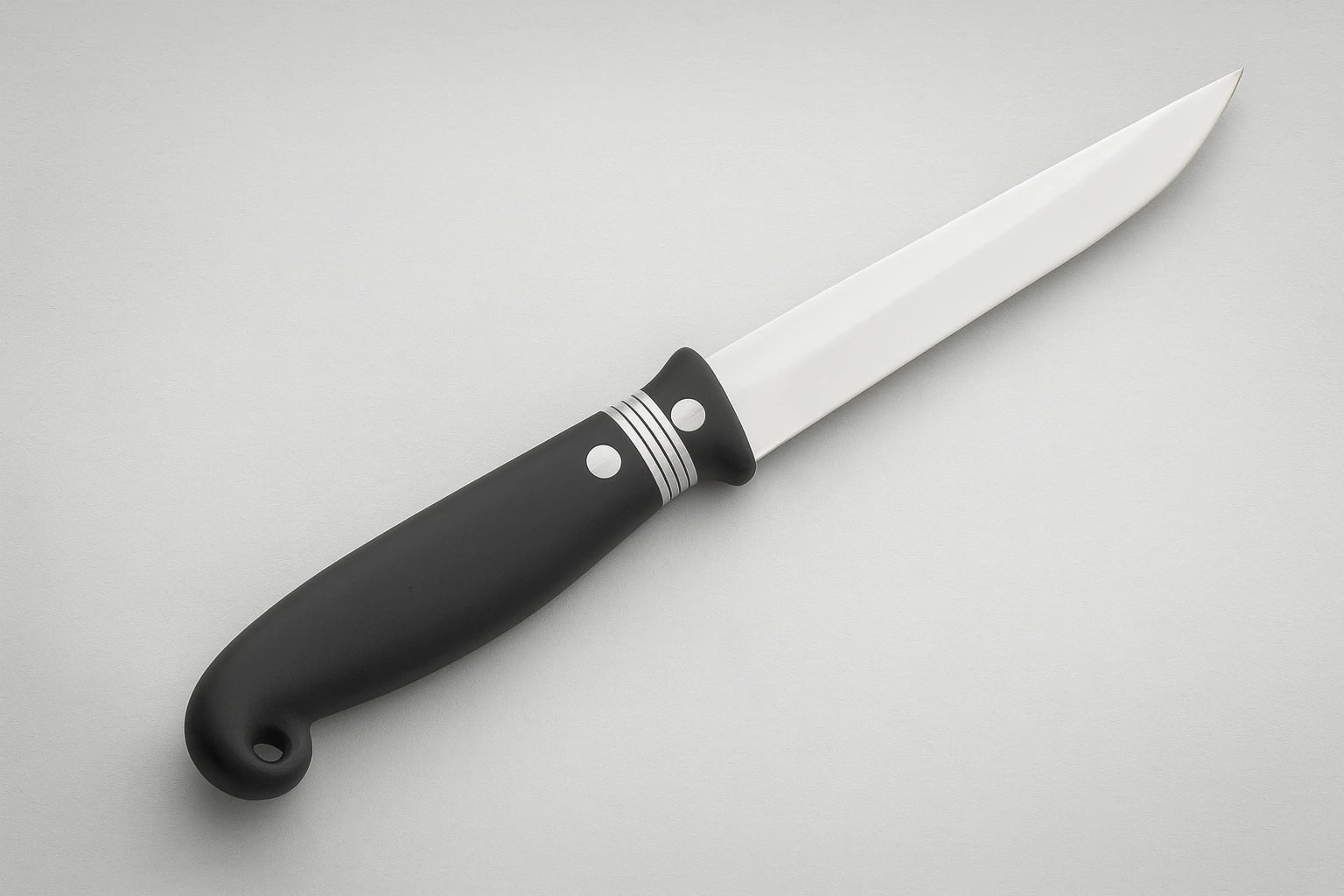
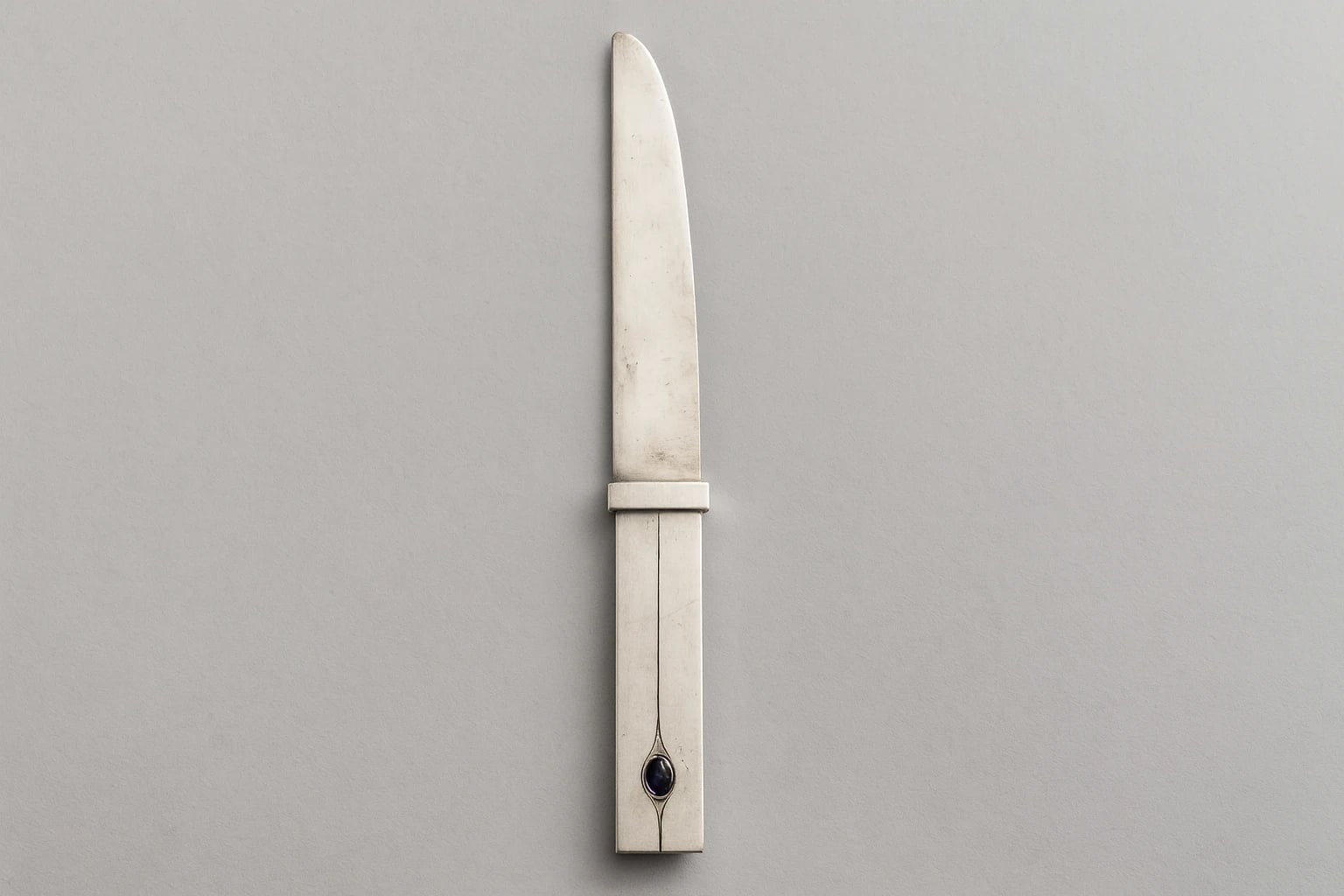
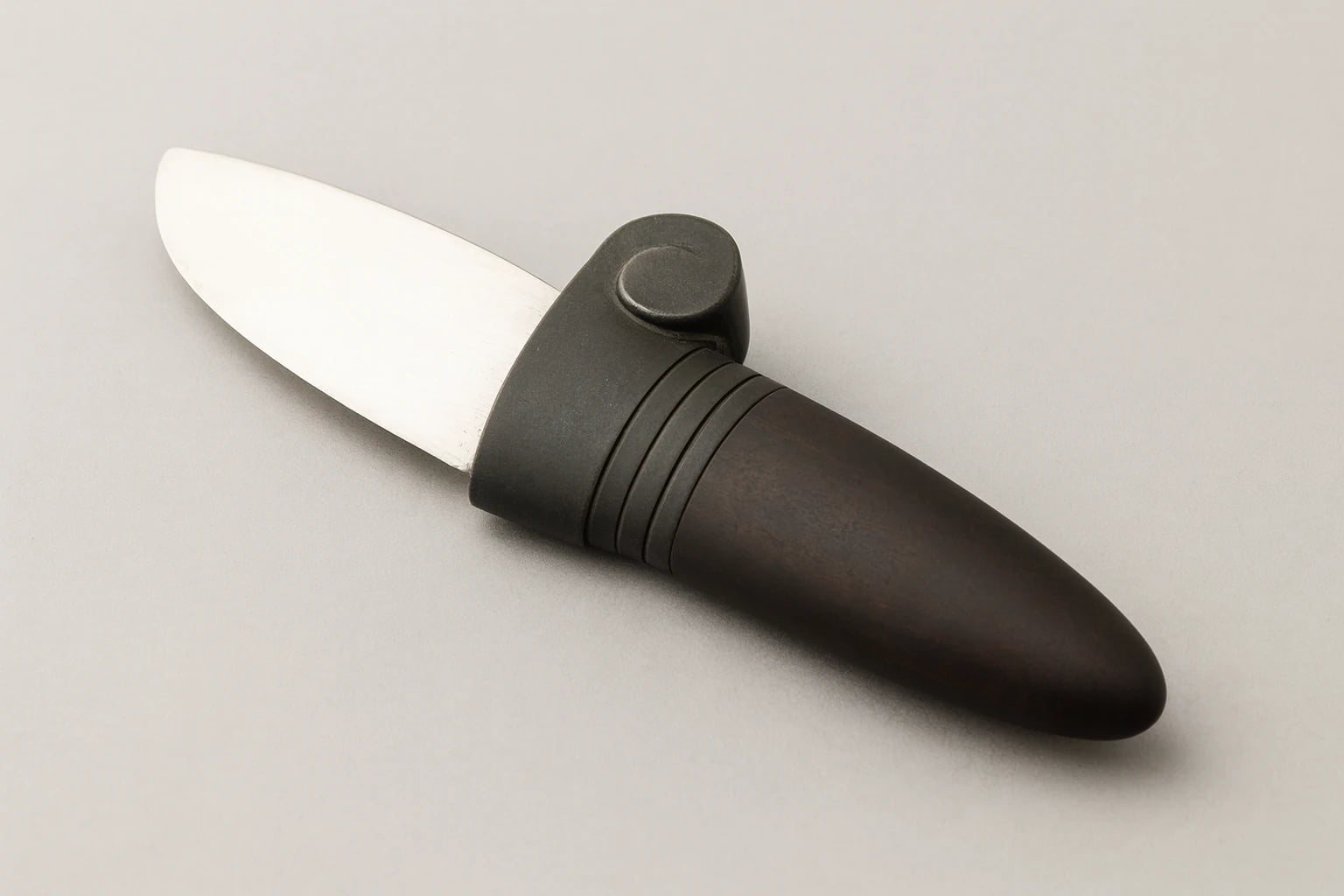
A cheese knife makes an unlikely test of design intelligence, and this one passes it. The problem is ordinary: a short blade for a soft food, a handle that must be gripped with some force, two materials that must join without a visible seam of weakness. Spratling's answer sets a silver blade against a carved rosewood handle so that the join becomes the whole point of the object. Where the pale reflective metal meets the dense dark wood, the eye registers a deliberate transition of color, weight, and temperature. The knife is small, but nothing about its resolution is casual.
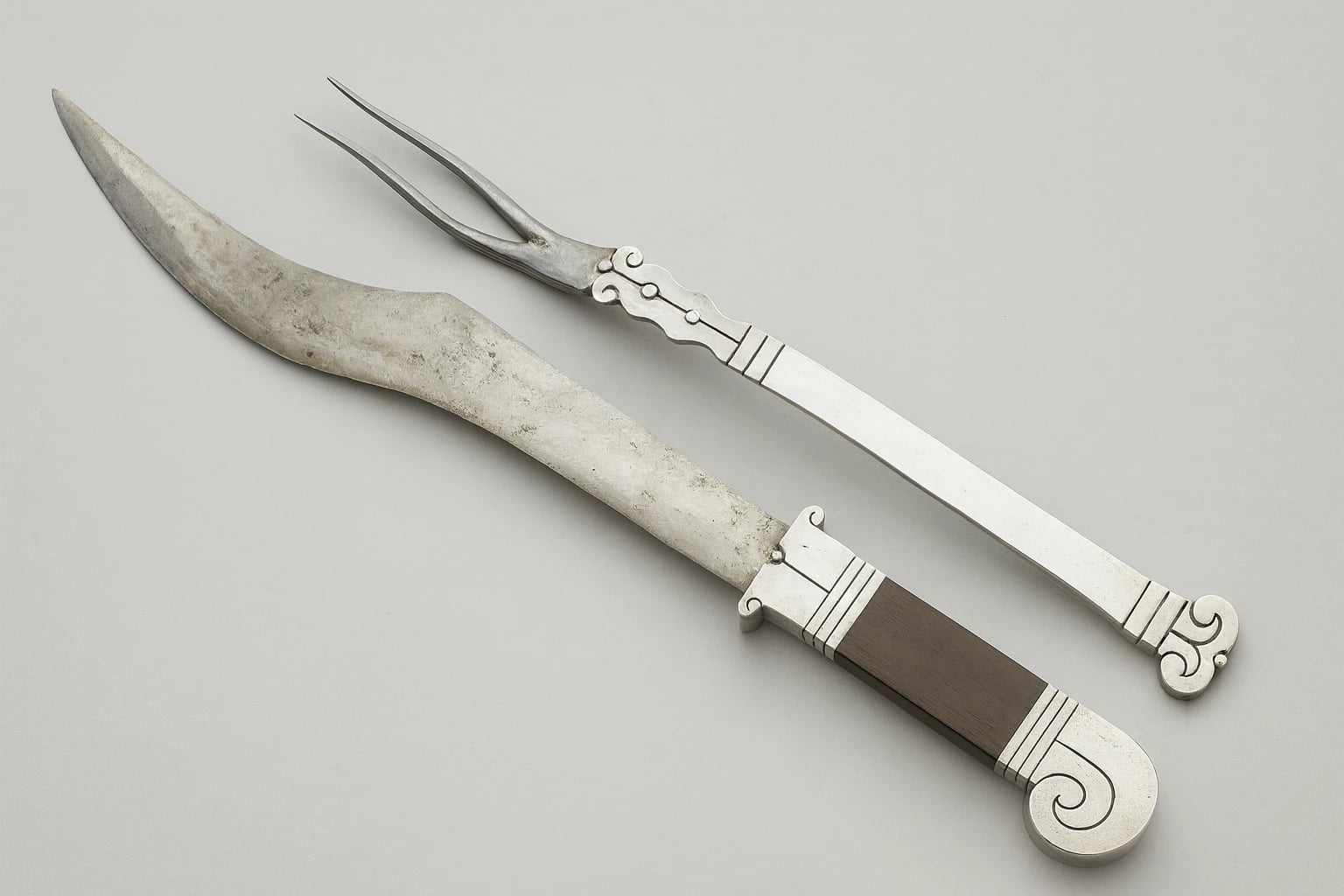
The carving is where the design earns its keep. Rosewood is a hard, close-grained tropical wood that resists the tool and holds a crisp edge once cut, and here it has been shaped into a handle that reads as sculpture in miniature rather than a turned or slab grip. The dark grain absorbs light while the silver blade throws it back, so the two ends of the object behave in opposite ways in the hand. Spratling used this pairing of silver with native hardwoods across his table objects, and the logic is consistent: the wood carries the warmth and the grip, the silver carries the working edge and the shine. The result balances differently from an all-metal knife, with the weight pulled back toward the handle so the blade stays light and controlled through the cut.
Spratling founded the Taller de las Delicias in Taxco in 1931 and built its reputation as much on hollowware and tableware as on jewelry, developing a wholesale trade that carried these objects well beyond Mexico. This design appears in his wholesale catalogs from 1942 to 1945, which places it in the first design period and among the pieces that defined his table objects for a North American market during the war years. That catalog presence matters for what it tells us about intent. This was not a one-off experiment but a design he was prepared to produce and ship in quantity, refined enough to stand as a repeatable model. The pairing of silver with carved local wood also reflects the workshop's habit of drawing on Mexican materials rather than importing a European table vocabulary wholesale.
Within a collection, the knife corrects a common distortion in how the Taxco renaissance is remembered. The large necklaces and cuffs dominate attention, yet Spratling's tableware carried the same design discipline into objects meant for daily use, where the demands of function left less room for error. A cheese knife that resolves grip, balance, and the meeting of two stubborn materials this cleanly shows the taller thinking as seriously about a small implement as about a showpiece. That seriousness, applied at this scale, is part of what set the workshop apart.
Museum of Mexican Silver. “Carved Rosewood Cheese Knife.” Catalog no. MoMS-000350. https://museumofmexicansilver.com/pieces/spratling-726
See something wrong with this record? Suggest a correction and the piece details fill in automatically.
Silver