Saves instantly, no account needed. Already a member? Sign in.
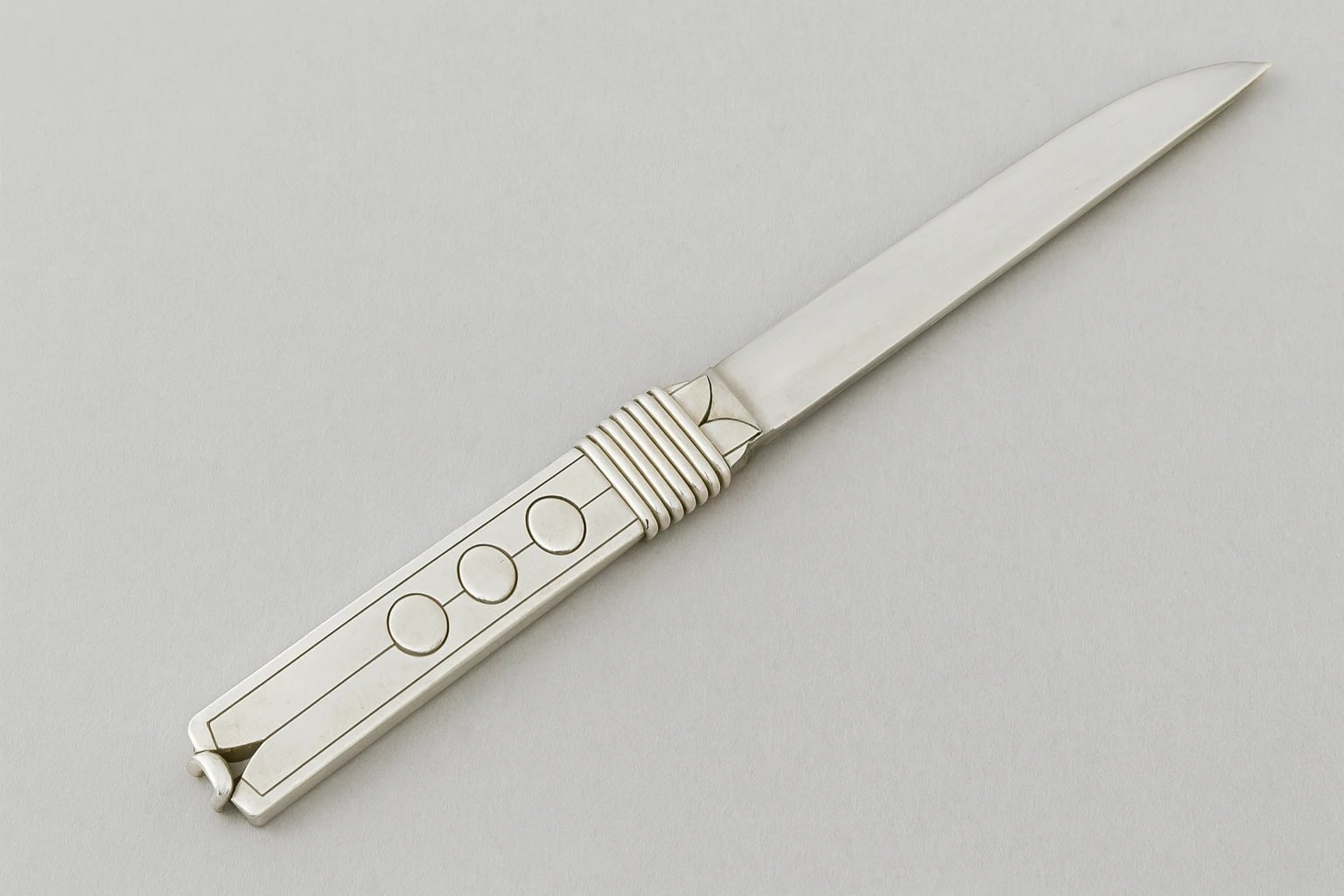
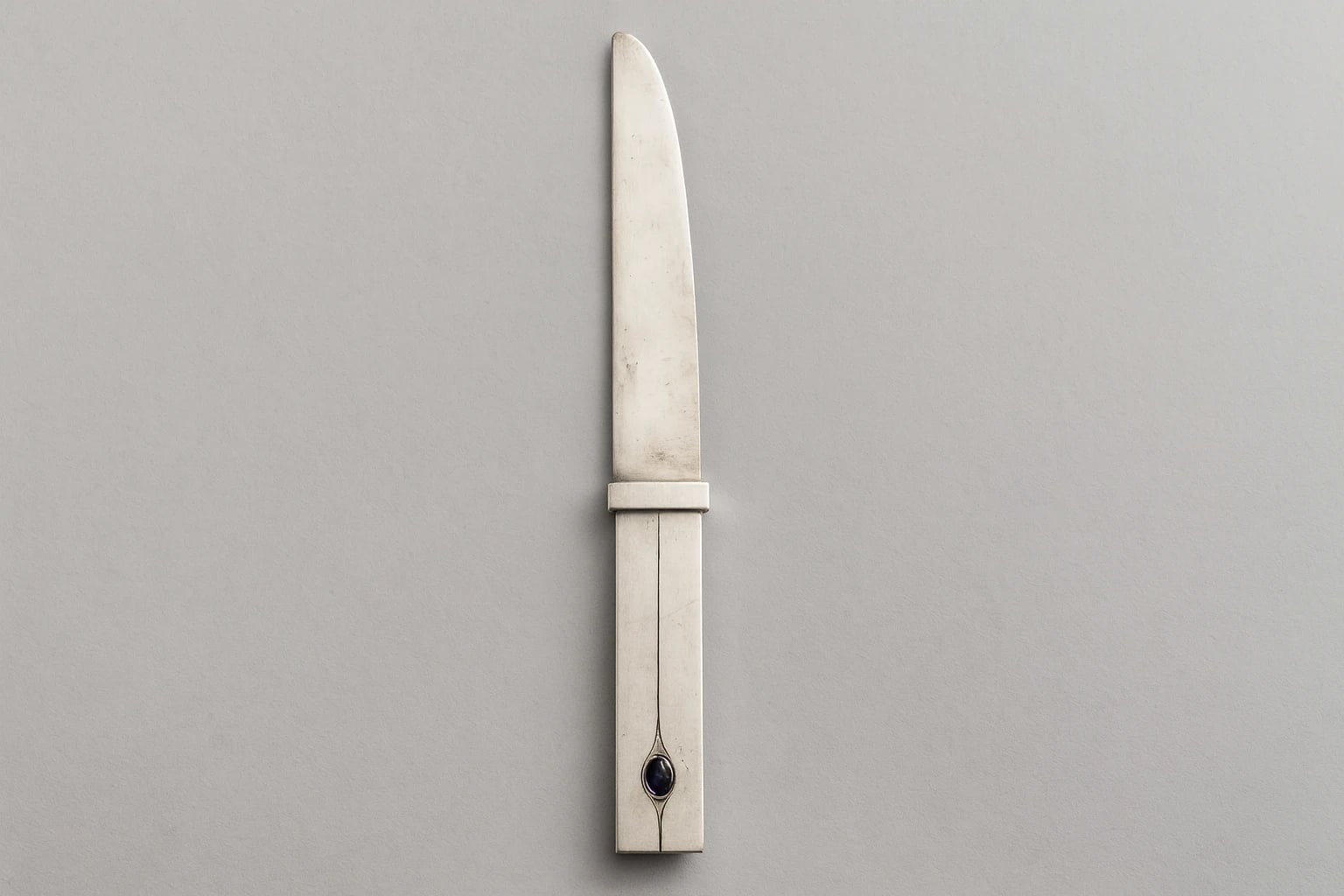
A dining knife is among the most demanding objects a silversmith can attempt, because it must reconcile the weight and balance of a tool with the discipline of a design line, and here that problem is solved by setting a single amethyst into the handle so the eye is drawn down the length of the piece to a point of color. The cabochon turns a utilitarian implement into a small composition, the warm violet of the Guerrero amethyst answering the cool reflective silver in exactly the contrast of materials that ran through Spratling's work.
The knife belongs to a four-piece place setting made in this pattern, the kind of coordinated table service Spratling developed alongside his jewelry. His flatware shows the same instinct for paring an object to a clear silhouette that he brought to holloware, and the inset stone is the decorative idea repeated across the setting so the pieces read as a family.
Flatware sits at the quieter end of Spratling's output and was made in far smaller quantity than his jewelry, so complete or partial place settings in a stone-set pattern reach the market only occasionally. Production dates to his First Design Period, the years between 1931 and the mid-1940s when the workshop at Las Delicias was establishing the vocabulary that would define Taxco silver.
Spratling, the American writer who opened his Taxco taller in 1931 and effectively founded the modern Mexican silver revival, built that revival as much on objects for the table as on personal ornament. A stone-set knife from a matched setting is a direct artifact of that ambition to bring handwrought Mexican silver into the daily rituals of the home.
Museum of Mexican Silver. “Knife with Inset Amethyst.” Catalog no. MoMS-000399. https://museumofmexicansilver.com/pieces/spratling-950
See something wrong with this record? Suggest a correction and the piece details fill in automatically.
First Design Period: 1931 - 1946
Silver