Saves instantly, no account needed. Already a member? Sign in.
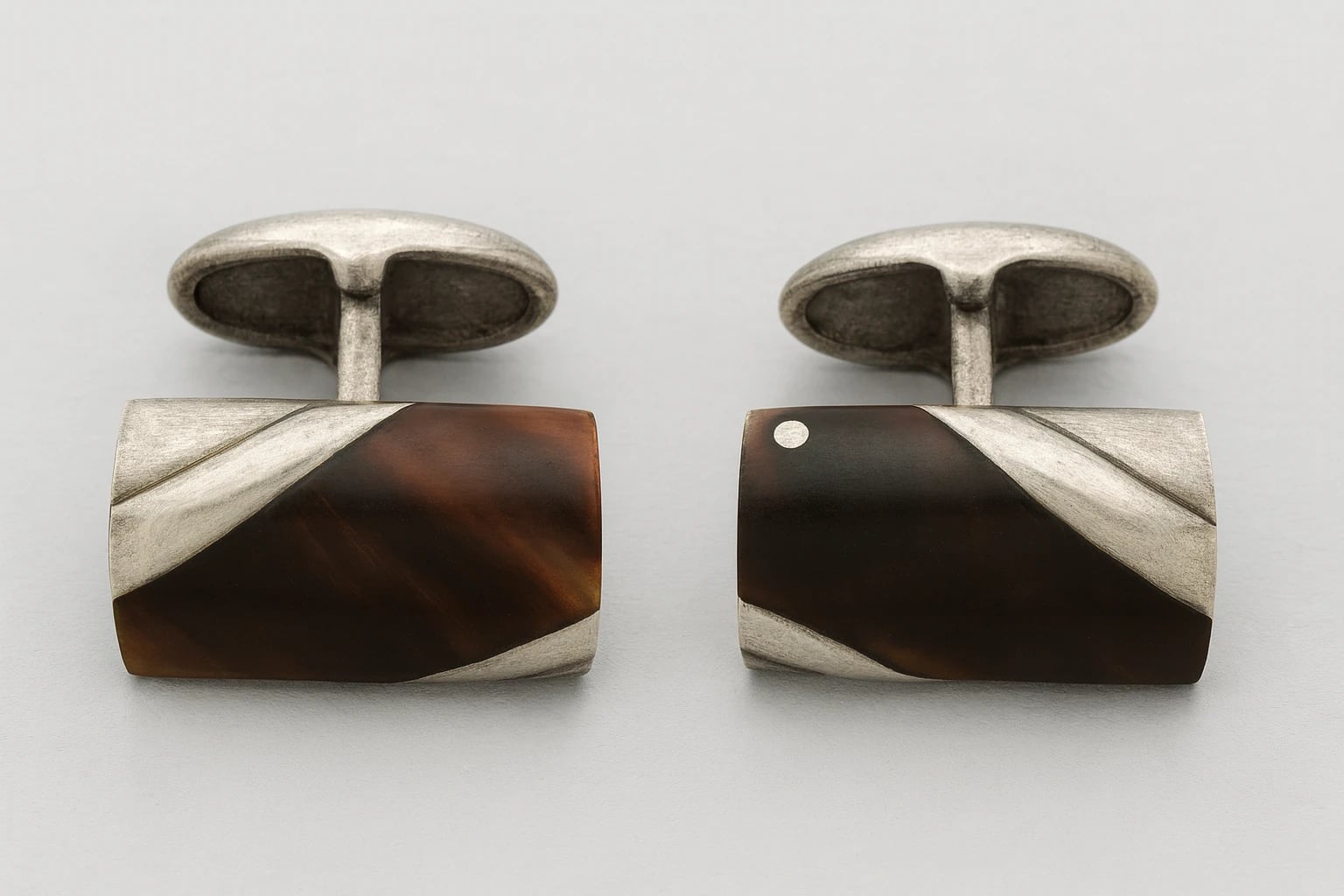
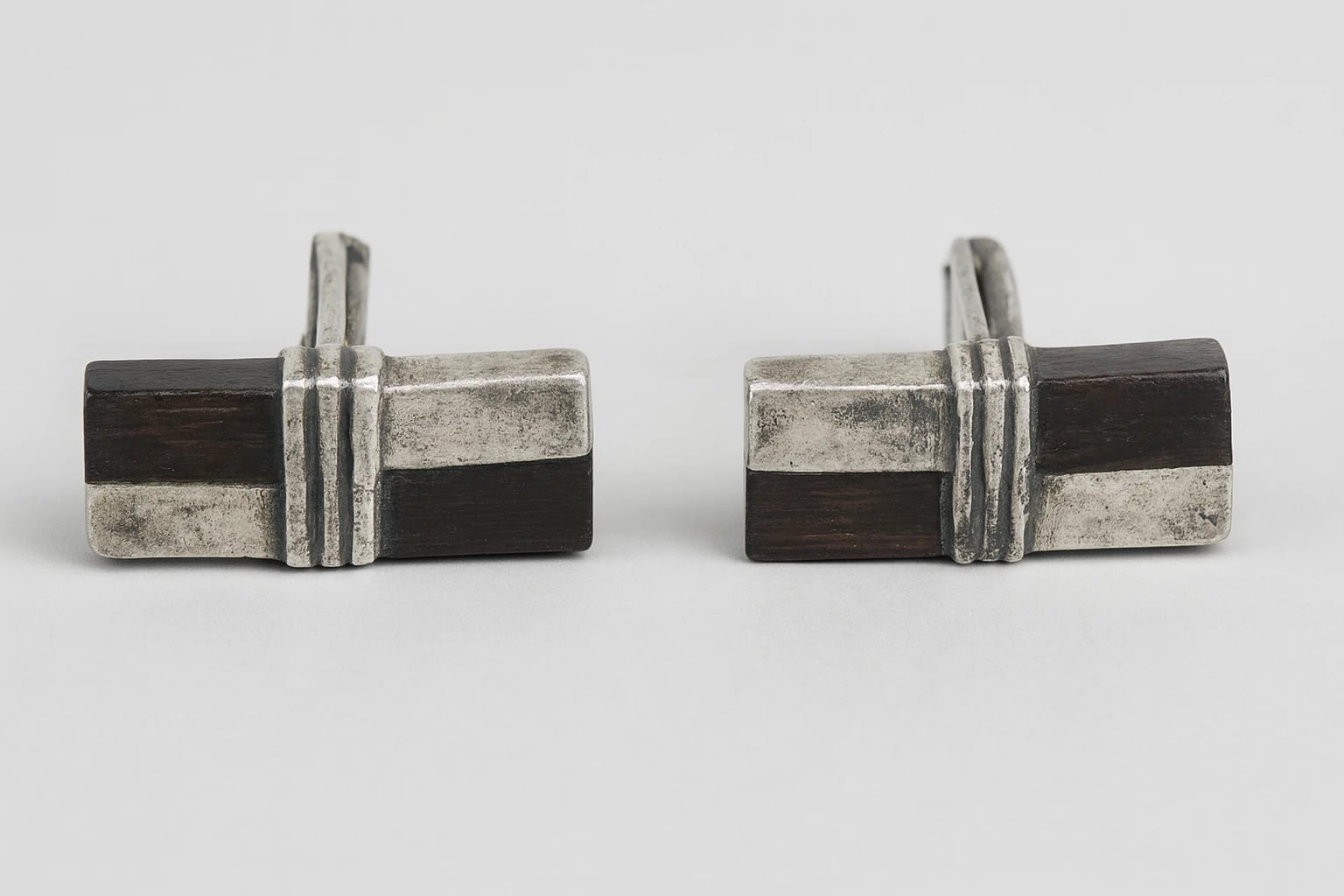
These cufflinks pair silver with rosewood, a warm, close grained tropical hardwood, rather than the carved amethyst, obsidian, or turquoise more often associated with William Spratling's accessories. The choice is a quiet one. Wood absorbs light where silver returns it, so each link sets a matte, grained field against a bright metal border. For a small object worn at the wrist, that contrast does the design's work, and it depends on material relationship rather than on figurative motif or applied ornament.
Cufflinks occupy a specific place in the Taxco repertoire. They were a staple of workshop production, made in quantity because they suited the male tourist and export trade alongside earrings and shirt studs. Spratling's own designs for men tended toward reduction: a clear silhouette, a single material accent, a form that reads at arm's length. Rosewood serves that discipline well. Its color and figure supply visual interest without carving or stone setting, and the silver mount frames and protects the wood while establishing the join between the two materials as the central event of the design. The reference to a matching necklace indicates that the pairing was conceived as a coordinated group, extending a single material idea across more than one object.
Spratling's use of native and regional materials was deliberate and ran throughout his practice at the Taller de las Delicias, founded in 1931. He drew on Mexican hardwoods, obsidian, amethyst, and tortoiseshell as design elements in their own right, not as substitutes for precious stones. Setting rosewood against silver belongs to that habit of thought, in which the value of an object rests on the intelligence of the material combination rather than on gem weight. Production at Las Delicias was collaborative, organized through a taller system in which trained silversmiths translated designs into finished work, so the silver mounting and the fitting of the wood reflect that workshop's practiced control of small, repeated forms.
As a surviving example of Spratling's men's accessories, the cufflinks record a part of Taxco output that is less studied than his brooches and necklaces, yet was central to how the workshops reached their market. They show how a modest object type carried the same material thinking that shaped Spratling's more ambitious pieces, and how a warm hardwood, rarely foregrounded in accounts of Mexican silver, could anchor a complete design.
Museum of Mexican Silver. “Rosewood Cufflinks.” Catalog no. MoMS-000630. https://museumofmexicansilver.com/pieces/spratling-824
See something wrong with this record? Suggest a correction and the piece details fill in automatically.
Tortoise Shell Barrel Cuff Links
Silver