Saves instantly, no account needed. Already a member? Sign in.
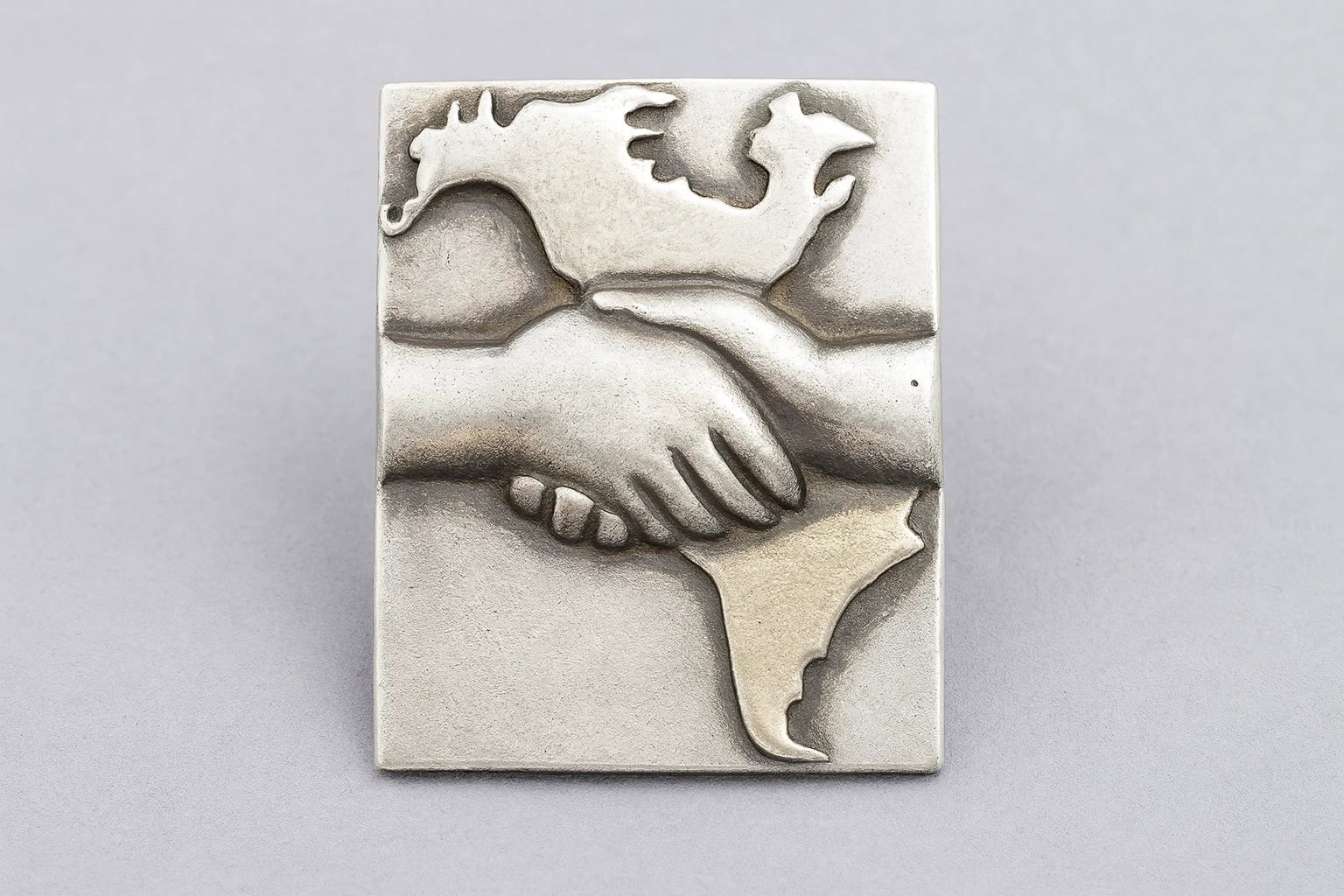
Few Spratling designs carry an institutional history as specific as this one: the Hands Across America brooch served as the insignia of the Pan American Union, a clasped-hands emblem rendered in silver with a gold wash laid over the forms of North and South America. The piece is unusual in his work for being a commissioned symbol rather than a decorative or Pre-Columbian motif, and the gilded continents against plain silver make the political idea legible at a glance.
The object is also a technical anomaly within his catalog. It carries a two-prong clasp rather than the usual brooch attachment, and it is the only design on which a Registry number appears, the same number recurring across the cuff links and the various brooch sizes made from the design. That registered mark sets it apart from the standard hand-wrought identification of his work.
The design dates to Spratling's First Design Period, 1931 to 1946, and was issued in several formats, a sign of how widely the insignia was meant to circulate. Its life as a worn emblem rather than a one-off makes surviving examples a record of mid-century inter-American cultural diplomacy as much as of Taxco craft.
Spratling, the American who founded the Taxco silver revival in 1931, occupied a genuinely binational position, and a Pan American insignia in his silver is a fitting artifact of that role. The gold wash over the two continents is the rare instance where his material choices serve a stated political meaning.
Museum of Mexican Silver. “Hands Across America Brooch.” Catalog no. MoMS-000394. https://museumofmexicansilver.com/pieces/spratling-955
See something wrong with this record? Suggest a correction and the piece details fill in automatically.
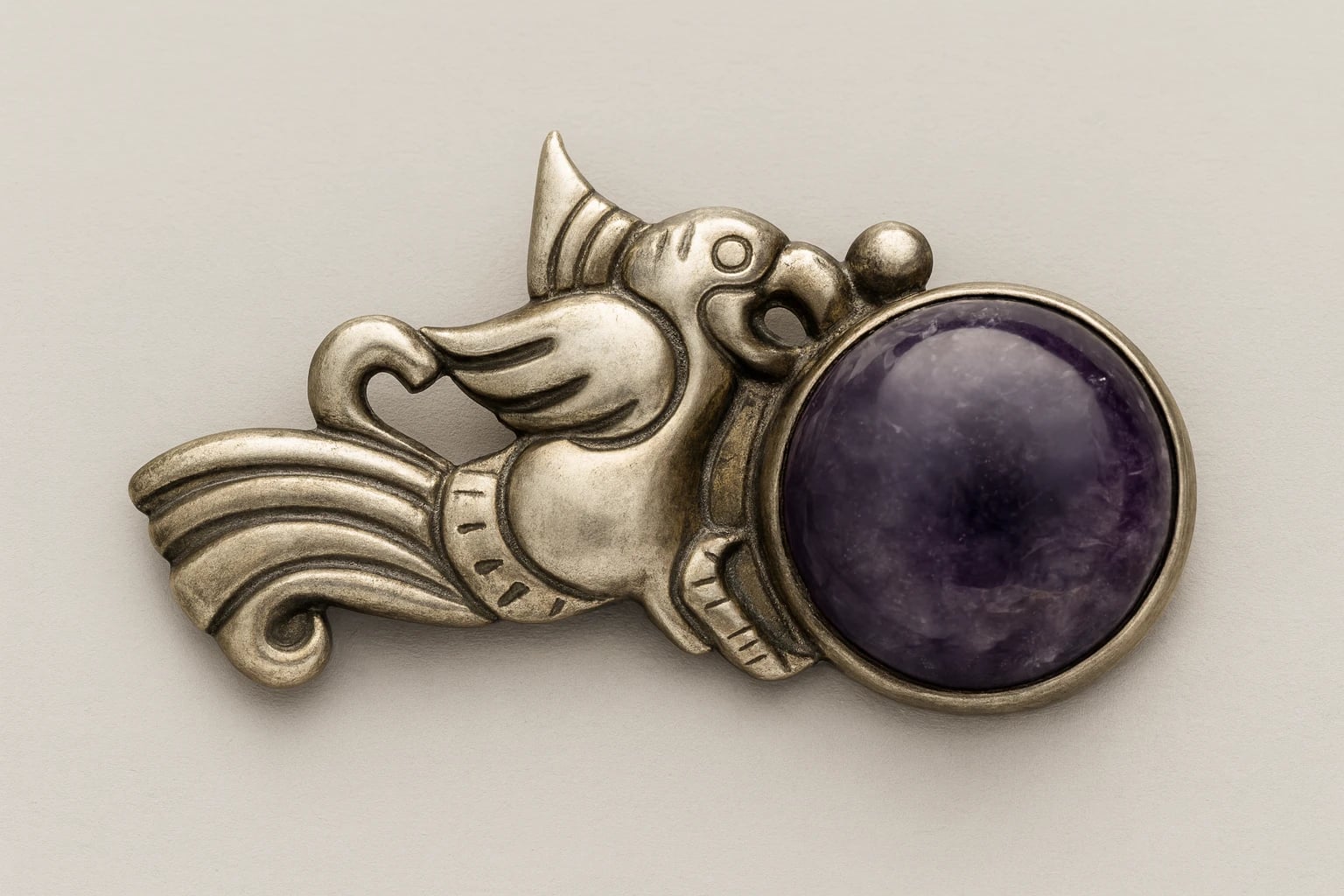
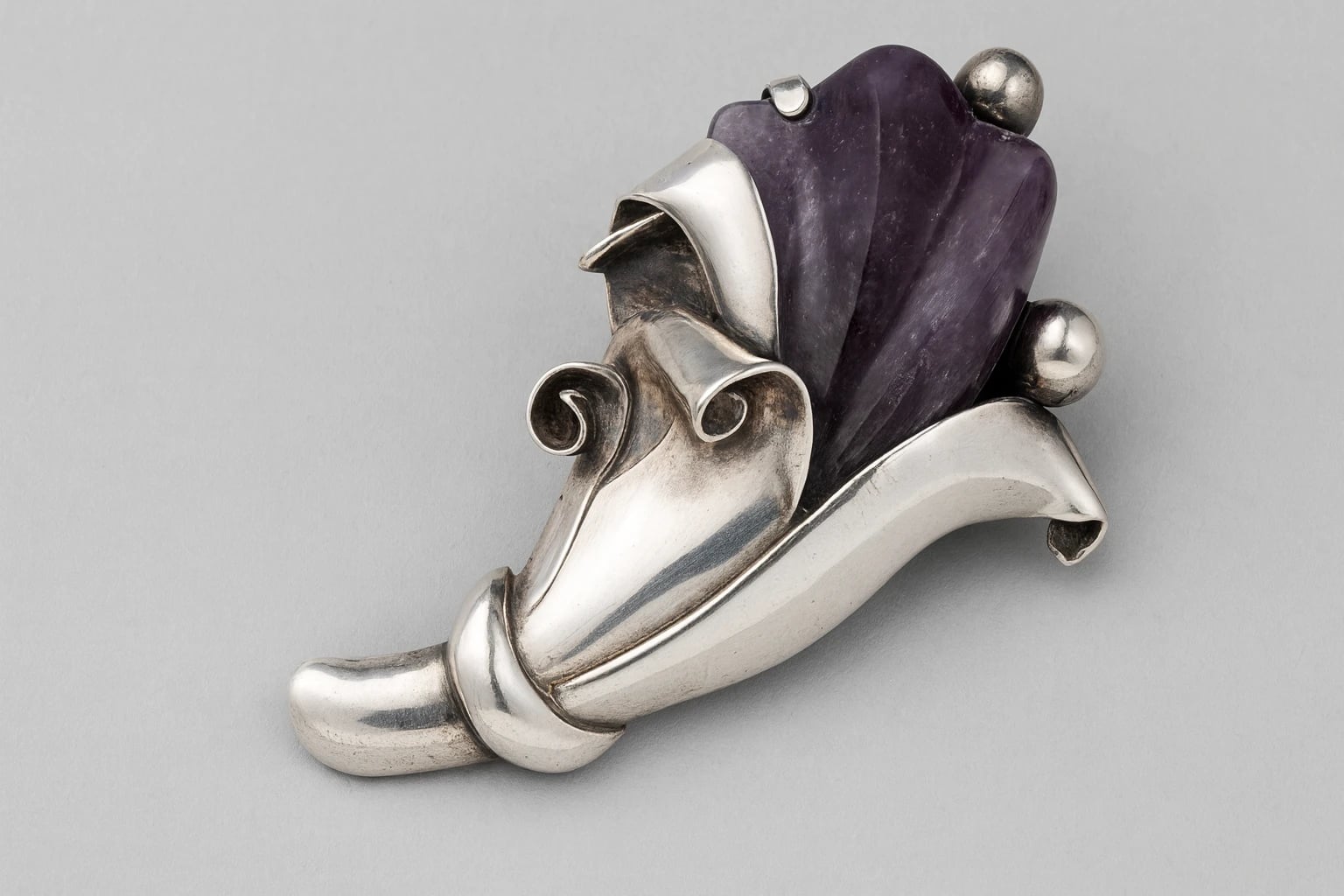
Amethyst Parrot Brooch
First Design Period: 1931 - 1946
Silver