Saves instantly, no account needed. Already a member? Sign in.
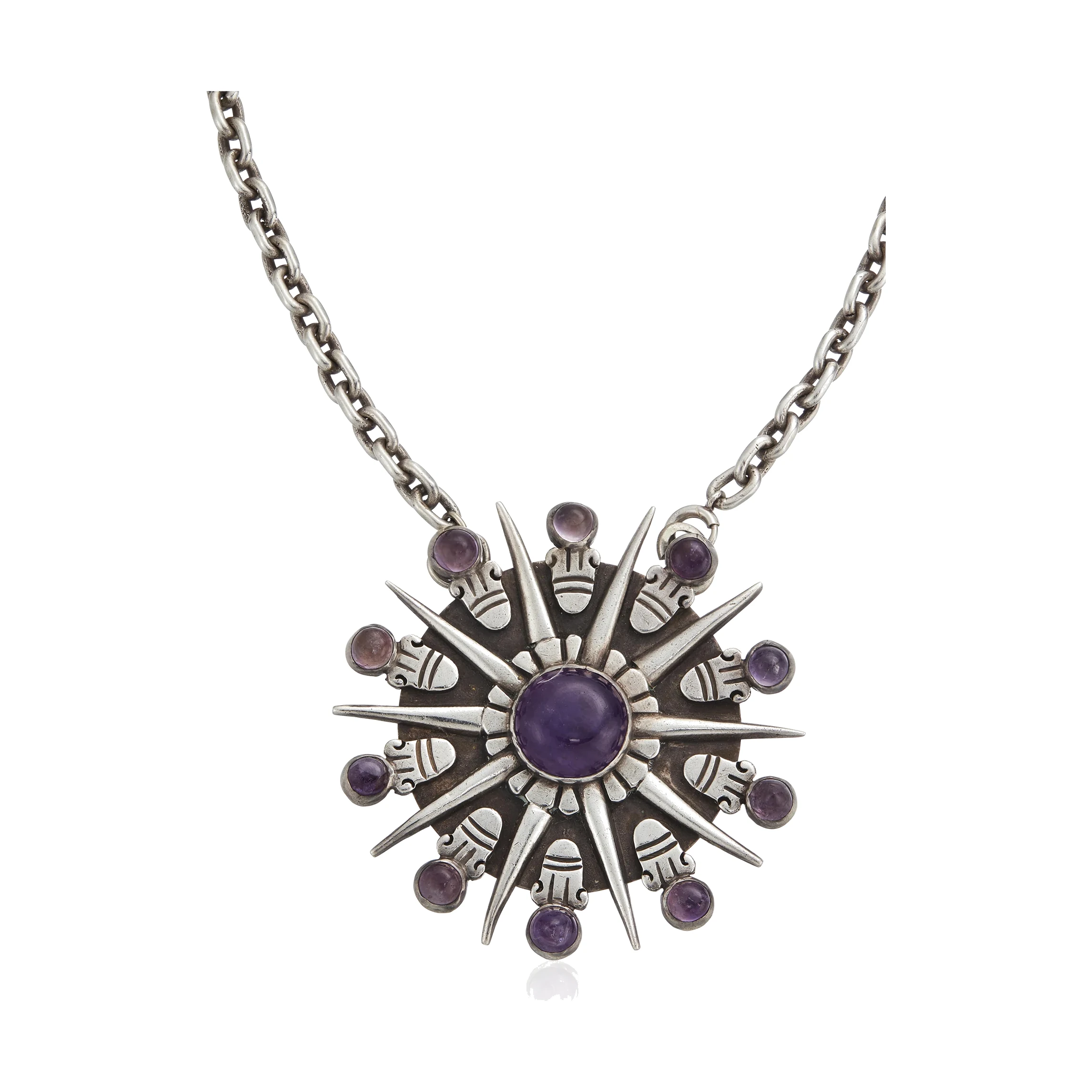
A silver sun blazes at the center of this pendant, long faceted rays driving outward from a domed amethyst cabochon and tipping the disc with sharp points like a struck star. The radiating-sun device is among the oldest images in Mexican art, and it is the iconography William Spratling drew on as he built the modern Taxco silver tradition, turning ancient solar symbols into wearable form.
The rays alternate long and short around a recessed, oxidized field, the dark ground throwing the bright metal into relief. Between the longer points sit small stamped motifs in the pre-Columbian manner, and round amethyst cabochons ring the disc, each a beat in the circle that answers the larger stone at the heart of the design. The effect is all radiance and interval, geometry standing in for the sun itself.
Worked in hand-wrought silver, the pendant carries the SPRATLING MADE IN MEXICO mark with the WS monogram, placing it in the early workshop years of about 1940 to 1946. Eleven amethyst cabochons stud the sunburst, the central dome set high above the field and the smaller stones flush around the rim. The disc hangs from a heavy silver cable chain that gives the piece the weight of a medallion.
Solar and pre-Columbian themes run through Spratling's early output, and here they are reduced to a single emblem: a sun of silver and violet stone, struck and oxidized, built to be worn at the throat.
Museum of Mexican Silver. “Sunburst Amethyst Pendant Necklace.” Catalog no. MoMS-002159. https://museumofmexicansilver.com/pieces/william-spratling-sunburst-amethyst-pendant-necklace
See something wrong with this record? Suggest a correction and the piece details fill in automatically.
William Spratling
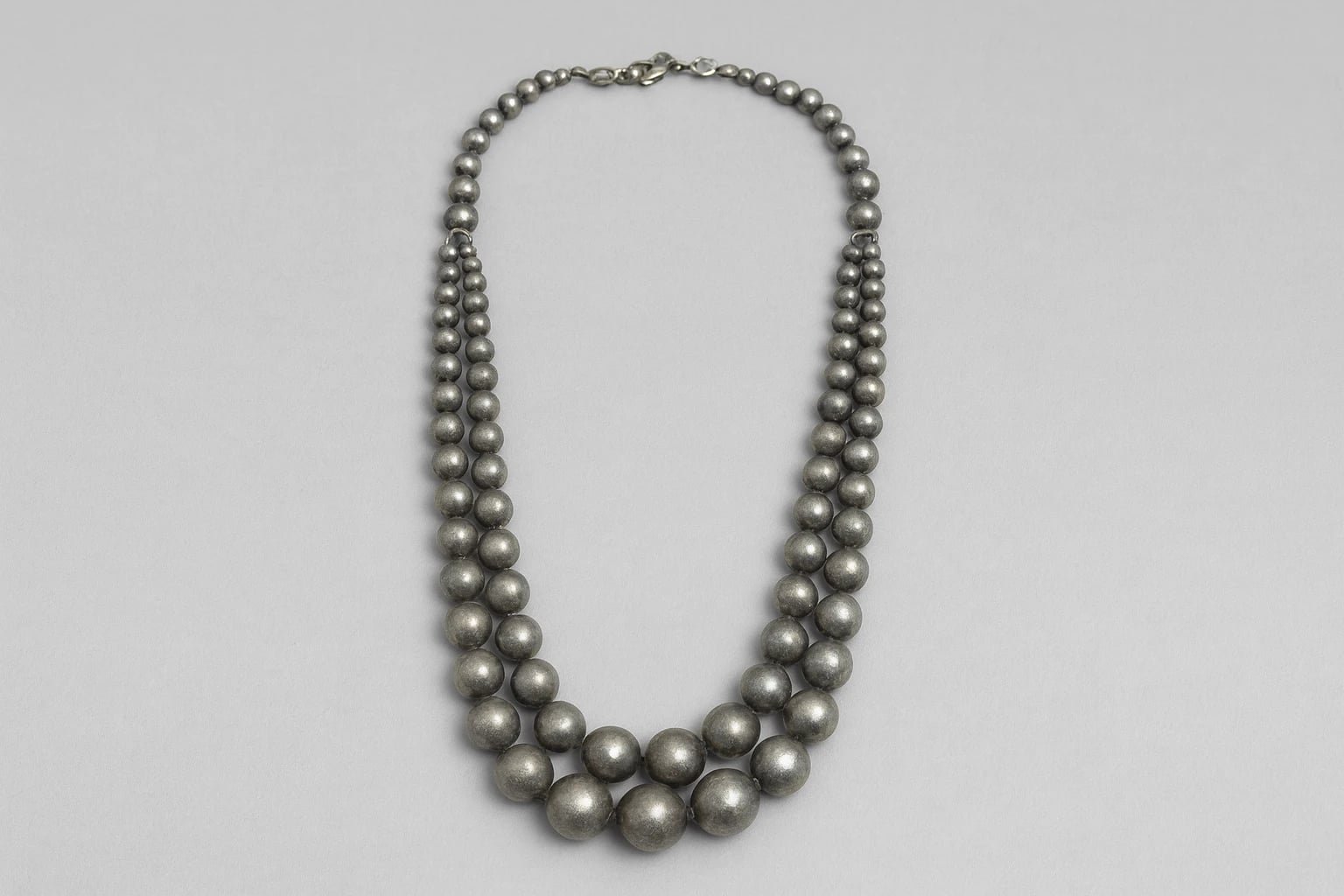
Double Strand Bead Necklace
First Design Period: 1931 - 1946
Silver