Saves instantly, no account needed. Already a member? Sign in.
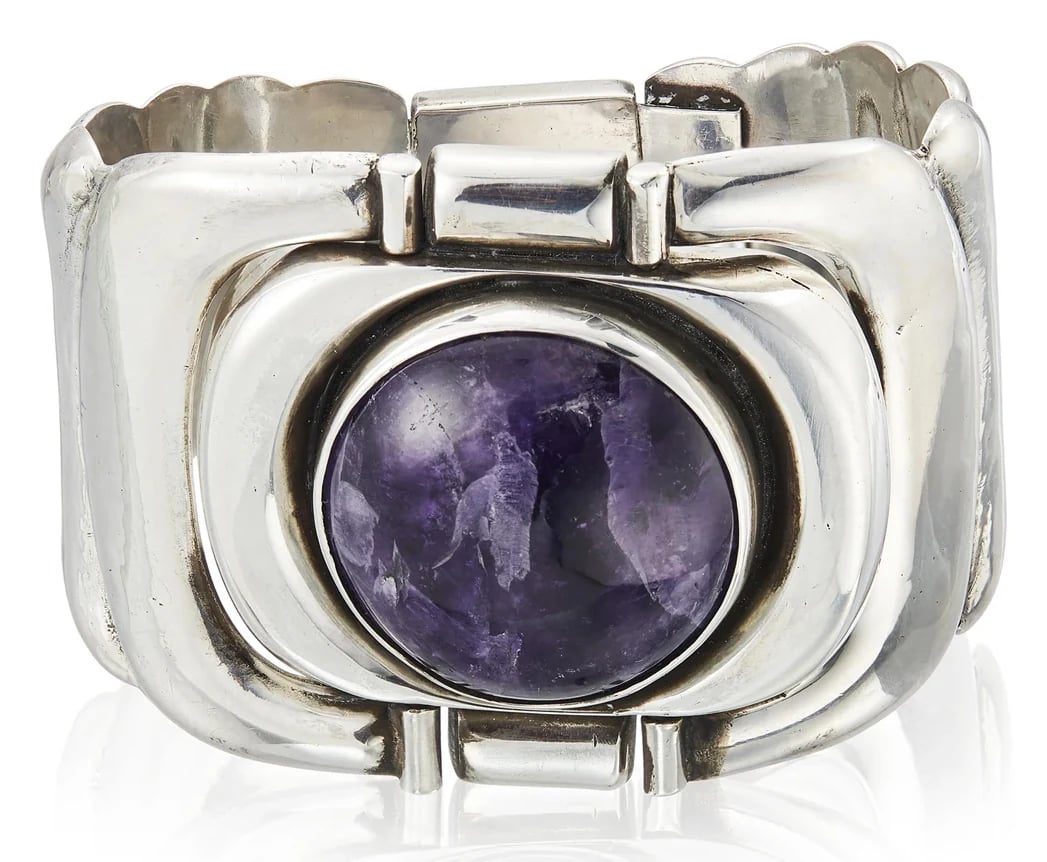
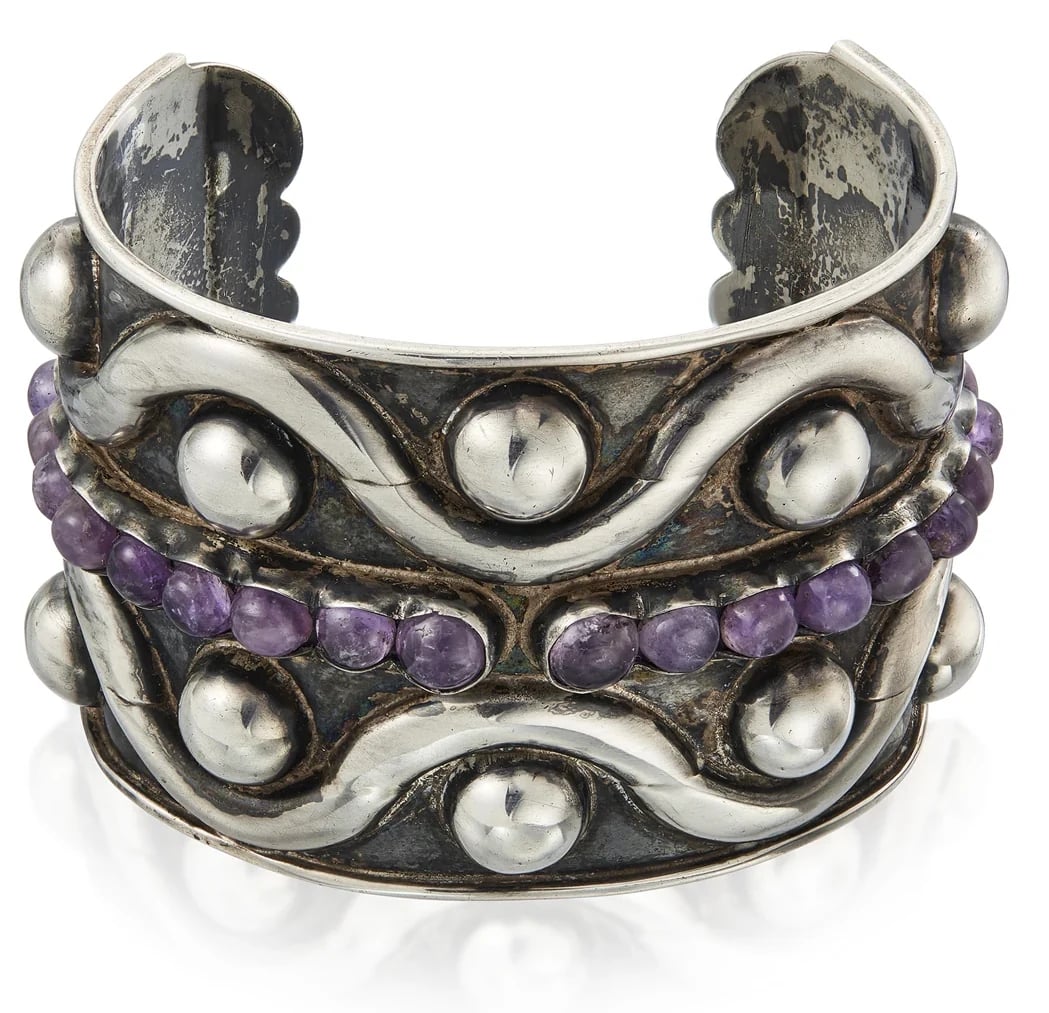
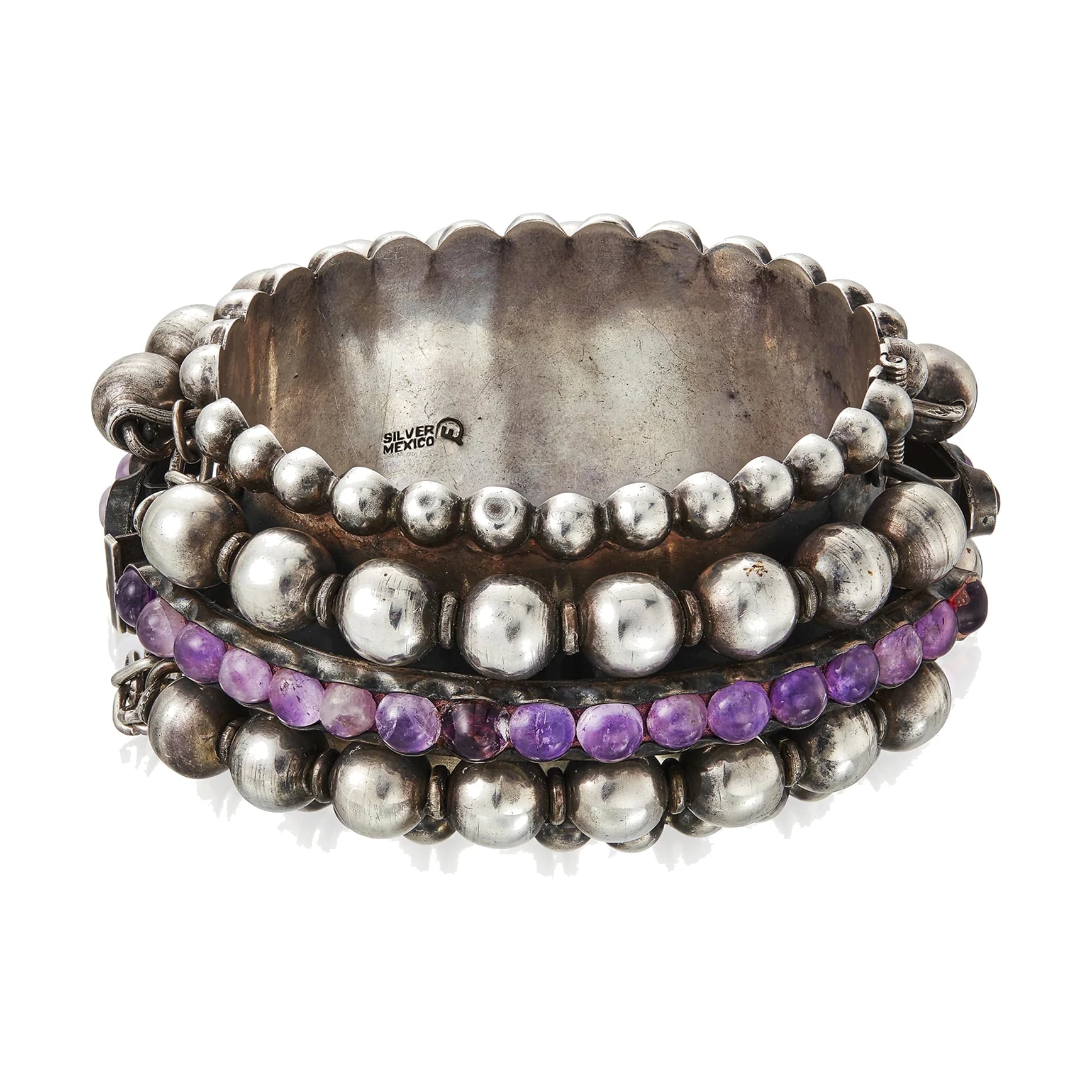
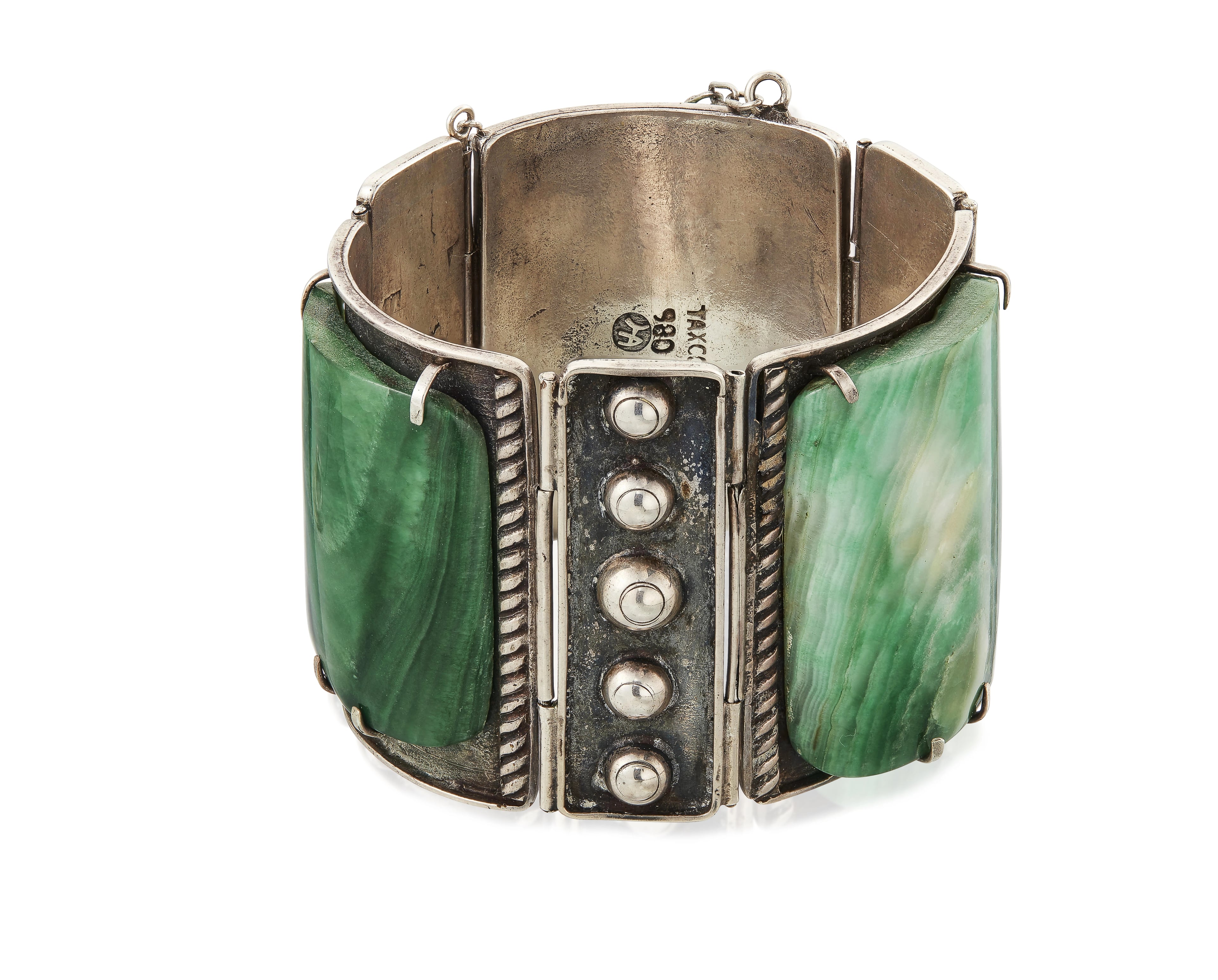
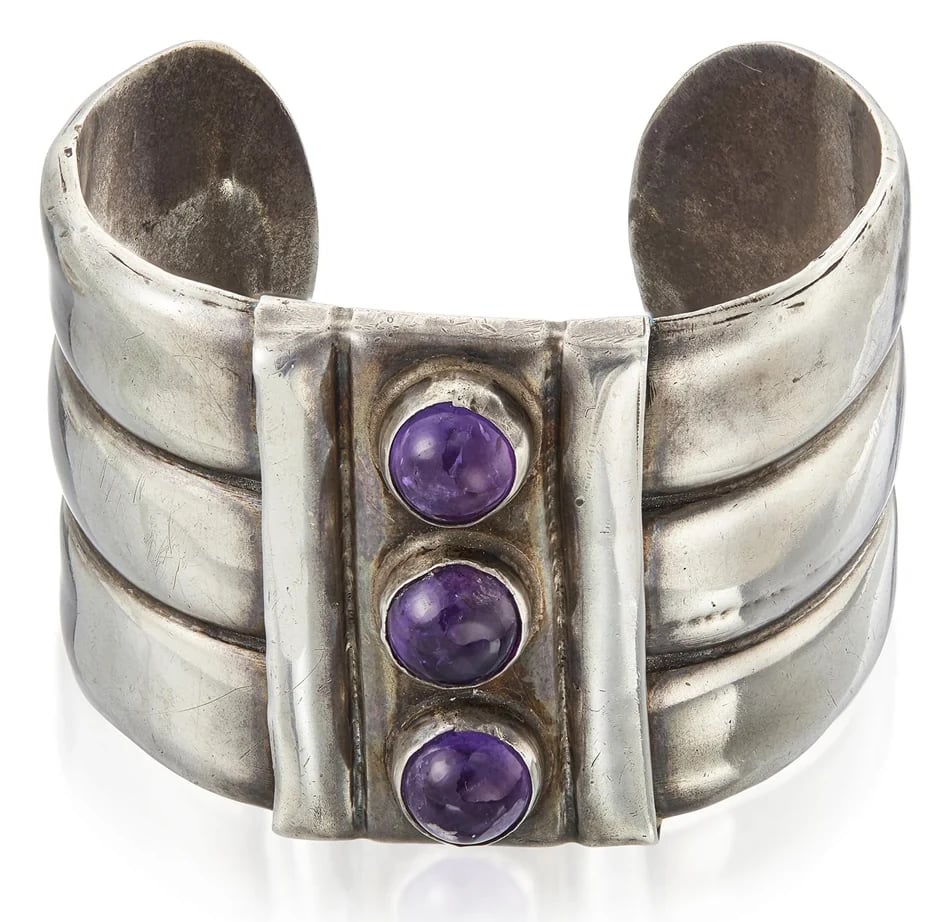
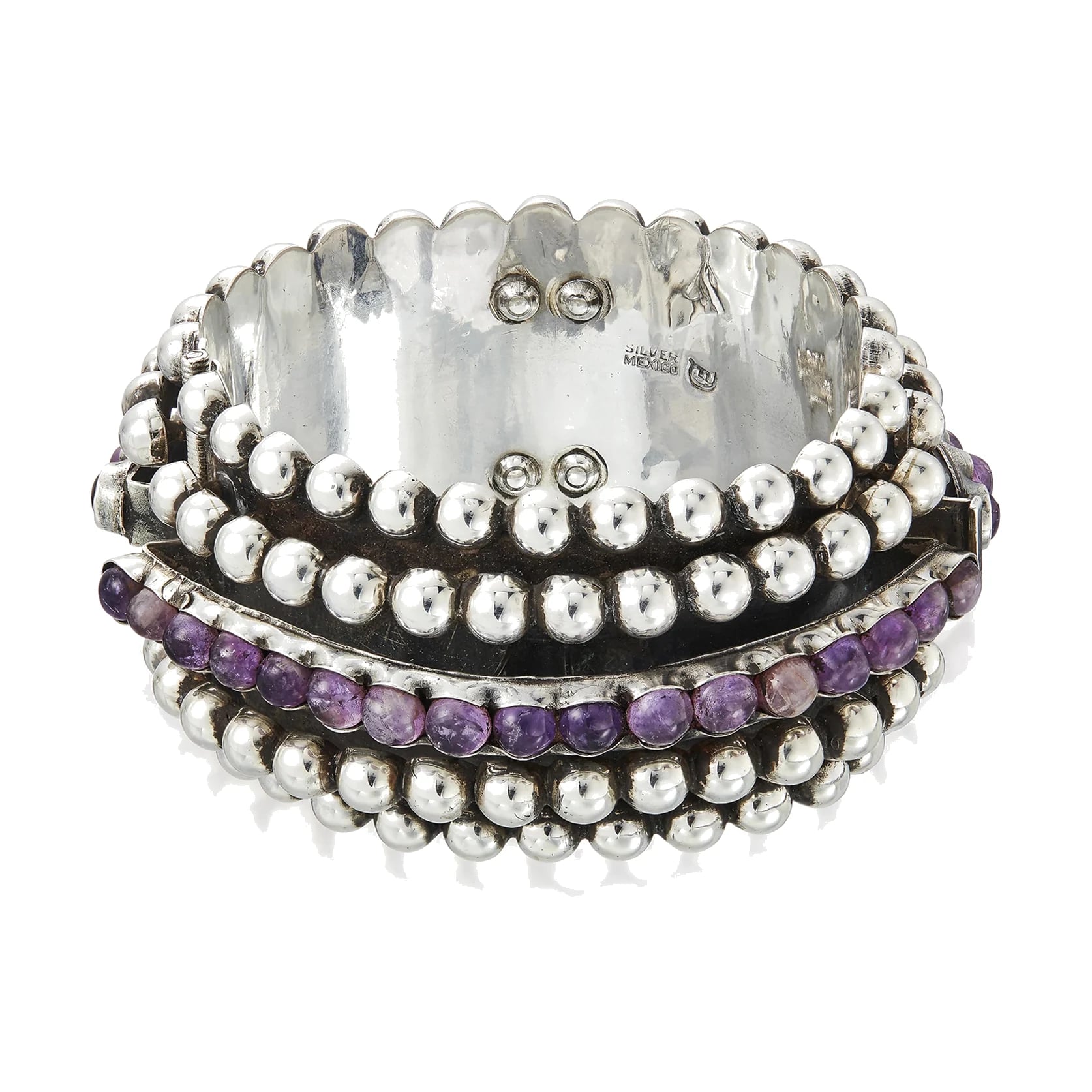
Three round amethyst cabochons climb the center of the cuff in a single vertical file, each cradled in its own bezel on a raised silver panel that stands proud of the band. To either side the metal is worked into stacked horizontal ribs that wrap the wrist, so the piece reads as a quiet architecture: a still column of purple stone set against the rhythm of channeled silver. The amethyst becomes a measured, three-beat incident rather than scattered color, and the restraint is the point.
The raised panel lifts the stones off the ribbed ground and gives the eye a fixed point against the channels. Heavy, sculpturally handled silver set with a short file of cabochons is a manner associated with Frederick W. Davis, the Mexico City gallery owner and tastemaker whose name the cuff carries.
The cuff is struck with the FD signature and a MEXICO SILVER stamp, the marks that place it with Davis. An arbiter of taste rather than a bench silversmith, Davis had the work under his name made to his eye by the contracted Mexico City silversmiths he drew on. Morrill connects the amethyst and carved-stone designs sold for Davis at Sanborn's to Valentín Vidaurreta, who supplied stone-set work from his capital workshop in those years.
Amethyst against weighty silver runs through Davis's bracelets of this period. Morrill illustrates a group of his amethyst bracelets and a cuff in sterling, amethyst and quartz dated to about 1930, which gives this one its company and its date. It is a marked example of the colonial-revival sensibility Davis cultivated, where a file of cabochons and a ribbed ground were enough.
Museum of Mexican Silver. “Amethyst and Silver Cuff Bracelet.” Catalog no. MoMS-002102. https://museumofmexicansilver.com/pieces/fred-davis-amethyst-and-silver-cuff-bracelet
See something wrong with this record? Suggest a correction and the piece details fill in automatically.
Fred Davis
Beaded Amethyst Silver Bangle Bracelet
Silver