Saves instantly, no account needed. Already a member? Sign in.
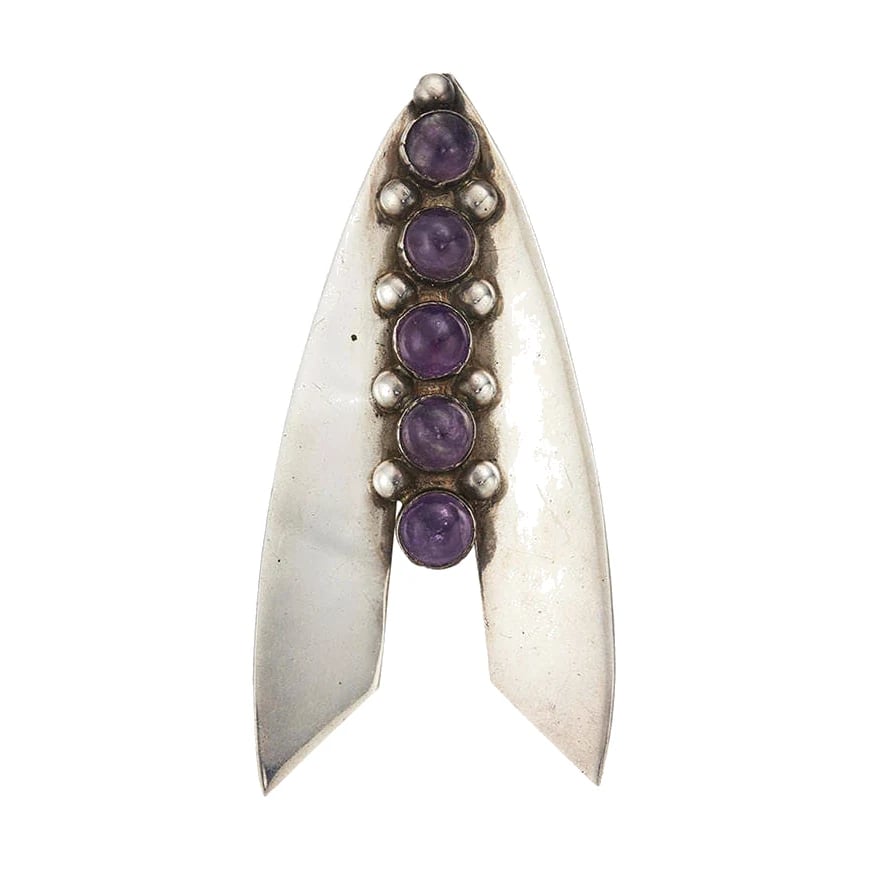
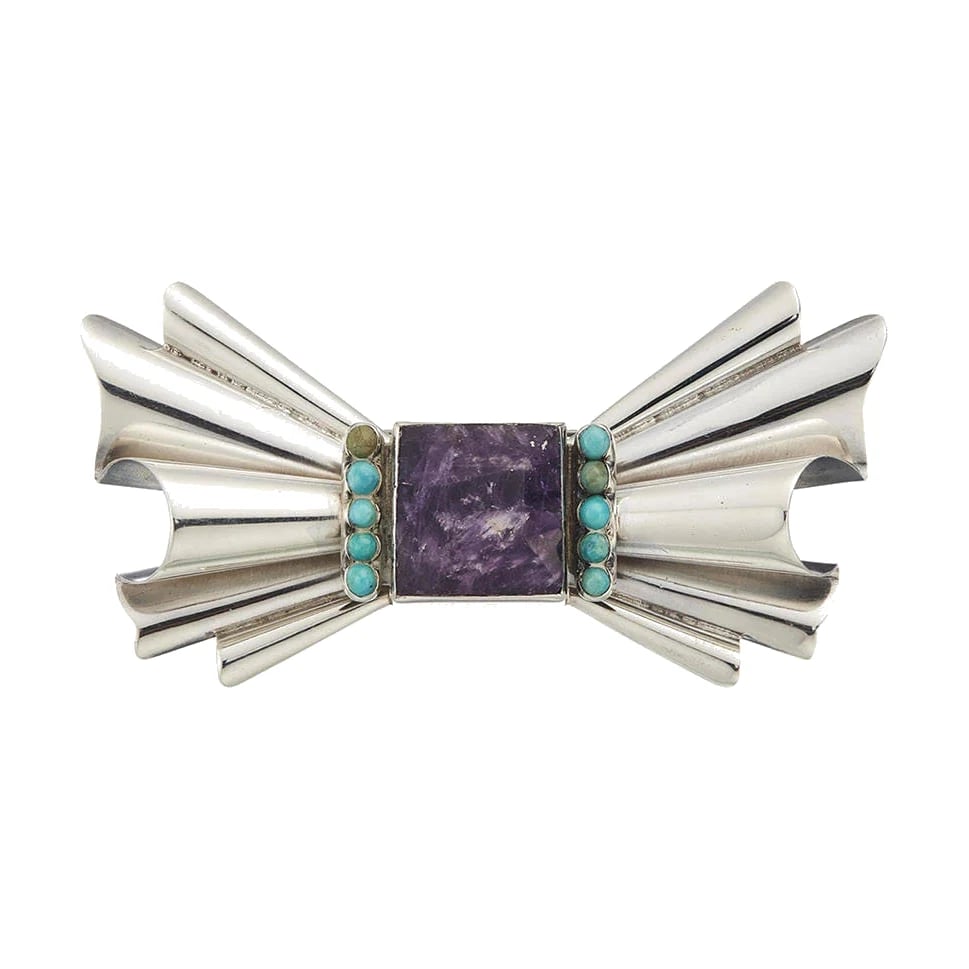
A crisp silver bow flares to either side of a square amethyst plaque, the fluted loops cut with sharp parallel ridges so the metal reads like stiff pleated ribbon caught mid-tie. The knot at the center is framed on each side by a vertical column of four turquoise cabochons, the cool blue stones flanking the purple stone in a tight, symmetrical band. It is a dressmaker's conceit worked in sterling, ornamental but disciplined, and the amethyst-and-turquoise pairing against bright silver is one that recurs through the jewelry Fred Davis put his name to.
Davis was the American who built the silver counter at Sanborn's in Mexico City into the taste-making source for fine Mexican work. As Morrill records, he did not run a workshop of his own; he commissioned leading independent silversmiths, sharing in the design and drawing on his deep feel for the Mexican aesthetic, and through that counter he effectively pioneered the market for serious Taxco-school jewelry from the late 1920s.
The brooch is struck with the FD mark and the SILVER MEXICO stamp Davis used. Ribbon and bow forms were a recurring part of his decorative vocabulary, and this one turns a soft motif into something architectural, the flutes throwing a fan of light and shadow out from the stones at the center.
Built around a single bright idea and two native stones, it is a clear example of the Davis line, where European jewelry forms are reworked in Mexican silver and set with the country's own amethyst and turquoise.
Museum of Mexican Silver. “Amethyst and Turquoise Bow Brooch.” Catalog no. MoMS-002142. https://museumofmexicansilver.com/pieces/fred-davis-amethyst-and-turquoise-bow-brooch
See something wrong with this record? Suggest a correction and the piece details fill in automatically.
Fred Davis
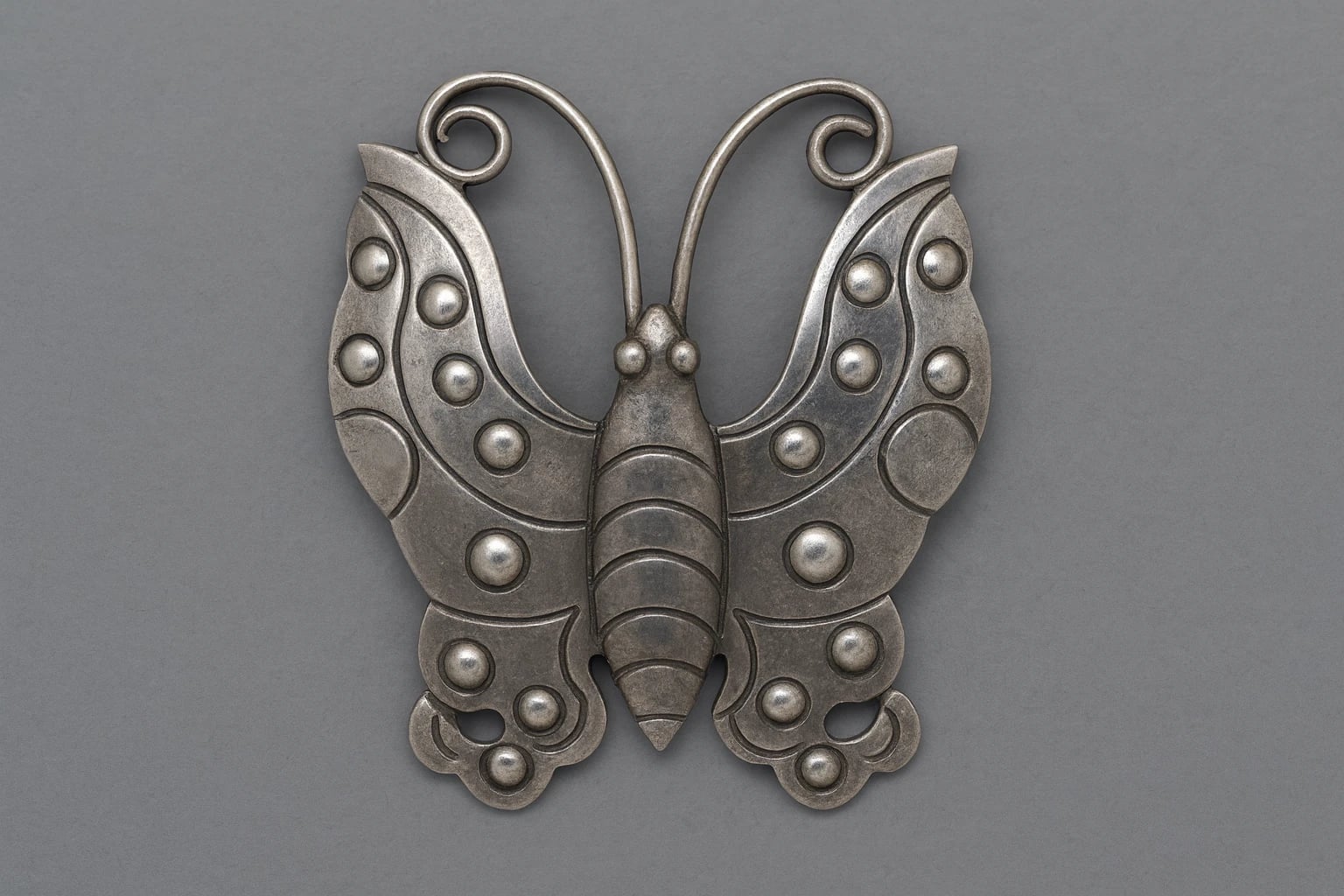
Butterfly Brooch with Round Domes