Saves instantly, no account needed. Already a member? Sign in.
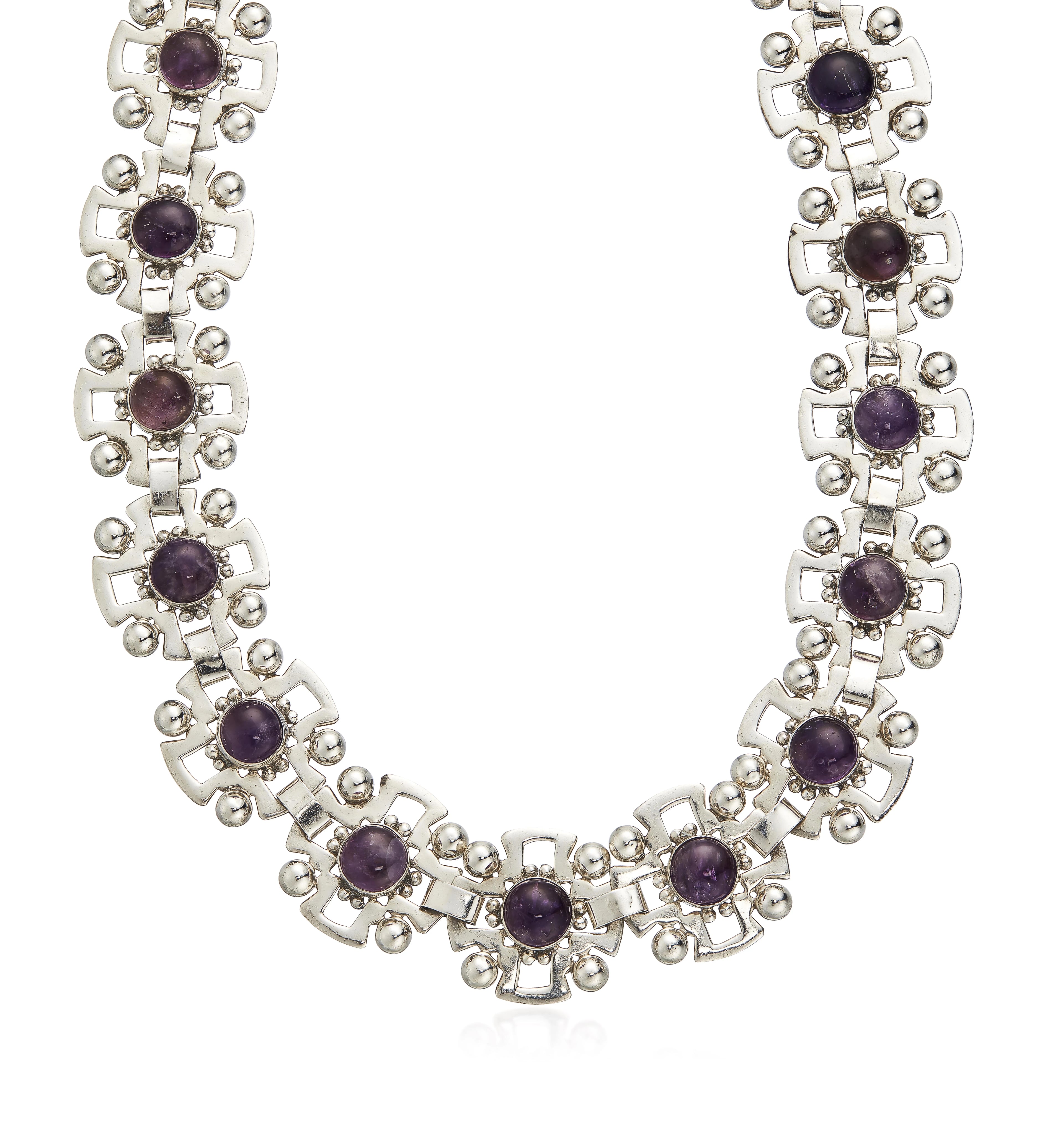
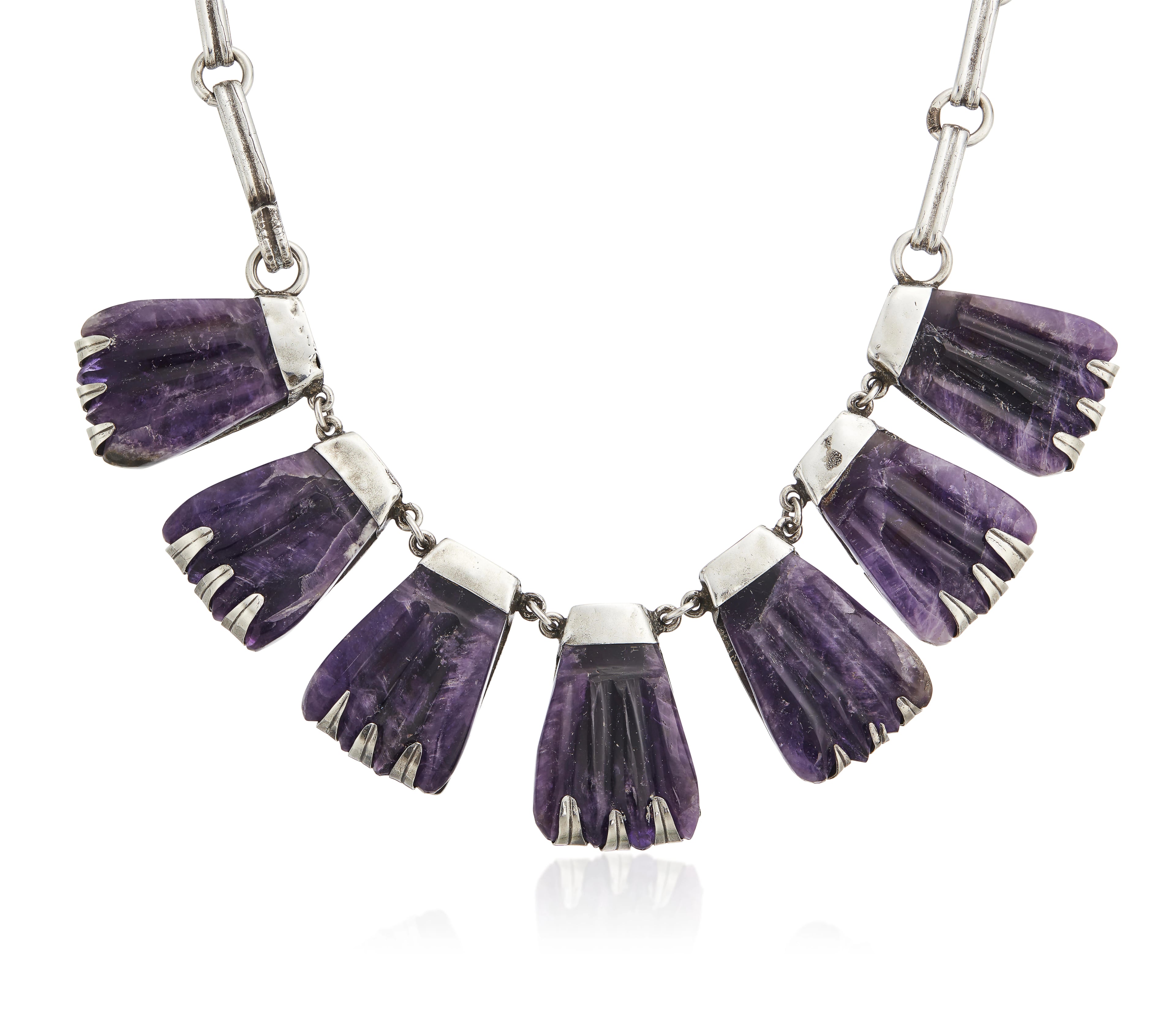
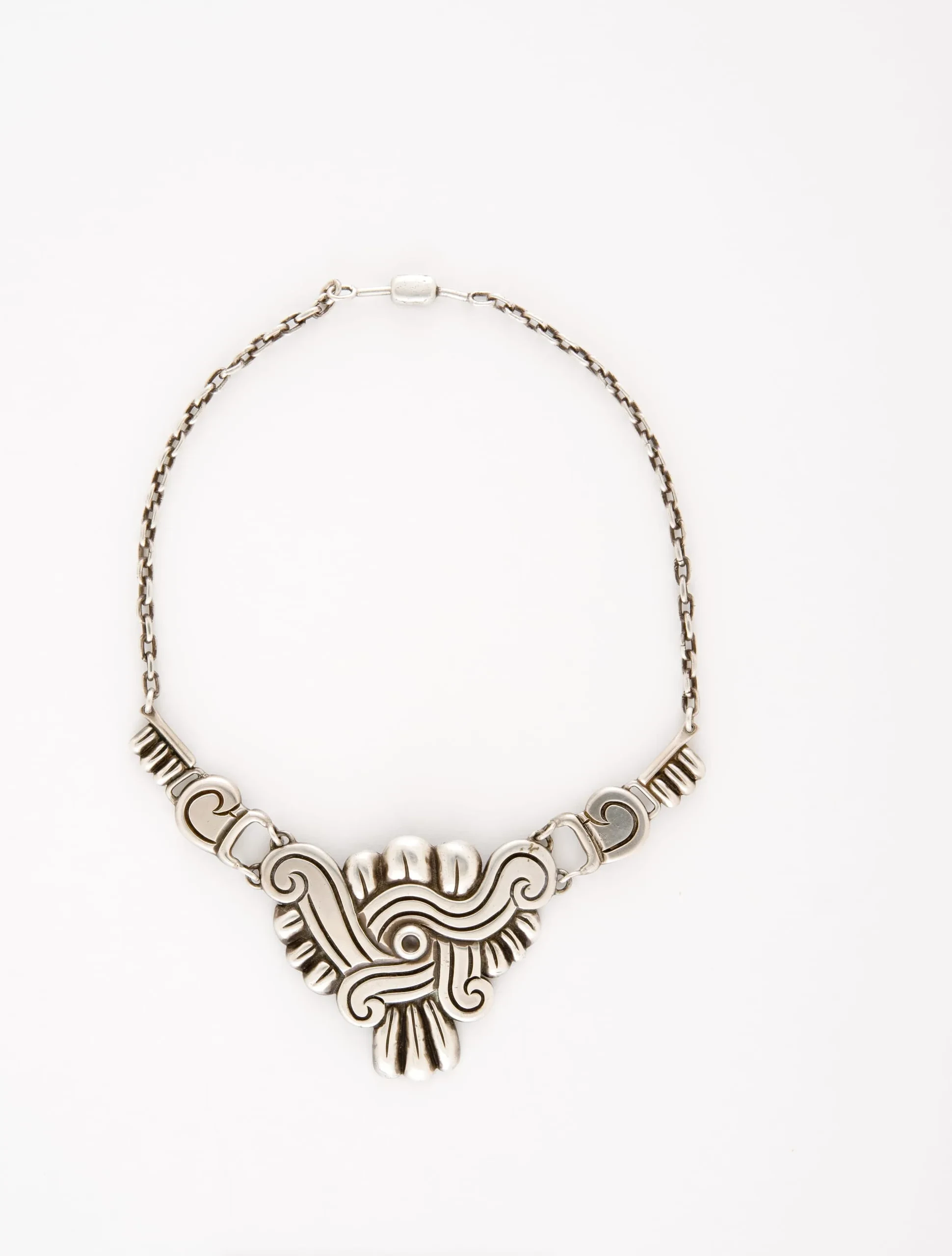
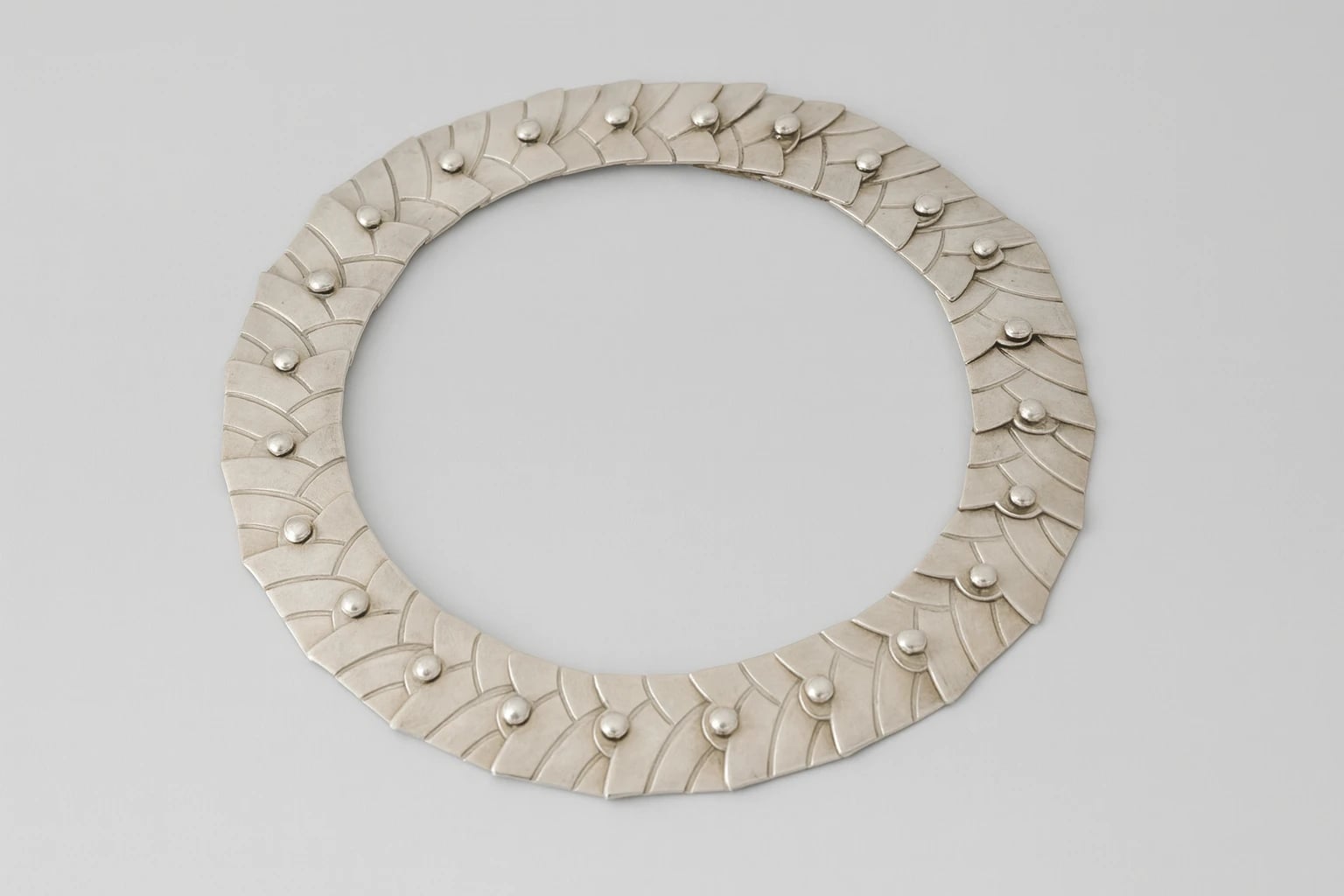
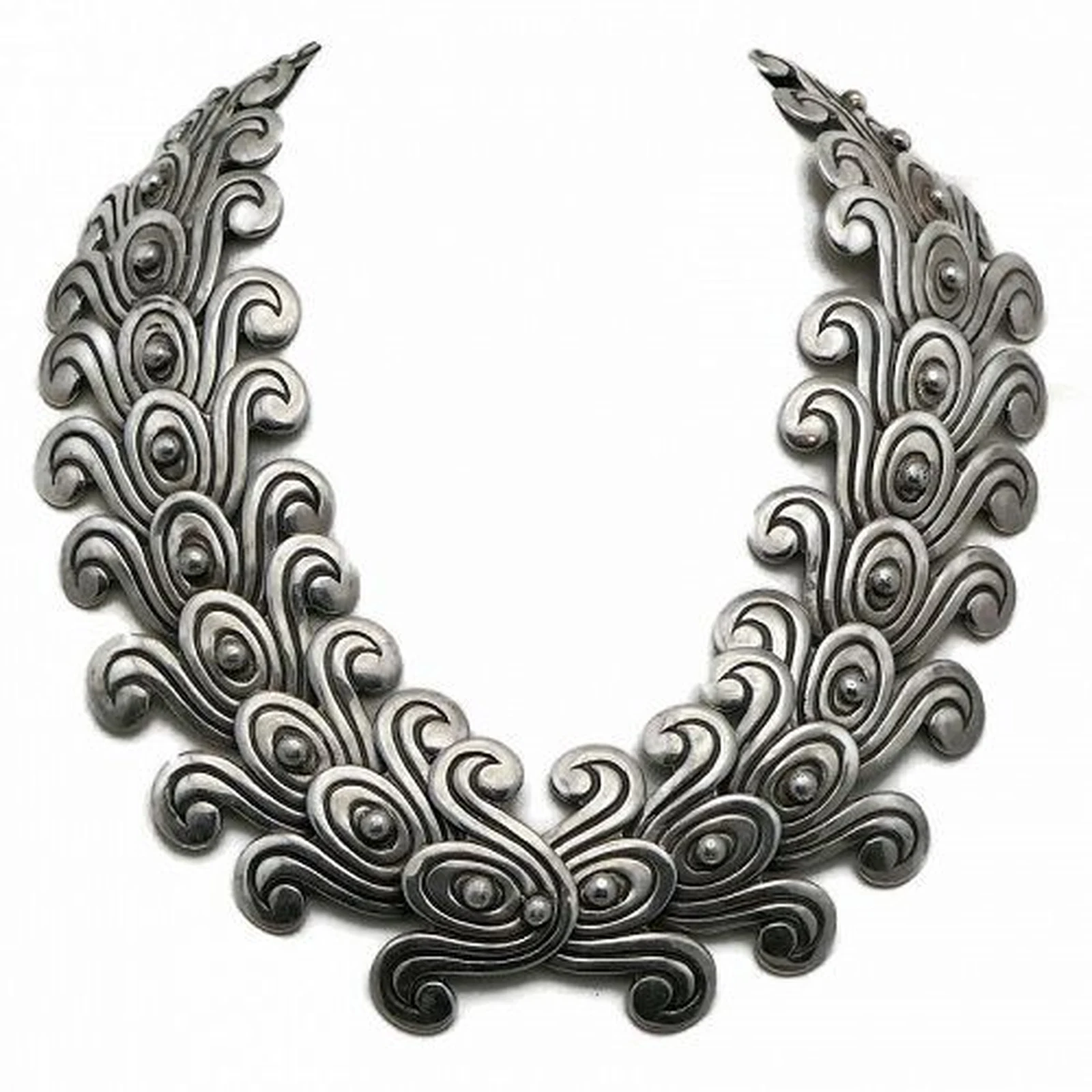
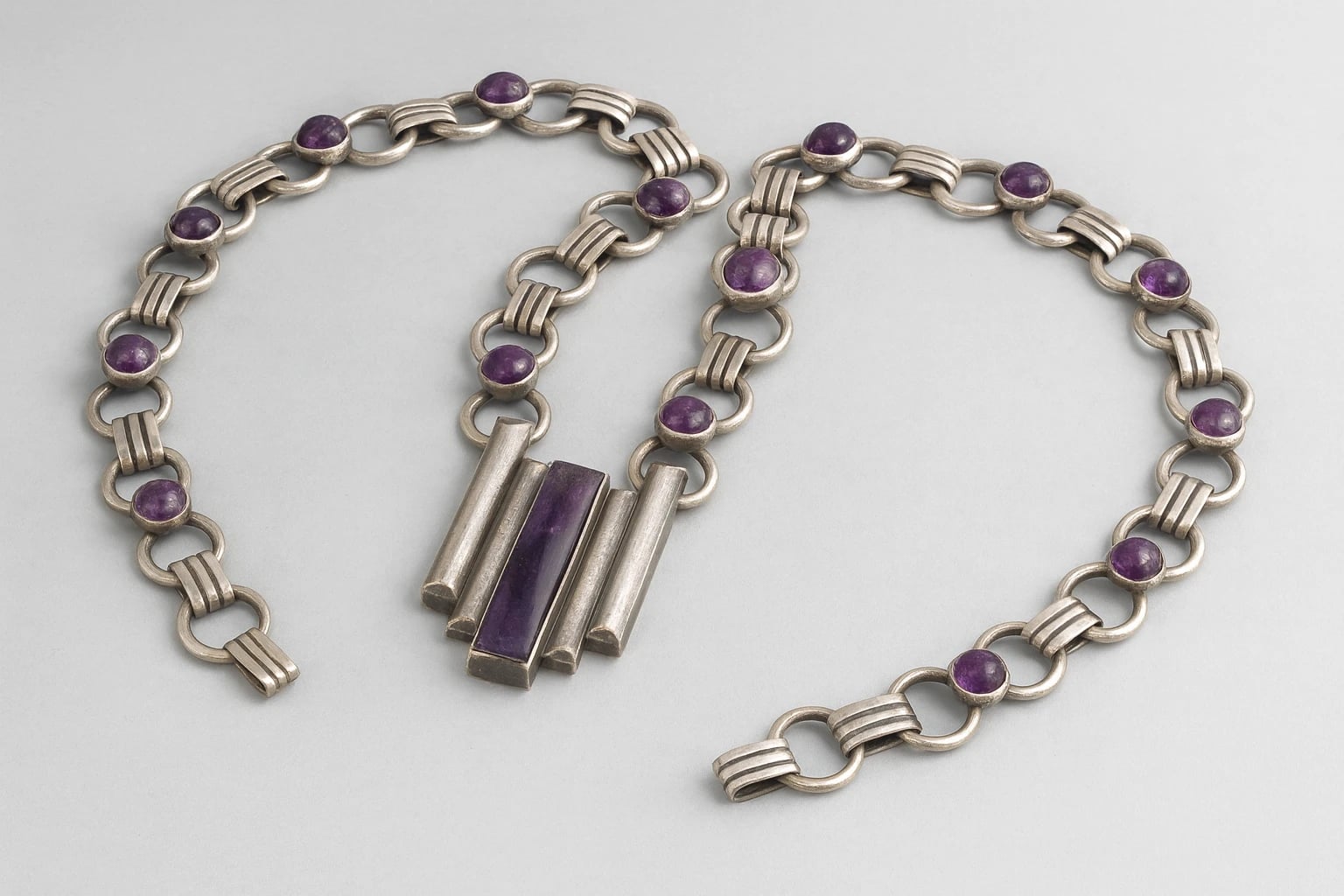
Few wearable objects condense the founding logic of modern Mexican silver as cleanly as this amethyst link necklace. It is built from a procession of openwork squared links, each framed by a halo of applied silver beads and centered on a round amethyst cabochon, seventeen stones marching collar-length around the throat. The vocabulary is deliberate: the squared, U-braced cells and the bands of beading deliberately echo pre-Columbian form, the same impulse that ran through the Mexico City workshop tradition from which it comes. This is not jewelry that imitates Europe. It is the "unmistakably Mexican" aesthetic that a small circle in Mexico City worked out in the 1930s and 1940s, rendered here in sterling and stone rather than in motifs borrowed from abroad.
The piece carries the conjoined FD cipher with MEXICO STERLING, the signature of Frederick W. Davis. Davis was not a bench silversmith in the ordinary sense. After managing the Sonora News Company's craft showroom he became head of antiques and fine crafts at Sanborn's in Mexico City in 1933, and his "designs" were collaborations: he understood and shared in the Mexican aesthetic and contracted the actual fabrication to independent master silversmiths, chief among them Valentín Vidaurreta, who produced jewelry for Davis at Sanborn's (Morrill & Berk, Mexican Silver, 1994, pp. 24, 28). Davis drew openly on pre-Columbian art as he saw it on pyramid walls and in contemporary Indian work, tempered by his own eye (Morrill & Berk, 1994, p. 24). The beaded, U-linked construction seen here belongs squarely to that lineage. Penny C. Morrill traces the same U-shaped motif, linked with bands of beading and reading as Pre-Columbian, through Vidaurreta's circle and into the early work of Antonio Pineda, who apprenticed in that Mexico City workshop (Morrill & Berk, Mexican Silver, 1994, p. 114; Morrill, Silver Masters of Mexico: Héctor Aguilar and the Taller Borda, 1996, pp. 83, 178).
Amethyst was a favored stone in this milieu, the purple cabochon a recurring signature of Davis-line jewelry, and the substantial, broad collar form makes a serious statement piece rather than an everyday ornament. Davis pieces, and his amethyst jewelry in particular, are actively collected and pass regularly through the major houses and specialist dealers in this field, which is why a fully marked FD collar of this scale carries real weight in the market. Its importance, though, is finally documentary as much as decorative: it is a tangible record of the moment when a handful of designers and silversmiths in Mexico City, working through Davis and Vidaurreta, defined what modern Mexican silver would look like, and handed that vocabulary forward to the makers who became famous under their own names.
Museum of Mexican Silver. “Amethyst Link Necklace.” Catalog no. MoMS-002050. https://museumofmexicansilver.com/pieces/fred-davis-amethyst-link-necklace
See something wrong with this record? Suggest a correction and the piece details fill in automatically.
Record data: the standard is entered as sterling silver on the authority of the MEXICO STERLING stamp described above; place of manufacture is Mexico City; construction is recorded under Techniques. The date is entered as an inferred range, c. 1930s-1940s, on the basis of the FD cipher and Davis's Sanborn's years, and should be read as inferred rather than documented.
The citations previously carried inside the prose have been added to References as formal entries: Penny C. Morrill and Carole A. Berk, Mexican Silver: 20th Century Handwrought Jewelry & Metalwork (Schiffer, 1994), pp. 24, 28 and 114; and Penny C. Morrill, Silver Masters of Mexico: Hector Aguilar and the Taller Borda (Schiffer, 1996), pp. 83 and 178.
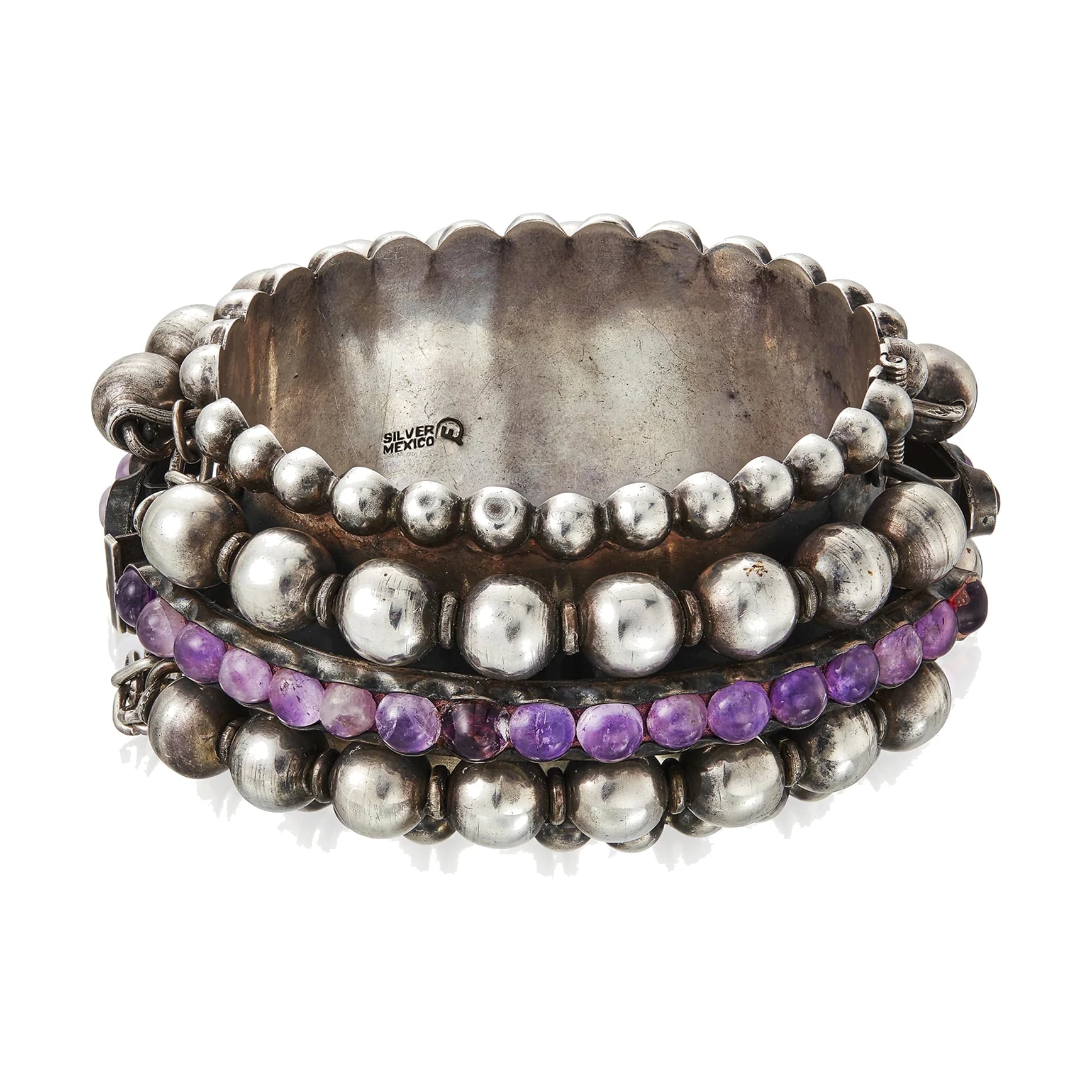
Fred Davis
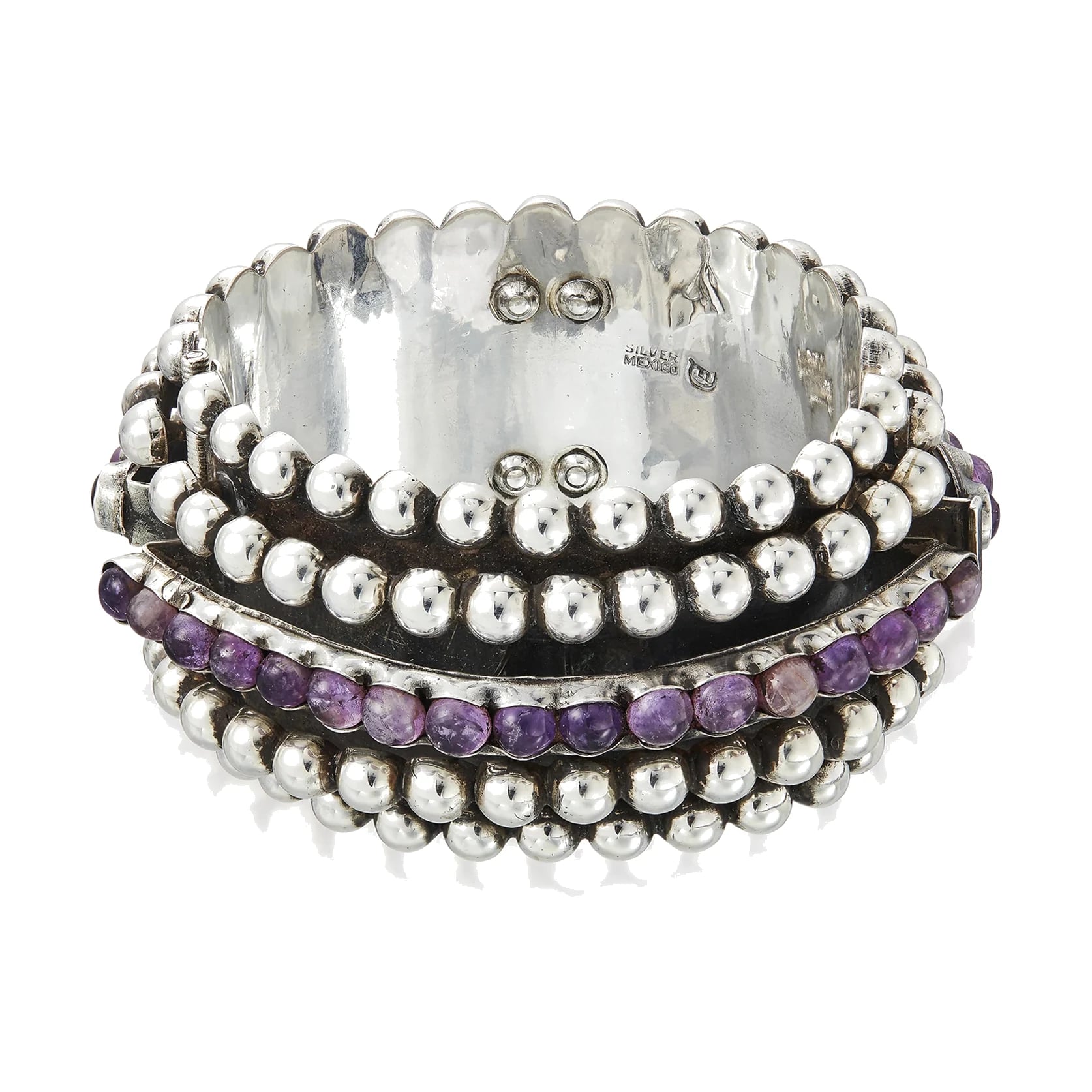
Beaded Amethyst Silver Bangle Bracelet
Silver