Saves instantly, no account needed. Already a member? Sign in.
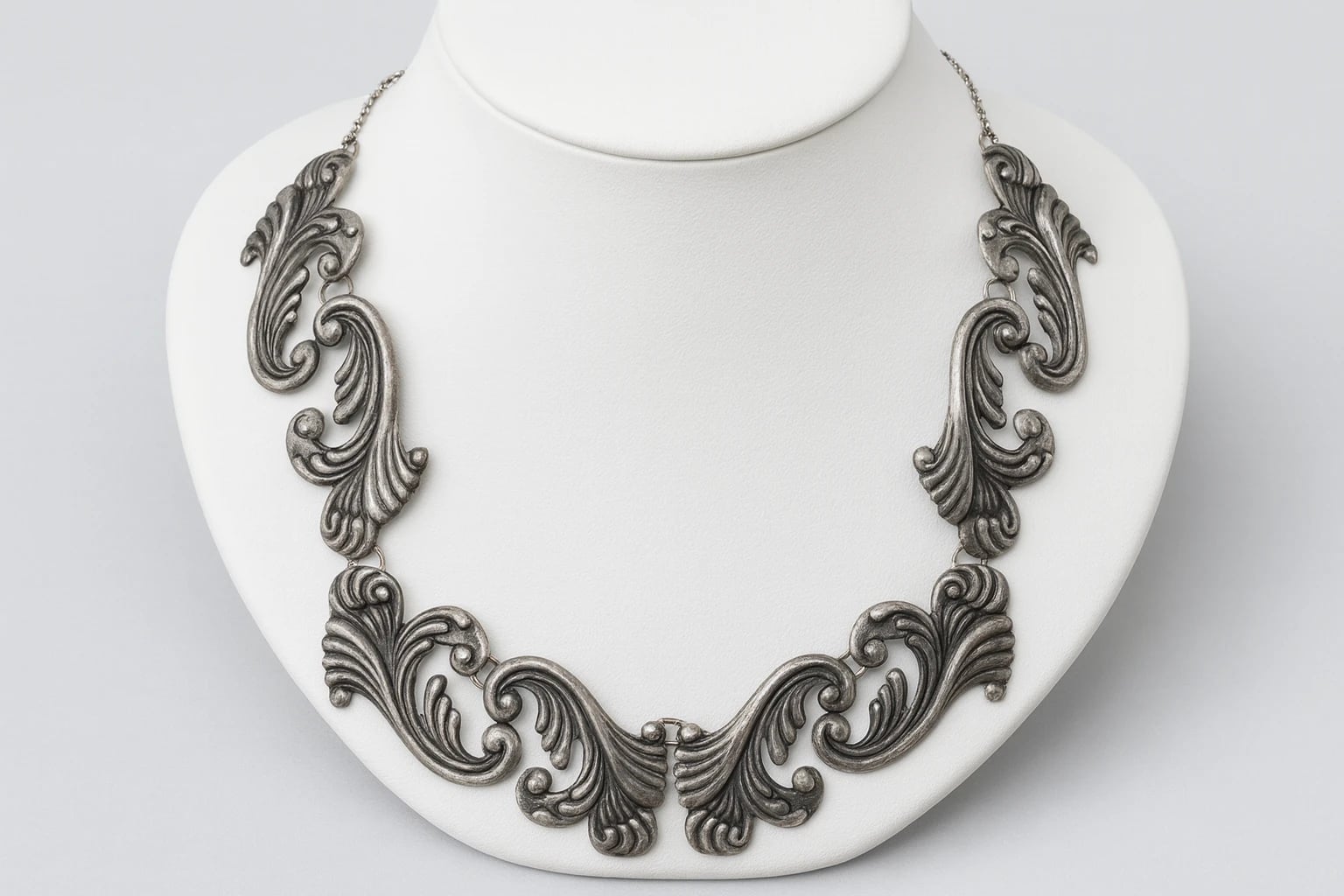
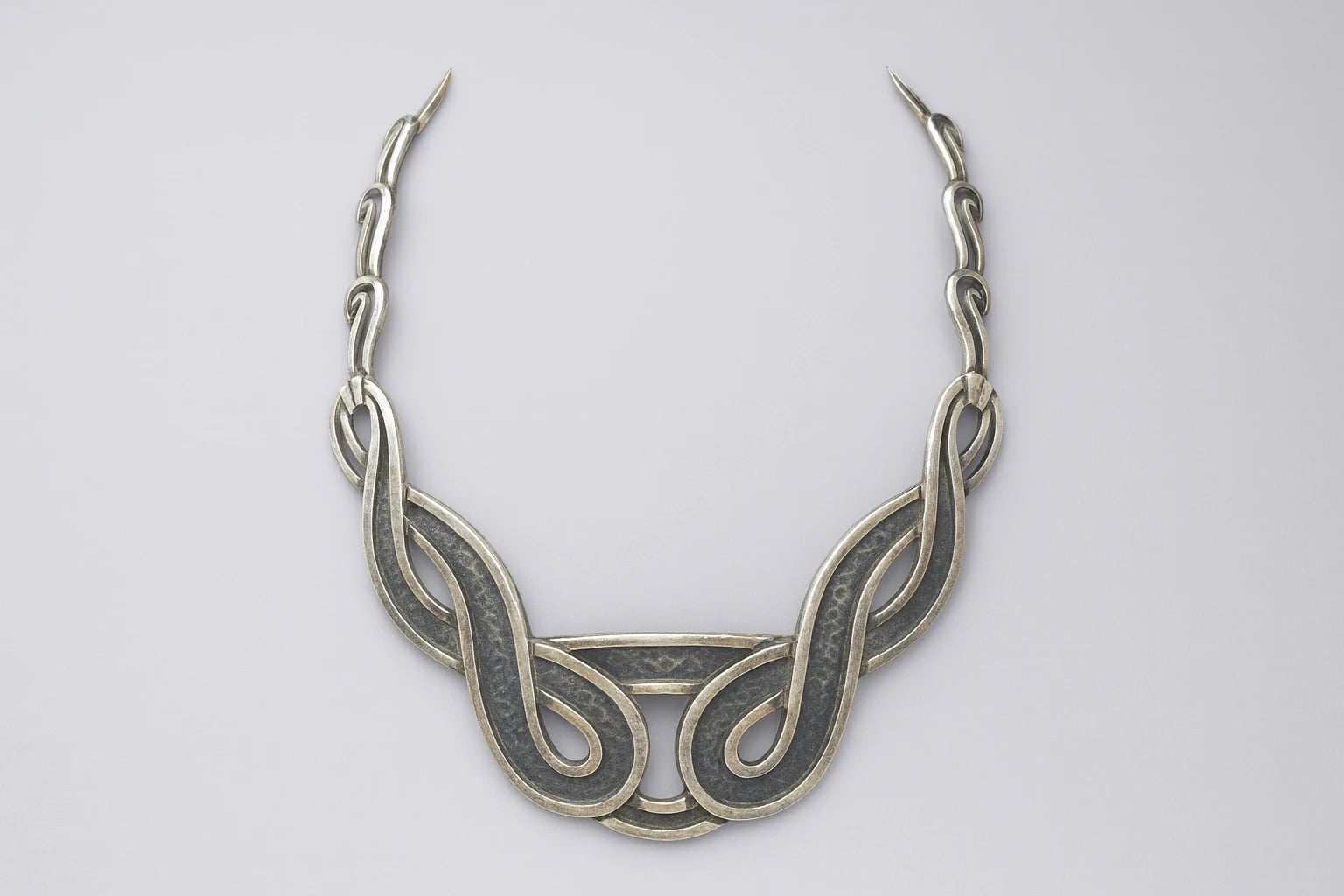
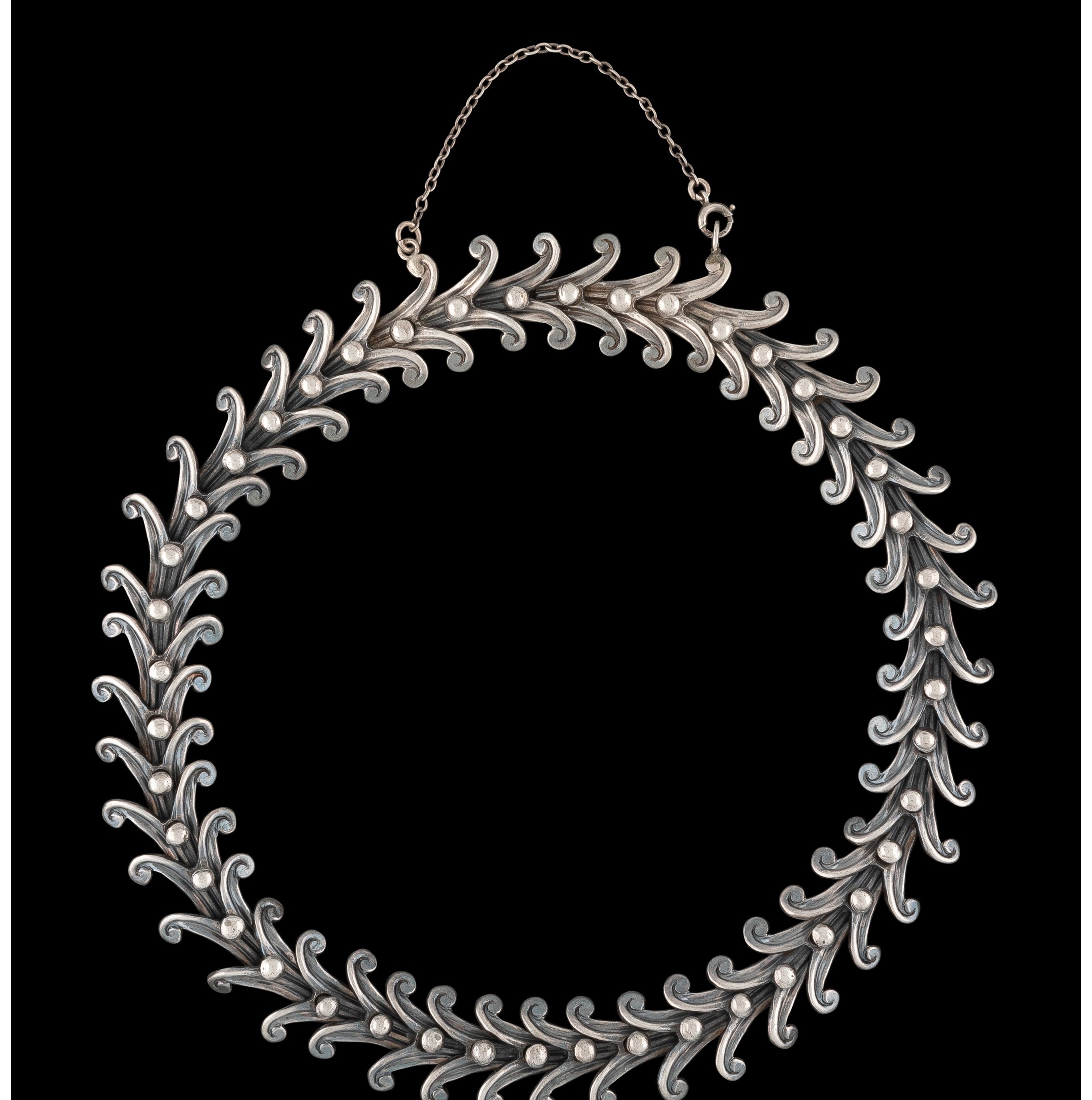
An articulated collar of paired scrolls. Each link is worked as a double swirl, two opposed volutes meeting at a domed boss, and the links are hinged so that the band curves closely to the neck. The scrolls are cut in low relief rather than pierced, which keeps the necklace visually solid while the hinging keeps it flexible. At 255 grams and 19 inches long, with a width of 1 3/4 inches, it is a substantial piece of hand-finished silver.
The mark reads 980 LOS CASTILLO TAXCO 262, giving the standard and the design number together. The linear 980 stamp belongs to a short early window in the workshop's production, 1939 to about 1940, so the necklace is dated circa 1939-1940. The Date field previously read "circa 1940s," which sits awkwardly against the mark chronology recorded in the Marks field; the narrower reading is preferred because it rests on the stamp rather than on style.
Los Castillo was established in Taxco in 1939 by the Castillo brothers, with Salvador Terán, after their training with William Spratling. Design 262 belongs to that first phase, before the workshop's later reputation for metales casados and stone inlay. What it shows instead is the linked, weight-bearing silver vocabulary that the taller shared with the other early Taxco workshops, handled with unusual confidence for a shop barely a year old.
Record data: Design No. 262 is entered as a structured field. The correction placeholder that previously stood in place of a curatorial note has been replaced by this entry.
Evidence: visible mark reading 980 LOS CASTILLO TAXCO 262.
Museum of Mexican Silver. “Double-Swirl Necklace, Design No. 262.” Catalog no. MoMS-002164. https://museumofmexicansilver.com/pieces/los-castillo-design-262-double-swirl-necklace
See something wrong with this record? Suggest a correction and the piece details fill in automatically.
Los Castillo
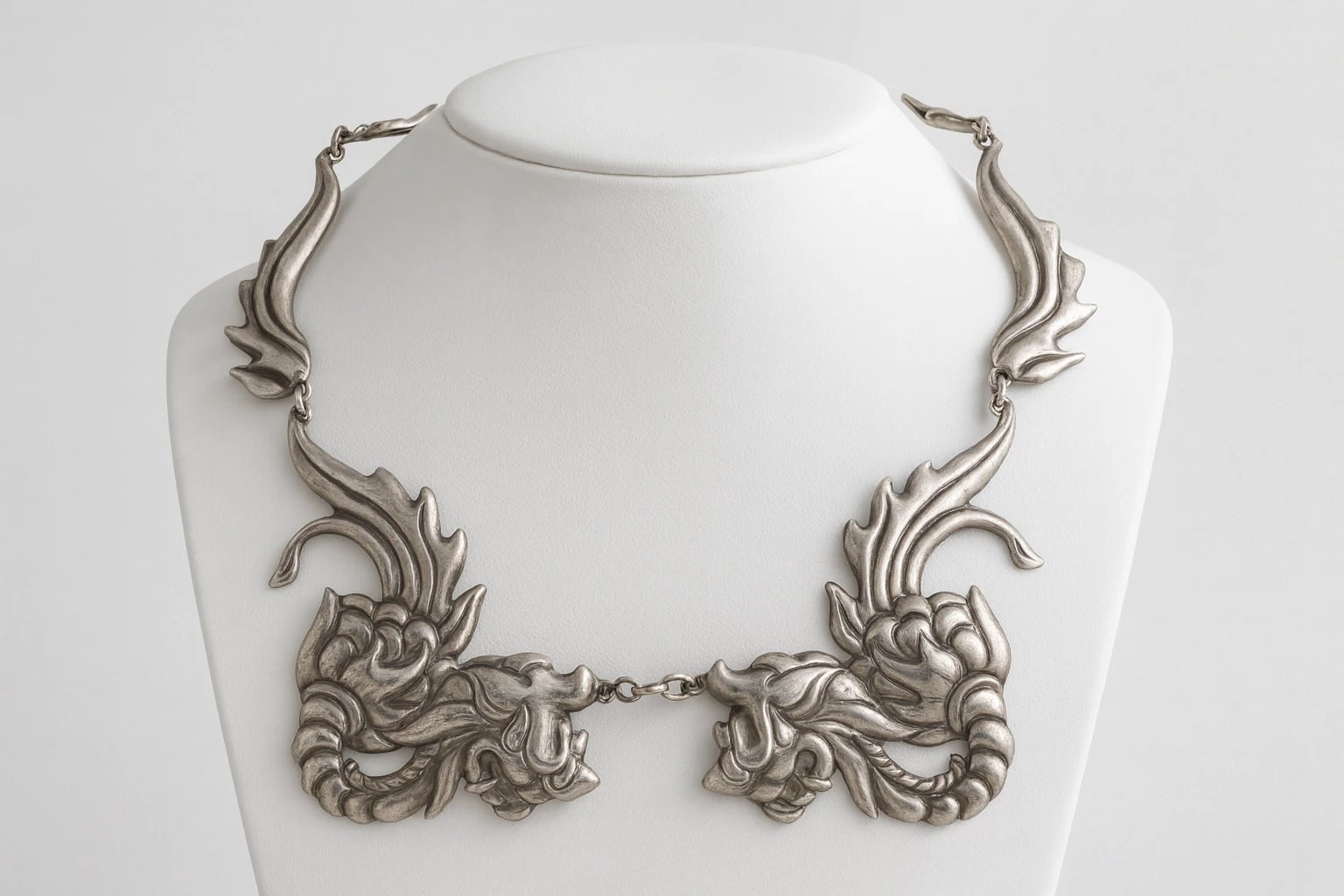
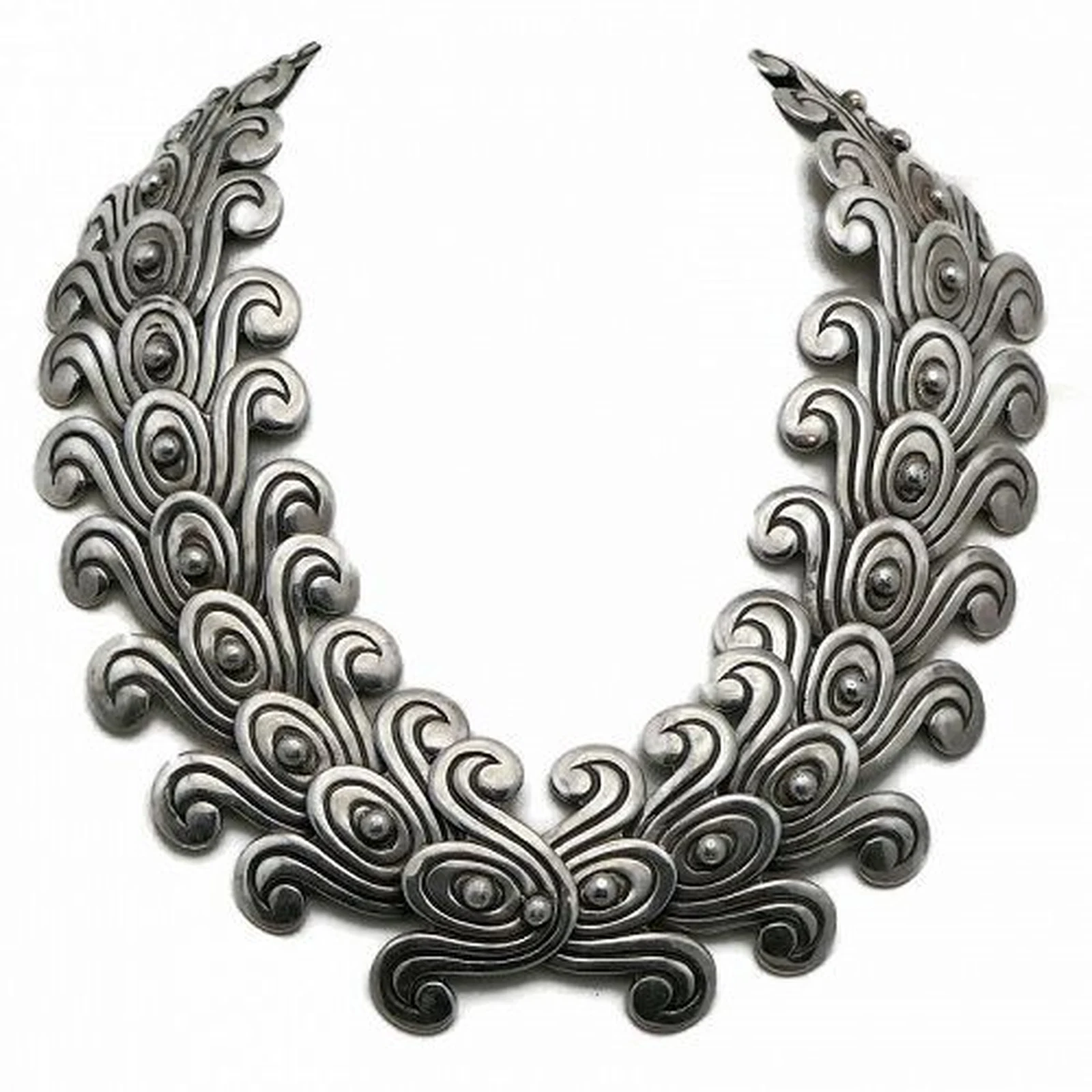
Repoussé Facing Dragons Necklace