Saves instantly, no account needed. Already a member? Sign in.
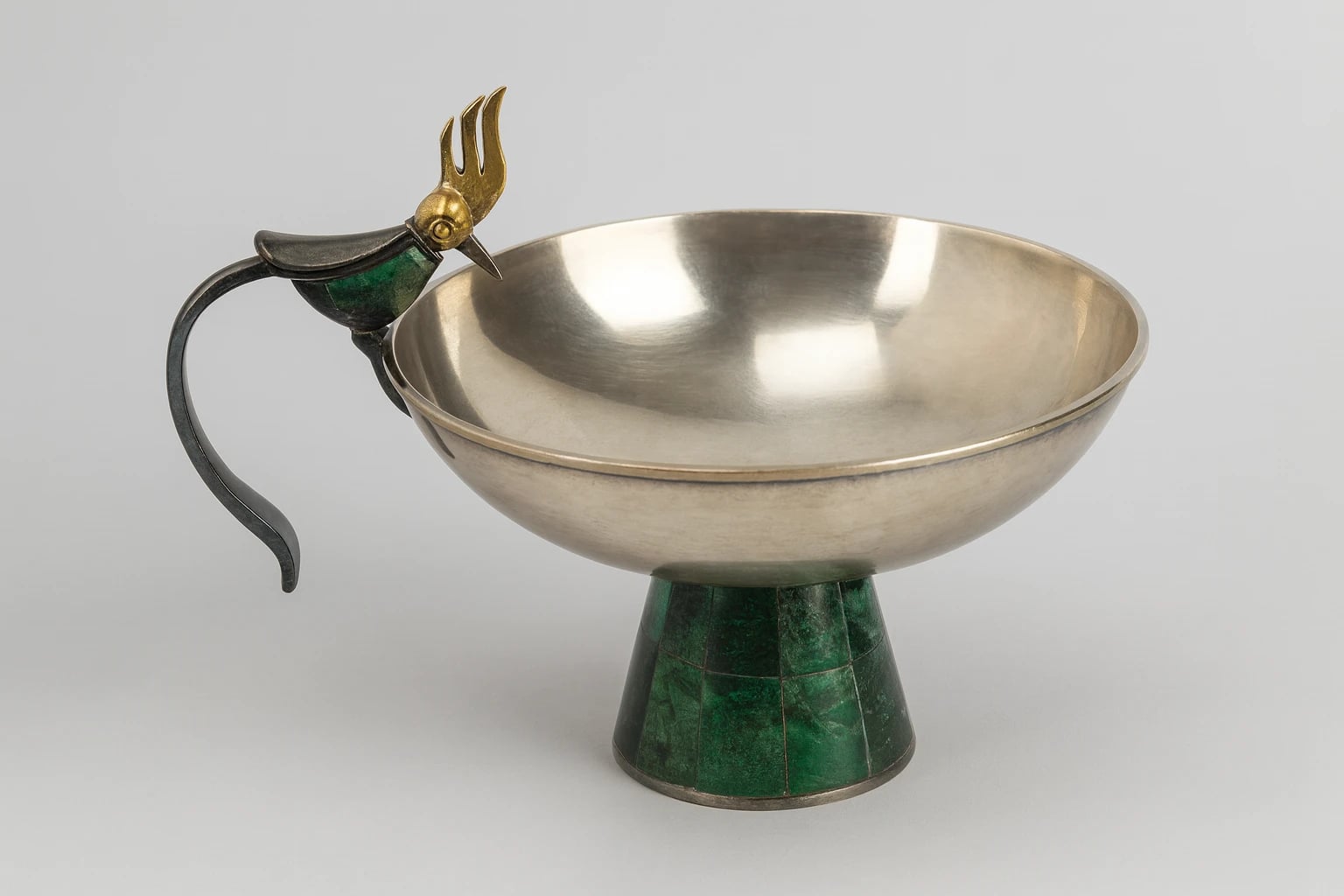
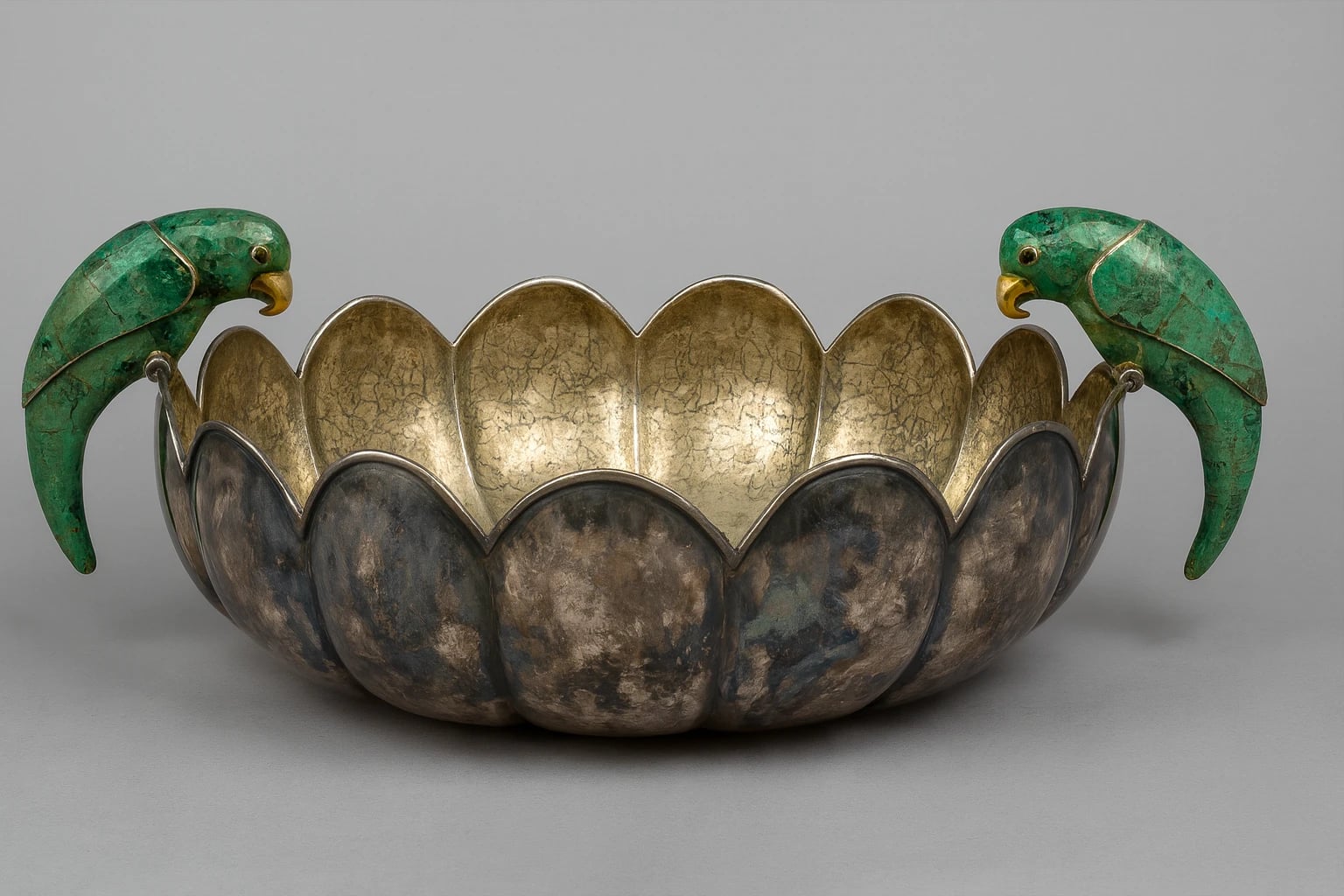
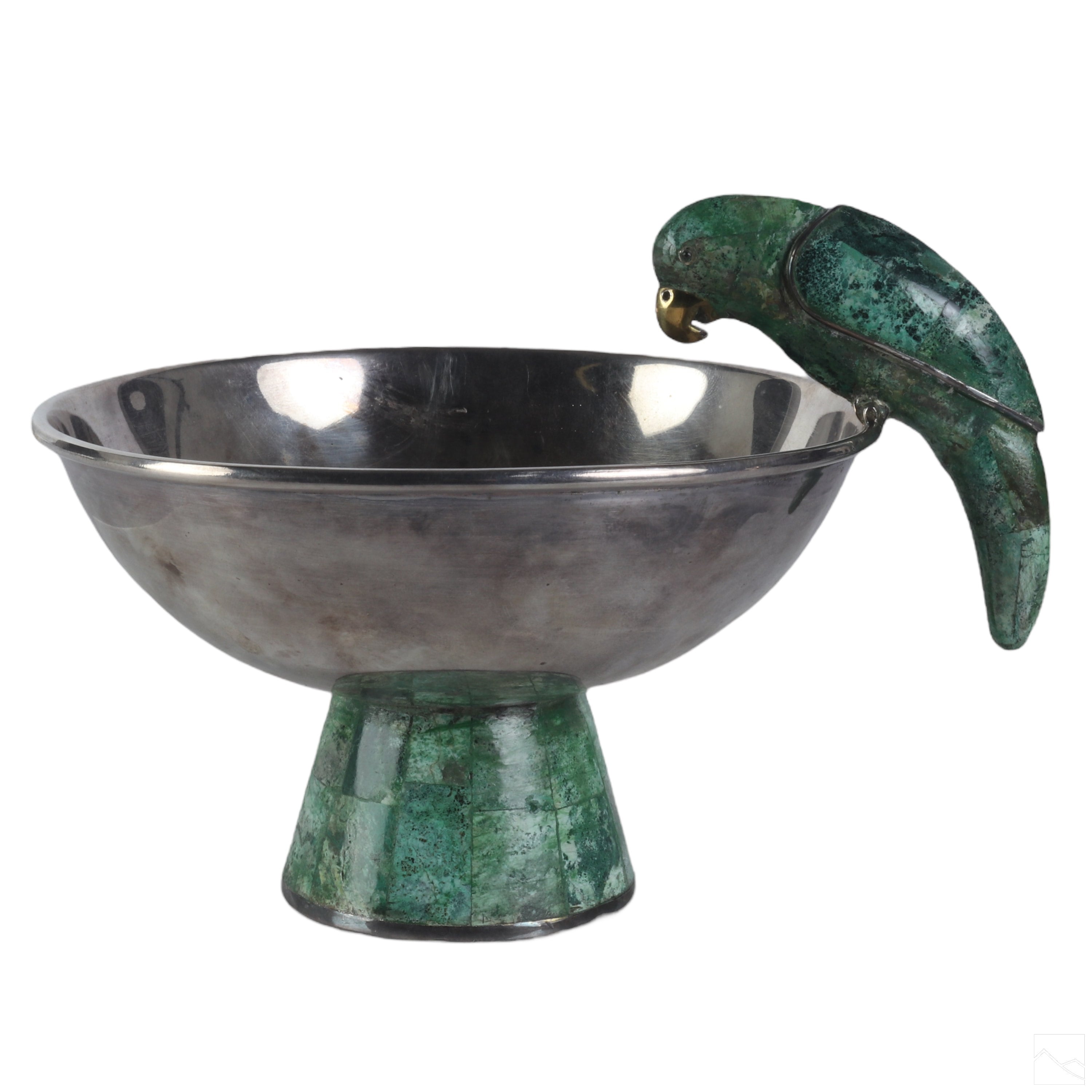
A parrot laid into a silverplate ground turns a decorative plate into a study of color held within metal. The bird's body is built from turquoise, its blue-green mass reading against the reflective field of the surrounding plate. This is inlay used as picture-making: the stone is not scattered as accent but assembled into a legible figure, so that the plate functions less as tableware than as a small panel in which mineral color and worked metal share the surface. Los Castillo made this kind of controlled marriage of stone and base metal a signature of the workshop, and the parrot is among its most recognizable motifs.
The design depends on the contrast between two very different materials. Turquoise is opaque and matte, absorbing light where the plate throws it back, and that difference does the compositional work. Where a painter would model a parrot with shifts of hue, the workshop lets the fixed color of the stone stand for the bird and reserves the metal for everything around it. Inlay of this sort requires each piece of stone to be cut and seated so that the joins read as drawing rather than as gaps, and the eye follows the outline of the bird as a continuous contour. On silverplate rather than sterling, the object belongs to the workshop's more accessible production, where the base metal carries the design without the cost of solid silver, and the value resides in the inlay and the drawing.
Los Castillo was founded in 1939 by Antonio Castillo with his brothers, among them Jorge "Chato" and Justo "Coco," together with their cousin Salvador Terán, several of whom had passed through William Spratling's Taller de Las Delicias before setting out on their own. The workshop became known for developing inlay and mosaic as named production lines, including Mosaico Azteca and later stone lines such as Onix Negro, treating the combination of metal and mineral as a field for invention rather than a mere finish. A parrot image is documented among Chato Castillo's own designs of roughly 1950 to 1960, and Hougart notes that his early designs sometimes served as prototypes for pieces later produced under the Los Castillo mark. The motif therefore sits inside a family of related bird designs that moved between individual signature and workshop production.
For a collection, the plate documents how Los Castillo carried its inlay aesthetic beyond jewelry and hollowware into flat decorative objects, and how the workshop extended a favored motif across materials and price points. It shows the parrot not as a solid-silver luxury but as a design idea robust enough to survive translation into silverplate and turquoise. Read alongside the workshop's sterling mosaic wares, it clarifies that the Castillos' contribution to the silver renaissance lay in a way of thinking about color set into metal, an approach that gave the taller a language distinct from Spratling's and made stone inlay one of the more inventive currents of postrevolutionary Mexican design.
Museum of Mexican Silver. “Parrot-Handled Footed Bowl with Stone Mosaic.” Catalog no. MoMS-001209. https://museumofmexicansilver.com/pieces/los-castillo-parrot-handled-footed-bowl
See something wrong with this record? Suggest a correction and the piece details fill in automatically.
Los Castillo
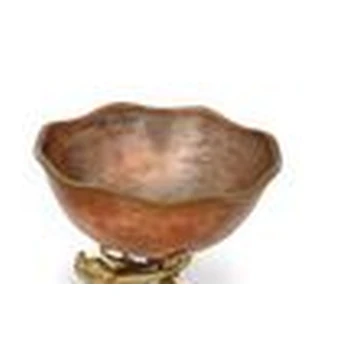
Footed Copper Bowl
Copper