Saves instantly, no account needed. Already a member? Sign in.
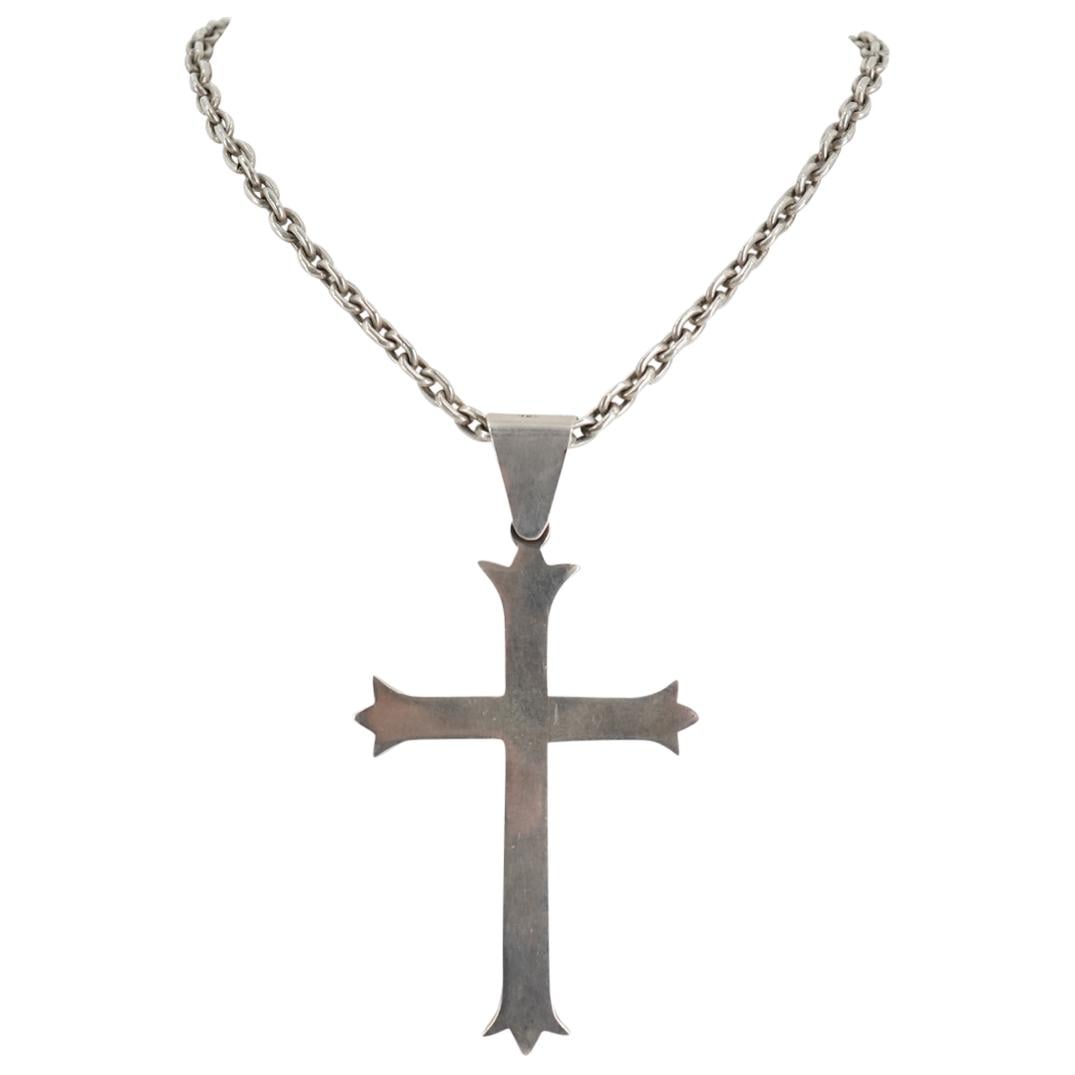
The cross is one of the most charged forms in the Taxco silver vocabulary, suspended between colonial Catholic devotion and the geometric economy that Antonio Pineda made the defining character of his workshop. Worked in sterling and left unadorned, such a pendant makes no appeal beyond the form itself: legibility, weight, and proportion carry everything.
Pineda established his Taxco workshop in 1941 after formative years as an apprentice in Mexico City, and from the outset he pressed the inherited motifs of the silver revival toward sculptural restraint rather than ornament (Morrill, 1996, p. 178). Sterling was his habitual ground, and the cross pendant is characteristic in its refusal to elaborate. The allusion to a centuries-old devotional form survives precisely because nothing has been added to dilute it.
In Pineda's hand, cross pendants in plain sterling — without stone setting or mixed-metal inlay — represent the most unmediated expression of his modernist line.
Museum of Mexican Silver. “Cross Necklace.” Catalog no. MoMS-000989. https://museumofmexicansilver.com/pieces/pineda-cross-necklace
See something wrong with this record? Suggest a correction and the piece details fill in automatically.
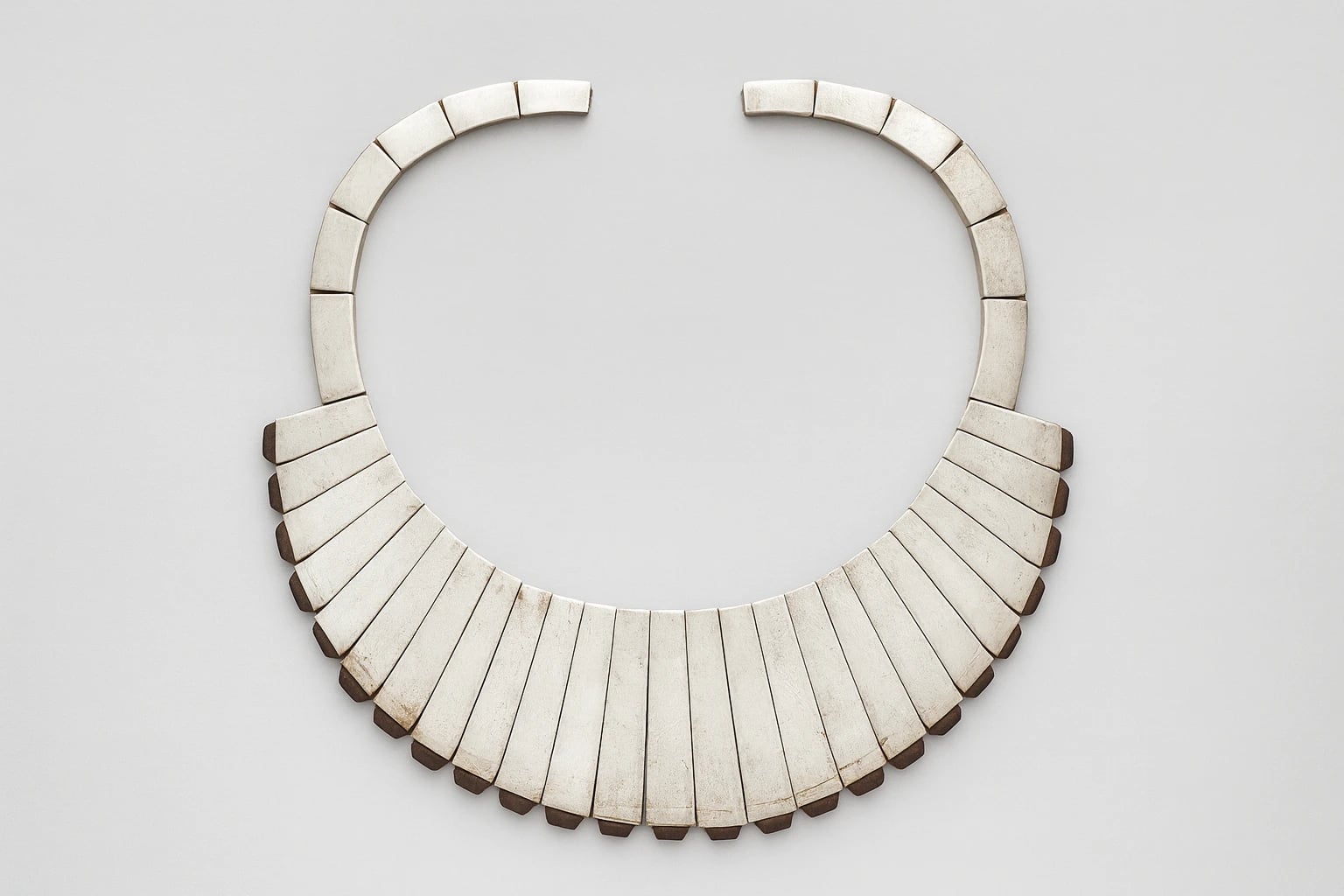
Antonio Pineda
Matchstick Necklace with Obsidian Tips
1953
Silver