Saves instantly, no account needed. Already a member? Sign in.
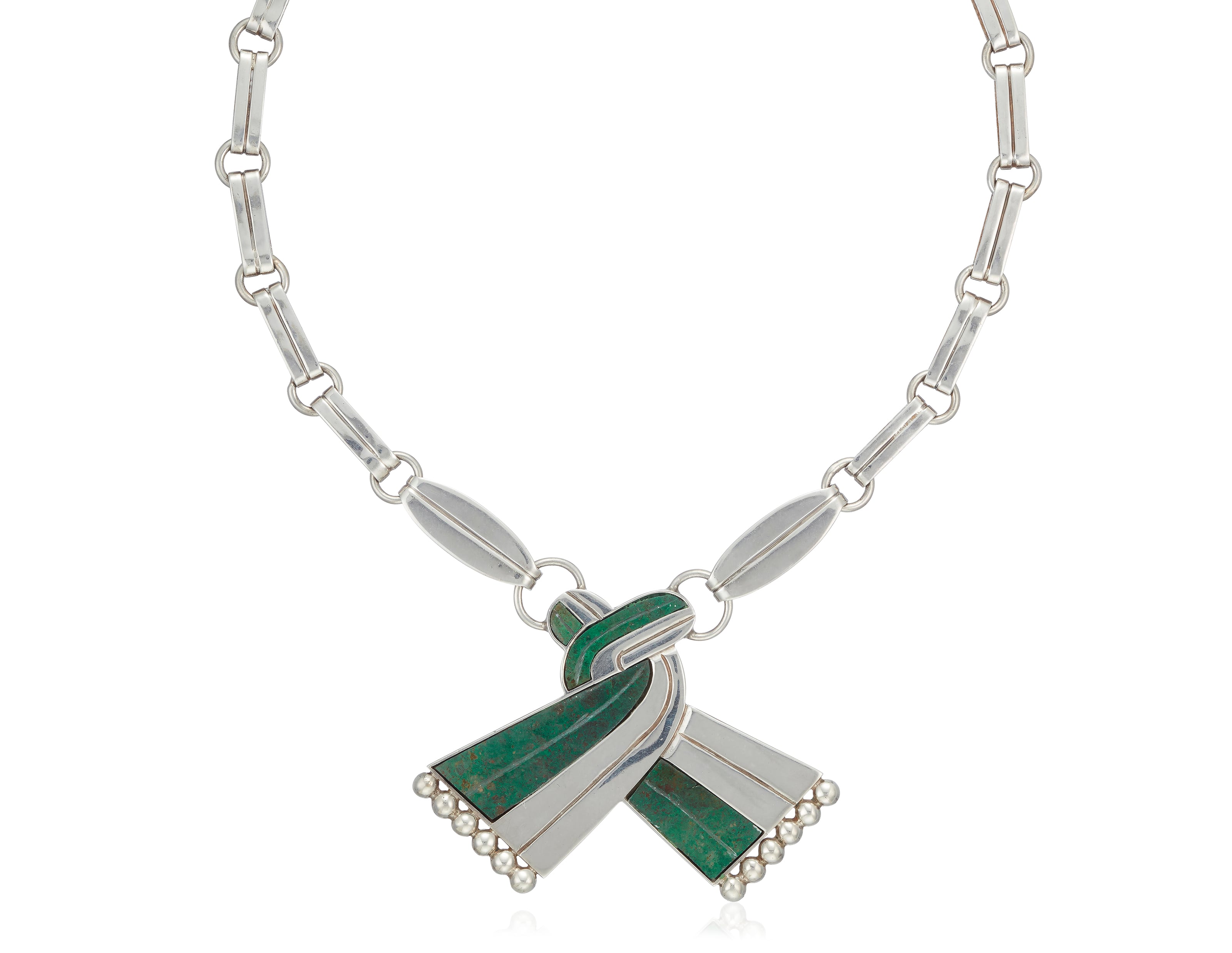
A broad collar of twenty azurmalachite plaques, each cut to show the banded blue-and-green marriage of azurite and malachite and held in plain silver bezels, alternating with little clustered fringes of polished silver balls. It carries the script-and-square mark Spratling used only in his last working years, roughly 1964 to 1967, which dates it to the very end of his life: he was killed in an automobile accident outside Taxco on August 7, 1967, at the age of 66. By the 1960s he had also turned to small runs of unique pieces in gold set with pre-Columbian stones, so a fully bench-built stone necklace from this narrow window is a relatively scarce survivor from a designer whose first-period silver of the 1930s and 1940s is far more often seen at market.
The design is pure late Spratling: the stone does the talking, and the metal is kept quiet and structural. Rather than carve or facet the azurmalachite, the workshop let each plaque keep its own swirling pattern, so no two links repeat, and framed them in unembellished bezels that read as drawing rather than ornament. The recurring motif of grouped silver spheres is one of Spratling's signature vocabulary elements, used here as a rhythmic fringe that softens the rectilinear plaques and gives the collar movement against the body. Azurmalachite, a soft copper-carbonate material prized for its vivid banding, was a stone Spratling returned to across his career, turning up in necklaces and pendants alike, and its blue-green register suits the cool, architectural restraint of his late work better than the warmer stones of his earlier output.
The piece speaks Spratling's mature design philosophy plainly: indigenous Mexican material, honestly cut and honestly set, organized by proportion rather than by applied decoration. The marks themselves tell the story of a working Taxco shop at the time, the maker's name with the .925 standard and the WS cipher, alongside the Mexican eagle assay stamp the federal system required. As an object made within a few years of his death, by the hand and shop of the man most responsible for the Taxco silver tradition, it sits close to the end of a singular career and carries the weight of that moment.
Museum of Mexican Silver. “Azur-Malachite Tassel Necklace.” Catalog no. MoMS-000456. https://museumofmexicansilver.com/pieces/spratling-1825
See something wrong with this record? Suggest a correction and the piece details fill in automatically.
William Spratling
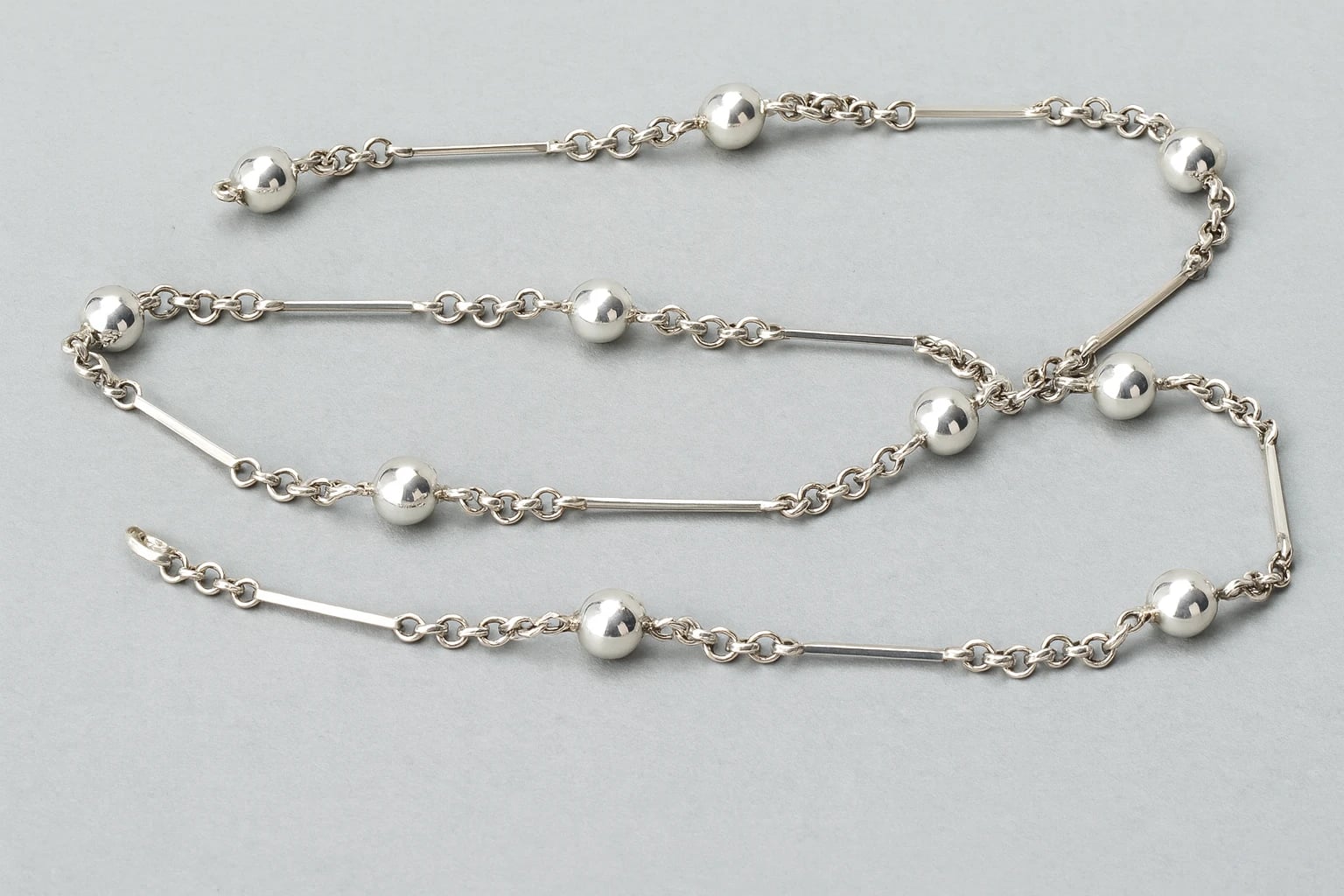
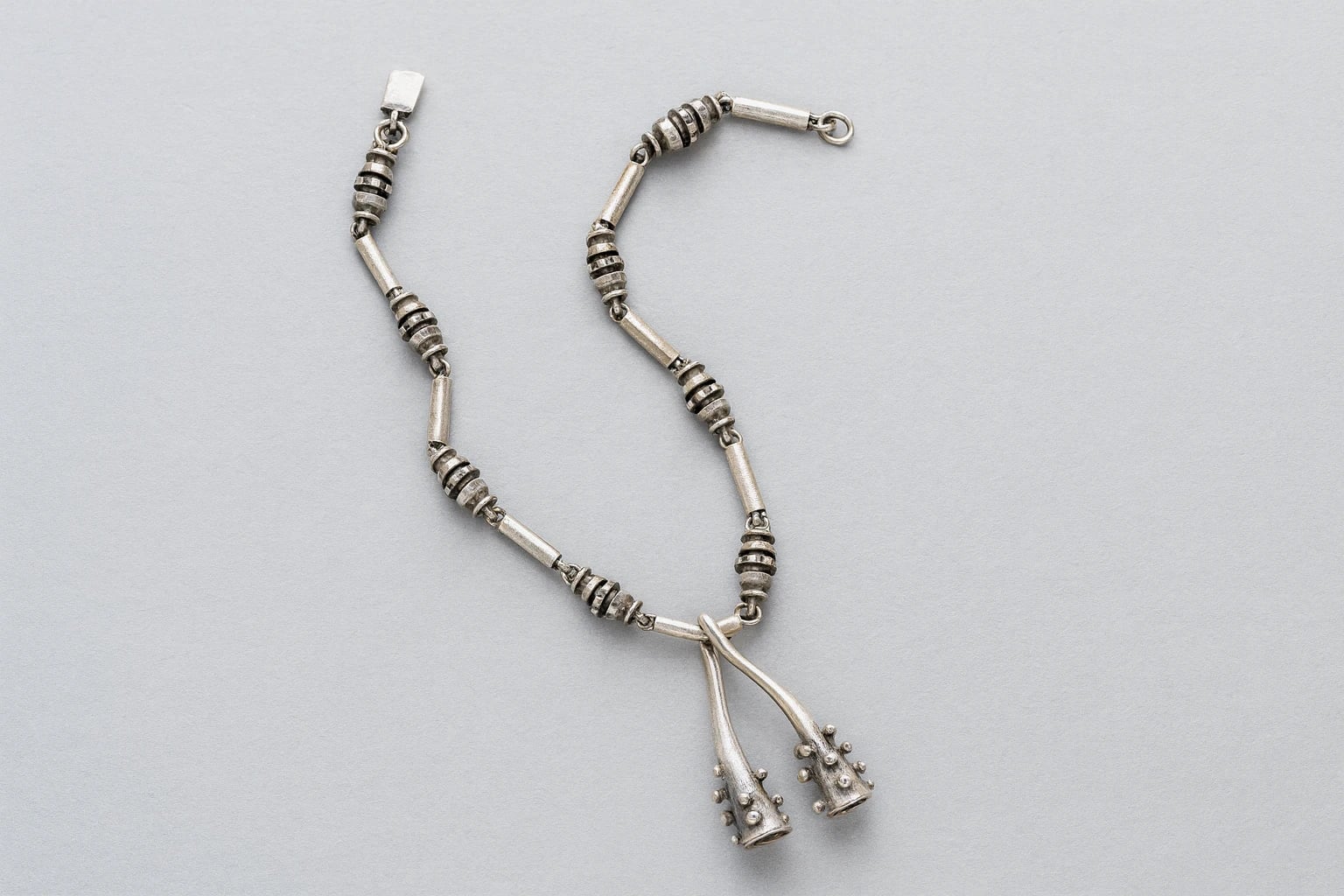
Silver Ball Cord Necklace
First Design Period: 1931 - 1946
Silver