Saves instantly, no account needed. Already a member? Sign in.
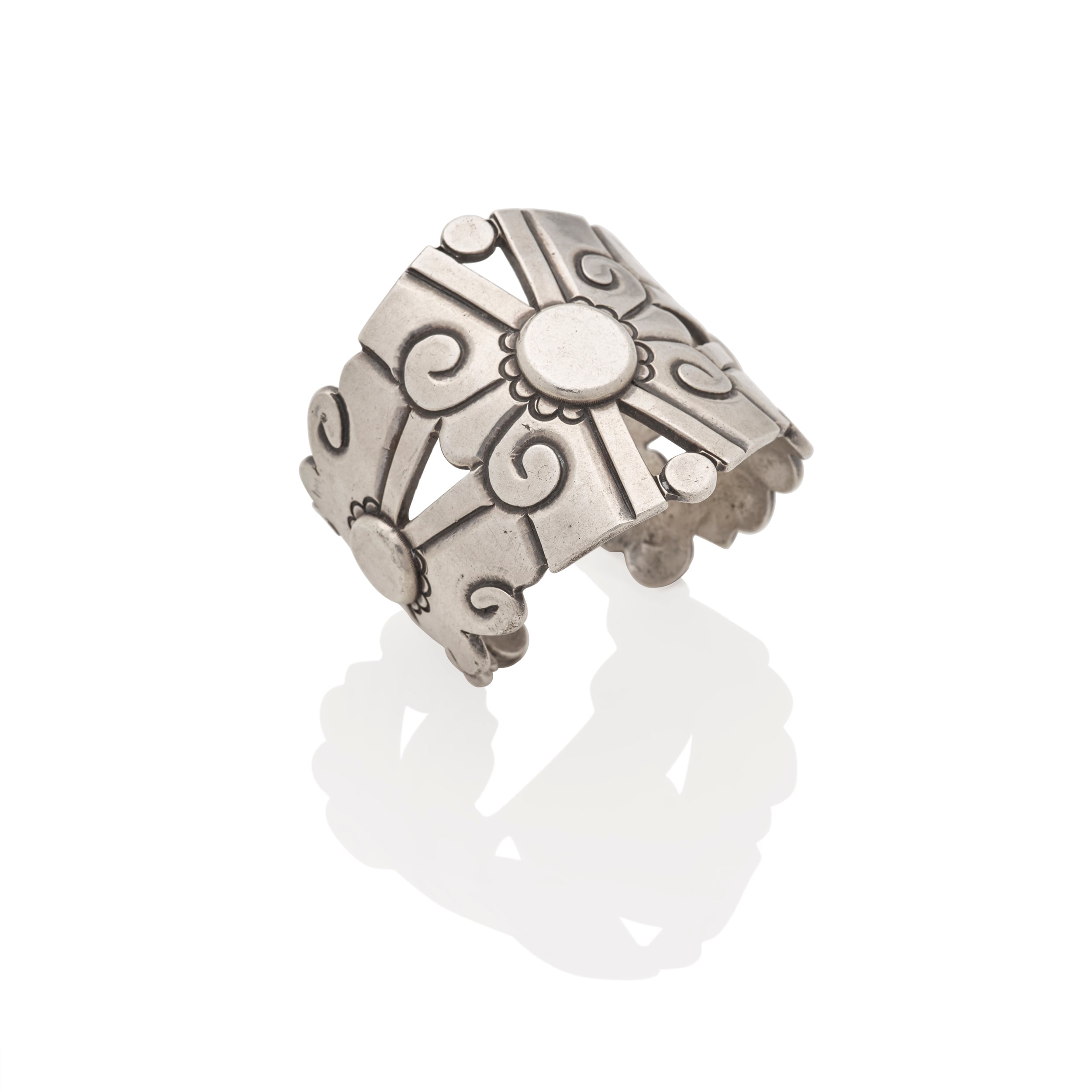
Catalogued under the name "Nahui Olin," this large heavy cuff draws its visual vocabulary directly from the Cuauhxicalli — the great Aztec calendar stone carved in 1479 and dedicated to the sun as the principal Aztec deity. Concentric rings of incised lines, alternating with bands of openwork and flattened beads, replicate the layered symbolic registers of that monument, while a slightly raised center disc positions itself where the solar face anchors the stone's composition. The mapping is deliberate: the name appears in Spratling's own wholesale catalogs, marking this not as loose archaeological inspiration but as a conscious naming and commitment to the iconographic source.
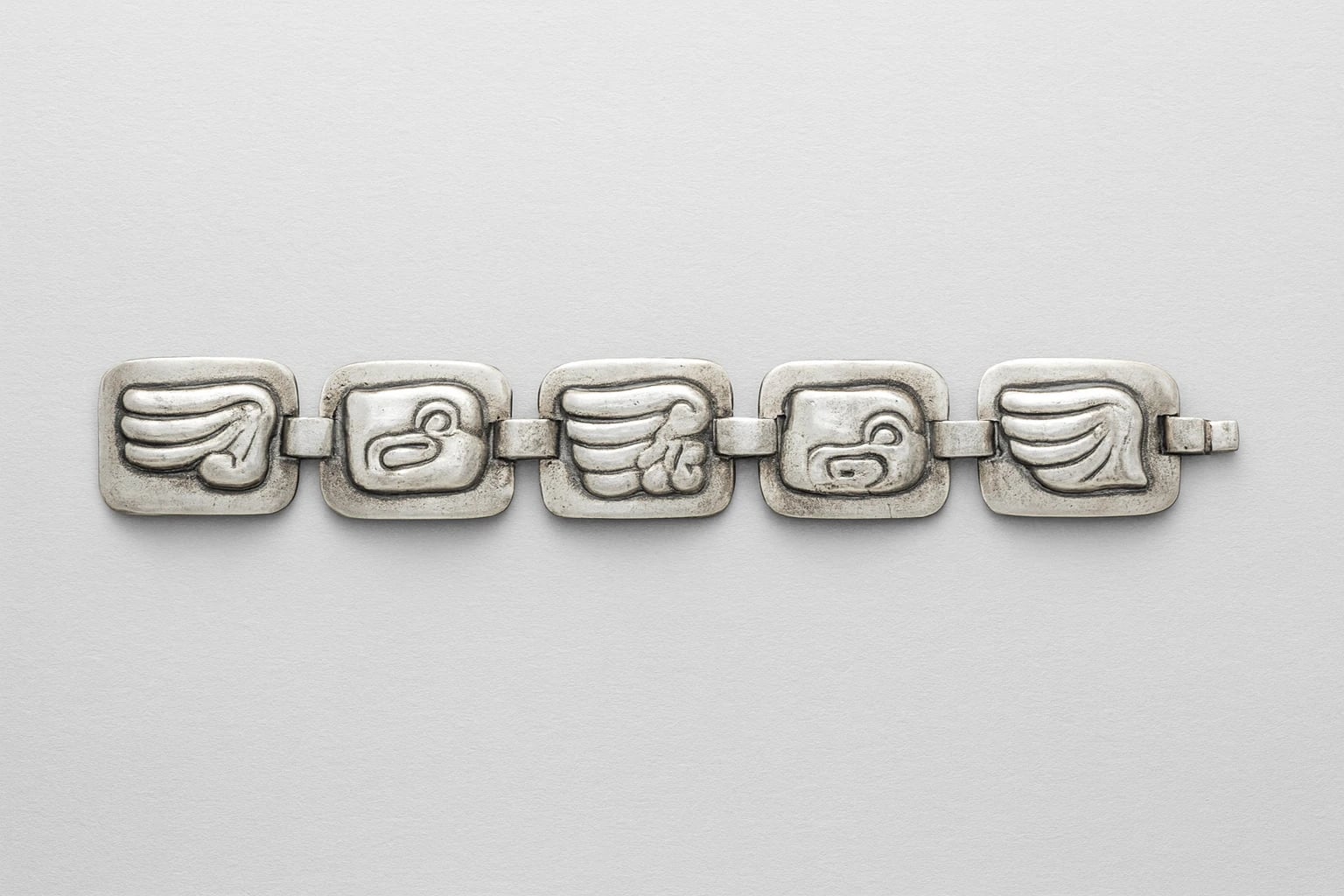
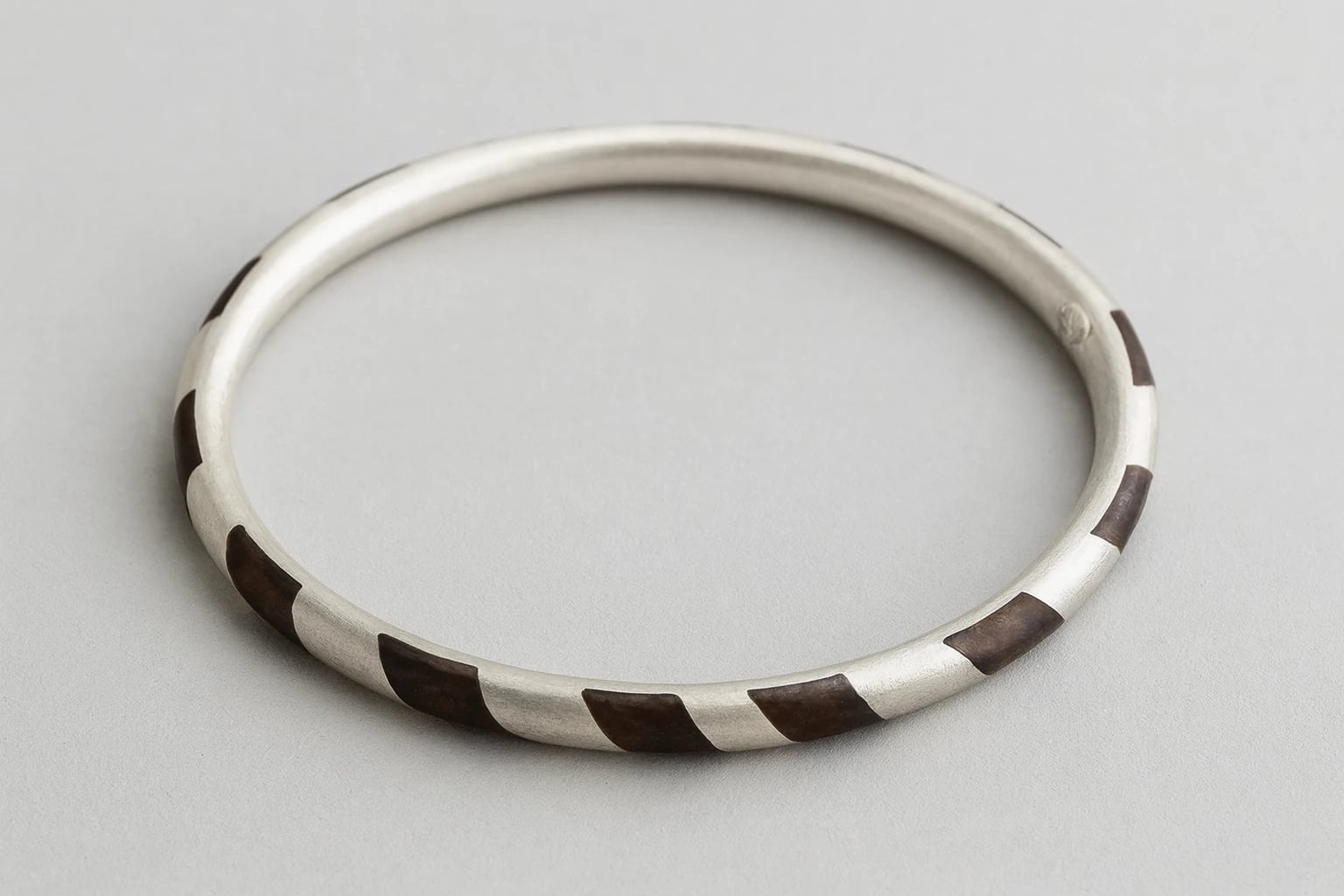
This kind of grounded translation was fundamental to how William Spratling built the Taxco workshop's early design program. Morrill has documented (Mexican Silver, 1994) that in those first years, design ideas were "almost literal copies of Aztec and Colonial motives," Pre-Columbian clay seals hammered into brooches, saddle cord designs shaping rings and buckles. Stromberg similarly observes (Antonio Pineda, 2008) that Spratling's particular achievement was taking motifs from Pre-Columbian design and rendering them accessible to an American audience without diminishing their cultural weight. The Nahui Olin cuff sits at that intersection: bold modernist jewelry that remains loyal to its source.
Produced in the first design period and dating to circa 1940–46, the cuff belongs to the phase of concentrated Pre-Columbian engagement that defined the formative taller years. The design also appeared with a center amethyst; this all-silver version, with its raised disc unmediated by color, keeps the geometry undistracted. The Nahui Olin — with its direct correspondence between silver geometry and cosmological source — stands as a document of that program.
Museum of Mexican Silver. “Heavy Incised Cuff Bracelet.” Catalog no. MoMS-000192. https://museumofmexicansilver.com/pieces/spratling-2385
See something wrong with this record? Suggest a correction and the piece details fill in automatically.
William Spratling
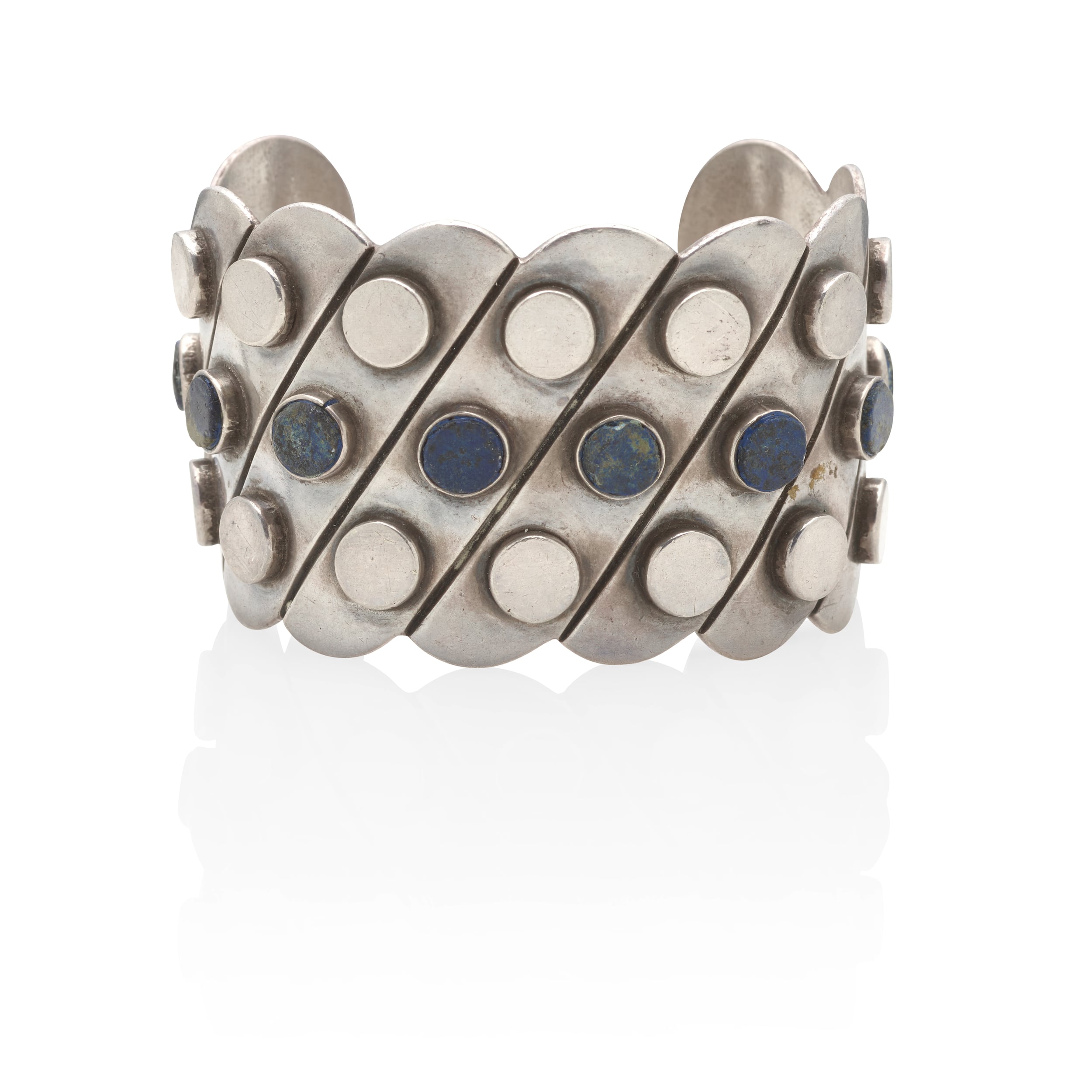
Scalloped Azurite Bracelet
First Design Period: 1931 - 1946
Silver