Saves instantly, no account needed. Already a member? Sign in.
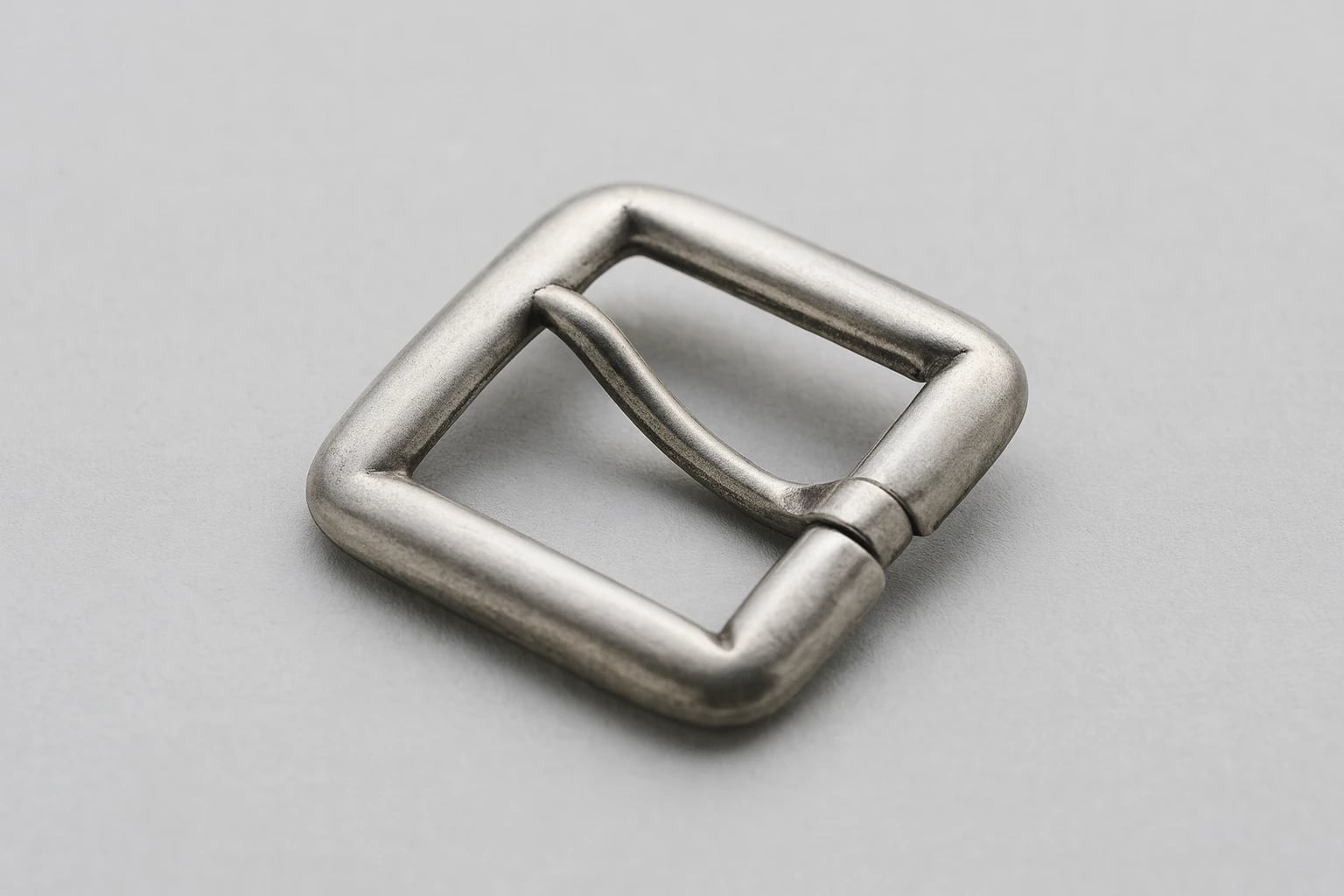
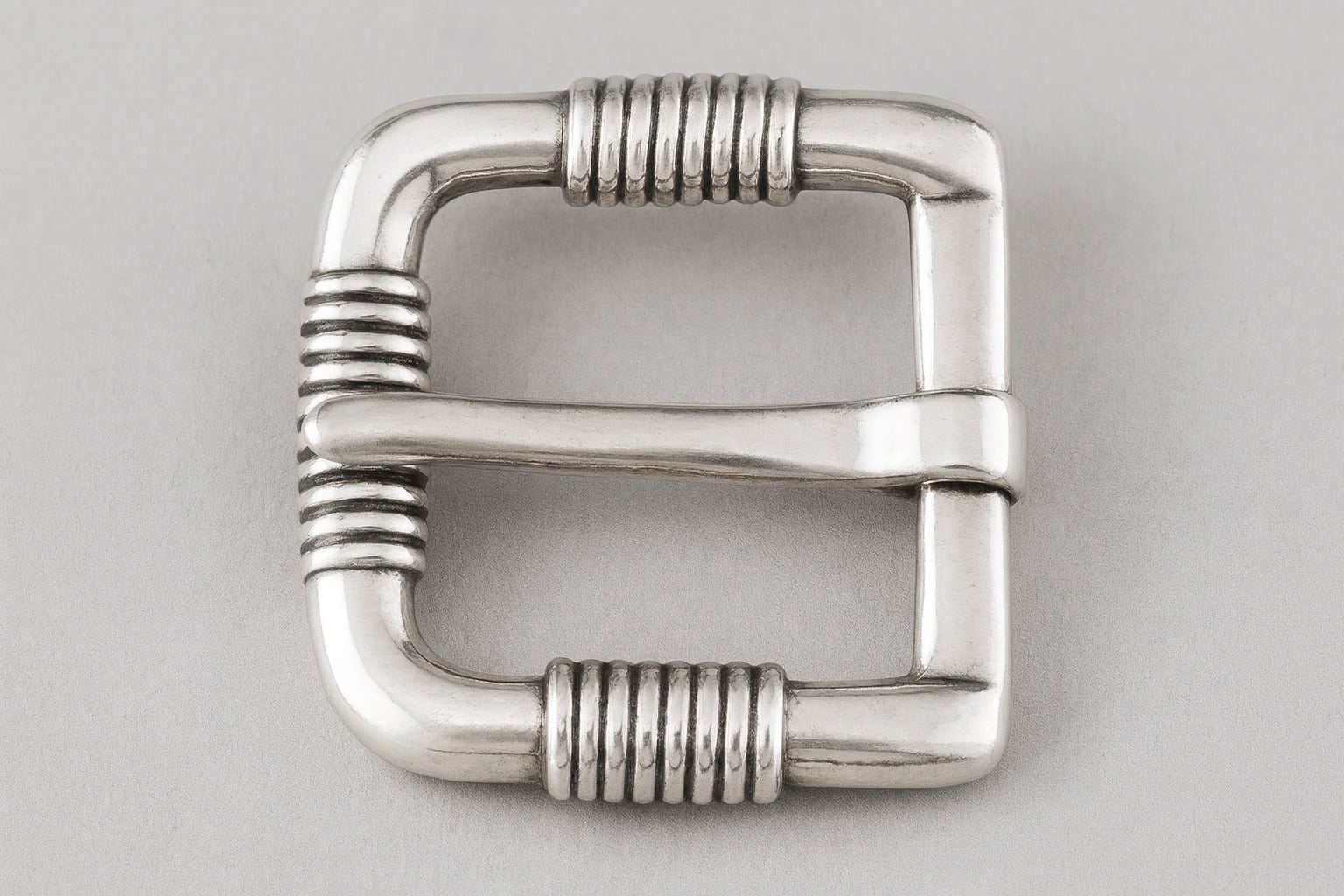
A wrapped-wire border on three sides of a silver buckle sets up a deliberate imbalance. Rather than frame the plate evenly, the coiled wire runs along three edges and leaves the fourth plain, so the eye registers the interruption as clearly as the decoration. The device draws directly on the cord and rope motifs that William Spratling adapted from Mexican saddle ornament, one of the recurring vocabularies of his workshop, and here it becomes a way to organize the surface through the tension between an enclosed and an open edge.
The wrapped wire is the buckle's essential incident. A length of silver wire is coiled tightly around a heavier band or edge, producing a ribbed, repeating texture that catches light differently from the polished plate it borders. That contrast between the matte broken rhythm of the coil and the smooth reflective ground is the whole design working, and the missing fourth side keeps the ornament from settling into a static frame. Spratling described his early buckles and rings as embodying cord designs derived from saddle ornaments, a starting point he called a point of departure, and the wrapped-wire treatment carries that idiom into a resolved decorative element. A buckle also carries its own constraints: it must anchor a belt, take the strain of the body, and present a face at the waist. The concentration of the coil on three edges directs attention across the plate toward the open side, where the strap would engage.
Spratling's Taller de Las Delicias, founded in Taxco in 1931, built its early identity on exactly this kind of adaptation, melting silver coin into heavy jewelry and translating Aztec and colonial motifs, pre-Columbian seals, and saddle cordwork into wearable silver. Heavy belt buckles were among the first objects the workshop produced, and the wrapped-wire cord motif belongs to that founding vocabulary. This buckle is placed within Spratling's third design period, from 1951 to 1967, when he had returned to independent production after the Taxco-Hidalgo years and continued to refine motifs established decades earlier. A later fabrication of a long-standing idea is characteristic of his practice, and the persistence of the cord motif across his career shows how firmly it was tied to his sense of a specifically Mexican silver design. The taller system that Spratling helped shape allowed a designer to set the form while master smiths executed it, and coiled-wire work of this kind depends on the steady hand of the smith winding the wire evenly around the edge.
Within the larger Taxco renaissance, Spratling stood among a generation of designers who established distinct formal languages while sharing this workshop structure, including Antonio Pineda, Héctor Aguilar, the Castillo brothers, and Enrique Ledesma. The buckle documents the source end of that development, the moment when regional craft references were being converted into a modern design idiom. Its interest lies less in complexity than in clarity: a single borrowed motif, the coiled cord, deployed with enough restraint that the asymmetry of three worked sides against one plain edge becomes the point. As a record of how Spratling turned saddle ornament into silver design, it preserves one of the foundational gestures of the Taxco School.
Museum of Mexican Silver. “Wrapped Wire Buckle.” Catalog no. MoMS-000571. https://museumofmexicansilver.com/pieces/spratling-3022
See something wrong with this record? Suggest a correction and the piece details fill in automatically.
William Spratling
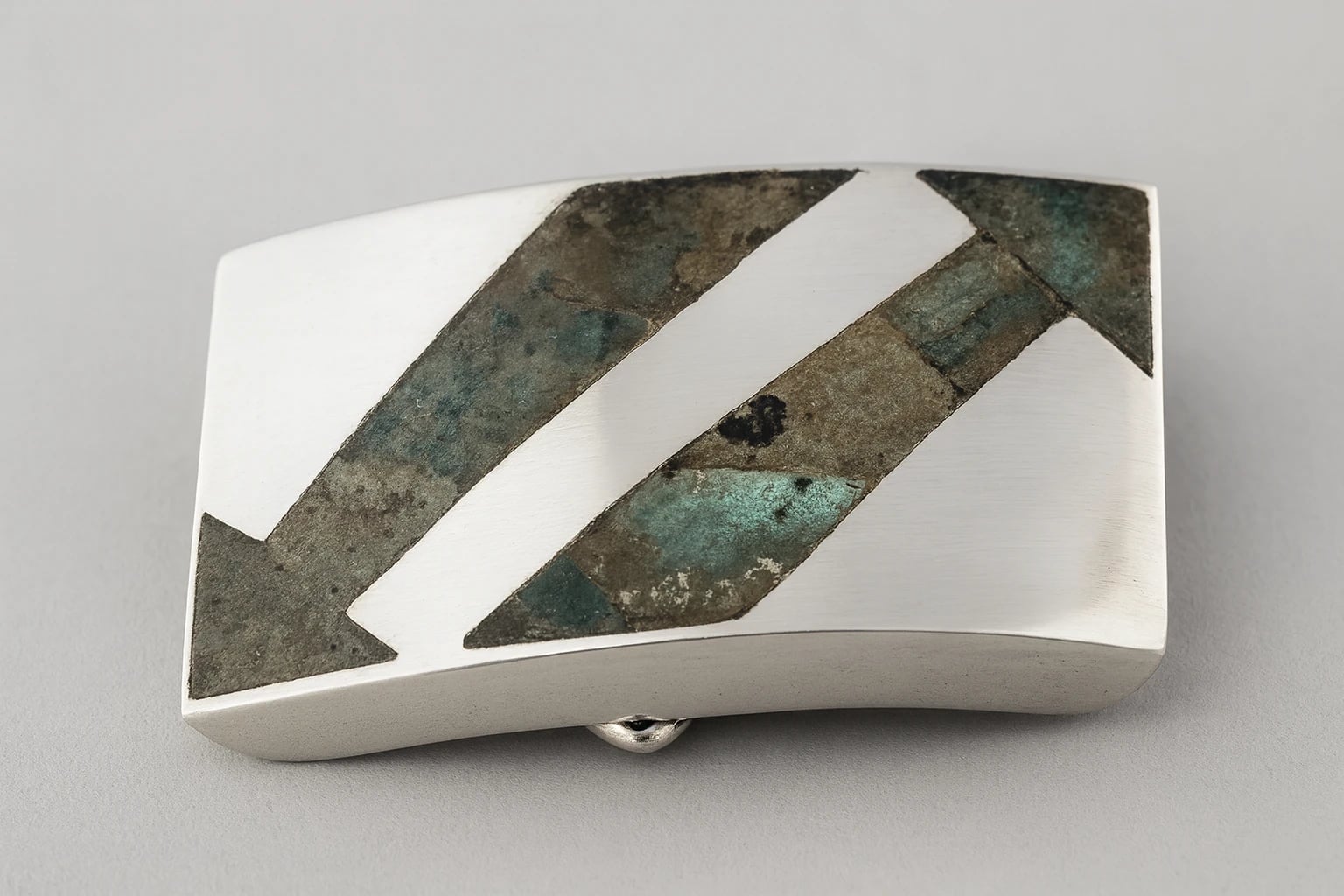
Buckle with Two Inset Azur-Malachite Arrows
Third Design Period: 1951 - 1967
Silver