Saves instantly, no account needed. Already a member? Sign in.
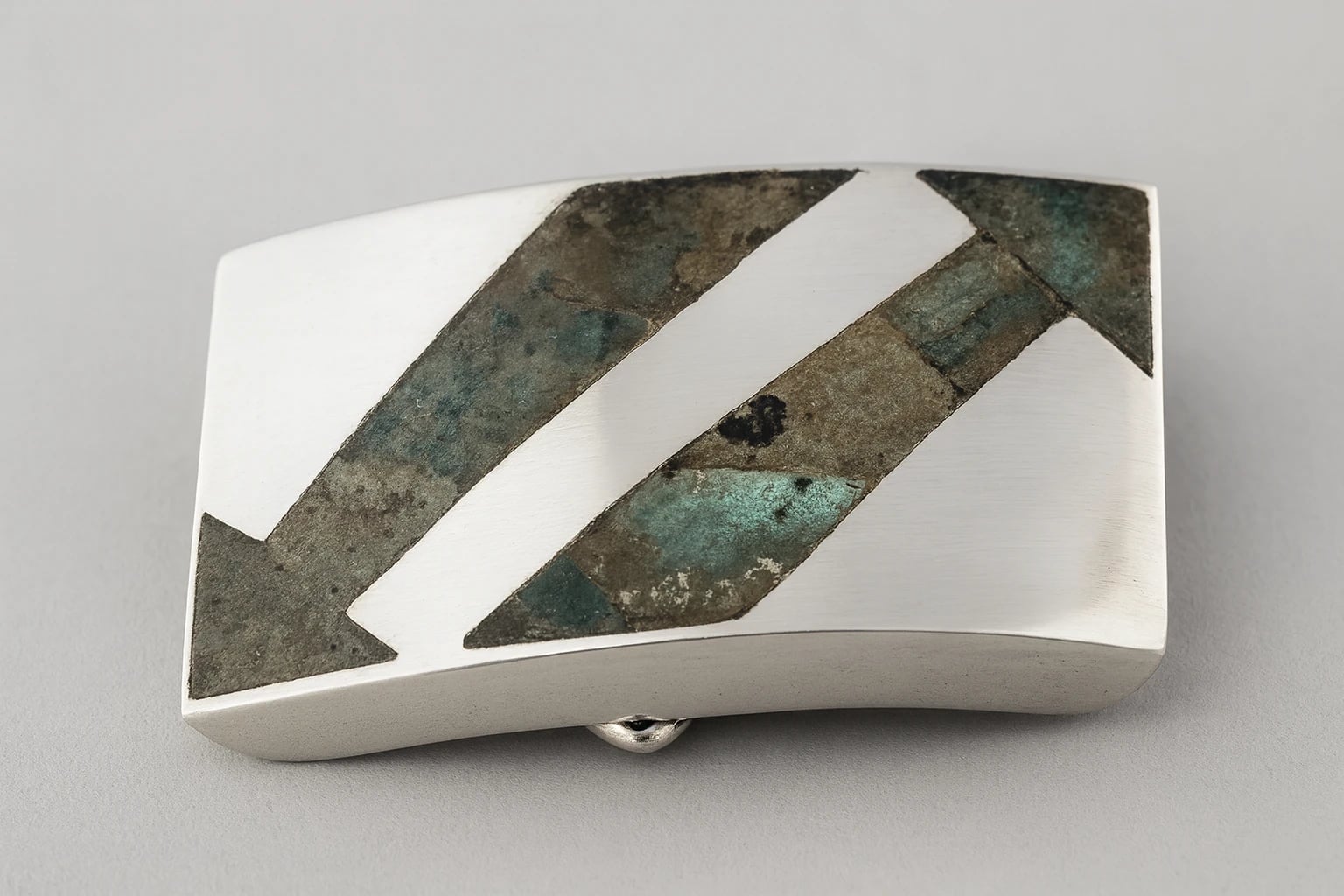
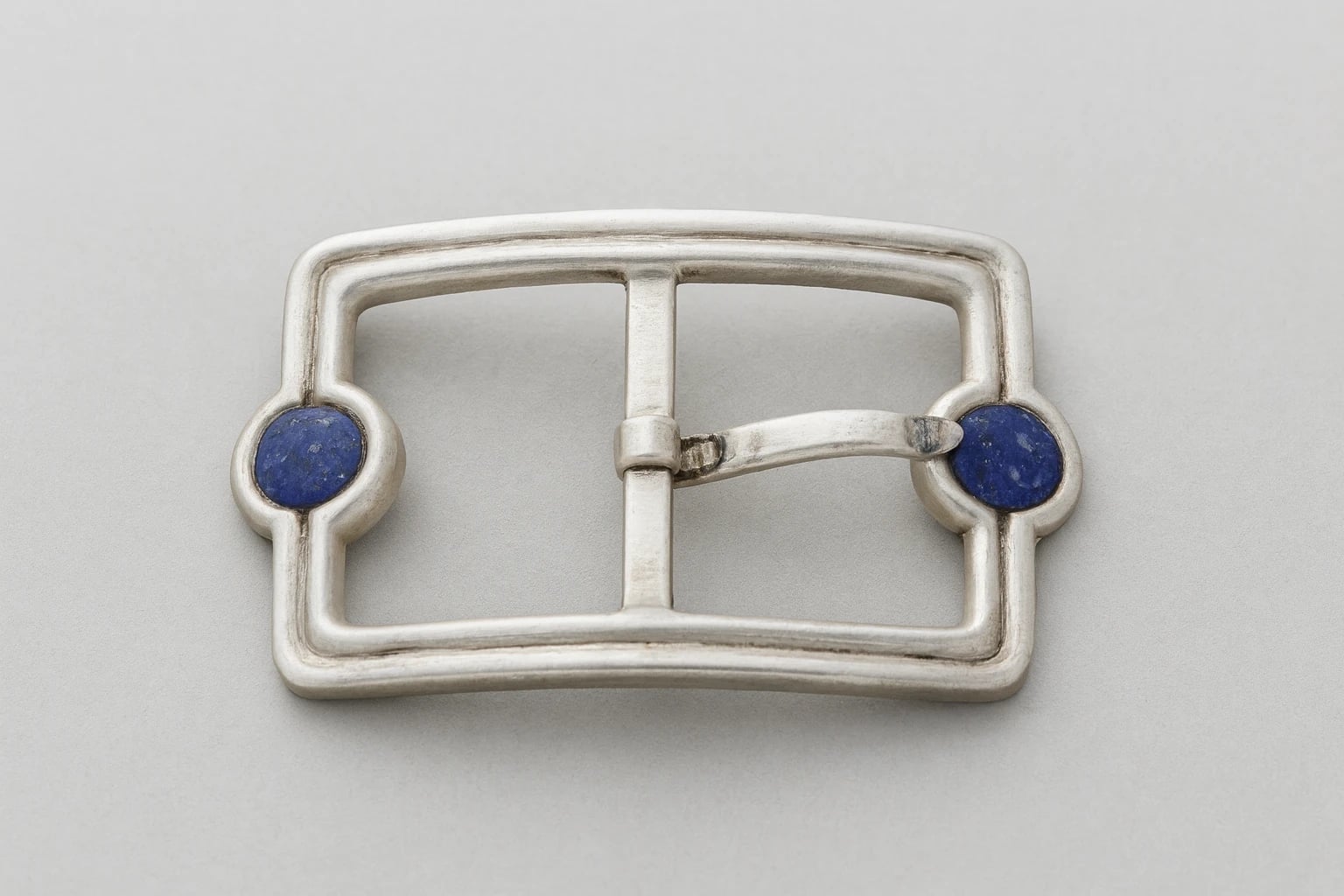
A rectangular silver buckle anchored at each end by a disc of azurite, this piece belongs to the small group of Second Design Period work (1949 to 1951) in which Spratling let a single hard stone carry the ornament against an otherwise plain field. The form is severe and architectural, with the deep blue of the azurite reading almost as inset enamel against the polished silver.
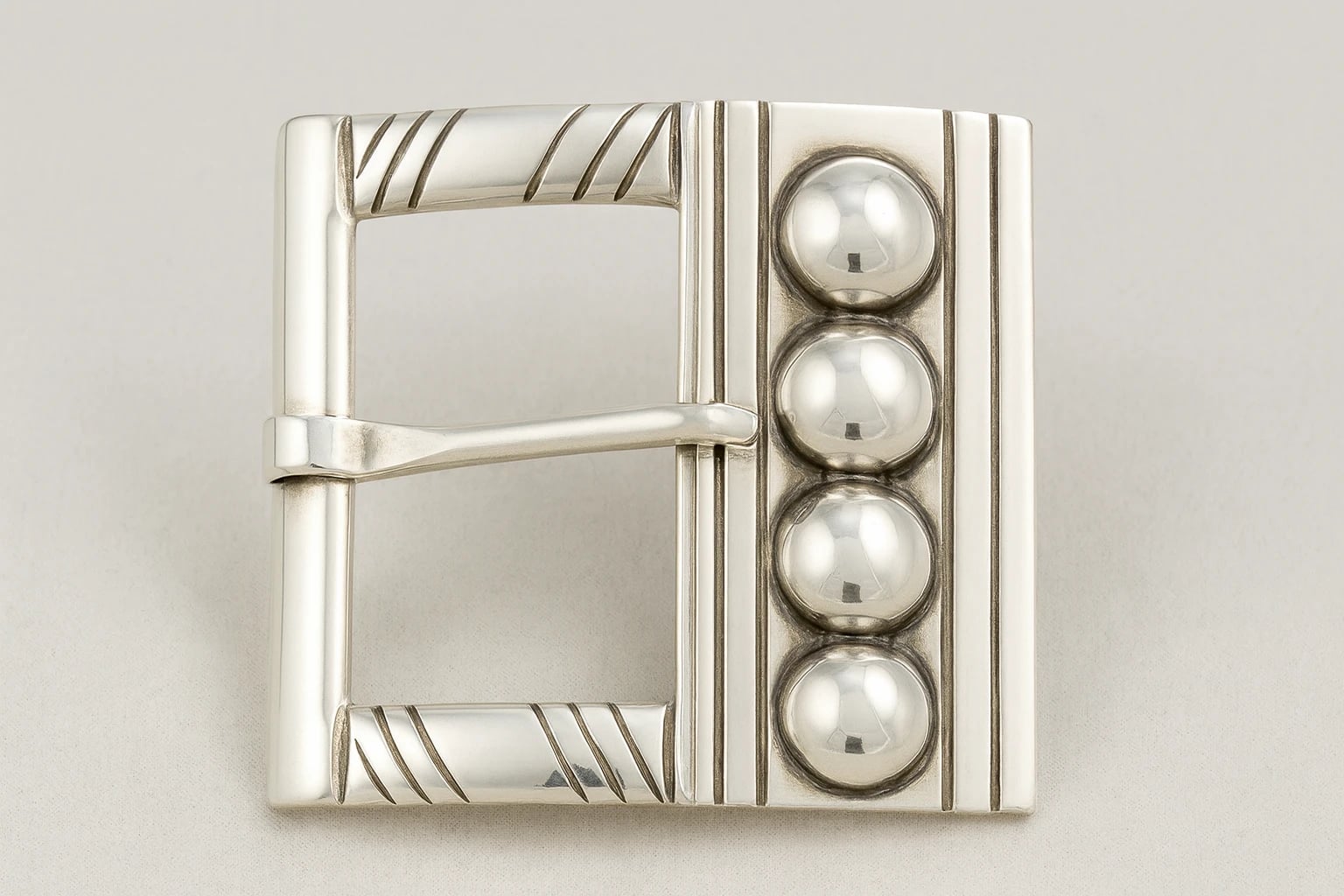
The buckle descends directly from the kind of object Spratling's workshop made from its earliest days. Morrill notes that some of the first pieces produced in Taxco were heavy silver belt buckles, and that buckles in particular "embodied cord designs derived from saddle ornaments" as a point of departure for the new work (Morrill, Mexican Silver, 1994, p. 39). By 1949 that vocabulary had been pared down: the saddle and cord references give way to a flat geometric frame in which the stone, not the metalwork, does the talking.
Azurite is an uncommon choice in Mexican silver, and pairing it with a strict rectangular plate is characteristic of Spratling's instinct to set a single rich material against restraint. The buckle is recorded in Phyllis M. Goddard's Spratling Silver: A Field Guide, the standard reference for authenticating his production.
Buckles from this short period come to market only occasionally, and the stone-set examples are scarcer than the all-silver ones. The combination of documented design period, recorded reference, and the relatively rare azurite gives this piece a clear place in the catalogue of Spratling's stone-set work.
Museum of Mexican Silver. “Azurite Rectangular Buckle.” Catalog no. MoMS-000535. https://museumofmexicansilver.com/pieces/spratling-3091
See something wrong with this record? Suggest a correction and the piece details fill in automatically.
William Spratling
Entwined Hands Buckle
Second Design Period: 1949 - 1951
Silver