Saves instantly, no account needed. Already a member? Sign in.
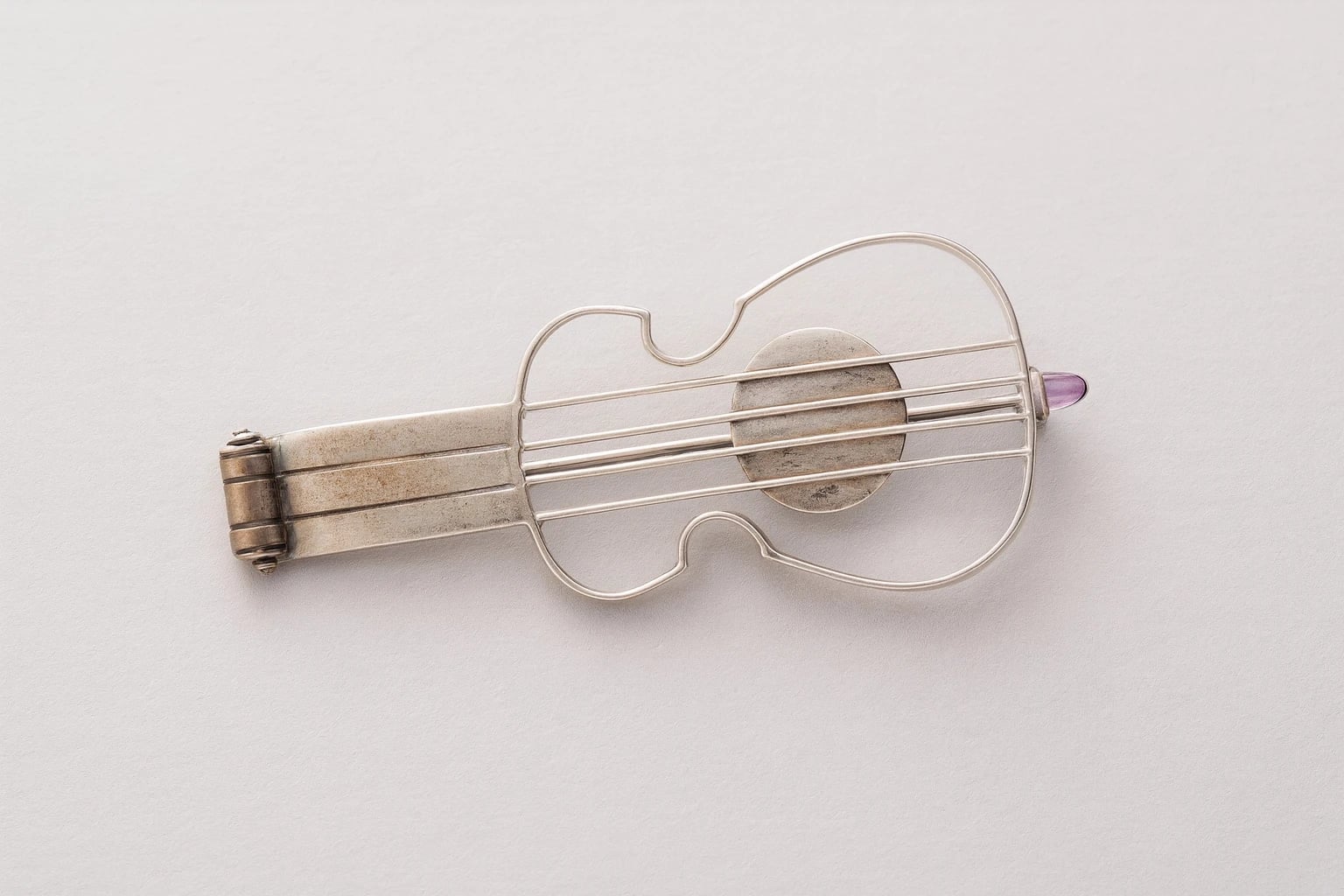
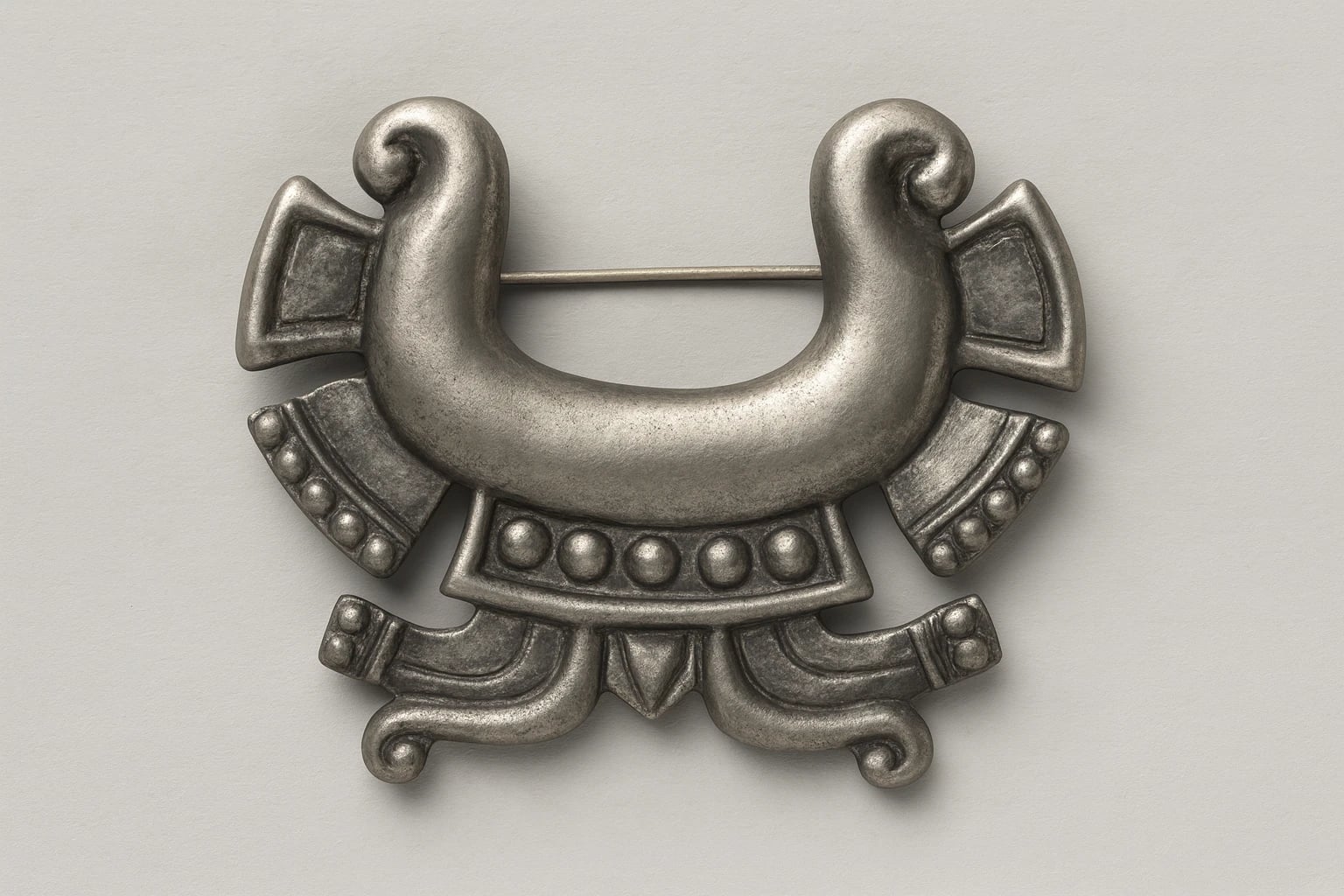
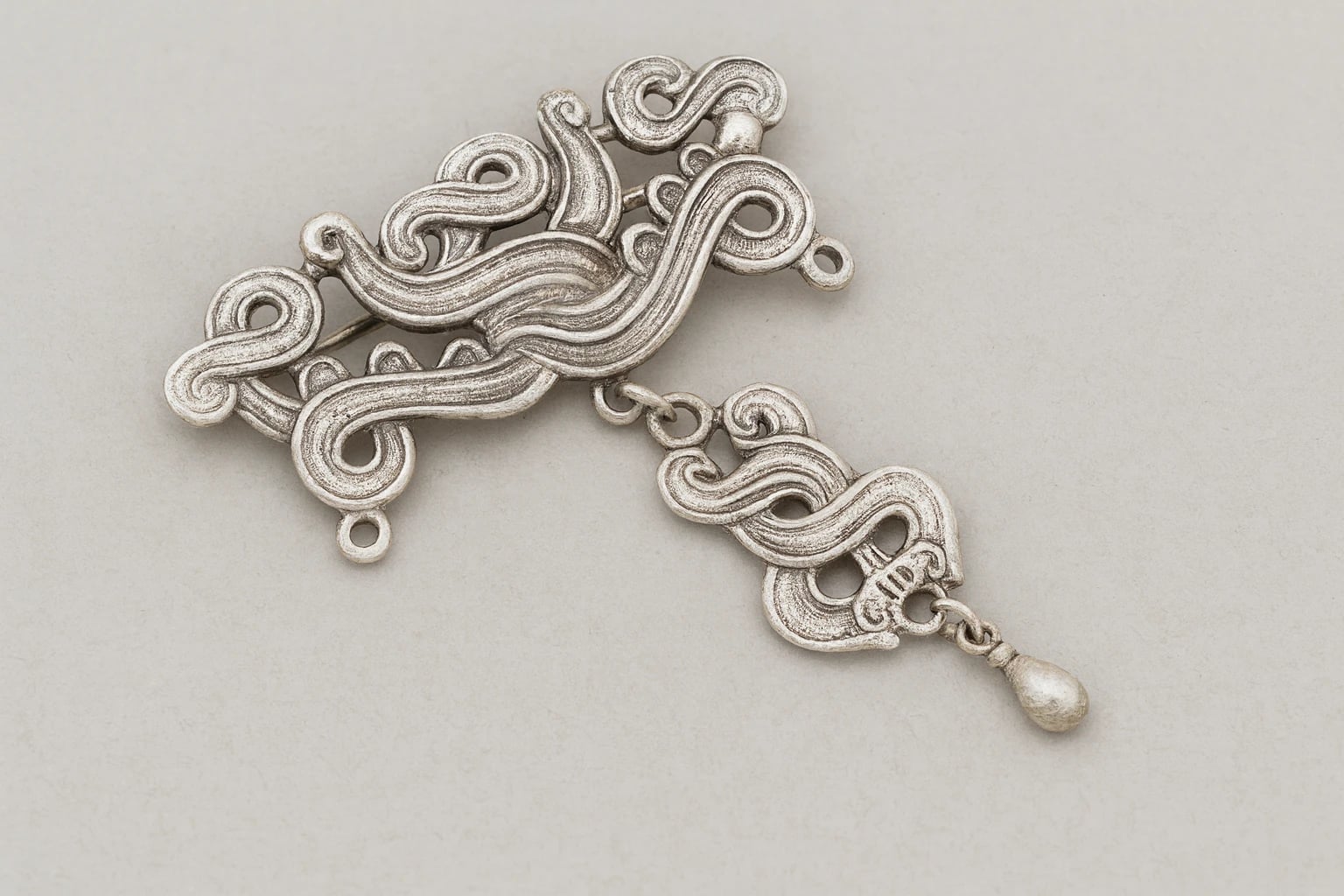
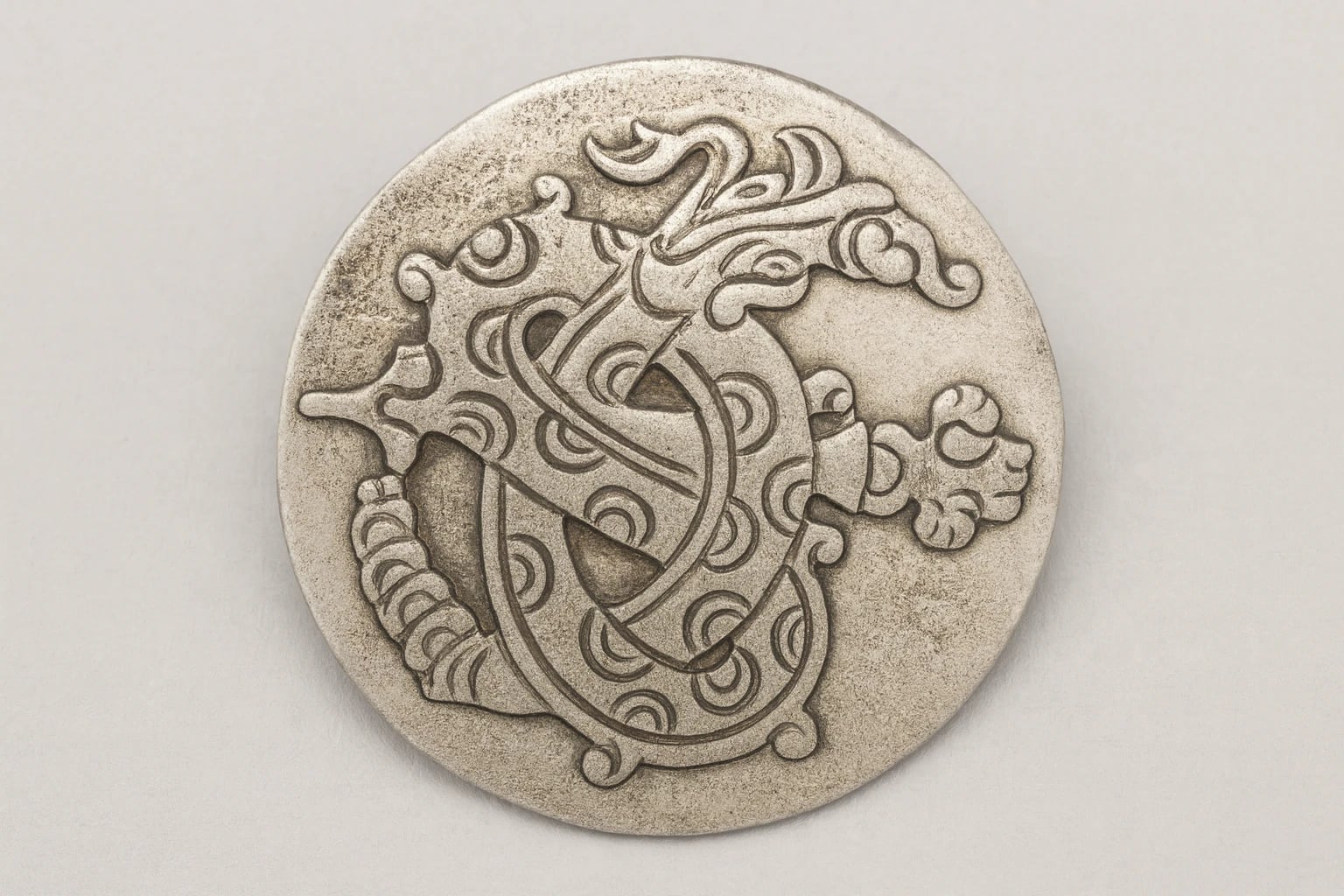
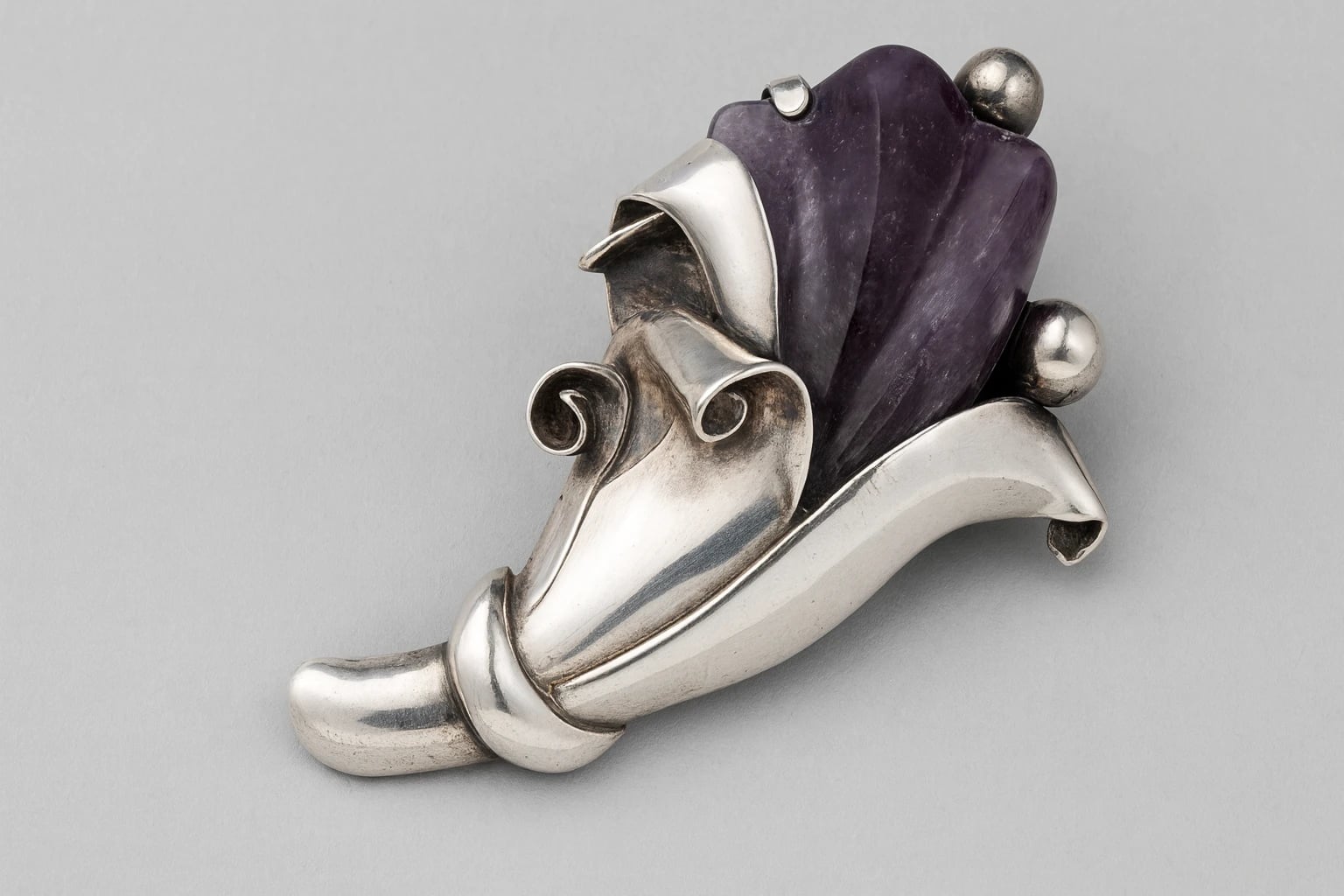
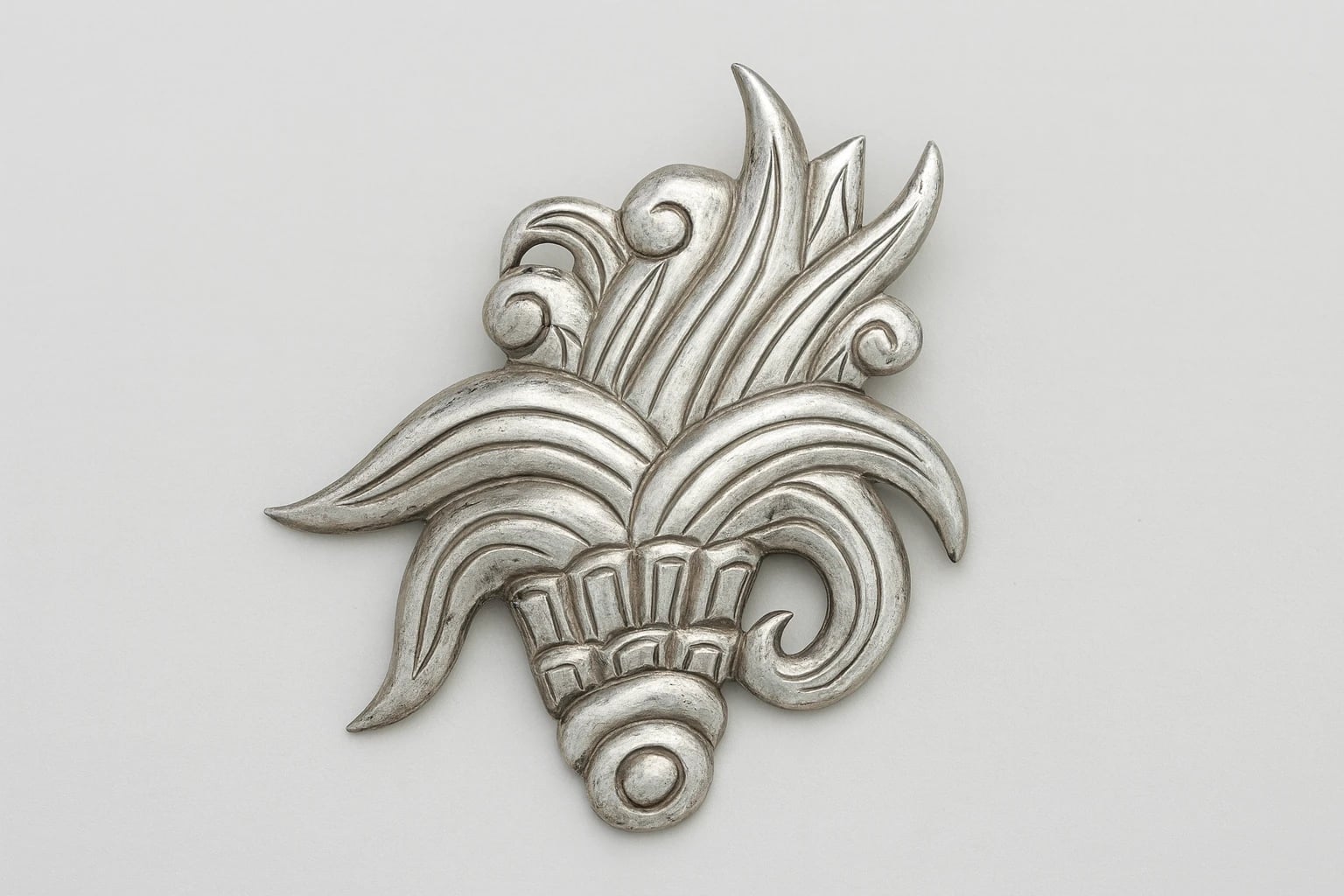
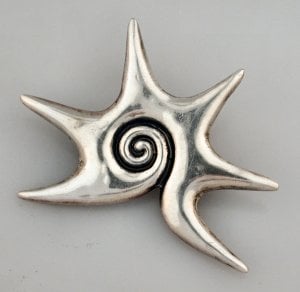
The Cholulteca brooch takes the cross section of a conch shell and translates it into silver, arresting the spiral at the moment when its interior chambers open to view. The shell is cut, not drawn from the outside: the design turns on the geometry of the inner whorl, its coil narrowing toward a central point while the outer wall frames the whole in a single continuous curve. This is a brooch that finds its ornament in a natural structure already close to abstraction, and William Spratling recognized in the shell a form that needed little adjustment to become modern.
The composition reads as a flattened spiral, the volute of the conch pressed into relief so that the eye follows the coil inward. Spratling worked the piece in silver alone, without stone, so the design depends entirely on the play of polished surface against the recessed channels that separate one chamber from the next. Light collects along the raised ridges and drops away into the grooves, giving the flat metal the suggestion of depth it would otherwise lack. The brooch was also produced with a hinged, two prong clip backing, a fitting that anchors the ornament securely against fabric while keeping the mechanism out of sight behind the shell's broad face.
This example is a variation of the design and probably a year or two later than the earlier version carrying the same catalogue design number, a reminder that a single number in Spratling's system often covered a design as it was refined in production rather than a fixed object. The brooch belongs to Spratling's First Design Period, the years between the opening of the Taller de Las Delicias in 1931 and the mid 1940s, when he was building a vocabulary from Mexican sources. Spratling himself described the early work as beginning with "almost literal copies of Aztec and Colonial motives," the pre-Columbian seals in his own collection sawn from heavy sheet silver and polished into brooches. The Cholulteca brooch extends that same method to a natural rather than a carved source, and its title points toward Cholula, the ancient Puebla center whose name Spratling attached to the design.
Within the range of first-period pins, the conch section occupies a distinct place because it draws its geometry from biology rather than from a clay seal or a colonial cord motif. The reliance on surface and channel, with no stone to carry color, shows how Spratling could build a complete design from silver alone and from the discipline of a single repeated curve. The existence of more than one variation under the shared design number, together with the alternate clip backing, records how the workshop reworked a successful idea across successive fabrications. As a document of Spratling's early practice, the brooch shows the taller taking a found structure and resolving it into ornament through reduction rather than elaboration.
Museum of Mexican Silver. “Cholulteca Brooch.” Catalog no. MoMS-000140. https://museumofmexicansilver.com/pieces/spratling-3070
See something wrong with this record? Suggest a correction and the piece details fill in automatically.
Silson Pot Metal Brooch
Silver Plate