Saves instantly, no account needed. Already a member? Sign in.
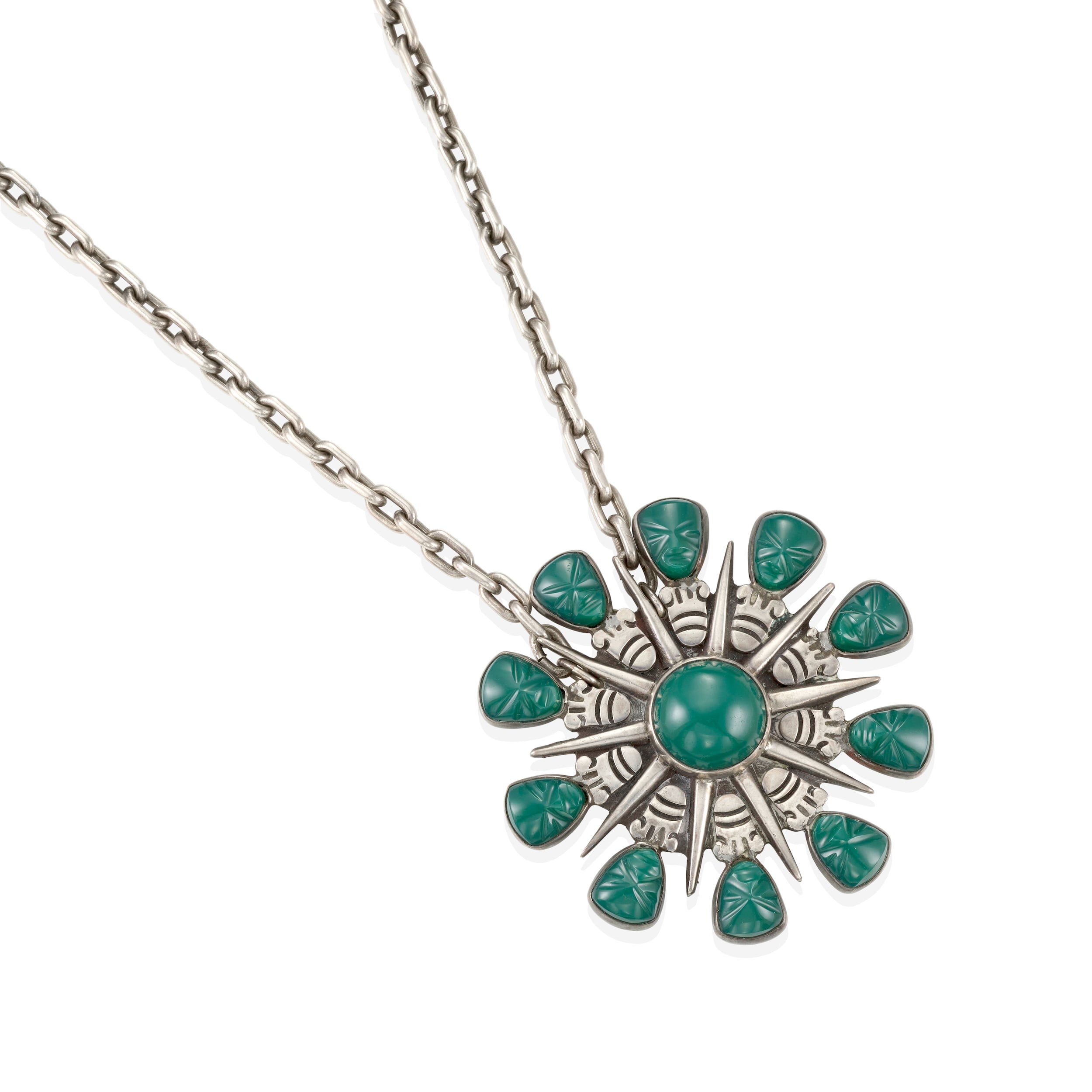
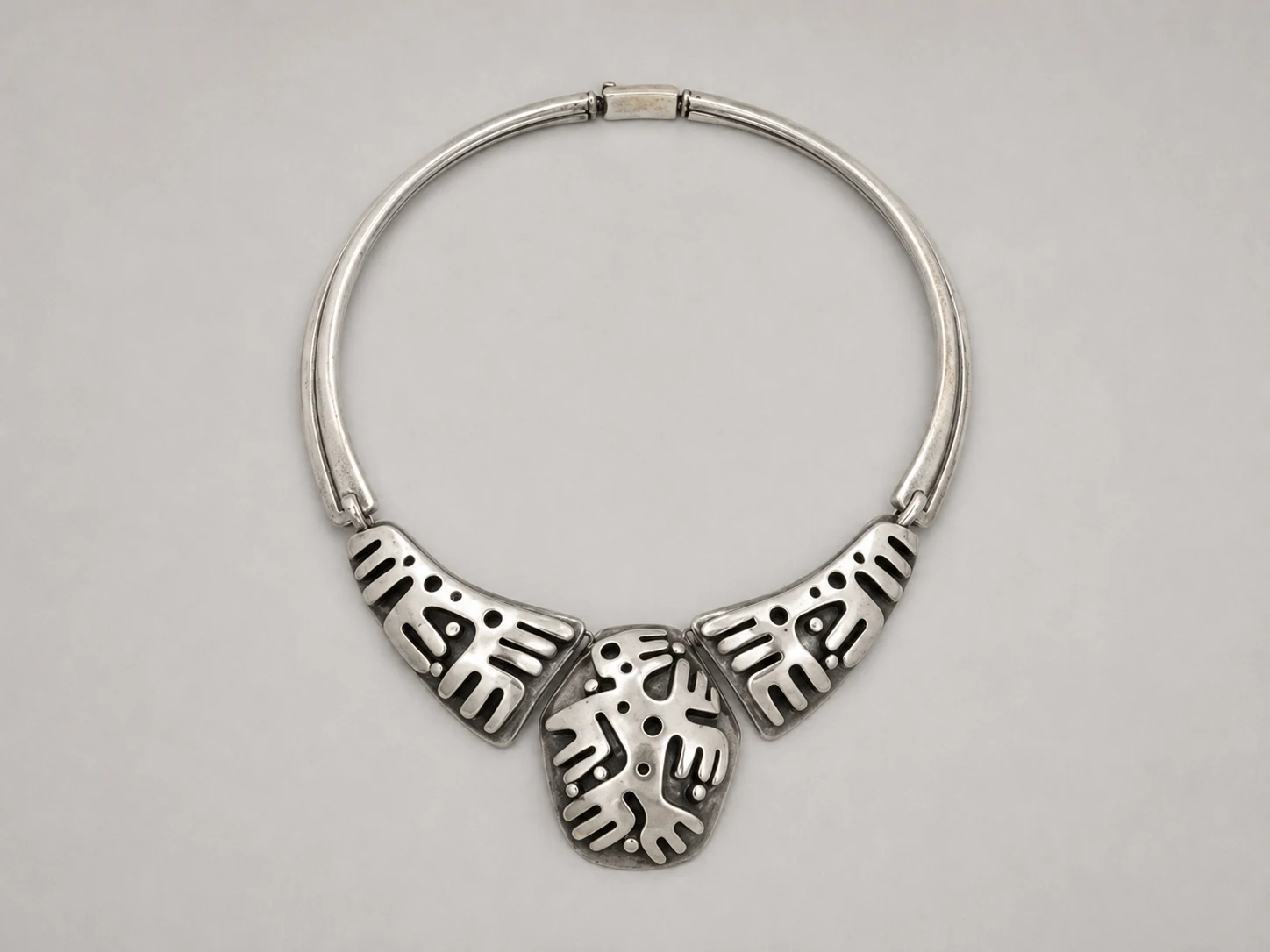
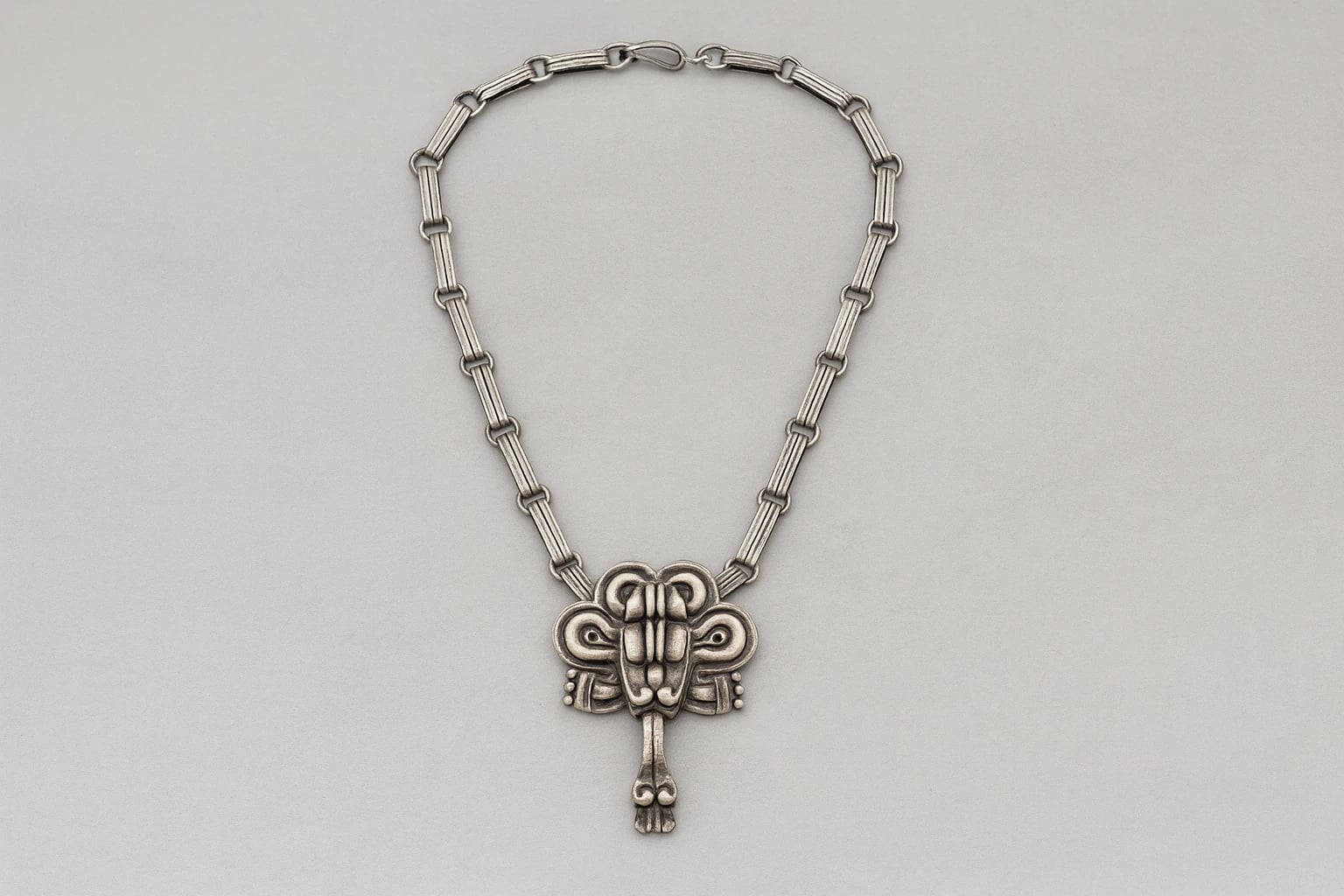
The face of a Pre-Columbian serpent worked in silver gives this First Design Period necklace its subject and its weight. The serpent was one of Spratling's recurring images, drawn directly from the ancient iconography he set out to revive in metal.
Morrill describes Spratling's project as adopting Pre-Columbian forms and interpreting them in silver, reviving "an ancient iconographic vocabulary" (Morrill, Mexican Silver, 1994, p. 14). The serpent, associated with Quetzalcoatl, is among the most charged of those forms, and Spratling returned to it repeatedly. In his hands the creature was typically flattened and stylized so that the design read as pattern rather than as a literal depiction of power (Morrill, p. 73).
A necklace built around a serpent face was a hand-wrought object made by the early workshop's labor-intensive methods, the silver hammered flat and worked without rolling mills (Morrill, p. 36). The result is a piece where the iconographic source and the craft are equally present.
The necklace is recorded in Phyllis M. Goddard's Spratling Silver: A Field Guide, the standard authentication reference. As a First Period serpent piece it belongs to the most sought part of Spratling's catalogue and surfaces only occasionally.
Museum of Mexican Silver. “Serpent Face Necklace.” Catalog no. MoMS-000300. https://museumofmexicansilver.com/pieces/spratling-3100
See something wrong with this record? Suggest a correction and the piece details fill in automatically.
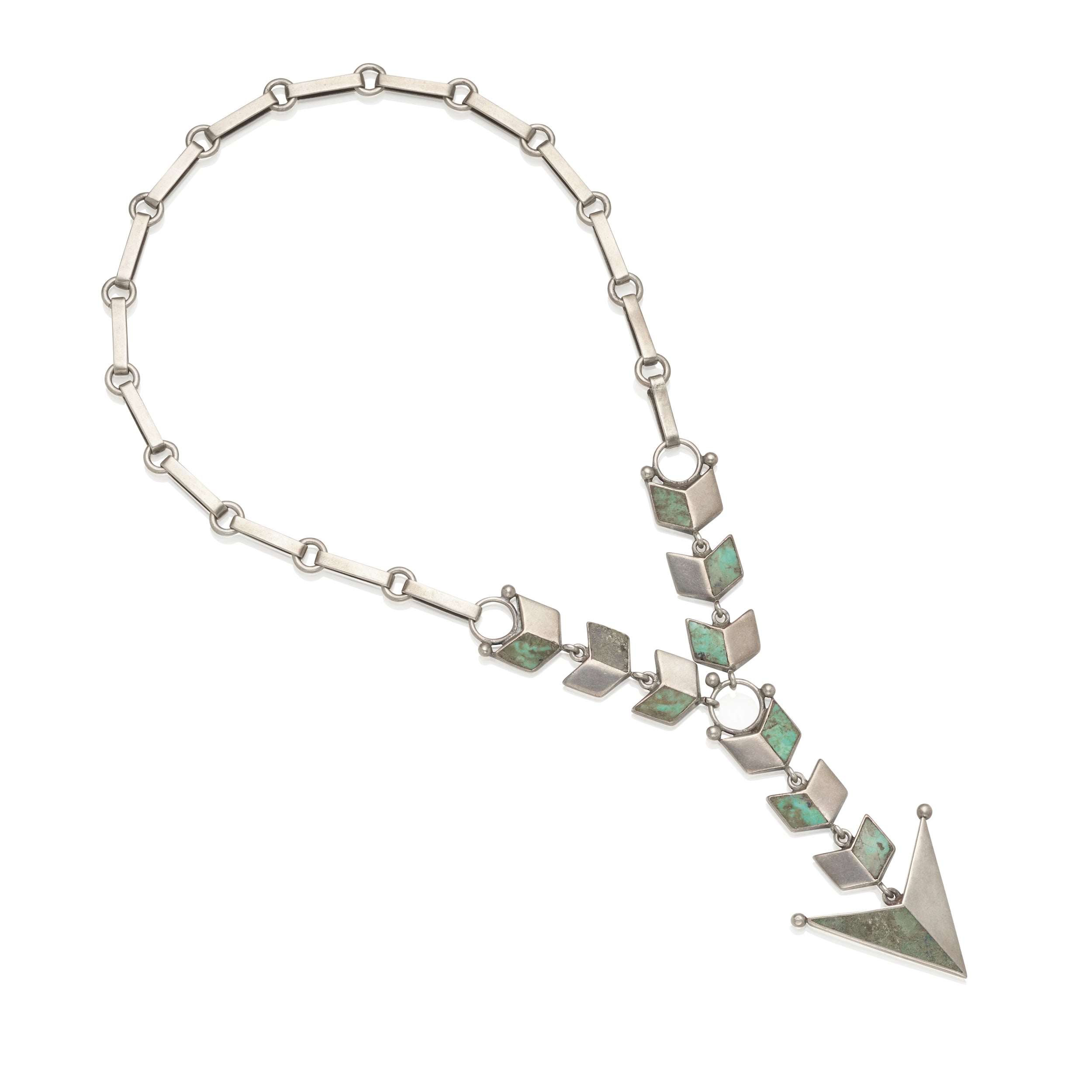
V Pendant Necklace
Silver