Saves instantly, no account needed. Already a member? Sign in.
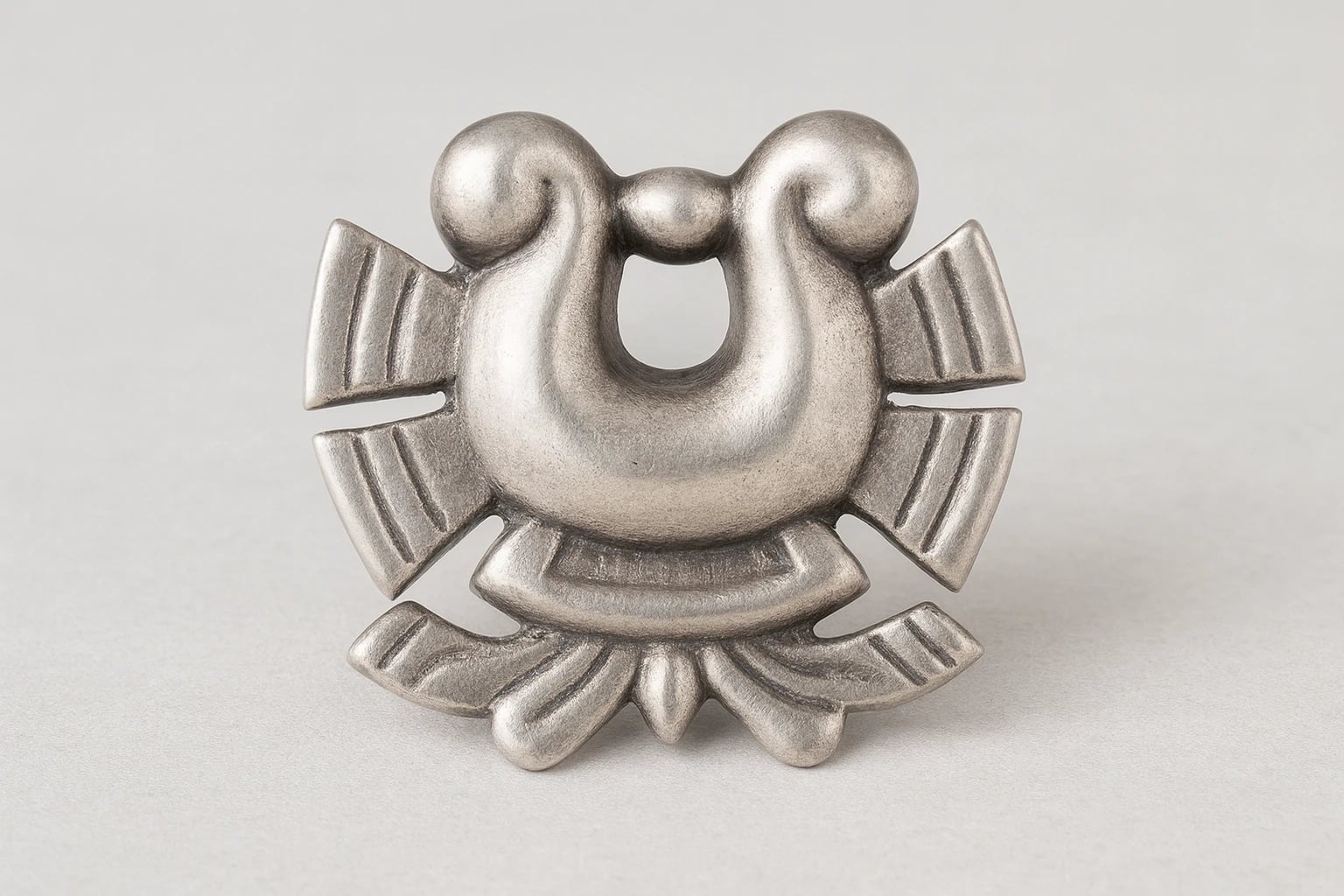
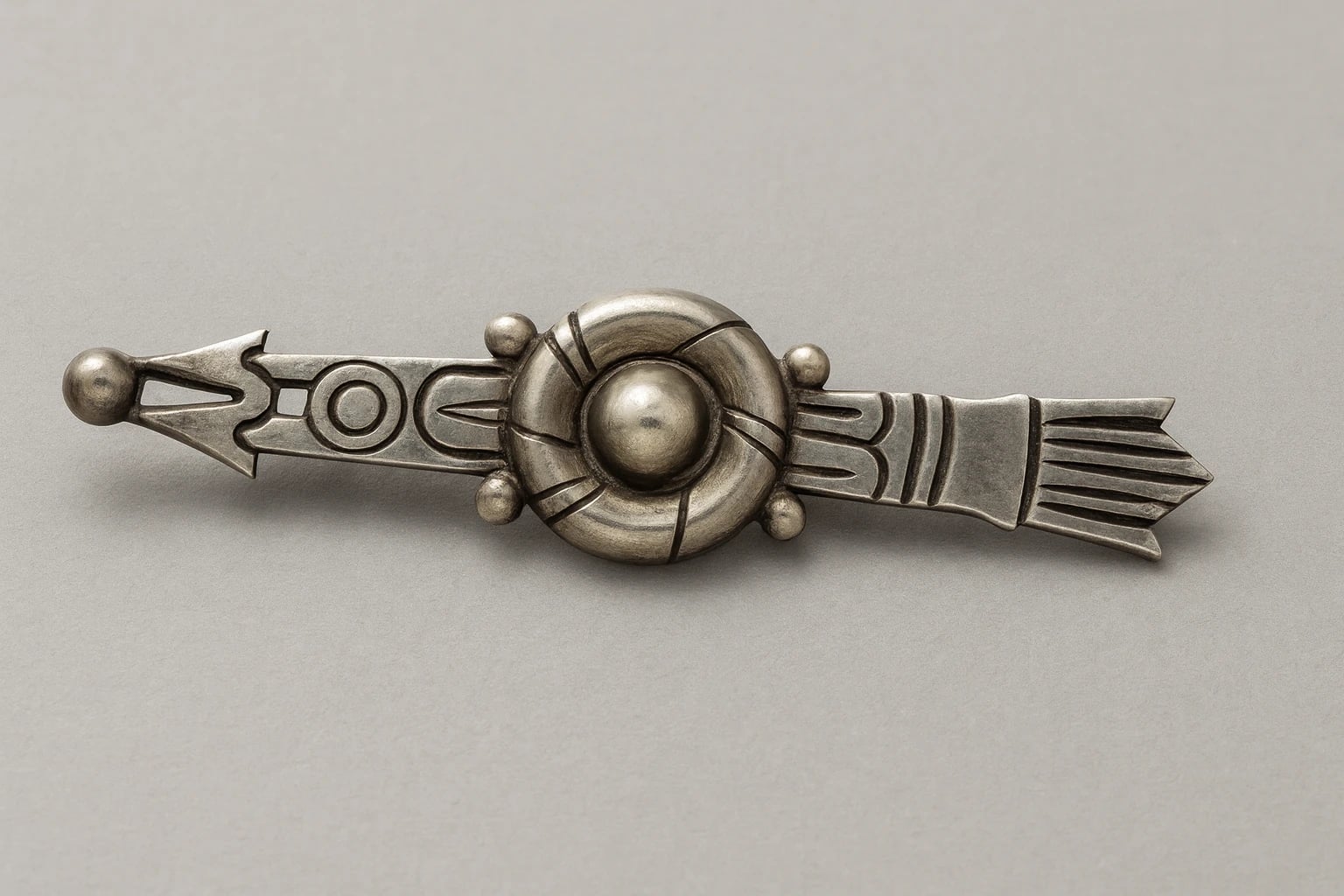
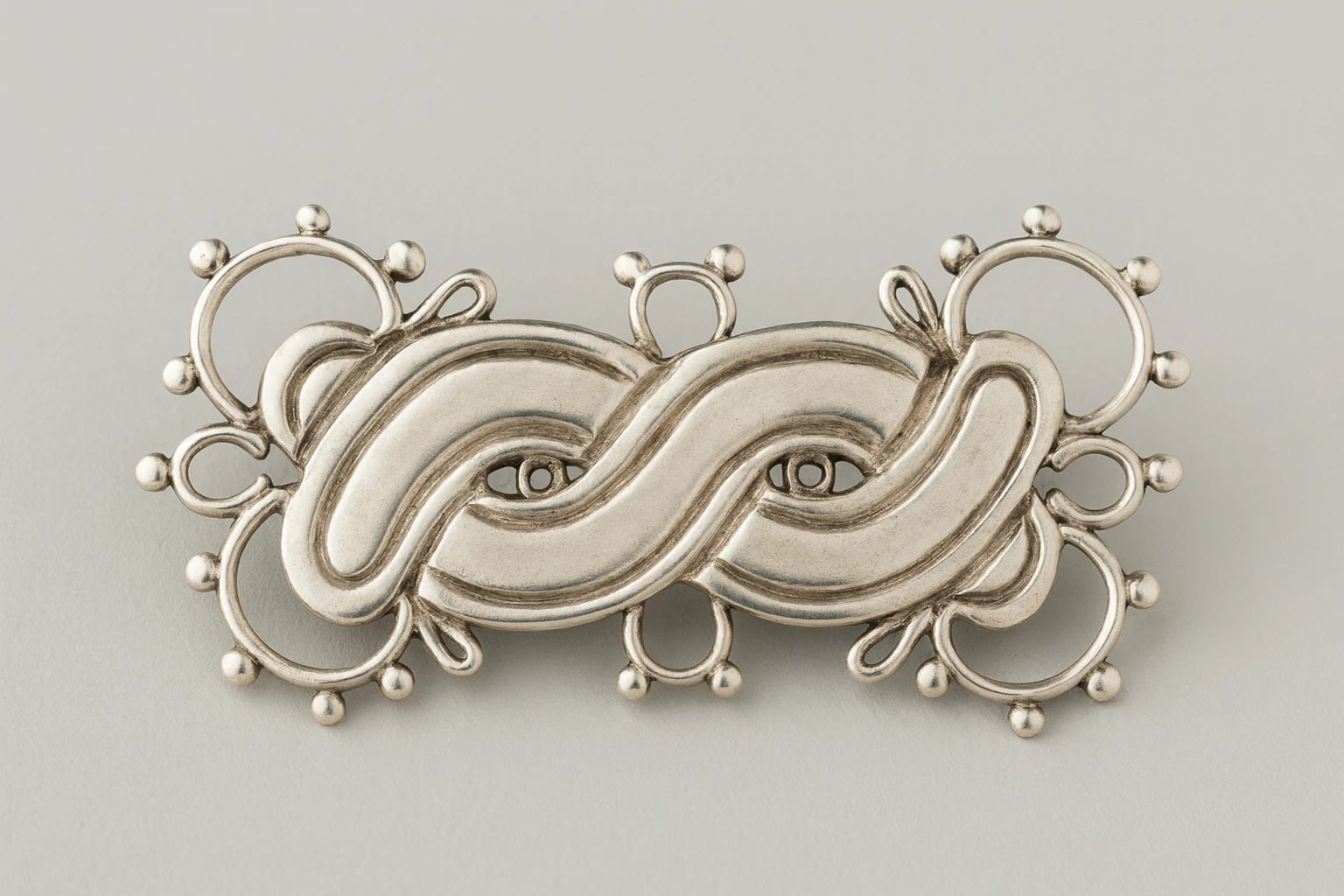
A brooch of twisted silver wire worked into the suggestion of an Aztec mask, the wirework reading as the linear features of a face. Spratling's own wholesale catalog described it as an ancient Aztec design, and it carried a national audience: it sold through Montgomery Ward in 1943 for $6.95. The piece is recorded in those Montgomery Ward catalogs and in Goddard's field guide.
The Aztec mask belongs squarely to the pre-Columbian vocabulary Spratling described as a point of departure for his early work, where pre-Columbian seals and motifs became brooches (Morrill, pdf p. 39). Rendering the mask in twisted wire rather than solid sheet gives it an open, linear character.
The Montgomery Ward sales sit within the documented chapter of Spratling's national reach: his silver ran in those catalogs from 1943 to 1946 (Morrill, p. 257).
With its original catalog description, its national distribution, and its place in those references, the twisted-wire mask is a well-documented example of Spratling's pre-Columbian figural work in the first design period.
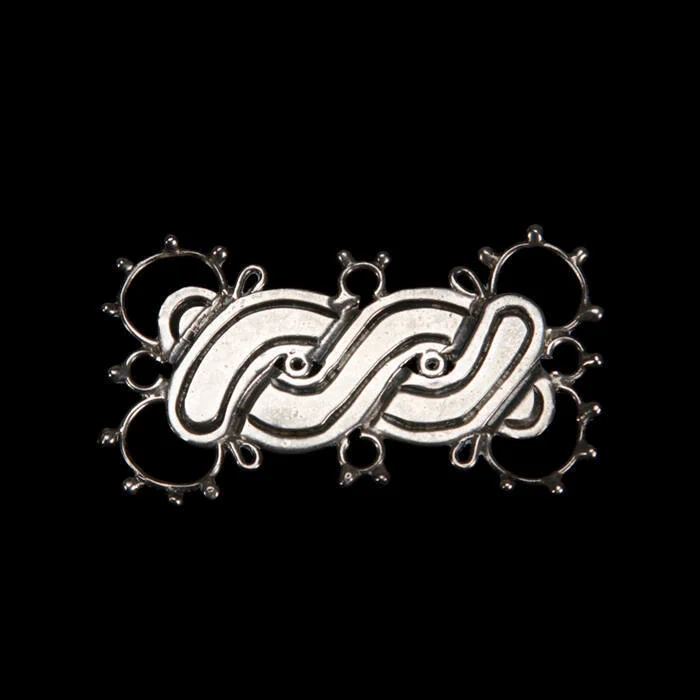
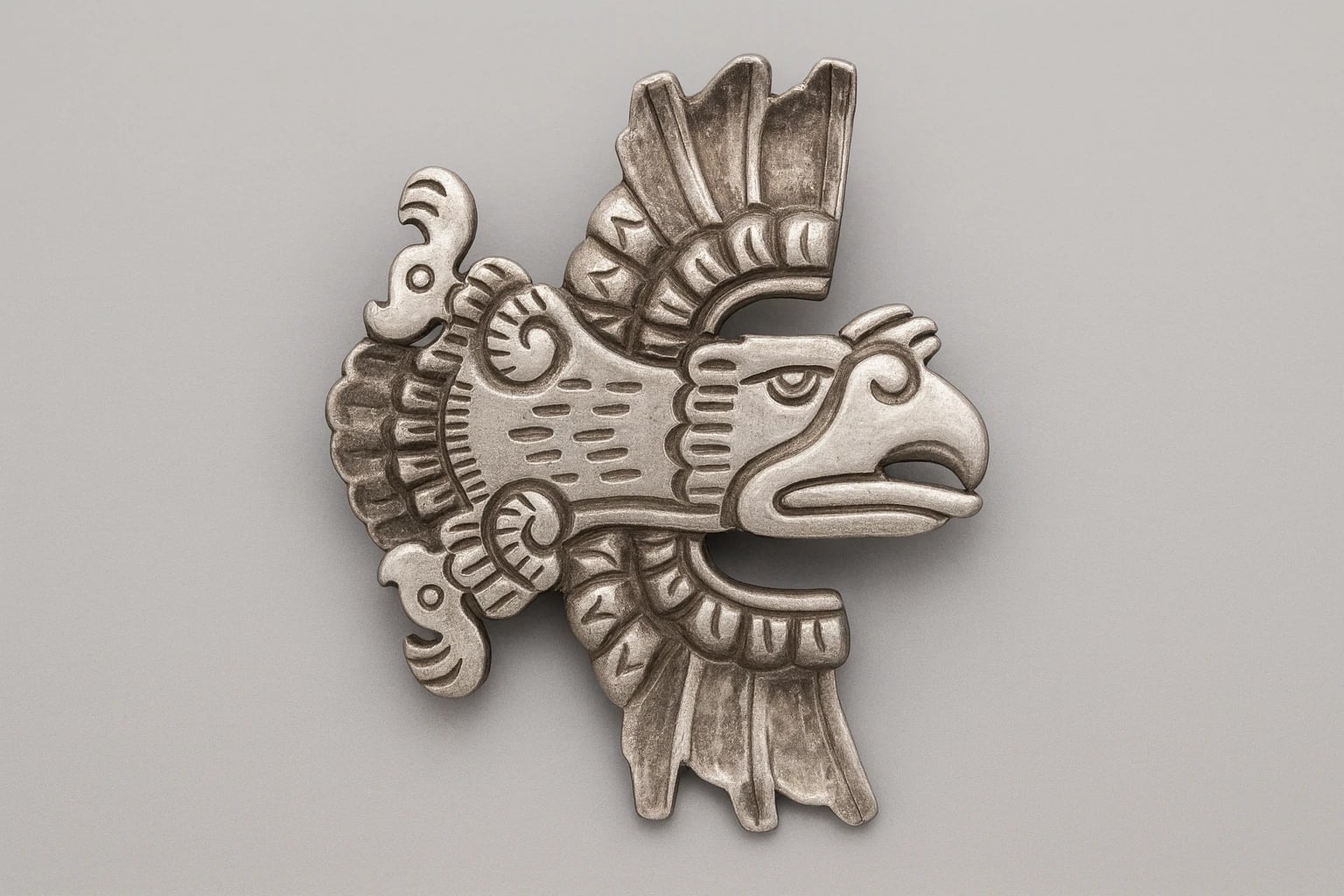
Pin, 1940s
Accession A.2010.84.16. Official museum record Photo: Museum of International Folk Art, Santa Fe.
Verified against each institution's own collection records. All museum collections
Museum of Mexican Silver. “Aztec Mask Brooch.” Catalog no. MoMS-000143. https://museumofmexicansilver.com/pieces/spratling-333
See something wrong with this record? Suggest a correction and the piece details fill in automatically.
William Spratling
Chupamirto Azteca Brooch
First Design Period: 1931 - 1946
Silver