Saves instantly, no account needed. Already a member? Sign in.
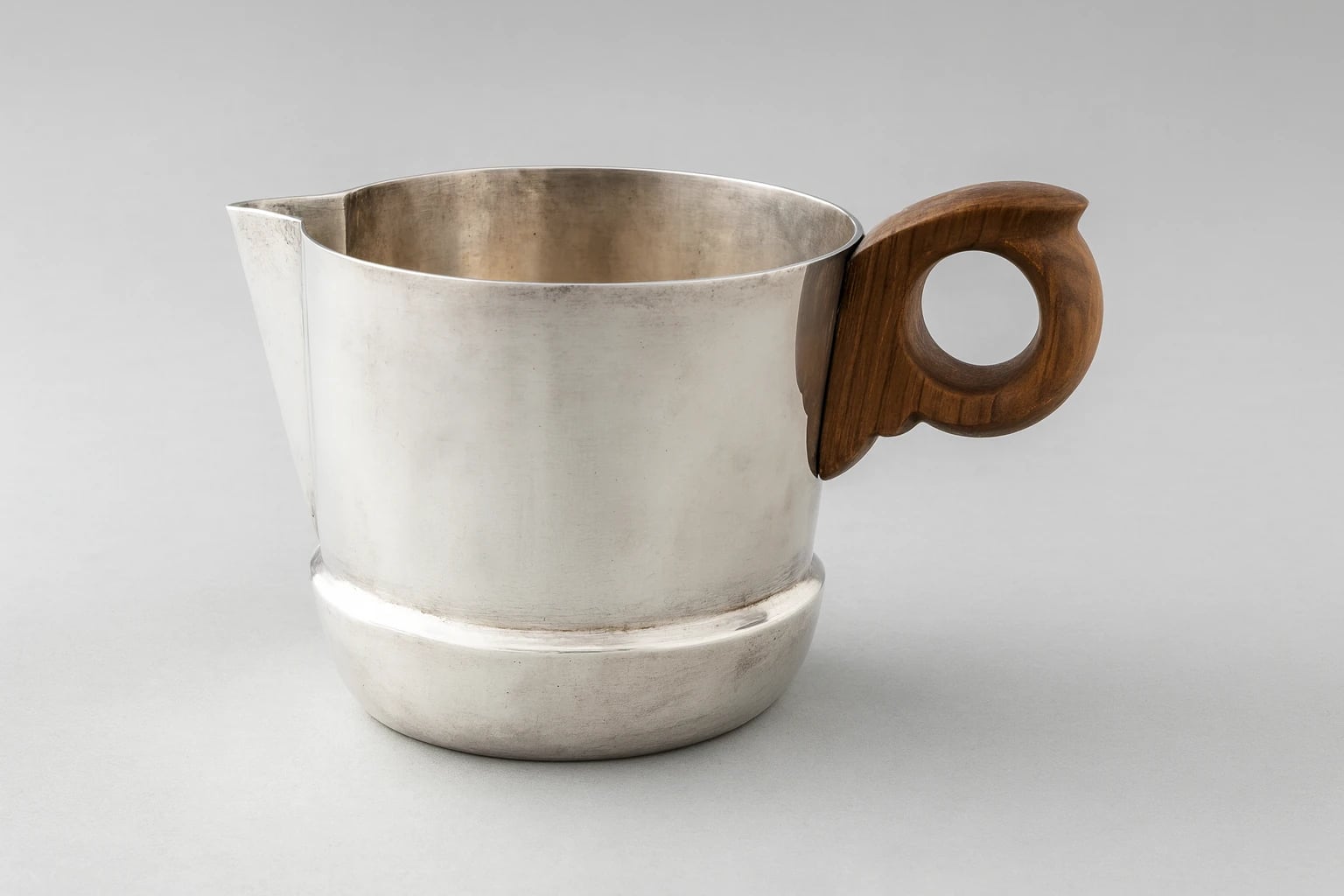
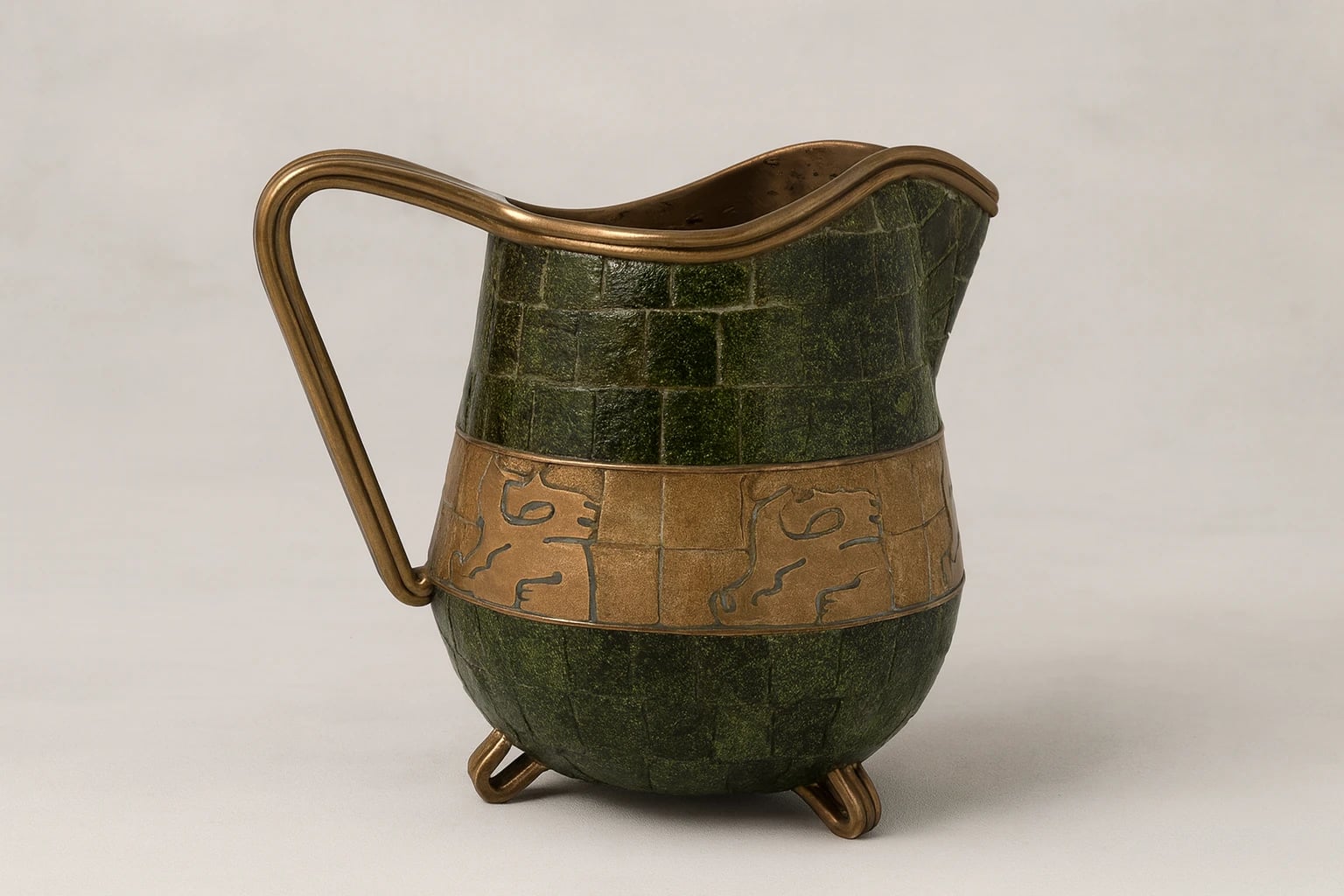
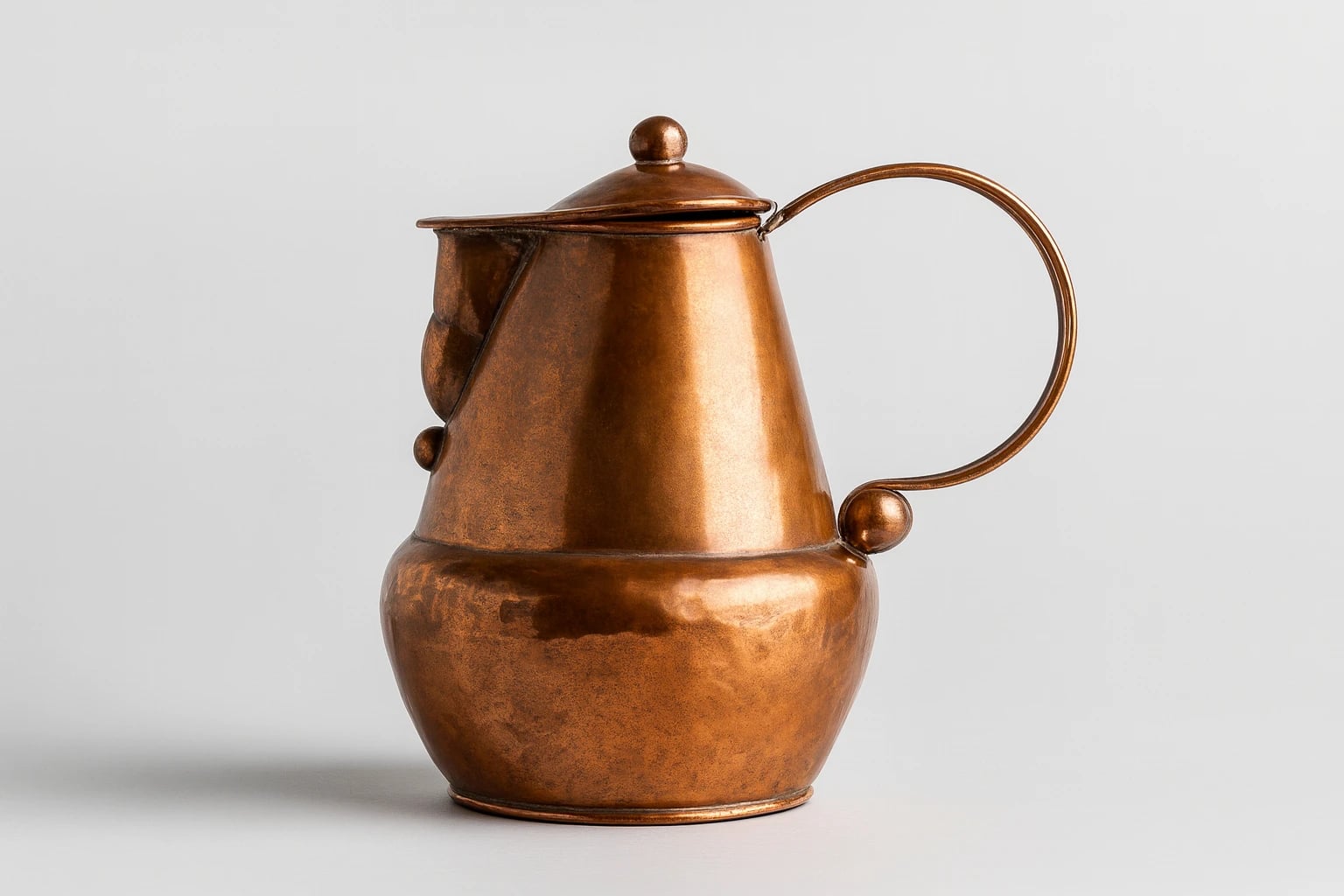
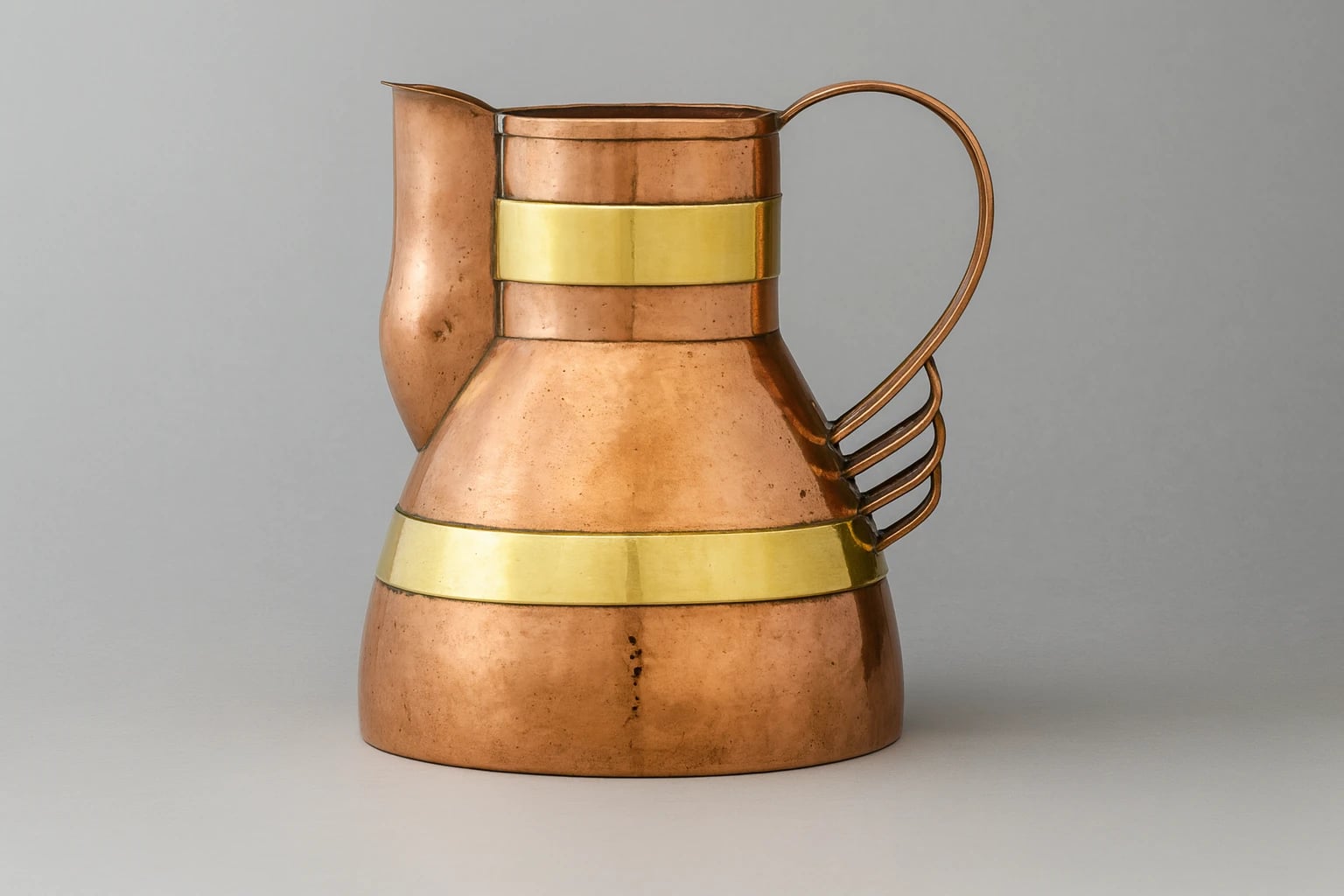
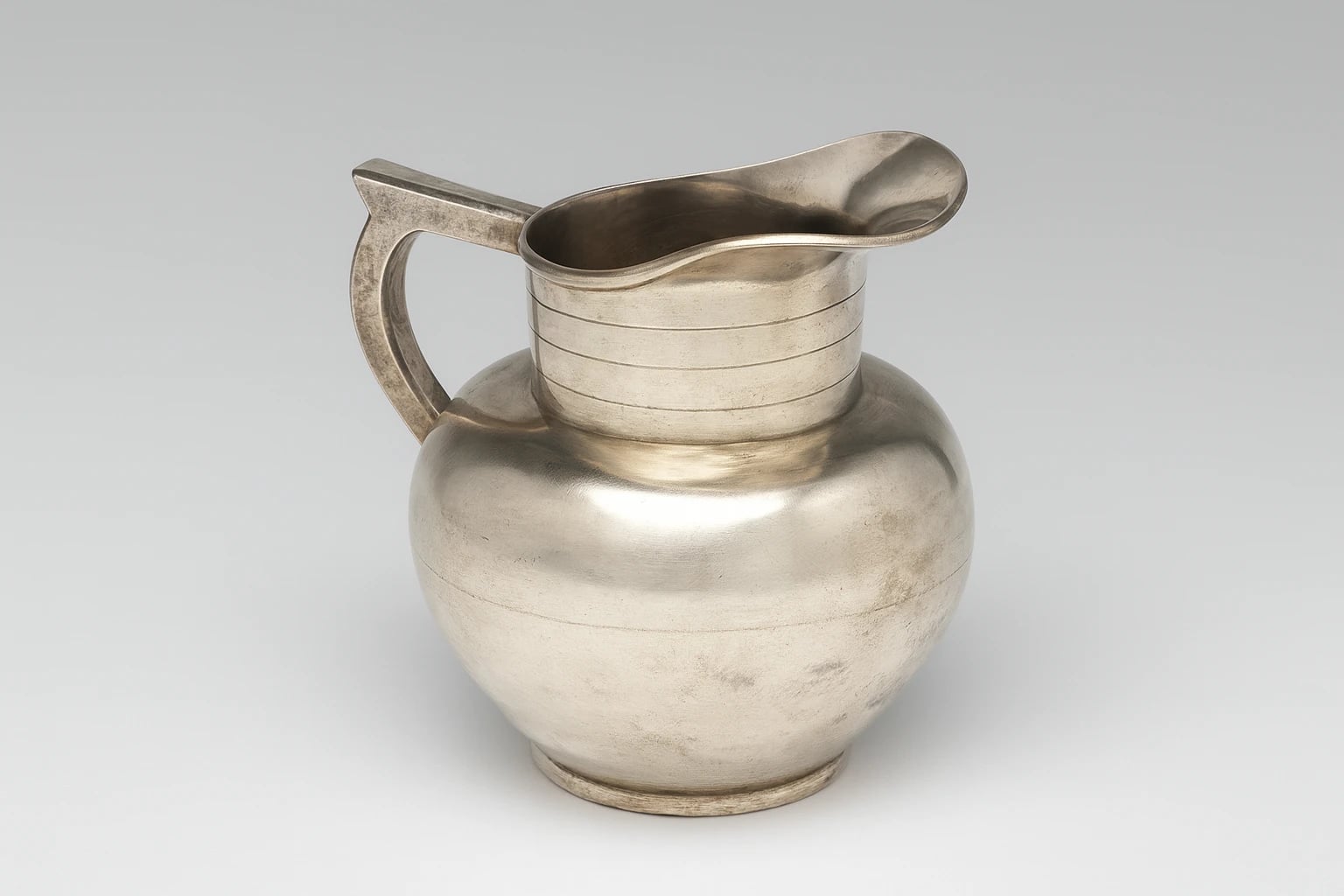
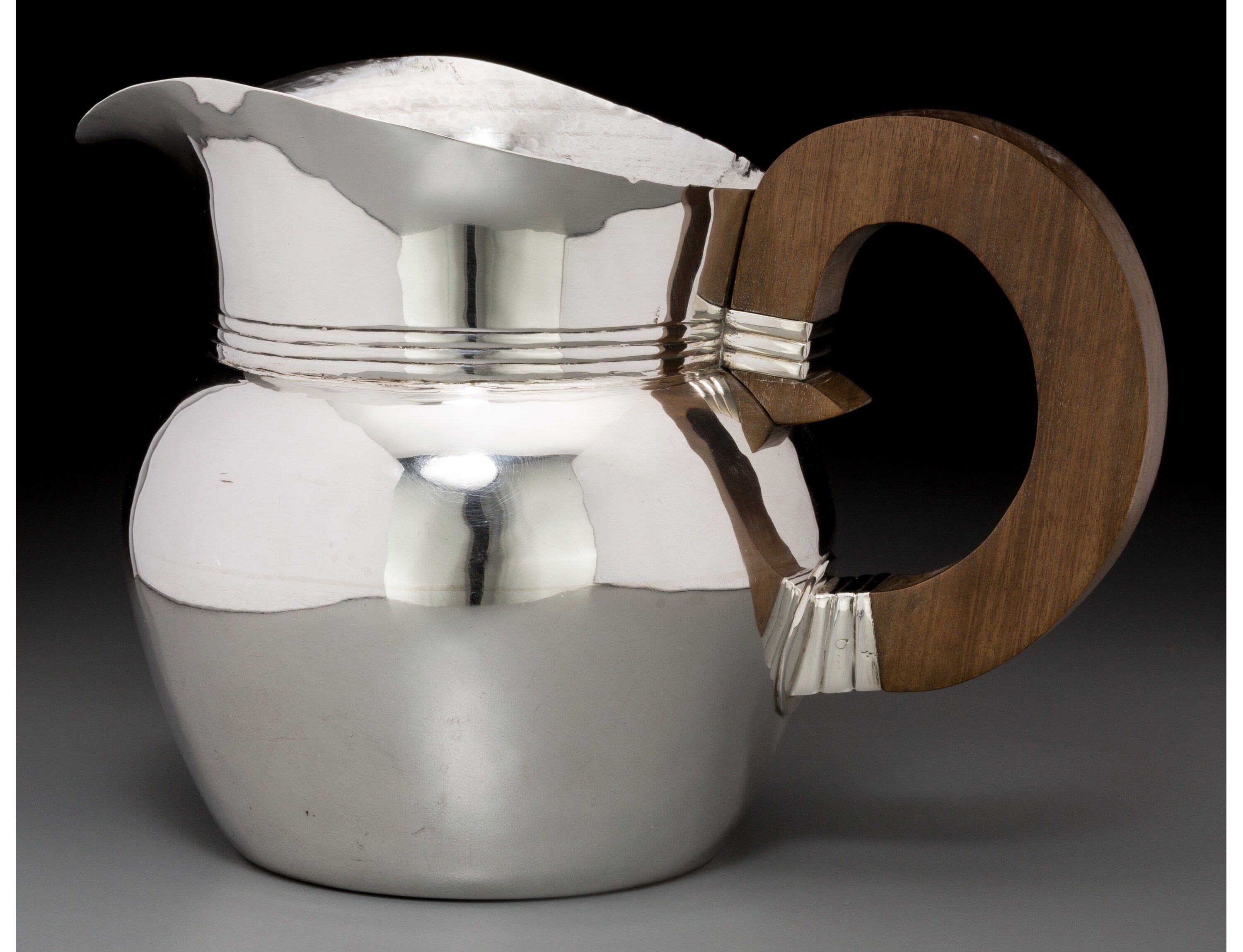
A pitcher marrying polished sterling with a boldly scaled circular wood handle represents one of the most considered forms of holloware from Spratling's First Design Period. The combination of silver and organic material — wood or tortoiseshell — was central to Spratling's vocabulary during the 1930s and early 1940s. Morrill observes that the signature pieces of this period were "beautiful combinations of silver and tortoiseshell or wood," the product of a deliberate shift toward simpler form with emphasis on surface and line (Morrill, Mexican Silver, 1994, p. 73).
The body swells generously from the base before narrowing at the shoulder, its surface brought to a mirror finish that amplifies the volume of the form. A row of applied parallel silver bands encircles the shoulder, articulating that transition and providing the only linear decoration on an otherwise continuous field of polished metal. The handle is a full circle turned from warm-grained wood, mounted to the body at two points with silver fittings — a composition that places the cool reflective quality of the sterling in direct dialogue with the matte warmth of the organic material alongside it.
Pitchers and table holloware were well established in Spratling's production program, and the form appeared in documented exhibition records of the 1960s cataloging the full range of his workshop's output.
Museum of Mexican Silver. “Ranch Pitcher.” Catalog no. MoMS-000155. https://museumofmexicansilver.com/pieces/spratling-759
See something wrong with this record? Suggest a correction and the piece details fill in automatically.
William Spratling
Ovalado Silver Pitcher
Silver