Saves instantly, no account needed. Already a member? Sign in.
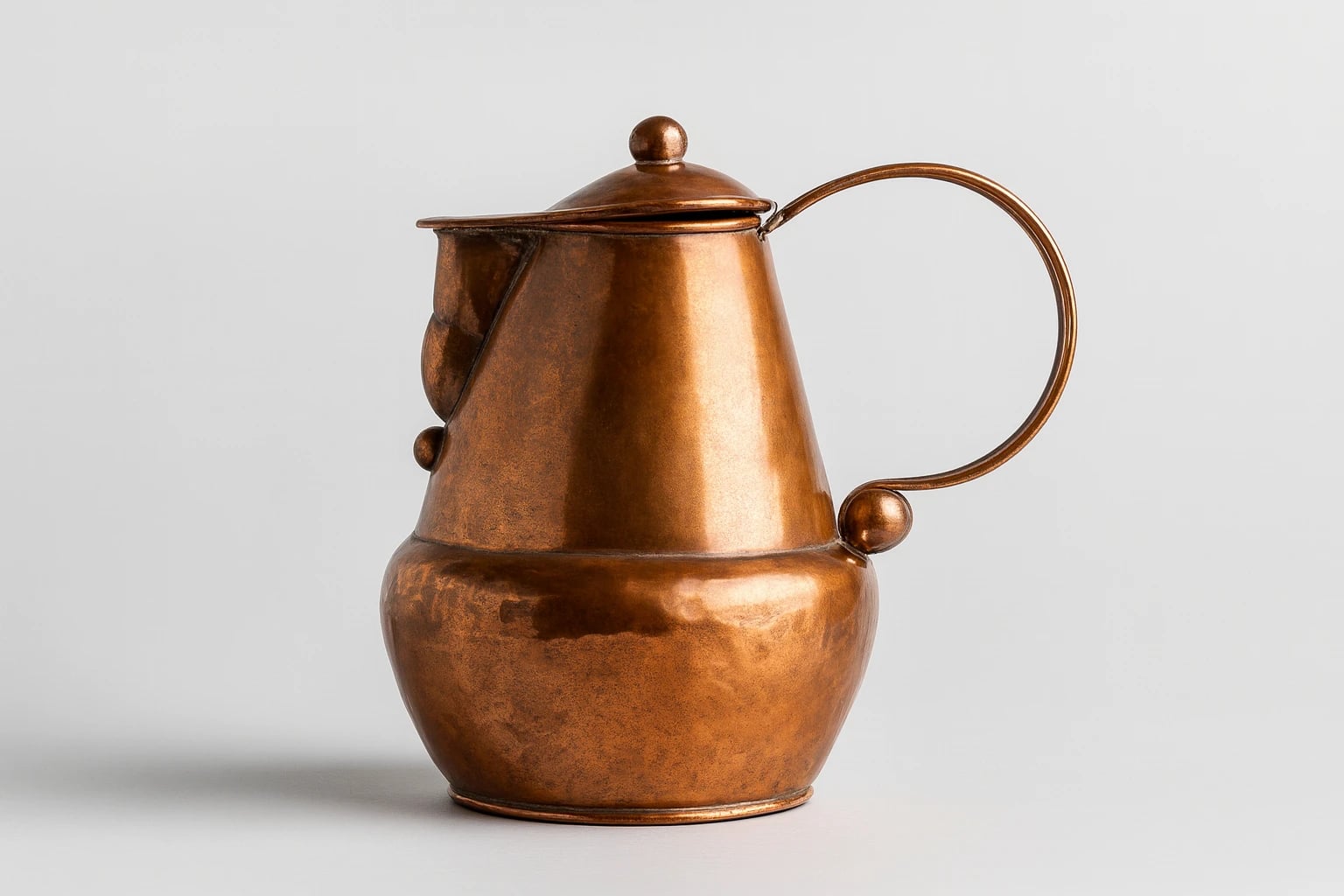
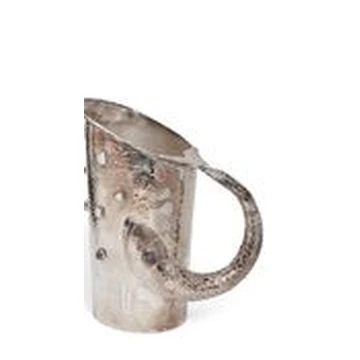
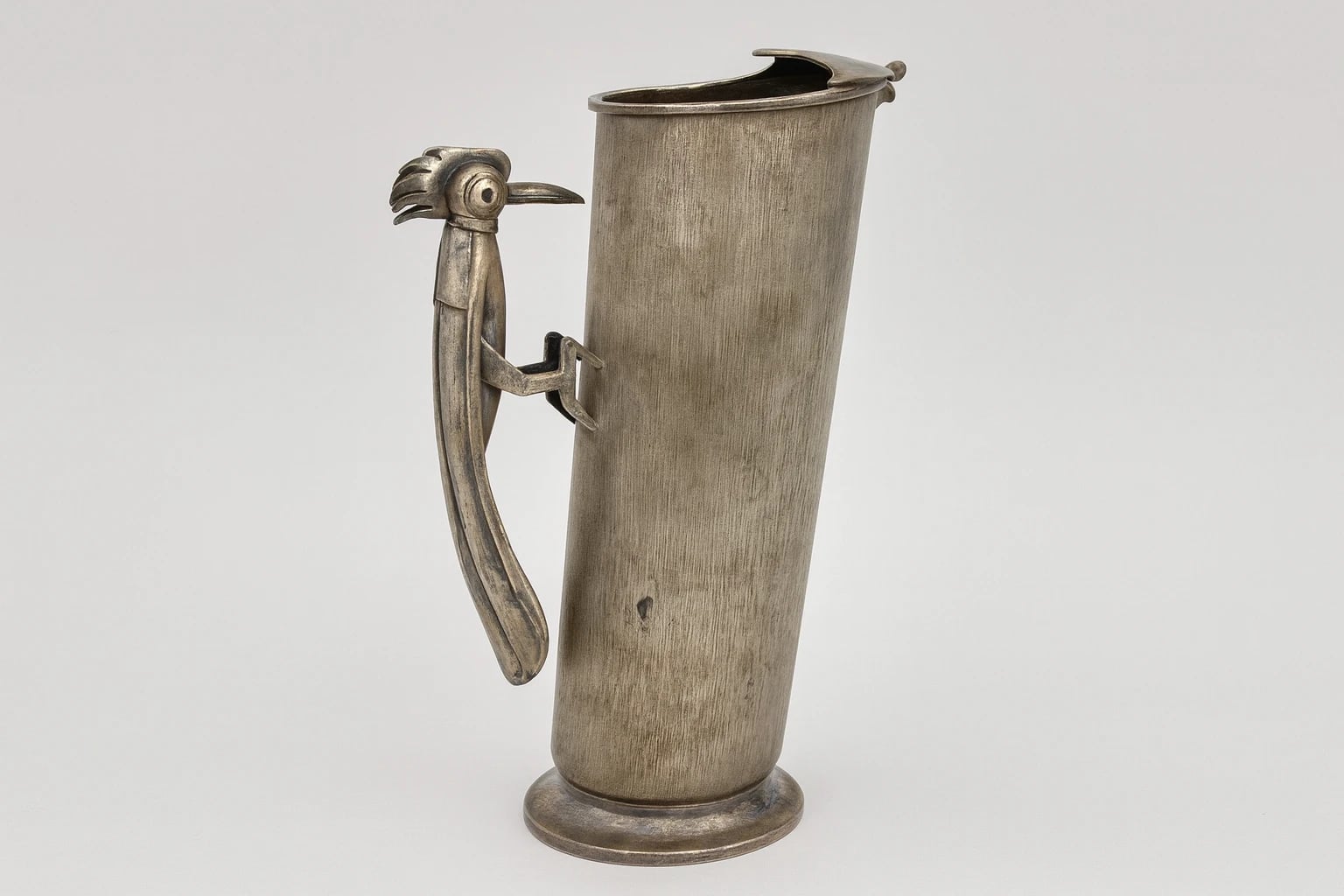
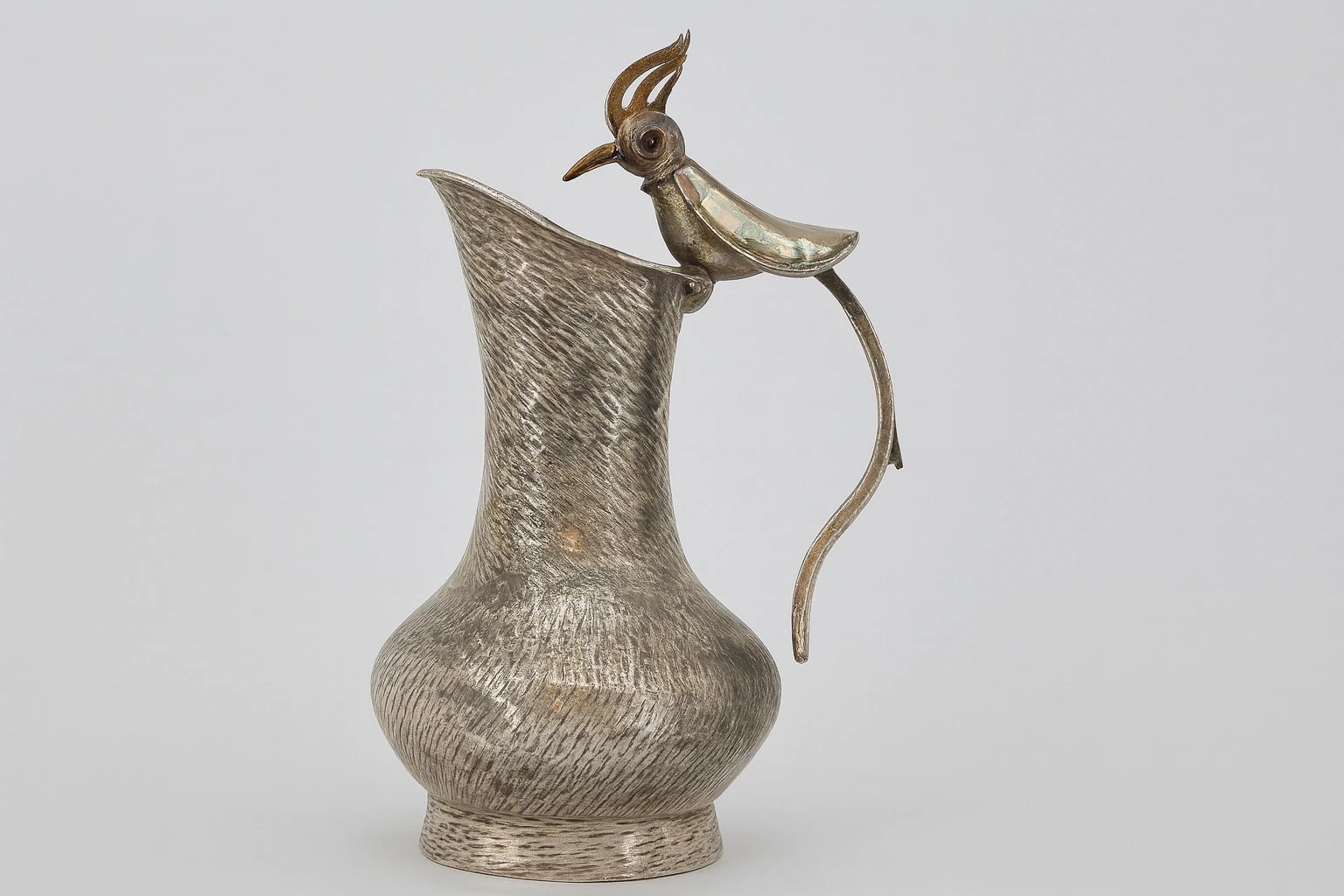
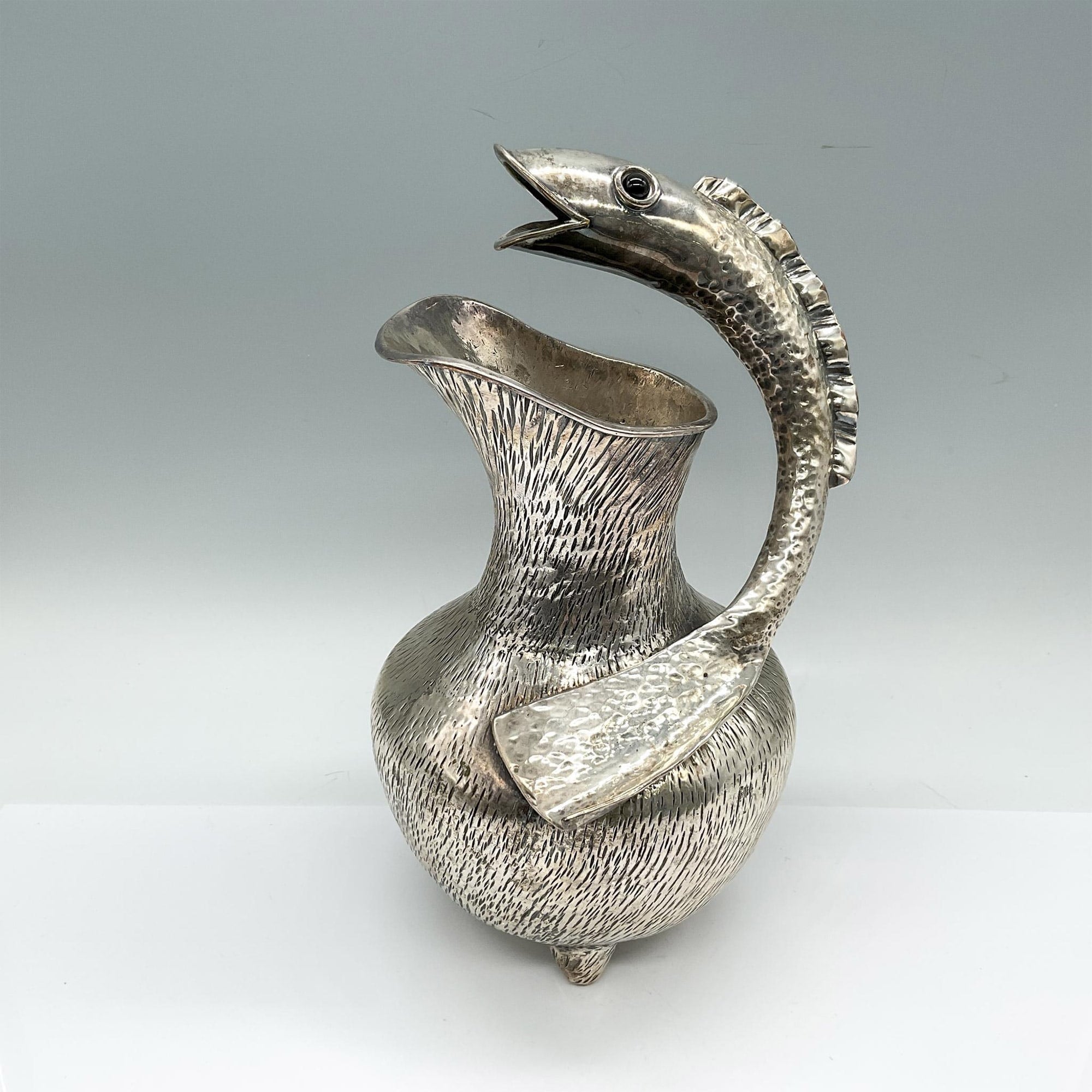
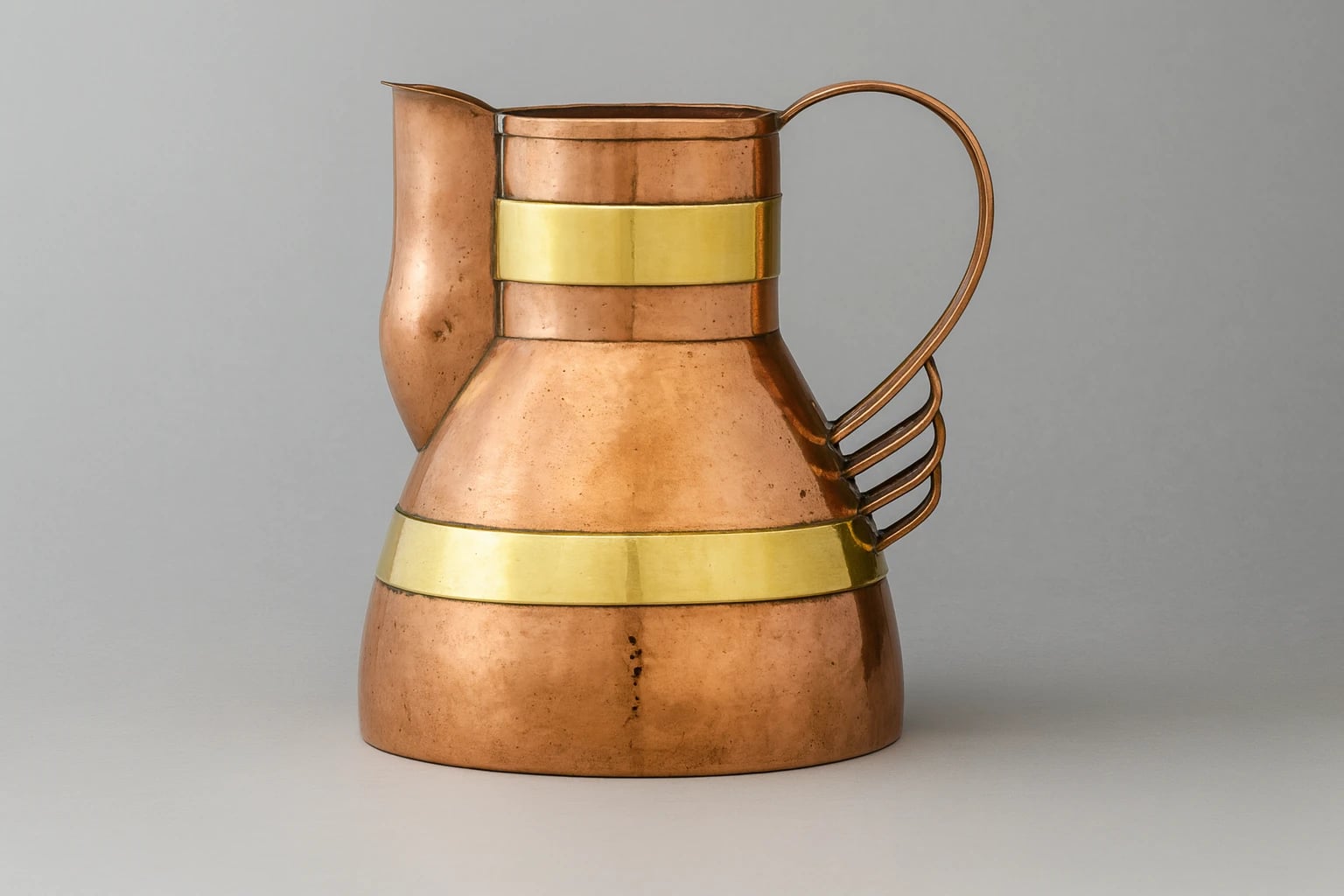
Héctor Aguilar's copper pitcher joins two metals to shape both function and ornament. The body rises in hammered copper, its warm reddish surface interrupted where brass articulates the handle, the collar, or the foot. This combination of copper with brass belongs to a distinct current within Aguilar's decorative production at the Taller Borda, one that treated base metals with the same design seriousness that Taxco brought to silver. The pitcher holds its interest through proportion and the meeting of two colors rather than through applied decoration.
The handwrought copper carries the marks of forming by hand, its planished surface catching and softening light across a curved body. Copper is a working metal, malleable under the hammer and capable of holding a strong, simple silhouette. Where brass appears, it introduces a cooler yellow against the copper's red, so that the transition between metals reads as a deliberate line rather than an accident of assembly. Aguilar's decorative objects in these materials are known for a certain robustness of character, favoring generous volumes and clear structural logic over delicacy. The handle in particular must resolve the practical demand of pouring with the visual demand of balancing the vessel's mass, and in Aguilar's work that junction is typically handled as a designed element in its own right.
Aguilar founded the Taller Borda in Taxco and directed a workshop that produced jewelry, hollowware, and furniture across silver, copper, and brass. Penny Chittim Morrill documents his copper pitchers and copper and brass candelabra among the decorative objects that gave the taller its reputation, noting that his copper work was valued for its strong character and, alongside the designs of Valentin Vidaurreta, was actively used and worn in the forties and fifties. Aguilar's copper marks span the full range of his active years, from the earlier HA stamps used before 1948 to the later marks that add Taxco, the .940 fineness, and the eagle 9 assay stamp introduced after 1948. The design period assigned to this pitcher reflects that broad working span rather than a single year of manufacture, and the specific object's date depends on which mark it carries.
Within the Mexican silver renaissance, Aguilar's copper and brass hollowware demonstrates that the movement's ambition extended well beyond precious metal. A pitcher of this kind shows how a Taxco taller applied its design intelligence to inexpensive materials for daily use, treating a household vessel as a considered object of form and color. For a collection, it documents the breadth of Aguilar's production and the place of base metals in the broader history of twentieth-century Mexican design.
Museum of Mexican Silver. “Copper & Brass Pitcher.” Catalog no. MoMS-001383. https://museumofmexicansilver.com/pieces/aguilar-pitcher-copper-brass
See something wrong with this record? Suggest a correction and the piece details fill in automatically.
Héctor Aguilar
Sterling Silver Pitcher
Sterling silver