Saves instantly, no account needed. Already a member? Sign in.
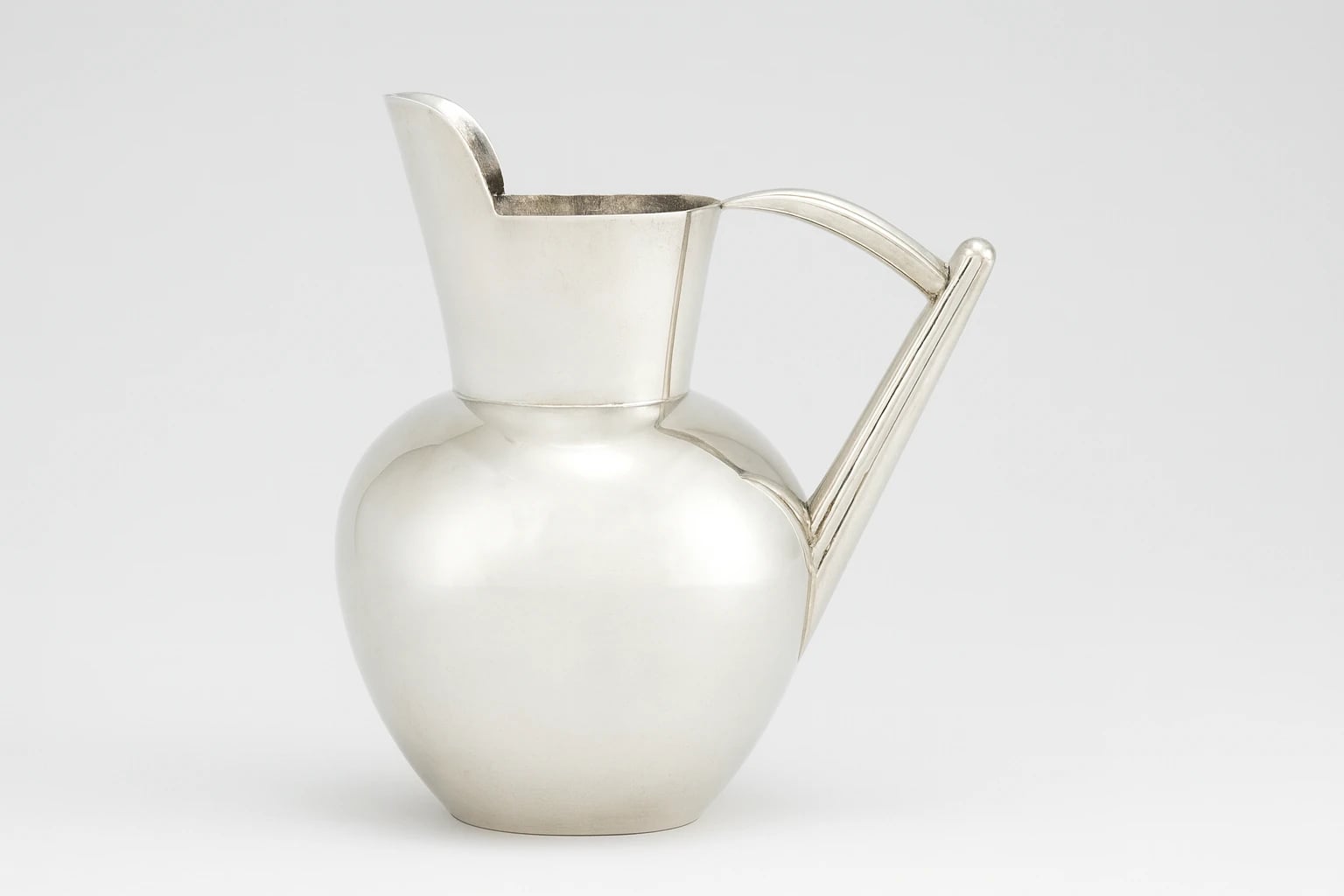
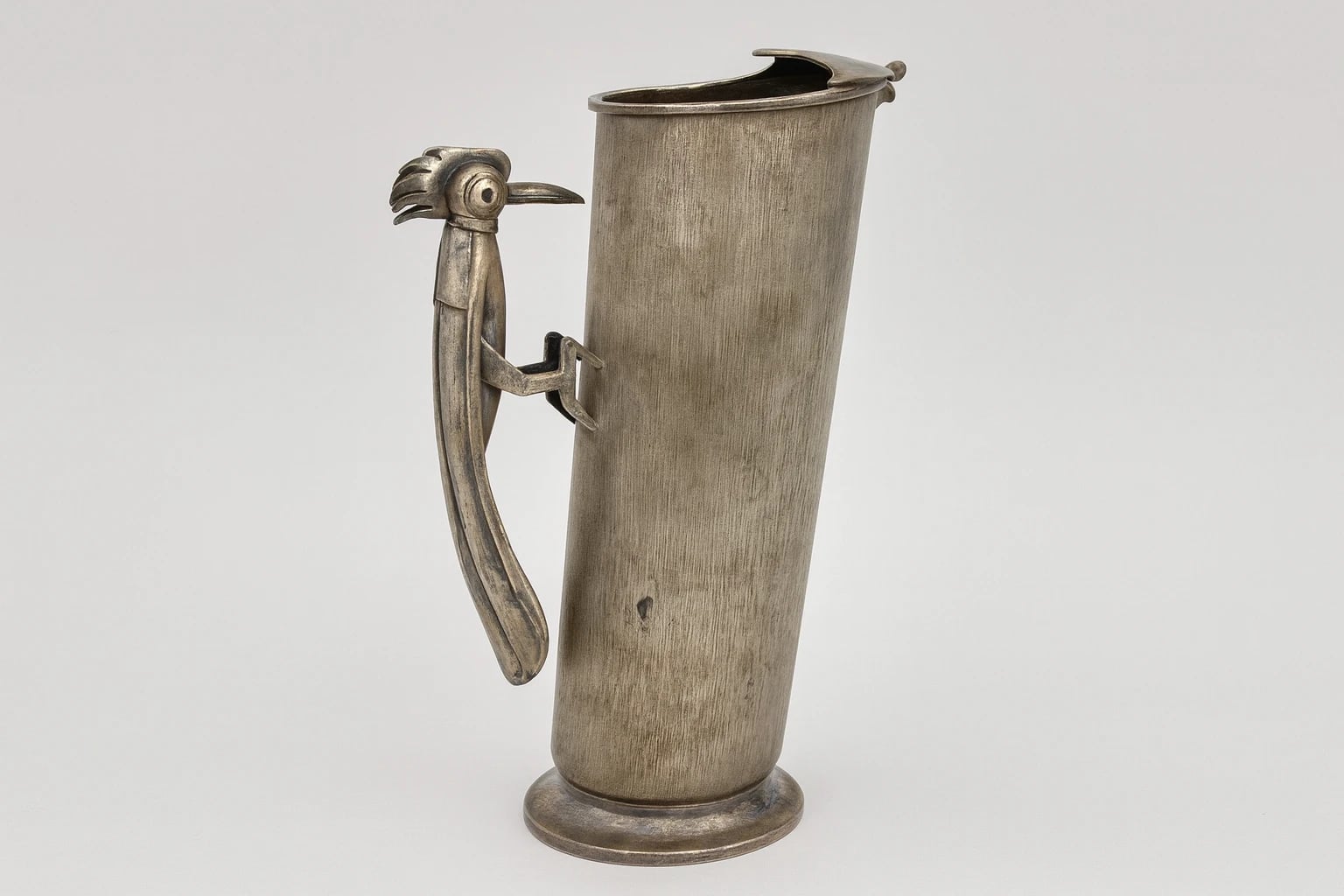
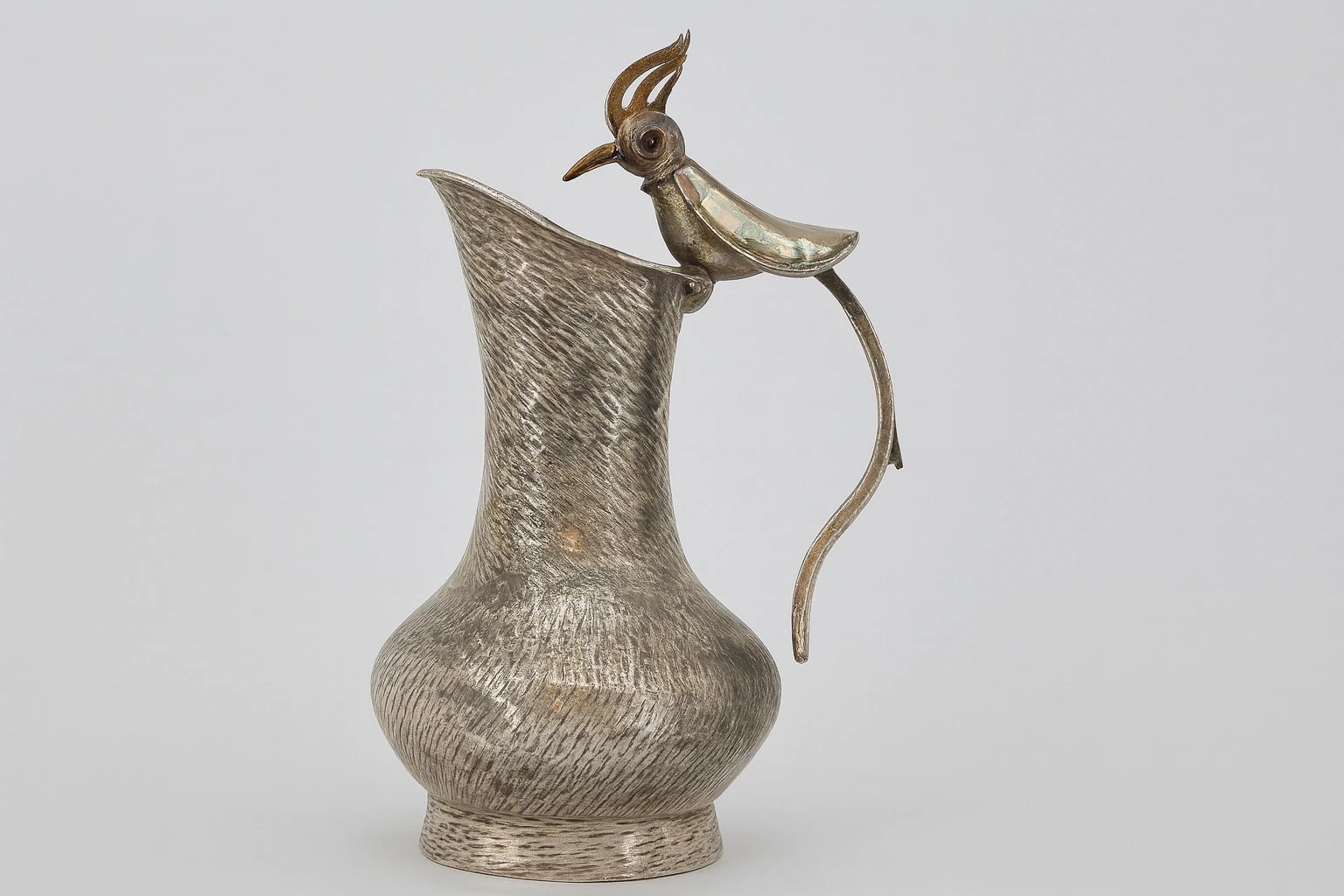
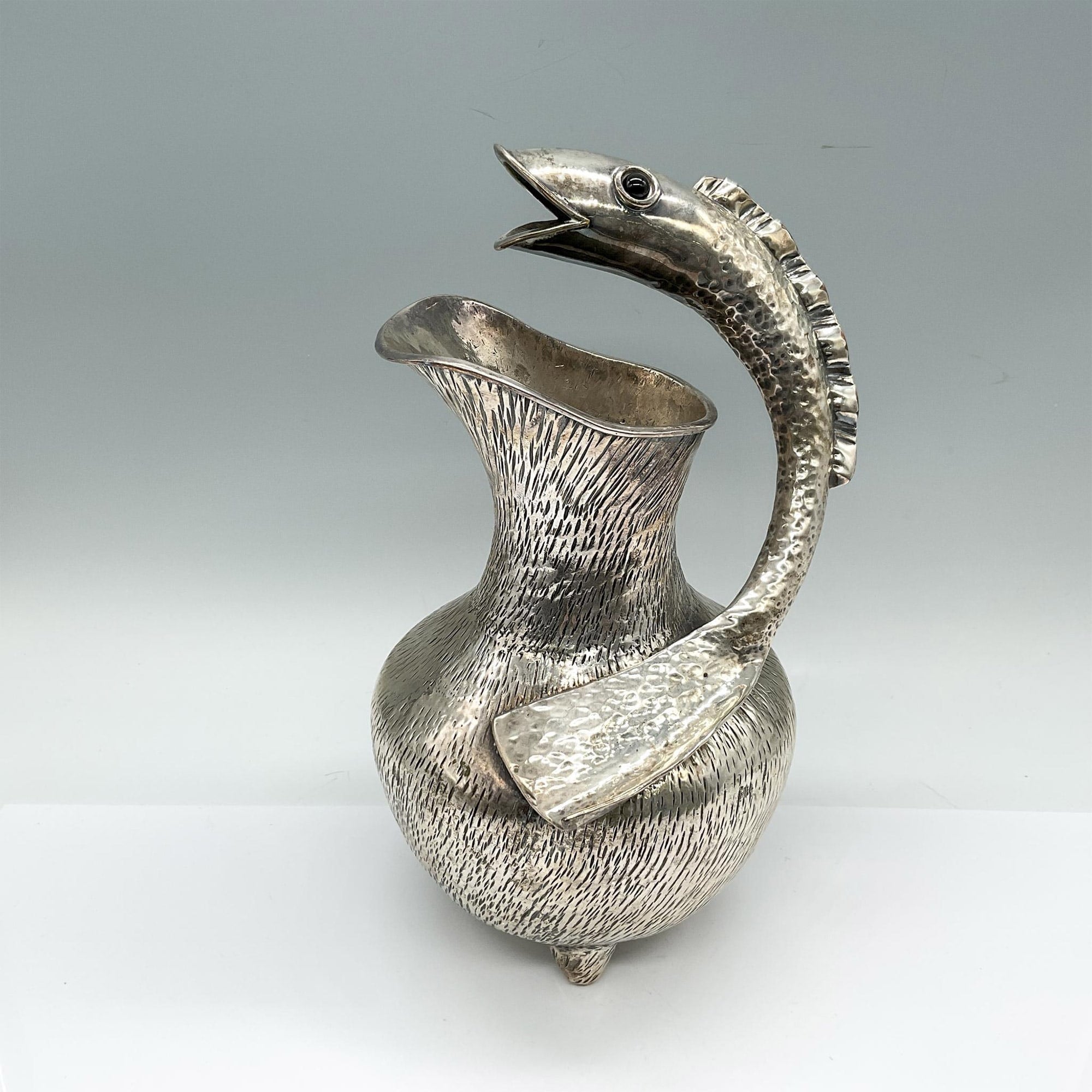
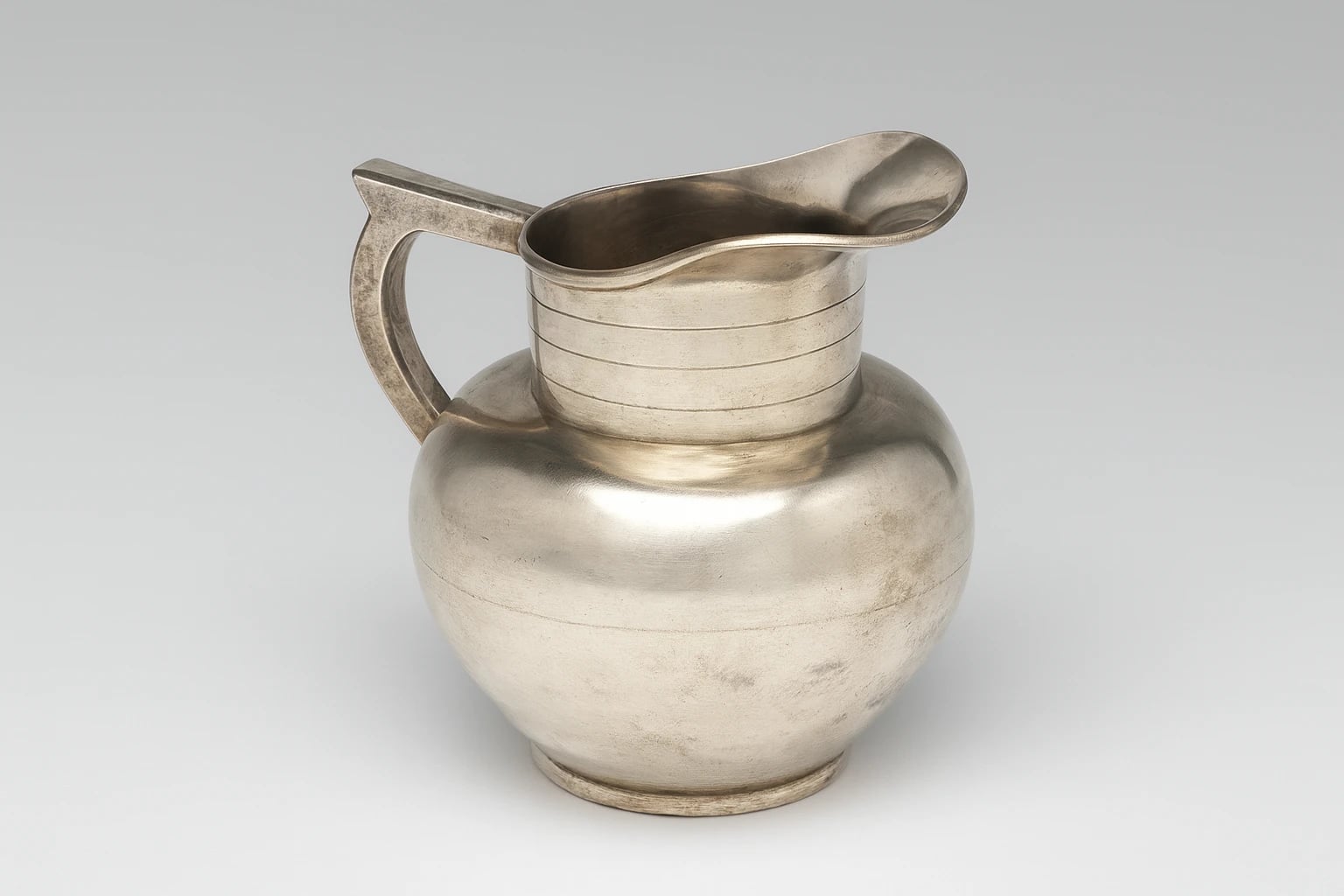
A silver pitcher by Héctor Aguilar is a study in how a workshop resolved the problem of the round body and the pouring lip without ornament to hide behind. The form depends on a swelling volume that catches light across its curve, a spout drawn cleanly from the wall, and a handle that must answer the weight of the vessel when full. Aguilar built his reputation on jewelry and on a bold, architectural sensibility, but his holloware asked a different discipline. Here the design has nowhere to retreat: the eye reads the silhouette, the balance of the body against the foot, and the junction where spout meets wall, and each of these decisions carries the whole object.
The construction history of Aguilar holloware clarifies what the surface of any given pitcher can tell us. Penny Morrill records that the Taller Borda was one of only three Taxco workshops producing handwrought holloware, and that Jesús Pérez, Enrique Ledesma, and José Asención were among the silversmiths who hammered silver into trays, bowls, and pitchers. The bases were commonly shaped as half-spheres on a turning wheel, flattened at the bottom to sit on a table, with spouts and upper portions soldered on and joined with a special white solder developed to be invisible and durable. That technical detail matters to the way a pitcher of this kind reads: the seam disappears, the vessel presents as a continuous body, and the labor of assembly is deliberately withdrawn from view so that the profile can dominate.
Dating an Aguilar pitcher requires holding several timelines apart. Morrill establishes that after 1942 much of the workshop's holloware was formed by machine at Horacio de la Parra's Mexico City operation, or at the Borda by machine and finished by hand, and that a great many surviving pitchers signed by Aguilar were in fact produced in the fifties by Conquistador. The pieces that show the marks of the hammer belong to the narrow window of 1939 to 1942, before the machine arrived. Moises de la Peña, drawing his information directly from Aguilar in the late 1940s, noted that Taxco was chiefly a jewelry center and that most holloware sold there was actually made in Mexico City for lack of chasing and die-cutting machinery. The broad 1939 to 1962 span of Aguilar's production is therefore not a single moment but the full life of the Taller Borda, and the presence or absence of hammer marks, dual hallmarks, and inventory numbers is what separates the early handwrought vessels from the later finished production. Without those specifics in the object record, the responsible claim is that this pitcher belongs to that production history rather than to any one year within it.
Museum of Mexican Silver. “Sterling Pitcher.” Catalog no. MoMS-001385. https://museumofmexicansilver.com/pieces/aguilar-pitcher-sterling
See something wrong with this record? Suggest a correction and the piece details fill in automatically.
What a pitcher of this kind adds to a collection is a corrective to the assumption that the Taxco renaissance was fundamentally about jewelry. Aguilar's holloware documents a working relationship between hand skill and machine, between a Taxco workshop and a Mexico City shop with equipment the Borda lacked, and between a designer's specifications and the silversmiths who realized them. Morrill notes that this work was never carried out at a high level of production, which makes surviving pitchers a smaller body of evidence than the jewelry that carries Aguilar's name. Seen alongside the vessels of Los Castillo and Victoria, an Aguilar pitcher marks one workshop's particular answer to the modern Mexican table, where a plain silver volume was made to stand as design in its own right.
Héctor Aguilar
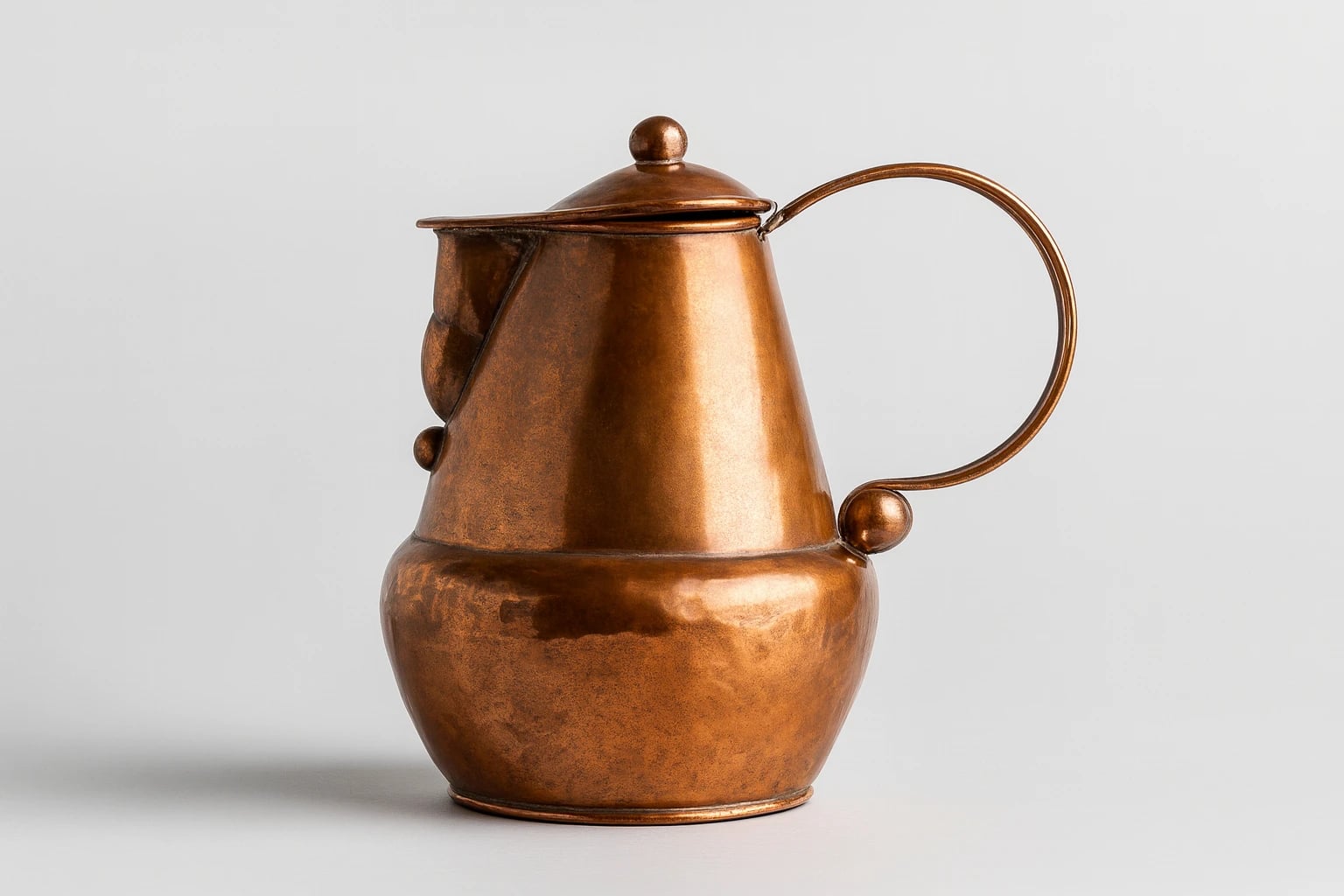
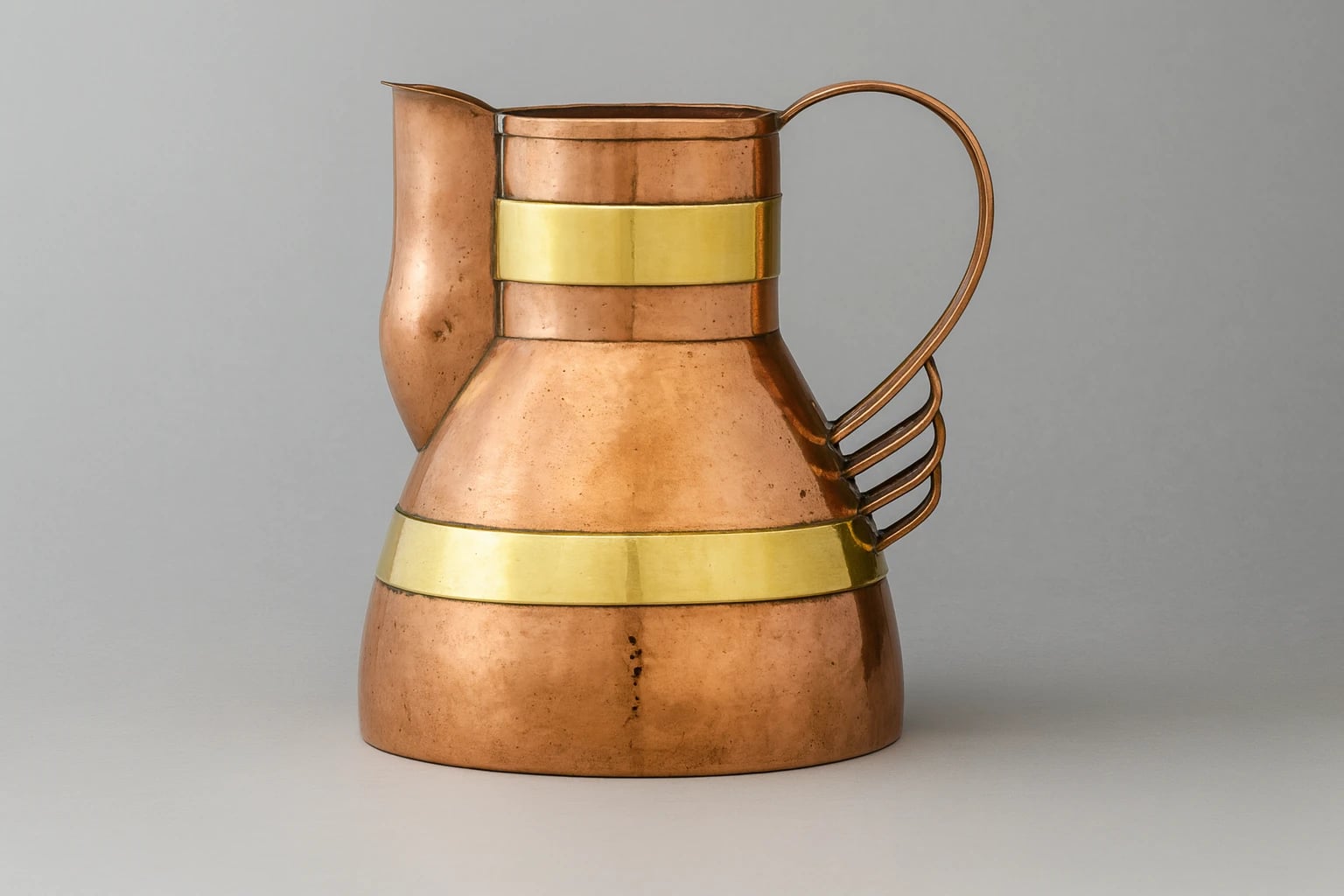
Copper Pitcher
c. 1945
Copper