Saves instantly, no account needed. Already a member? Sign in.
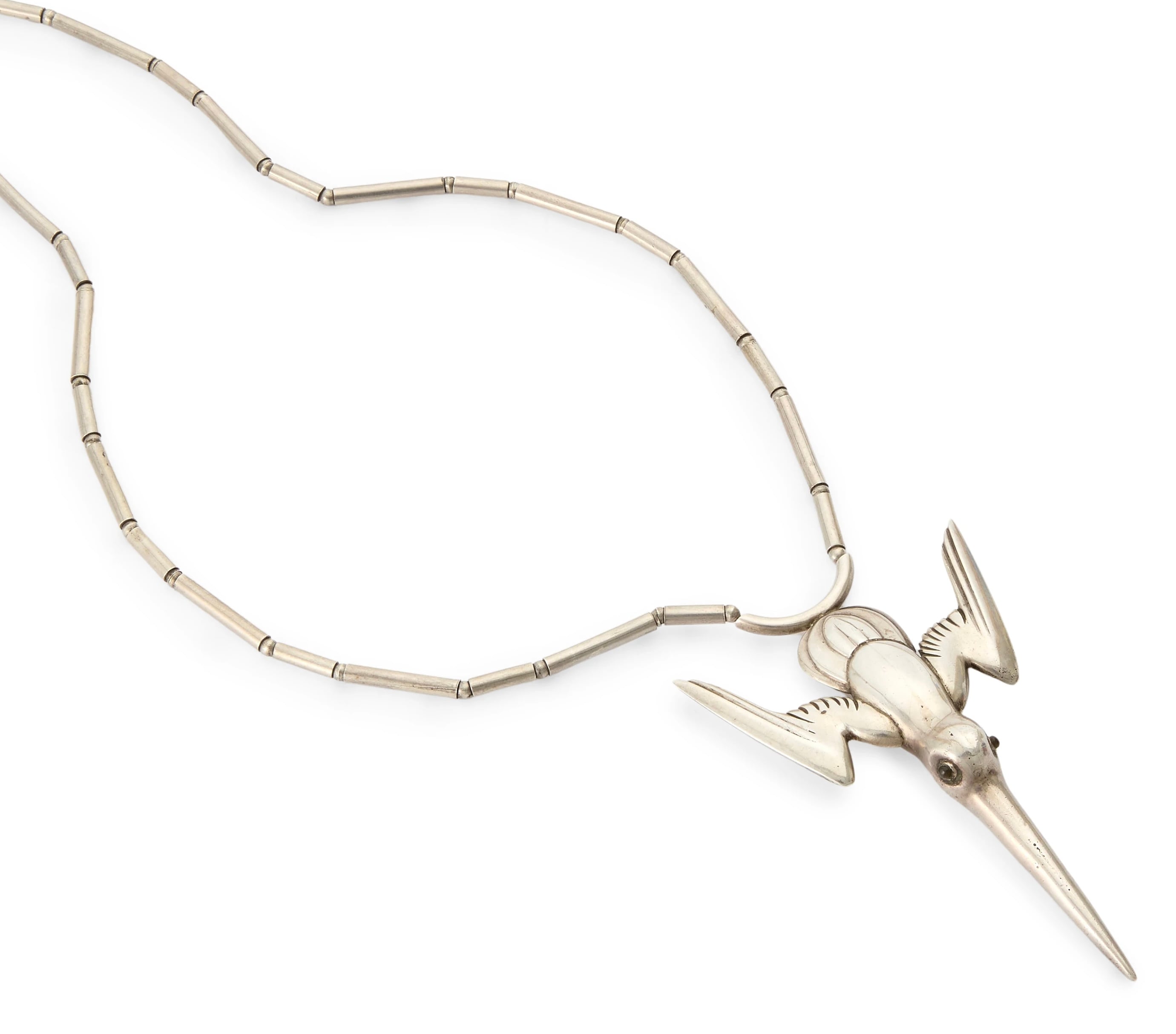
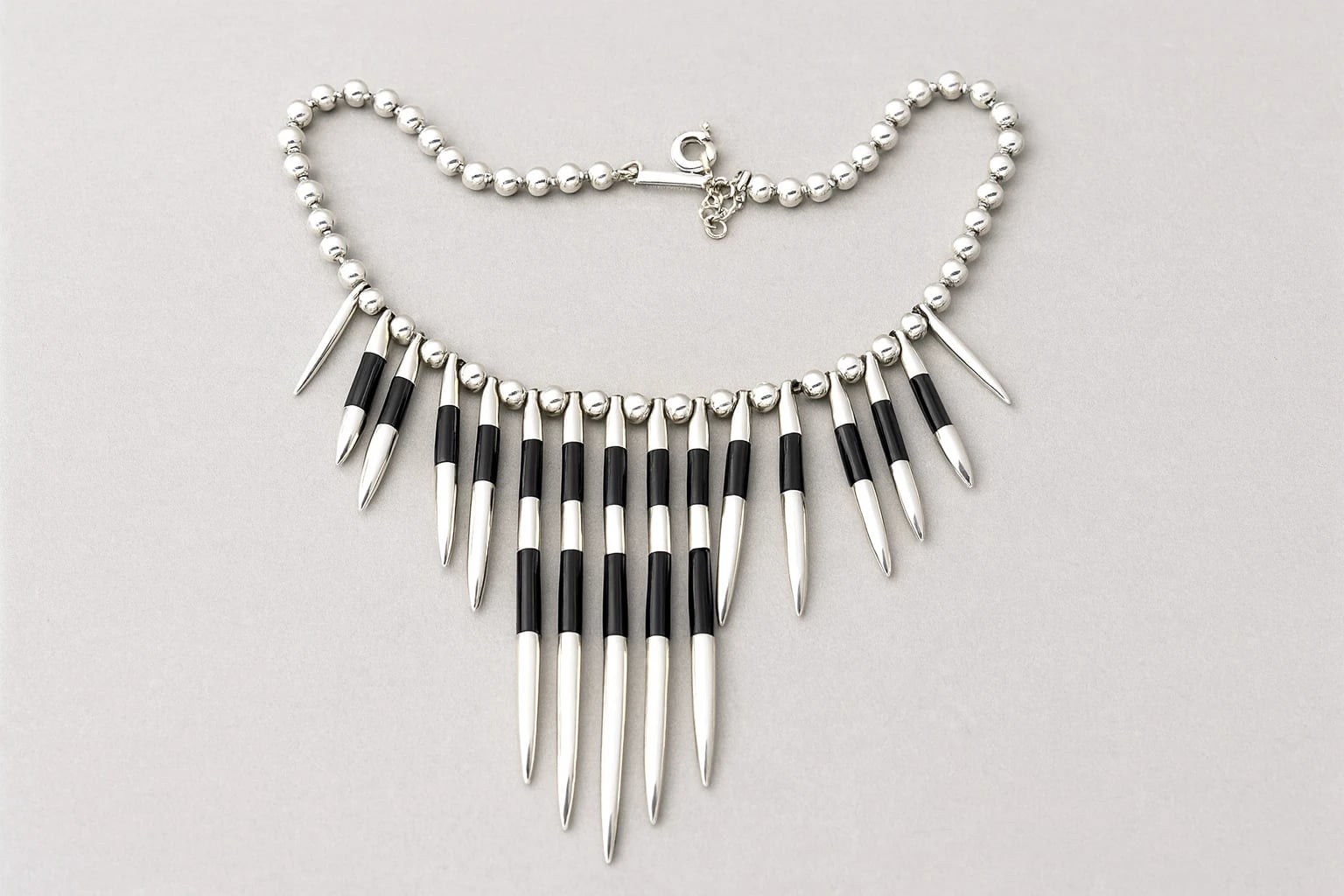
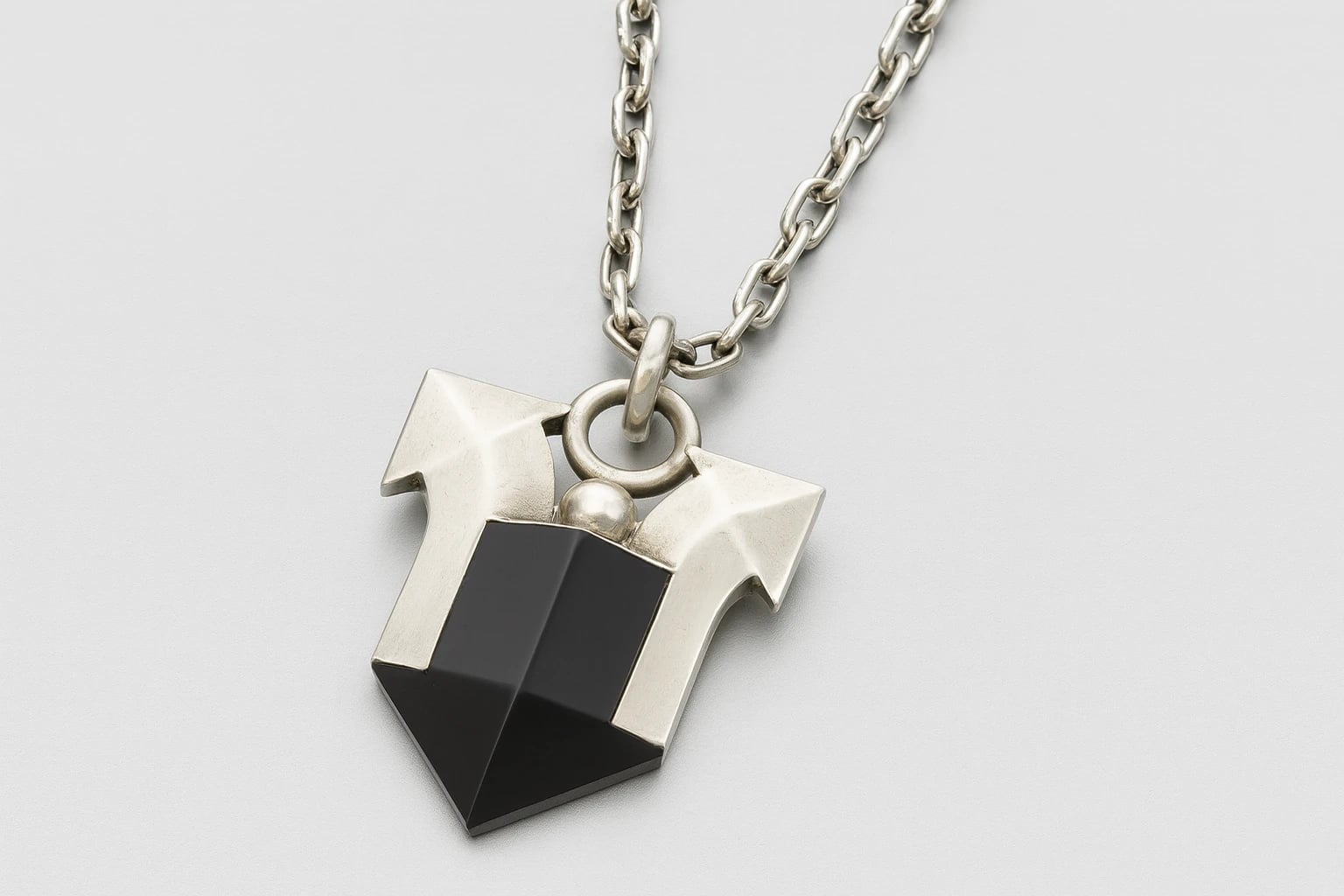
Slender obsidian blades hung as "arrows" against silver give this pendant its quiet drama, the volcanic black stone set off by the bright metal in a composition pared down to line and point. The piece is recorded as the earliest known example of the design, with later examples carrying slightly different proportions, which fixes it at the head of its own lineage within the workshop's Second Design Period of 1949 to 1951.
Obsidian was native to the Mexican highlands and prized by the Pre-Conquest cultures whose material vocabulary Spratling drew upon; the Tomb 7 finds at Monte Albán in 1932, which brought gold, jade, obsidian, and turquoise to wide public attention, fed directly into the design imagination of the Taxco school (Morrill, p. 38). Here that material is set to a modern, abstract end rather than an archaeological copy.
The pendant is recorded in Morrill's Maestros de Plata study of Spratling and the Mexican silver renaissance, in Goddard's field guide, and in the El Arte en la Vida Diaria exhibition catalogue. As the earliest documented instance of a design that was repeated with altered proportions, it carries particular interest for collectors tracing the evolution of a Spratling model.
Museum of Mexican Silver. “Obsidian and Silver Arrow Necklace.” Catalog no. MoMS-000578. https://museumofmexicansilver.com/pieces/spratling-764
See something wrong with this record? Suggest a correction and the piece details fill in automatically.
William Spratling
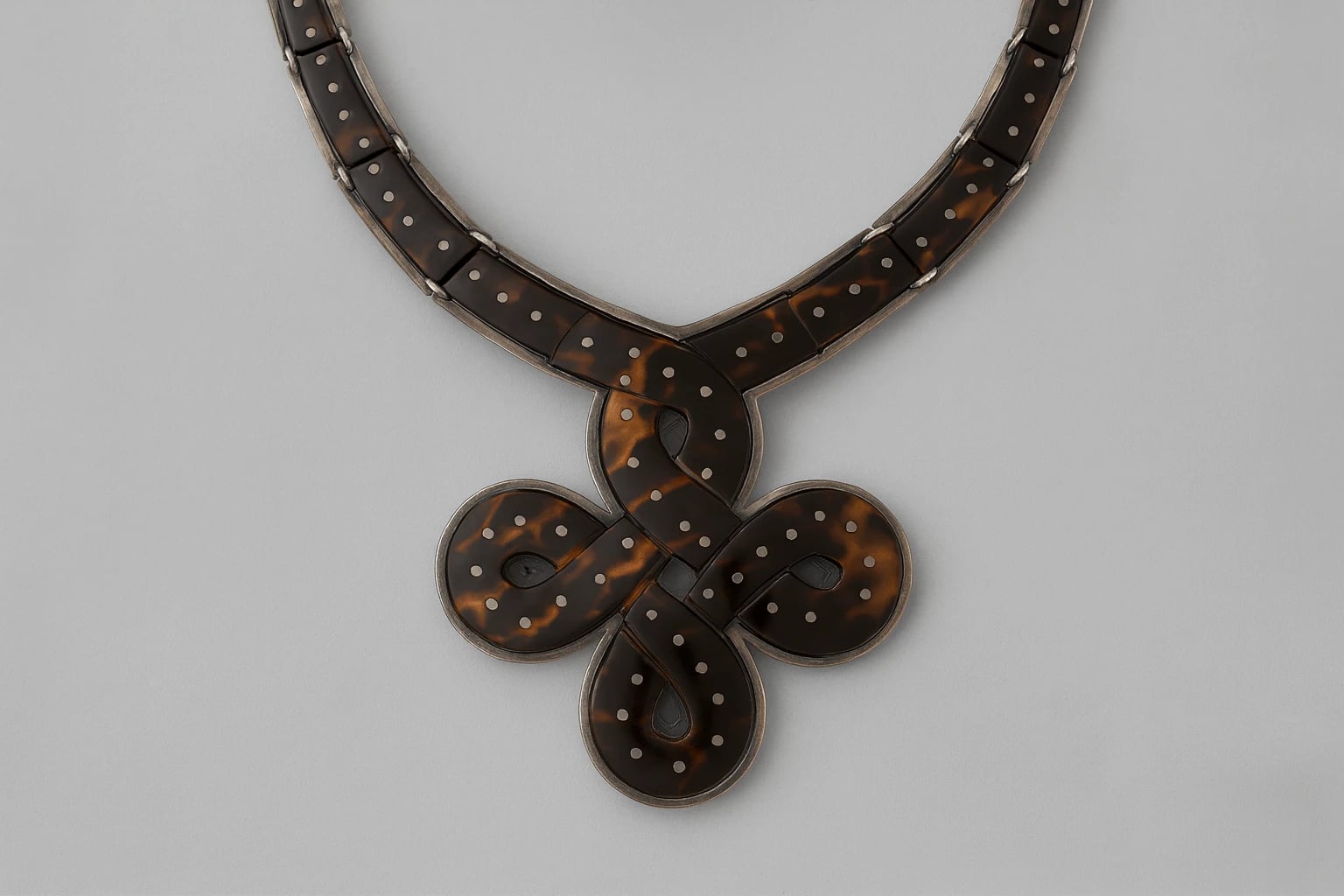
“Pretzel” Tortoise Shell Necklace
Second Design Period: 1949 - 1951
Tortoise Shell