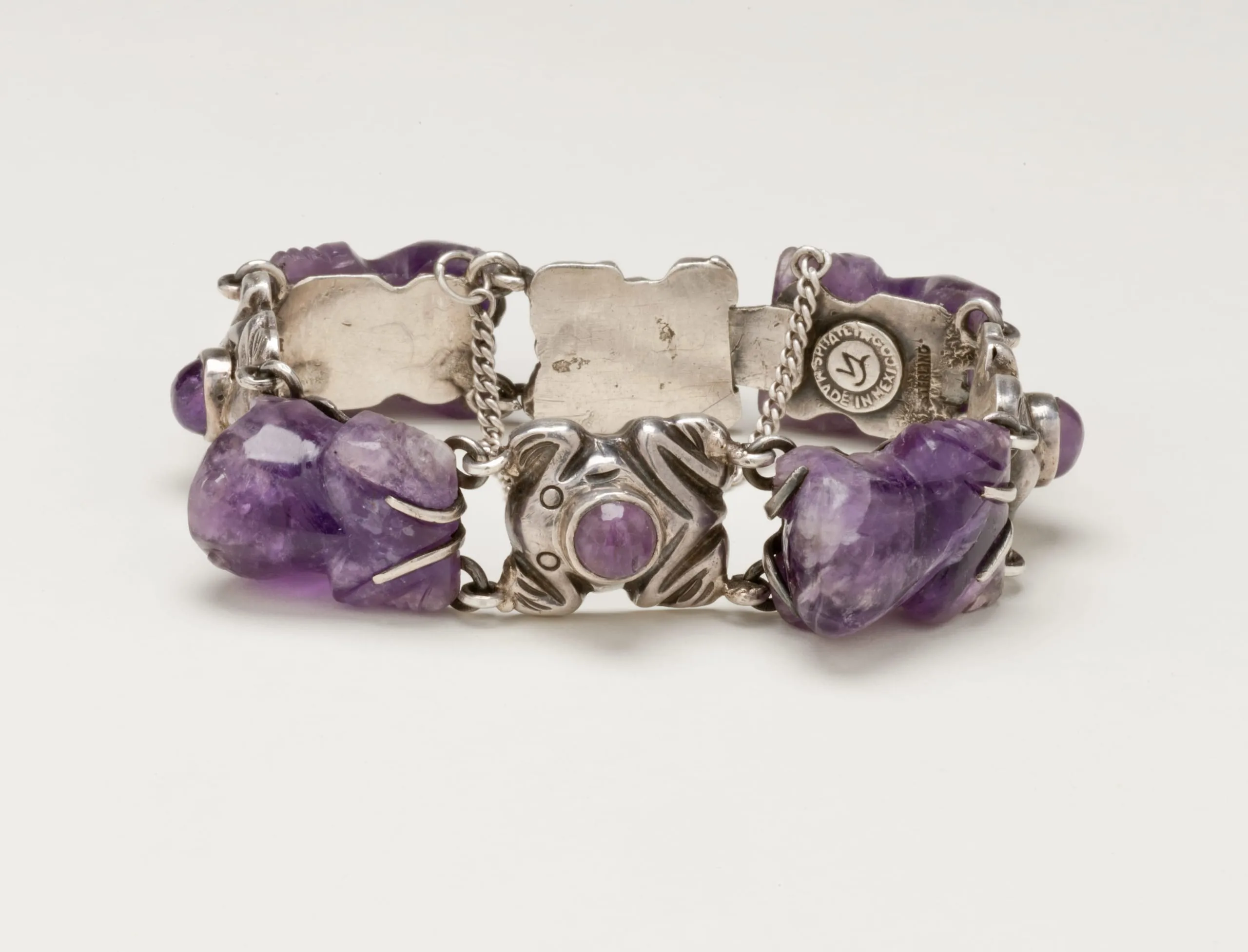
Part of the design family Amethyst Frog
Saves instantly, no account needed. Already a member? Sign in.
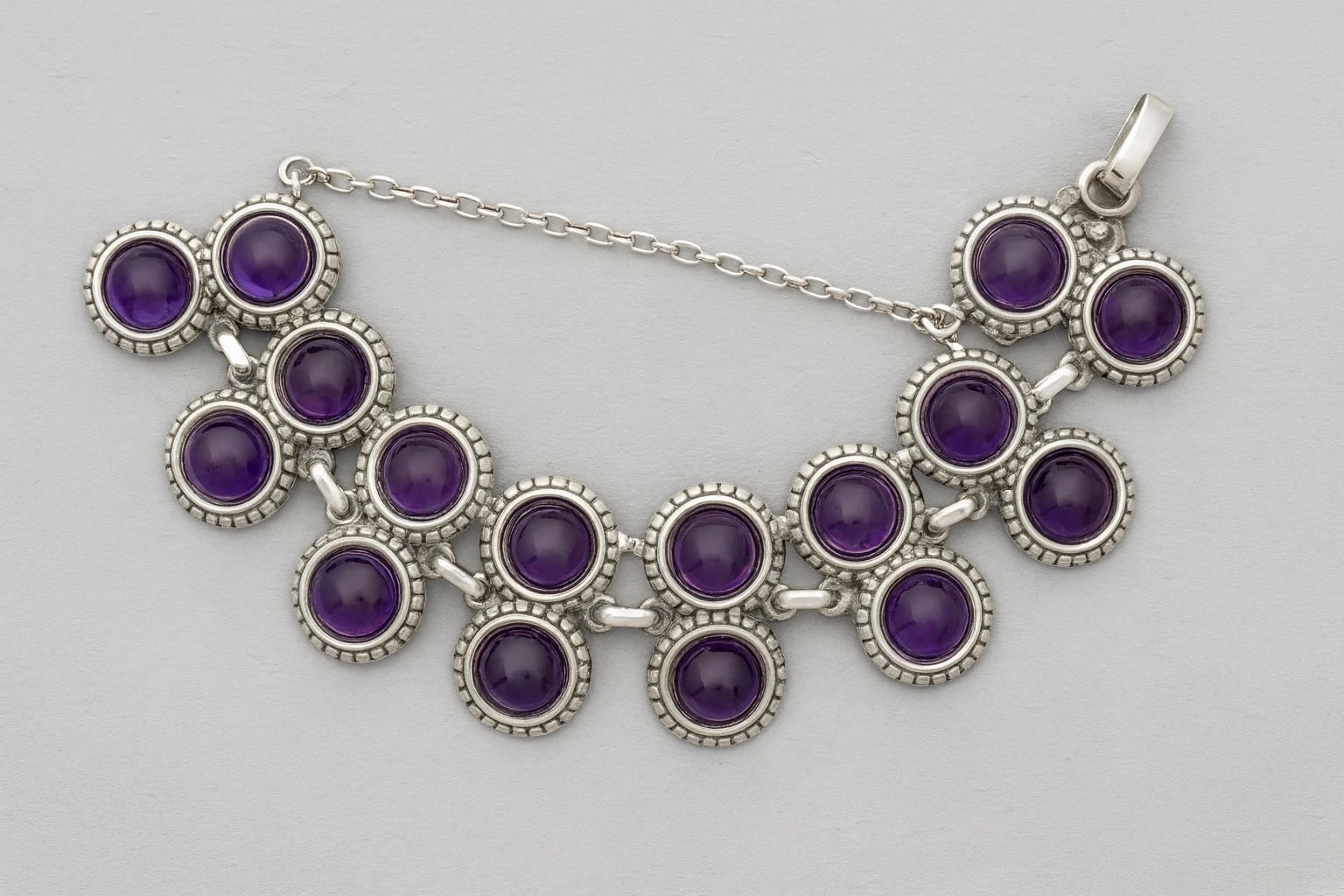
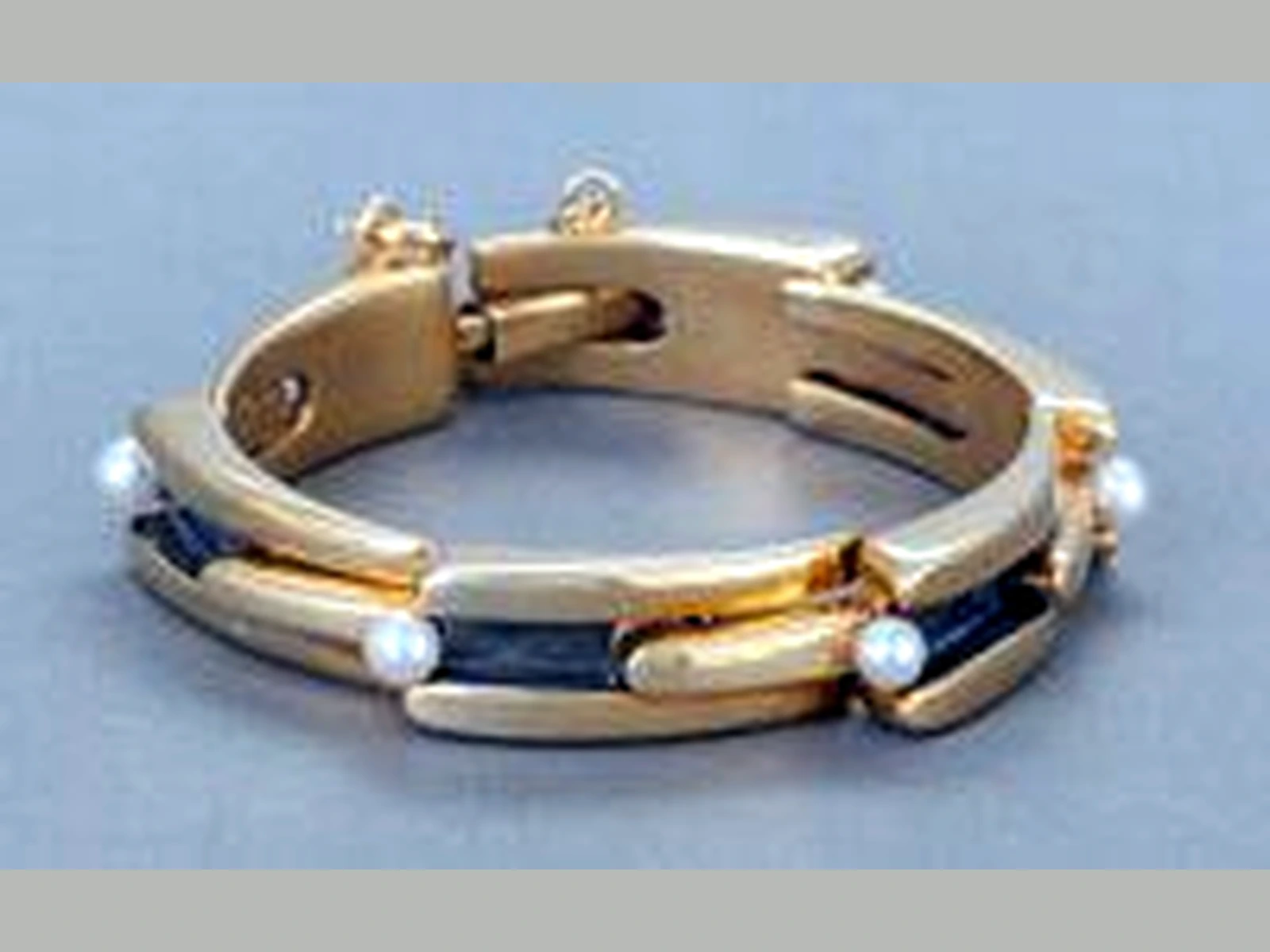
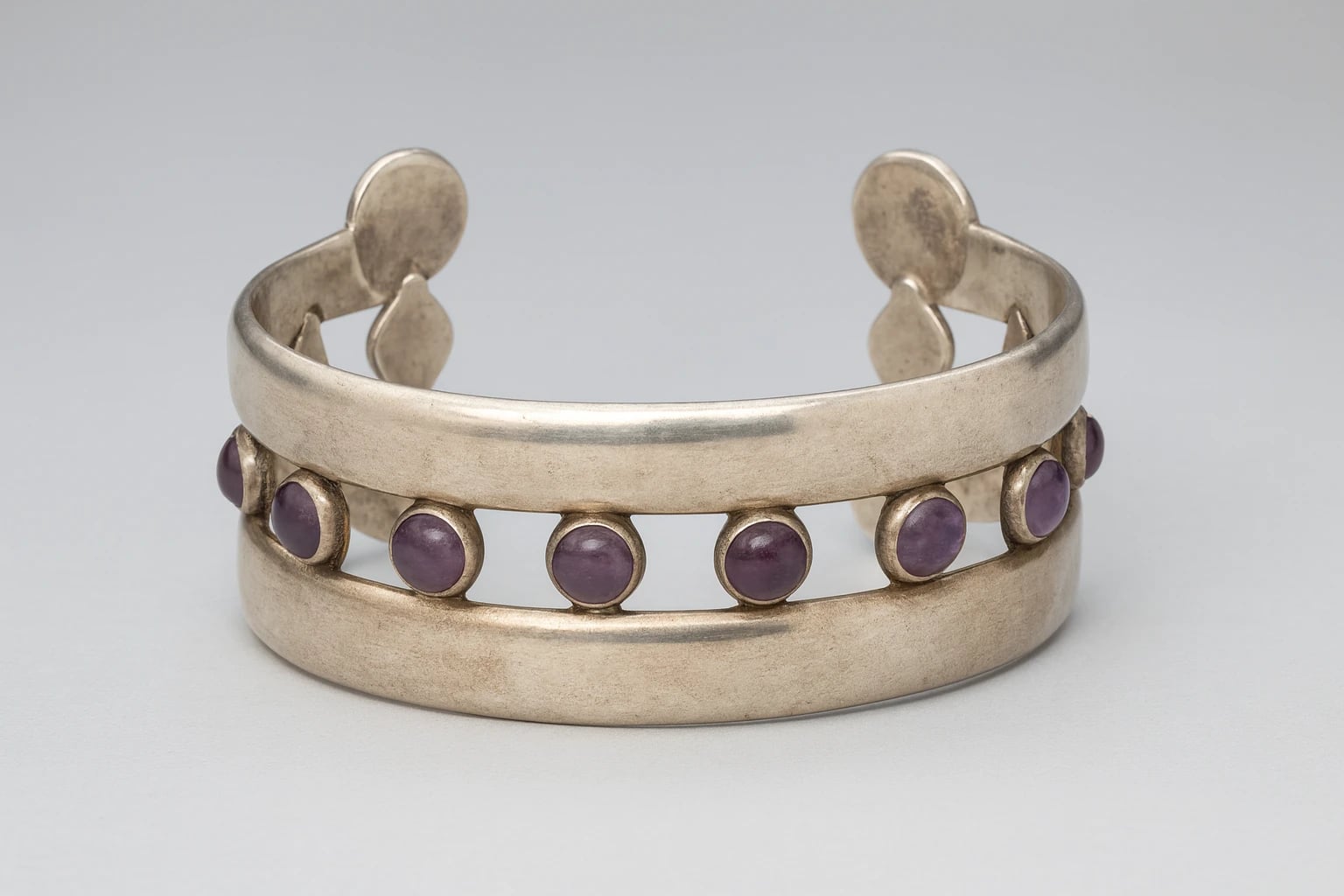
Among the menagerie of creatures William Spratling drew from Mexico's design vocabulary, the frog is one of the rarest, and a matched pair of his amethyst frog bracelets is rarer still. The motif belongs to Spratling's so-called First Design Period, the years around 1940 to 1944 when his Taxco workshop was at the height of its invention, and it survives today in only a handful of forms (bracelets, earrings, the occasional set). To have two of the bracelets together, each a flexible row of links alternating a frog hand-carved from amethyst with a cast silver frog, is to see the conceit at full strength: the stone itself becomes the animal, its translucence and natural inclusions standing in for living flesh, set beside its silver twin so that the eye reads carving and casting as one continuous procession.
Each bracelet is built as a band of alternating links, eight carved amethyst frogs in all across the pair, the silver frogs accented with cabochon amethyst eyes, sixteen cabochons in total. The design depends entirely on the lapidary's hand: the amethyst is worked in the round into a squat, folded frog with the bulging eyes and webbed feet that give the form its character, the kind of carving that left visible inclusions reaching the surface, a trait collectors and dealers treat as consistent with authentic Spratling work rather than a flaw. The silver links are substantial and broad, hung on a tongue-and-box clasp, and both bracelets carry the same hallmarks: SPRATLING MADE IN MEXICO with the WS conjoined mark used roughly 1940 to 1946, and STERLING. That mark window places the pair squarely in the period when Spratling's reputation as the figure who reordered Taxco silver was already made, even as the management troubles that would unsettle the company by mid-decade were beginning.
For authentication, the standard reference is Phyllis M. Goddard's Spratling Silver: A Field Guide, the tool collectors rely on to distinguish authentic Spratling from later copies, with its hallmark charts and period-by-period notes on design, materials, and construction. What distinguishes this piece is the pairing. Spratling's animal jewelry was made in a small workshop and in limited numbers, and a surviving matched pair of the amethyst frog bracelet, both correctly marked for the early-1940s period, is the form in its most complete state.
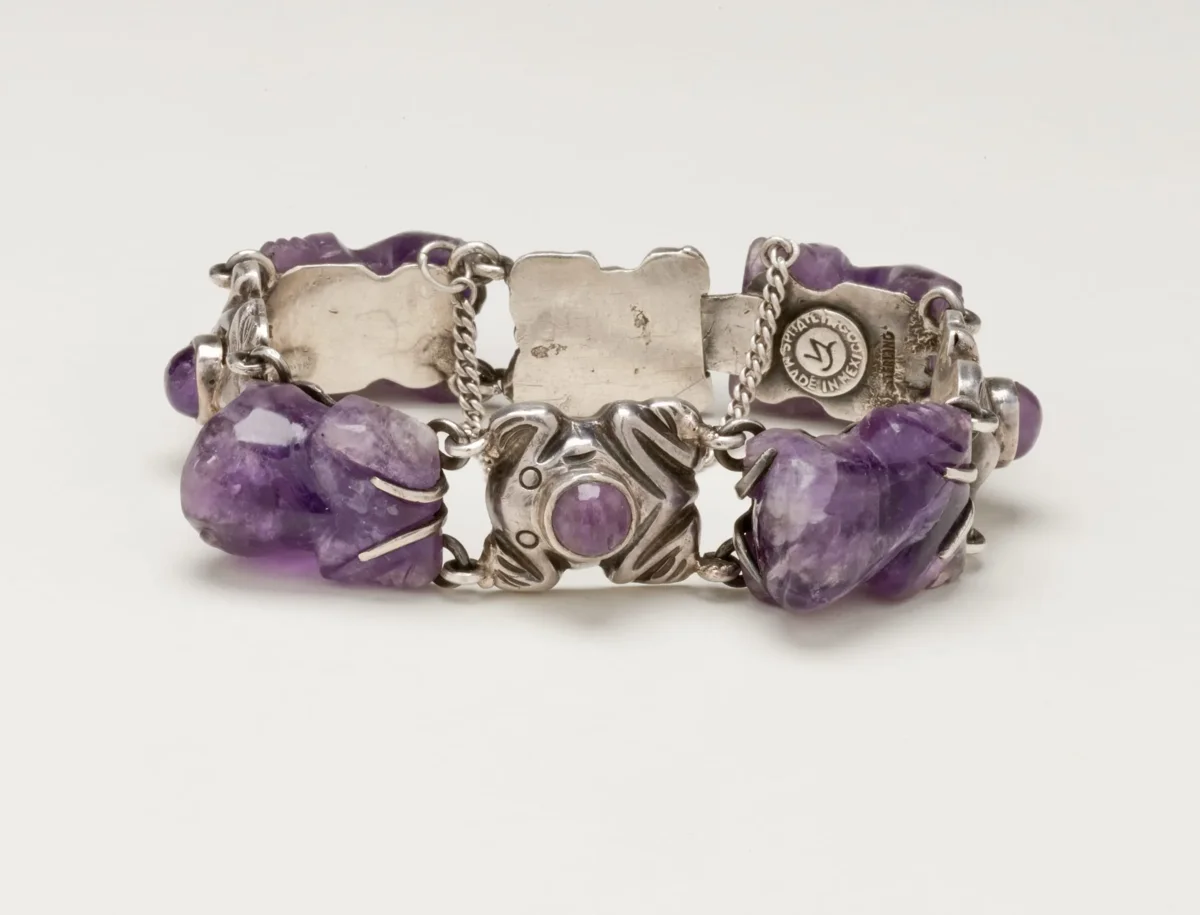
Frog Bracelet (Pulcera con ranas), circa 1940-1945
Accession M.2013.7.1. Official museum record Photo: Los Angeles County Museum of Art.
Verified against each institution's own collection records. All museum collections
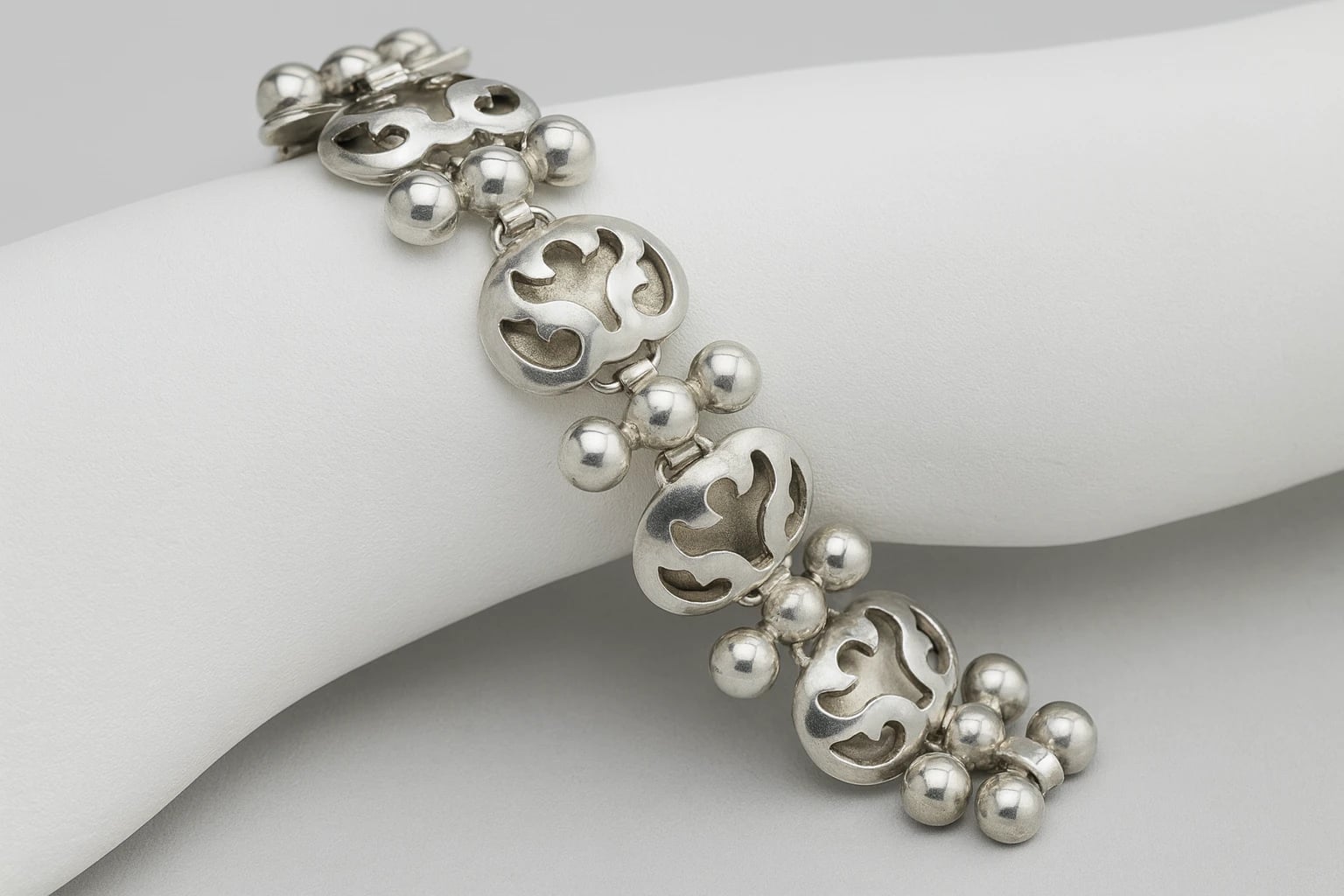
William Spratling, Frog Link Bracelet, ca. 1950
Santa Fe Art Auction · 2023-11-11
WILLIAM SPRATLING: A SILVER AND HARDSTONE BRACELET, MEXICO
Bonhams · 2022-11-10
WILLIAM SPRATLING PAIR OF AMETHYST AND SILVER FROG BRACELETS
Christie's · 2019-02-13
A SILVER AND TURQUOISE FROG BRACELET, WILLIAM SPRATLING, CIRCA 1940-46
Bonhams (United States)
Museum of Mexican Silver. “Amethyst Frog Bracelet.” Catalog no. MoMS-000404. https://museumofmexicansilver.com/pieces/spratling-82
See something wrong with this record? Suggest a correction and the piece details fill in automatically.
William Spratling
Carved Link Bracelet
First Design Period: 1931 - 1946
Silver