Saves instantly, no account needed. Already a member? Sign in.
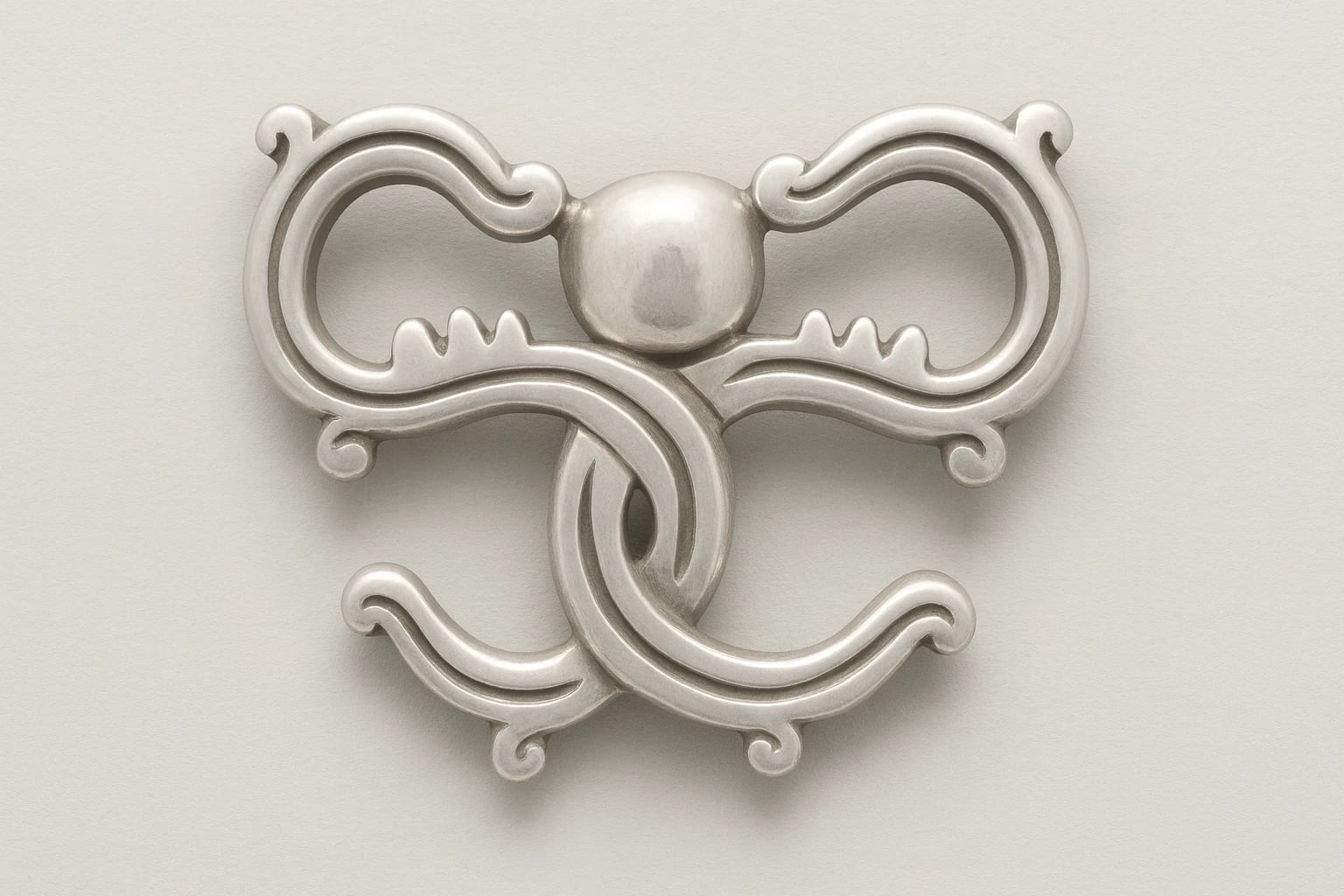
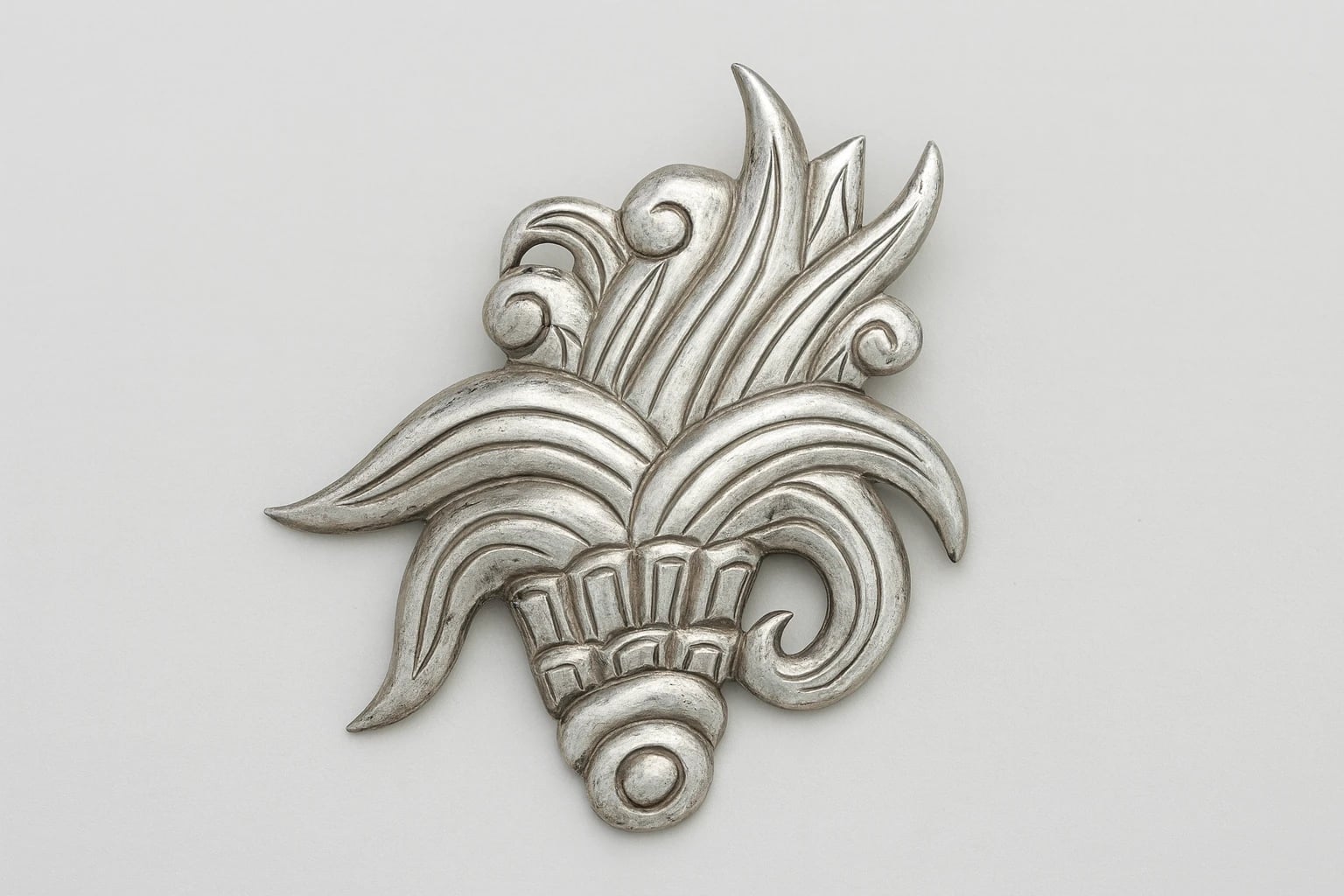
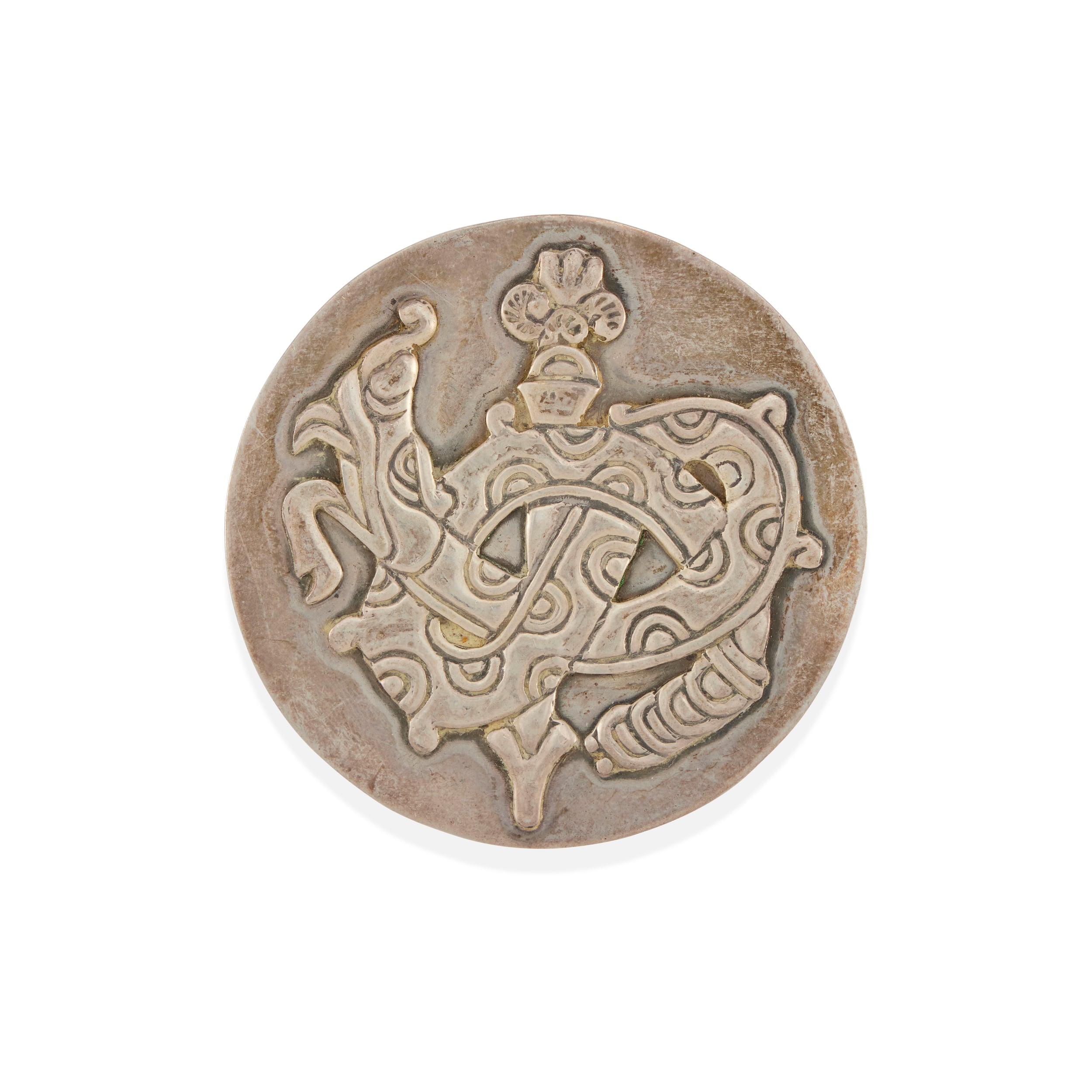
A flat sterling disc resolved entirely into the coiled body of a pre-Columbian serpent in high relief, this brooch belongs to the inaugural phase of William Spratling's Taxco workshop — the years between 1931 and 1946 when he first mapped the vocabulary of ancient Mexican design onto contemporary jewelry. The oxidized ground of the disc pushes the raised figure forward, sharpening both the creature's density of ornament and the clean boundary of the disc itself.
Spratling recalled in his own words, recorded in Morrill's Mexican Silver (1994), that "the pre-Columbian seals became brooches, sawed out of heavy sheet silver and polished." Morrill further notes that specific brooch designs from this period were taken directly from clay seals in Spratling's personal collection, and the close relationship between this serpent's coiling mass and the compact vocabulary of ancient stamp-seal composition is evident in the way the figure engages every part of the disc's surface. Stromberg similarly observes that Spratling "took motifs from Pre-Columbian design and translated them into a style that was accessible to an American audience and clientele" — a process this brooch enacts with particular directness.
The design's reach extended beyond the Taxco workshop. The same composition was produced as a pendant, and a version in silver plate was made for wider commercial distribution — a measure of how far a strong motif could travel from its handwrought origins at Spratling's taller without losing its identity.
The disc brooch, carrying the pre-Columbian serpent motif that Spratling himself named as one of his founding "point of departure" forms, represents an early and historically grounded moment in the development of Taxco modern silver.
Museum of Mexican Silver. “Quetzalcoatl Brooch.” Catalog no. MoMS-000009. https://museumofmexicansilver.com/pieces/spratling-928
See something wrong with this record? Suggest a correction and the piece details fill in automatically.
Eagle Head Brooch
First Design Period: 1931 - 1946
Silver