Saves instantly, no account needed. Already a member? Sign in.
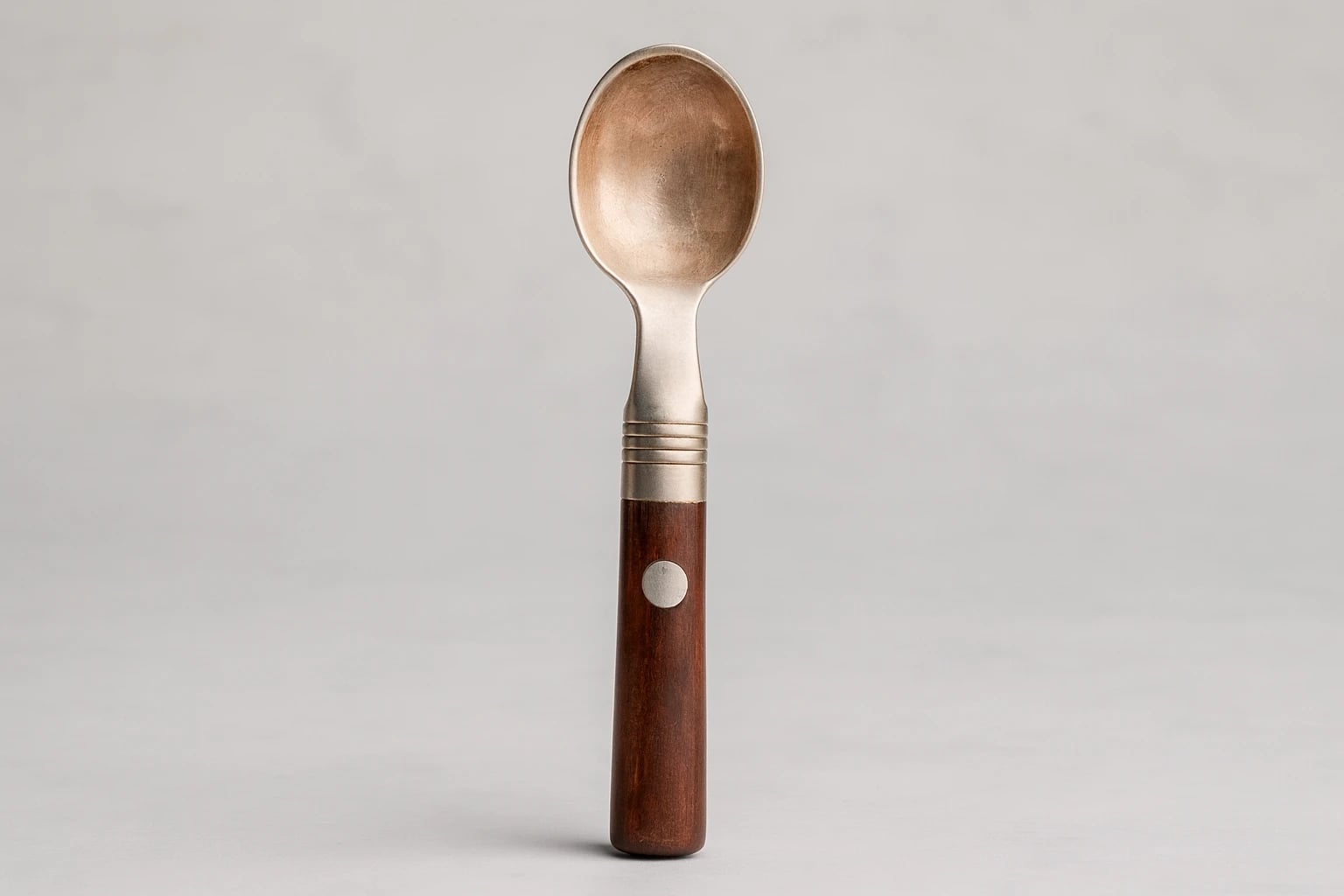
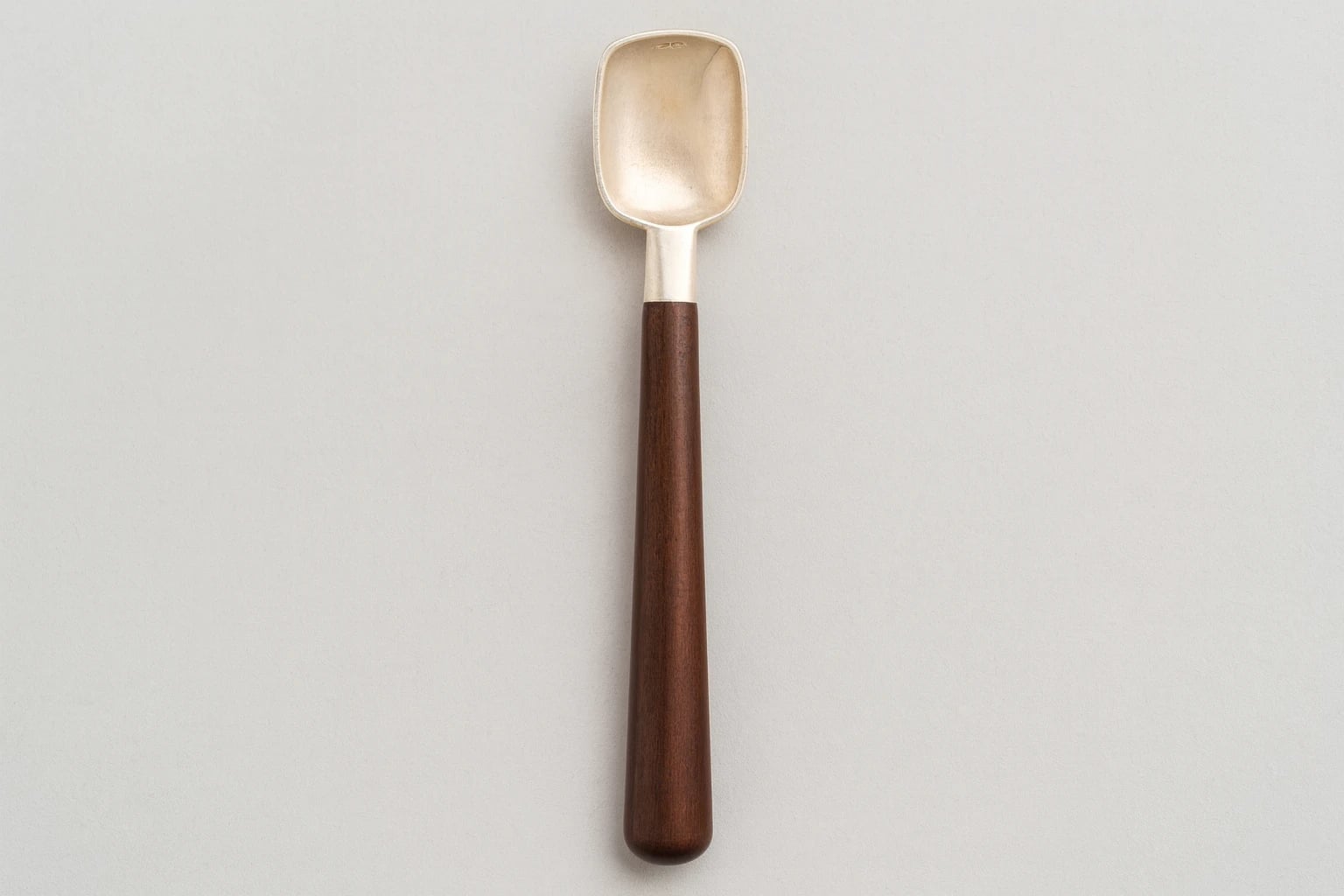
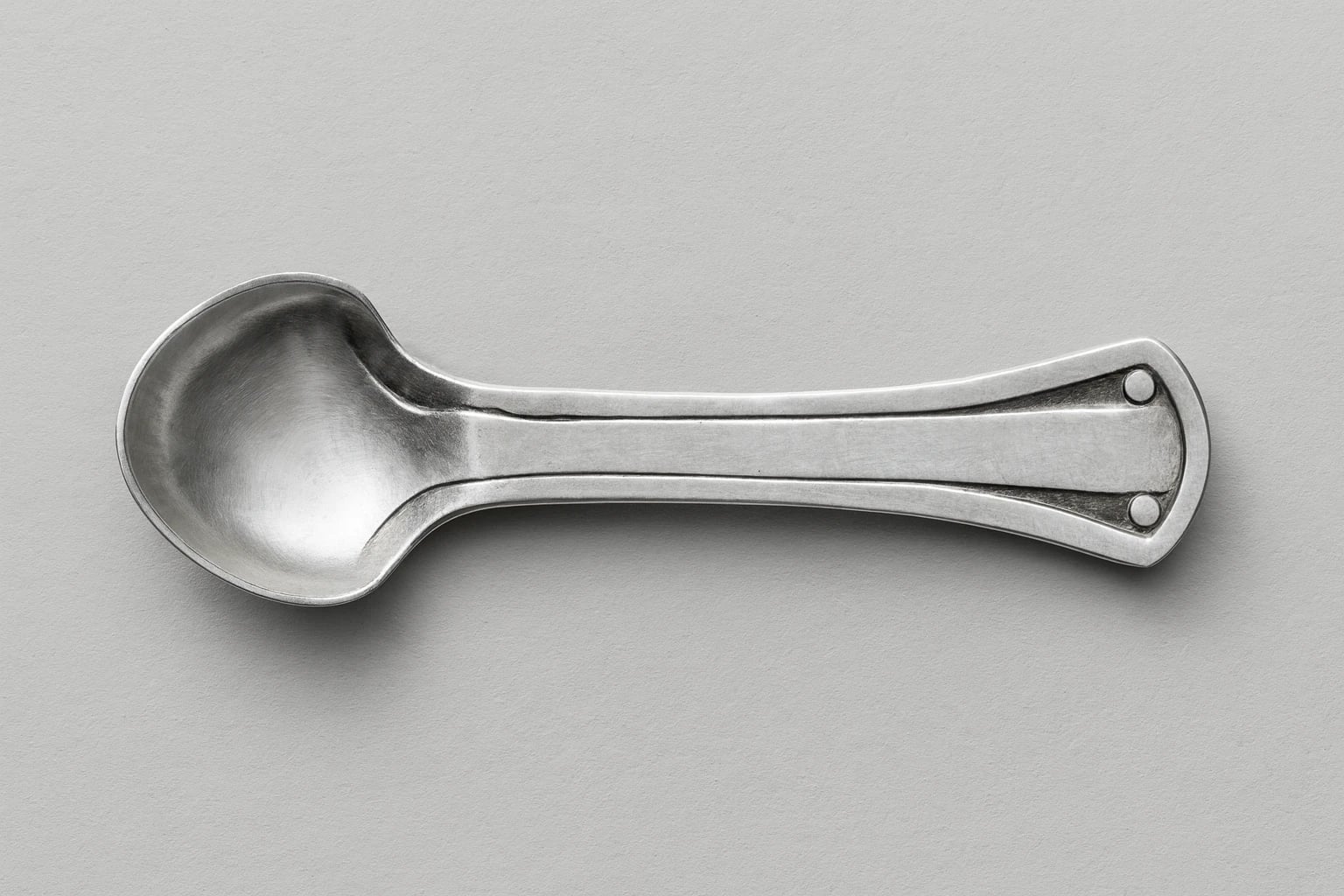
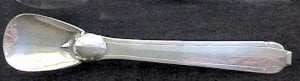
A salad serving spoon may be a humble object, but this one carries the Aztec Duck pattern, one of the named designs through which Spratling translated Pre-Columbian motif into the vocabulary of the modern table. The form is pure silver, its significance resting in a stylized motif drawn from Mexico's ancient design heritage and resolved into the clean handwrought line of a serving piece.
The design was included in "The World of William Spratling," the United States touring museum exhibition organized in 1965 that brought together his jewelry, holloware, and objects alongside Pre-Columbian art and work by friends such as Diego Rivera and Miguel Covarrubias (Morrill, p. 77); the exhibition's inventory specifically listed salad servers among the silver on view. To find a serving spoon of this pattern among that body of work places it squarely in the canon of his table silver.
The piece is recorded in the literature, appearing in Cederwall and Riney's Spratling Silver and in Penny Morrill's William Spratling and the Mexican Silver Renaissance: Maestros de Plata, the two principal scholarly references for his work. That documentation reflects how seriously his holloware and flatware are now studied, not merely his jewelry.
Spratling, who founded the Taxco silver revival after opening his workshop in 1931, drew his earliest designs almost literally from Aztec and Colonial sources before refining them into a modern idiom. A named pattern like the Aztec Duck is exactly that process made permanent in a usable object.
Museum of Mexican Silver. “Salad Serving Spoon.” Catalog no. MoMS-000702. https://museumofmexicansilver.com/pieces/spratling-952
See something wrong with this record? Suggest a correction and the piece details fill in automatically.
Small Silver Spoon with Detailing Like
Silver