Saves instantly, no account needed. Already a member? Sign in.
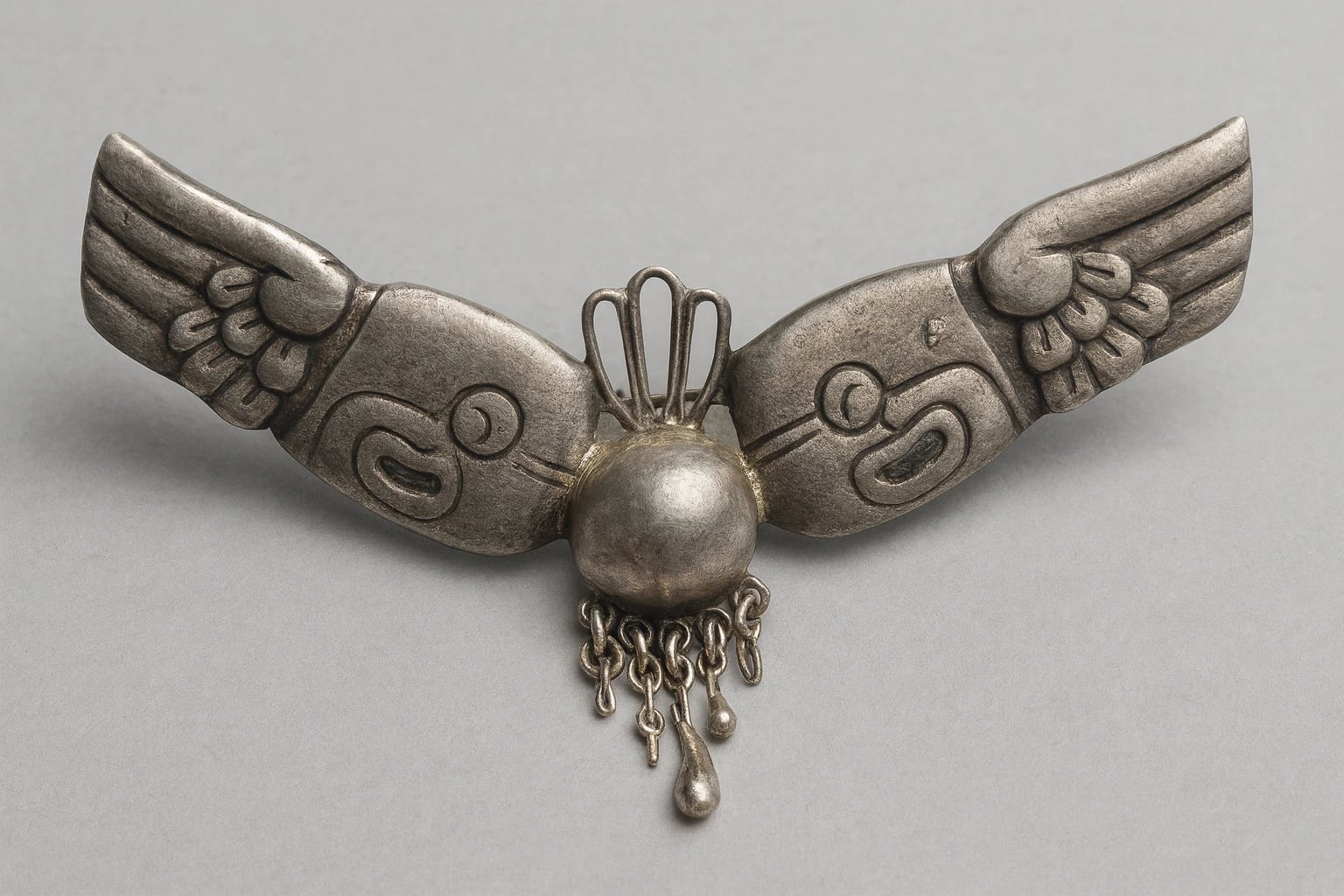
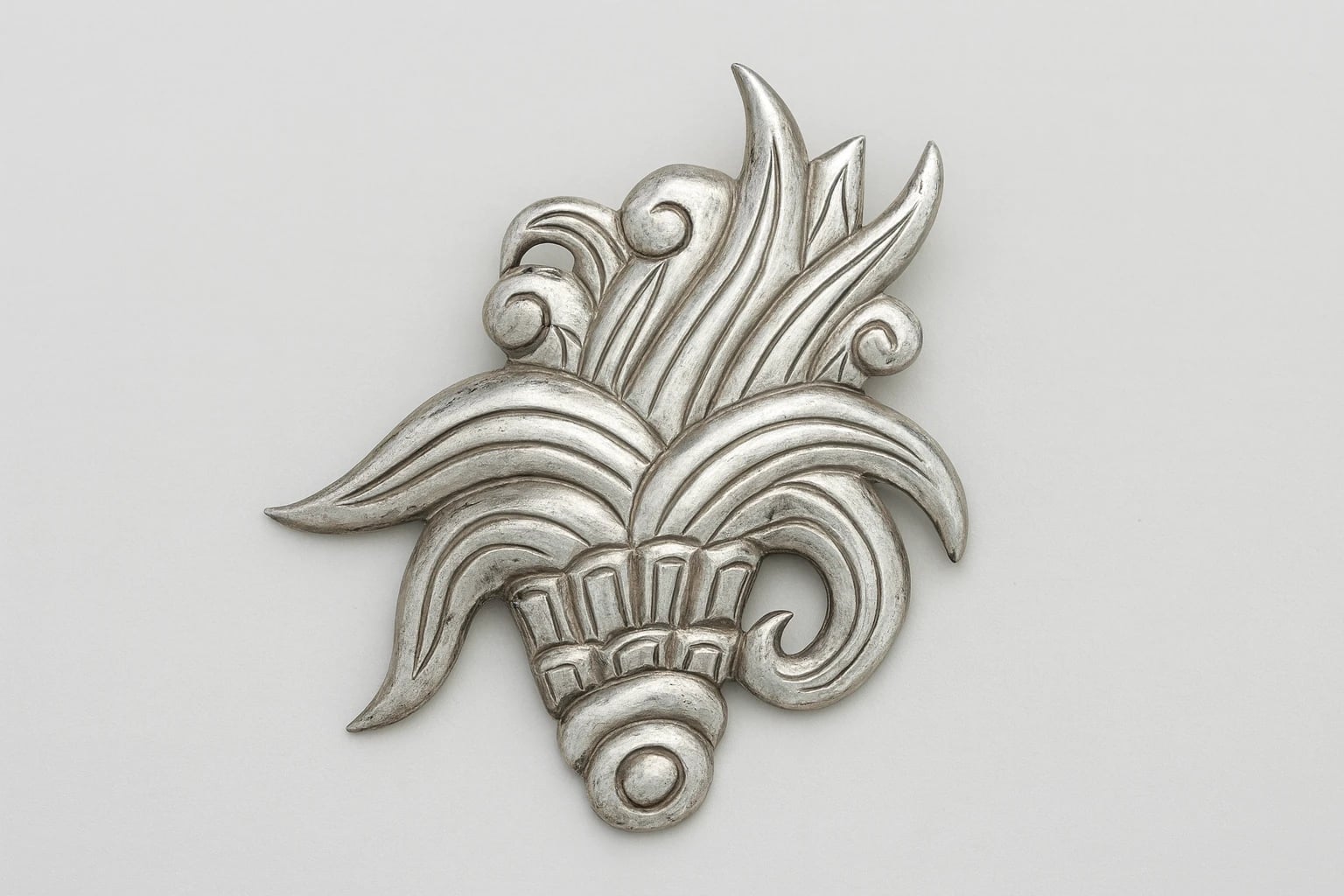
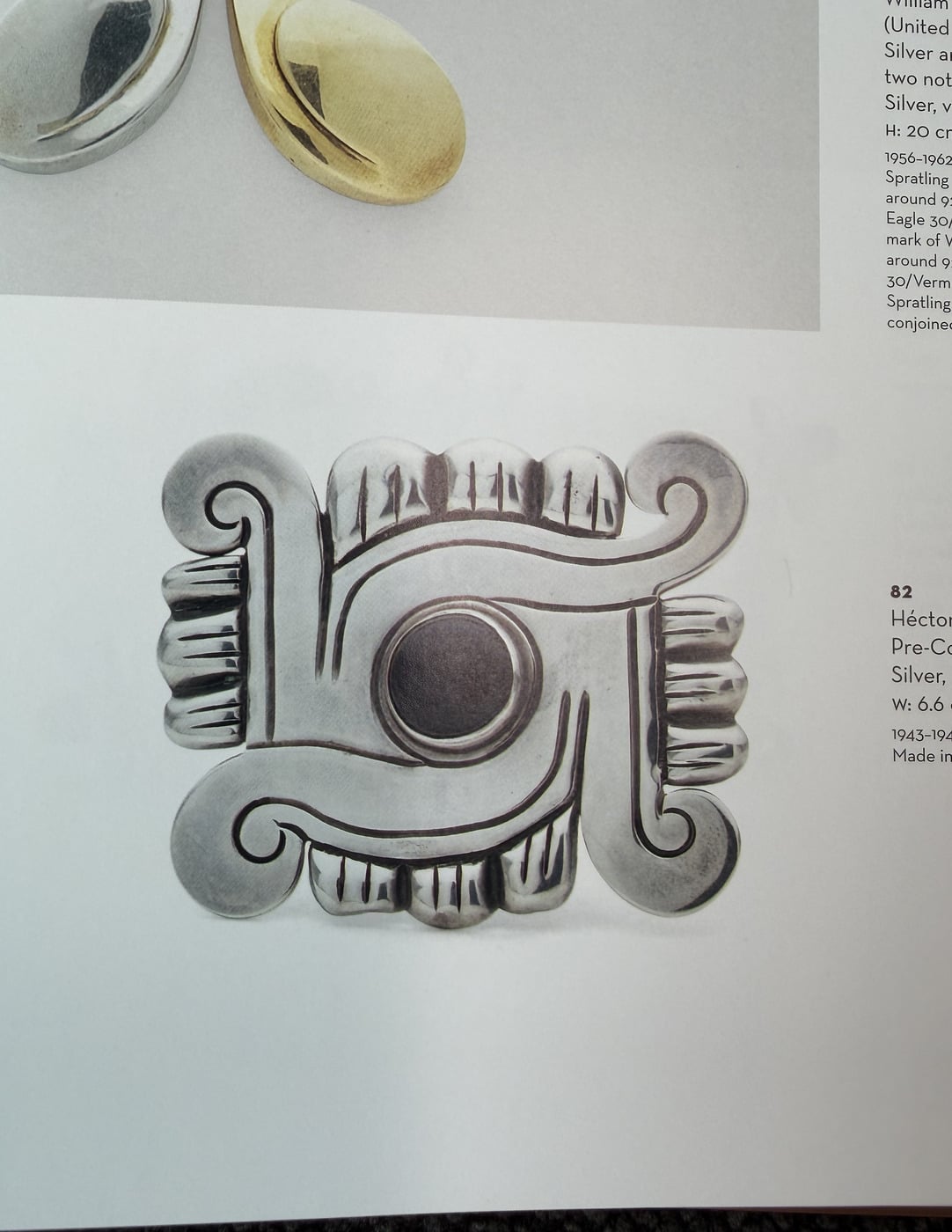
This early brooch takes its design directly from the Aztec codices, the painted manuscripts of pre-conquest Mexico, translated into a silver brooch. The piece is a clear instance of Spratling's founding method, in which a Pre-Columbian source was rendered into modern handwrought metal rather than merely imitated.
The brooch dates to his First Design Period, 1931 to 1946. Spratling wrote that his earliest designs were "almost literal copies of Aztec and Colonial motives," with Pre-Columbian seals becoming brooches sawed out of heavy sheet silver, and that these sources formed "a point of departure" for the new work (Morrill, pdf p. 39). A codex-derived brooch from these years is an artifact of exactly that process.
The piece is recorded in the literature, appearing in Morrill and Berk's Mexican Silver: 20th Century Handwrought Jewelry and Metalwork, the standard reference for the field. Its inclusion documents the codex motif among the recognized early designs.
Spratling, who founded the Taxco silver revival in 1931, built that revival on translating Mexico's ancient design heritage into a modern idiom, and a brooch drawn from the Aztec codices is the method in its purest early form. The object sits at the origin of the vocabulary that would define Taxco silver.
Museum of Mexican Silver. “Aztec Codex Brooch.” Catalog no. MoMS-000151. https://museumofmexicansilver.com/pieces/spratling-984
See something wrong with this record? Suggest a correction and the piece details fill in automatically.
William Spratling
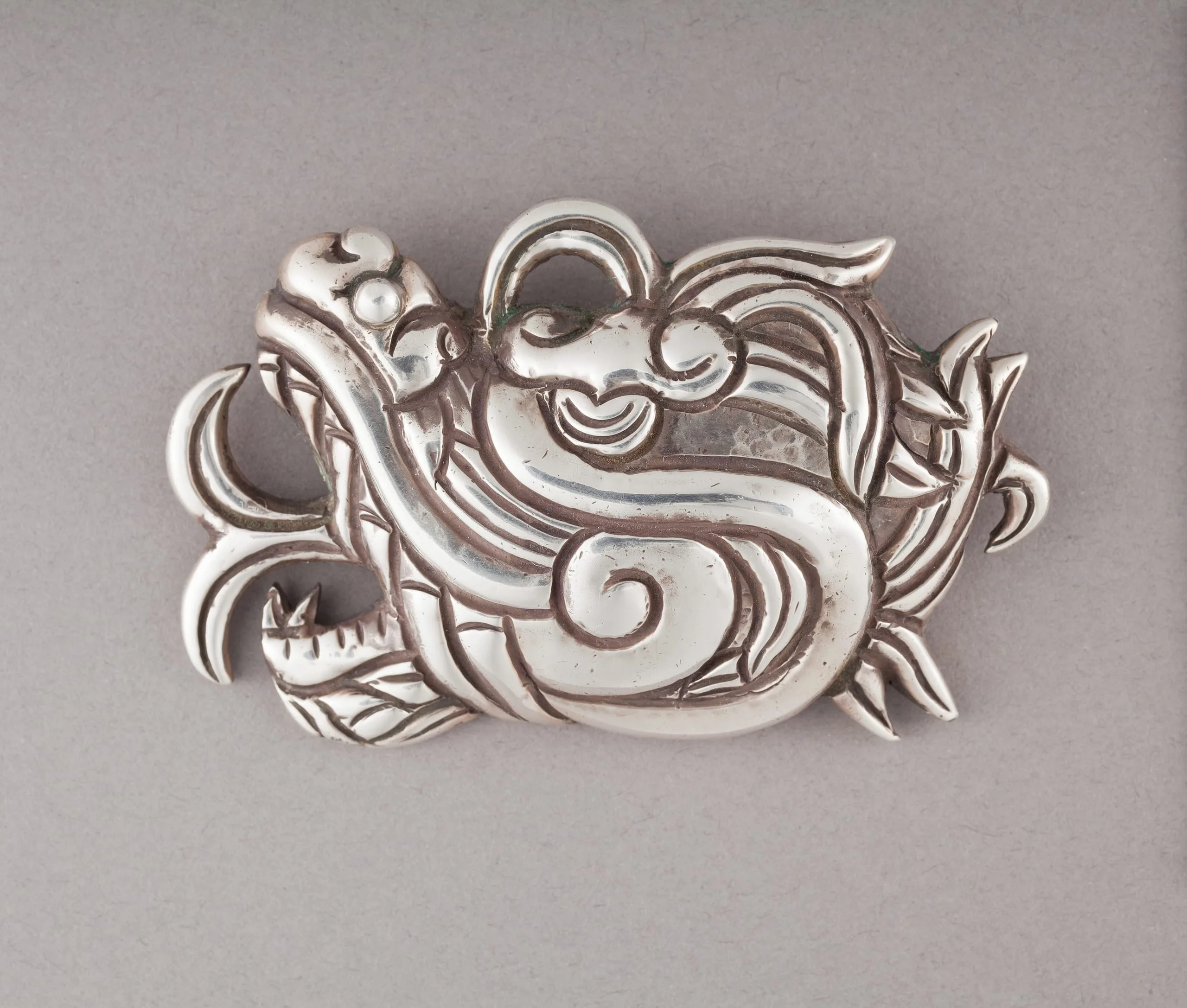
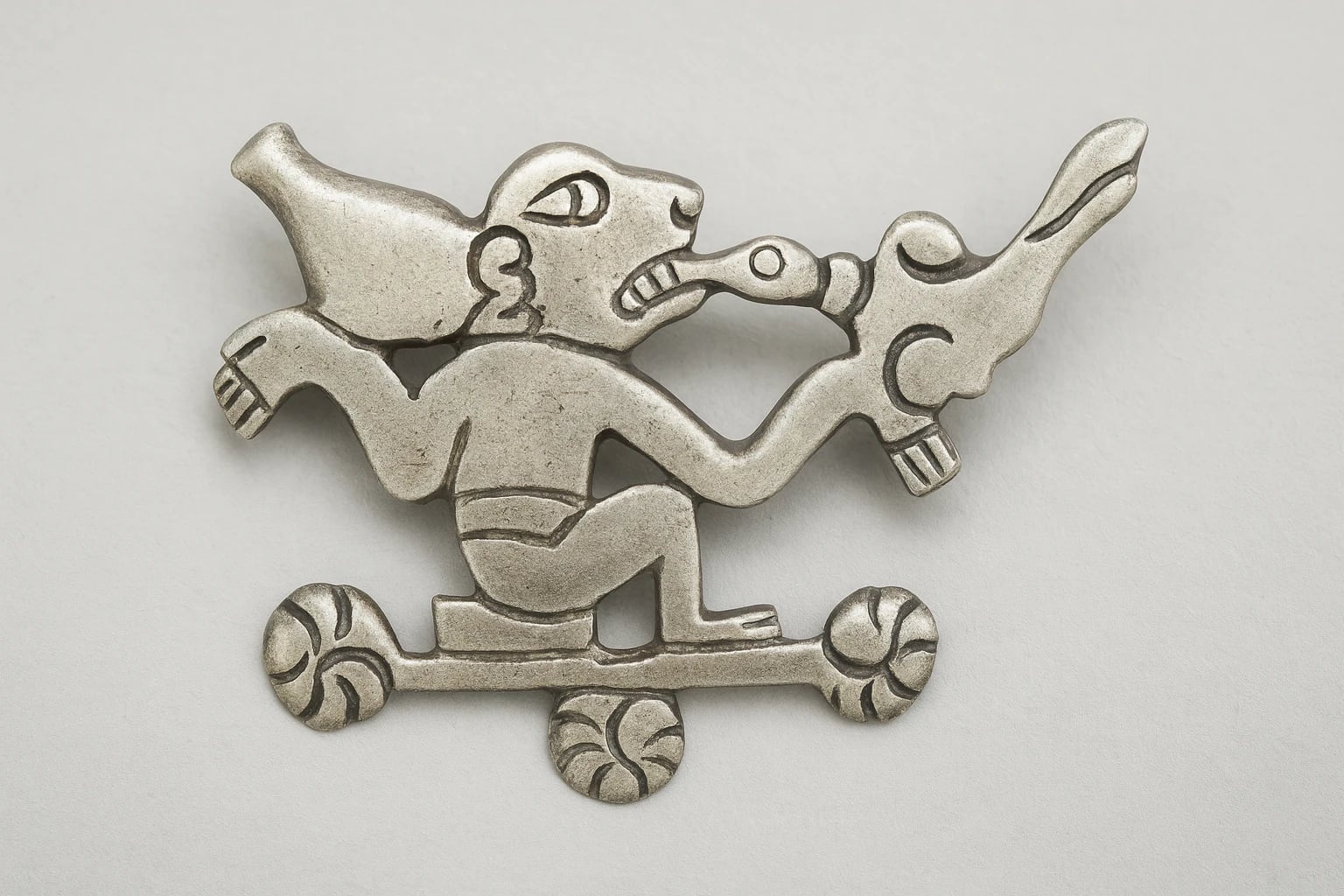
Quetzalcoatl Brooch
1939-1940
Silver