Saves instantly, no account needed. Already a member? Sign in.
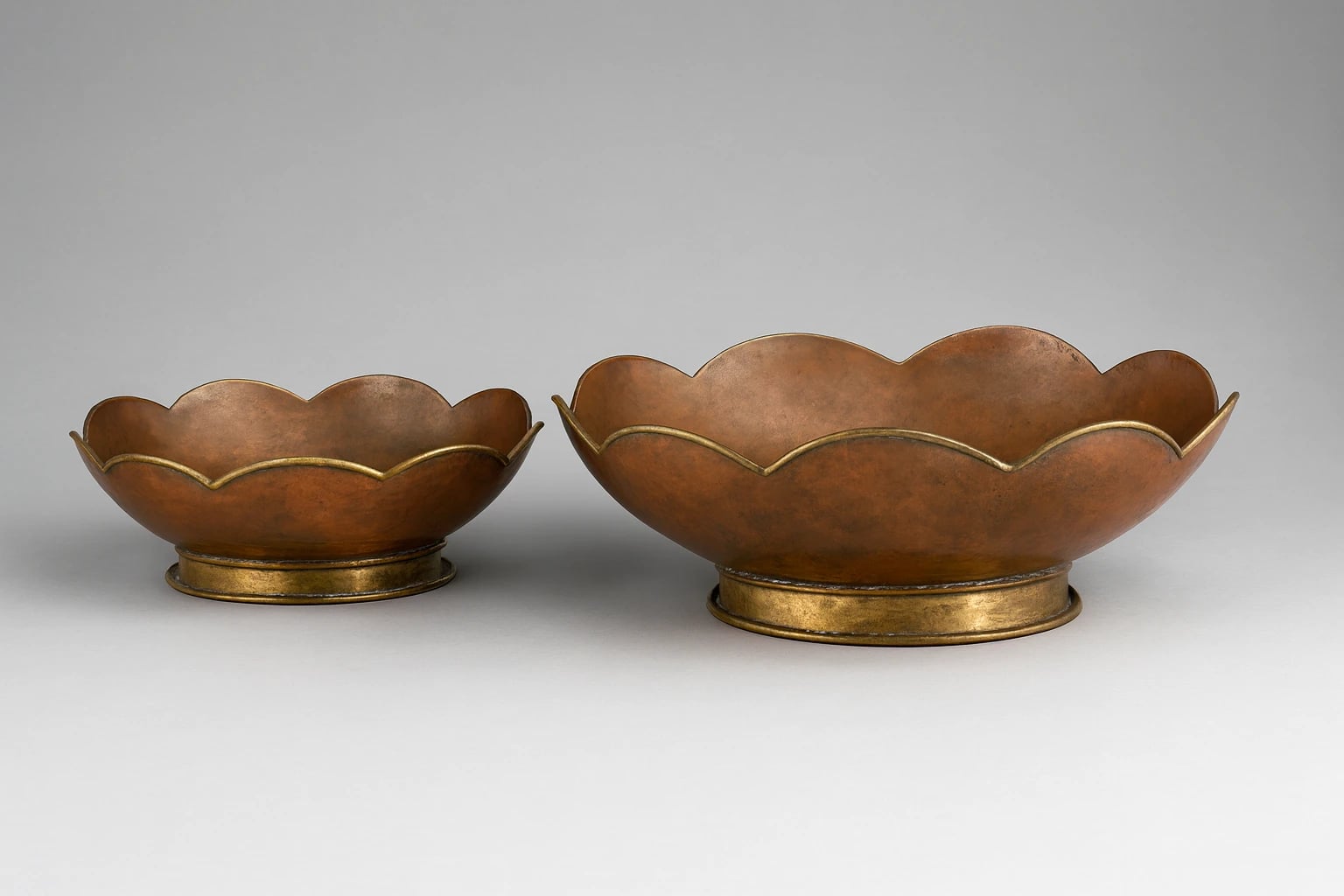
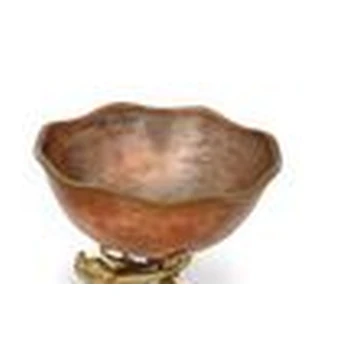
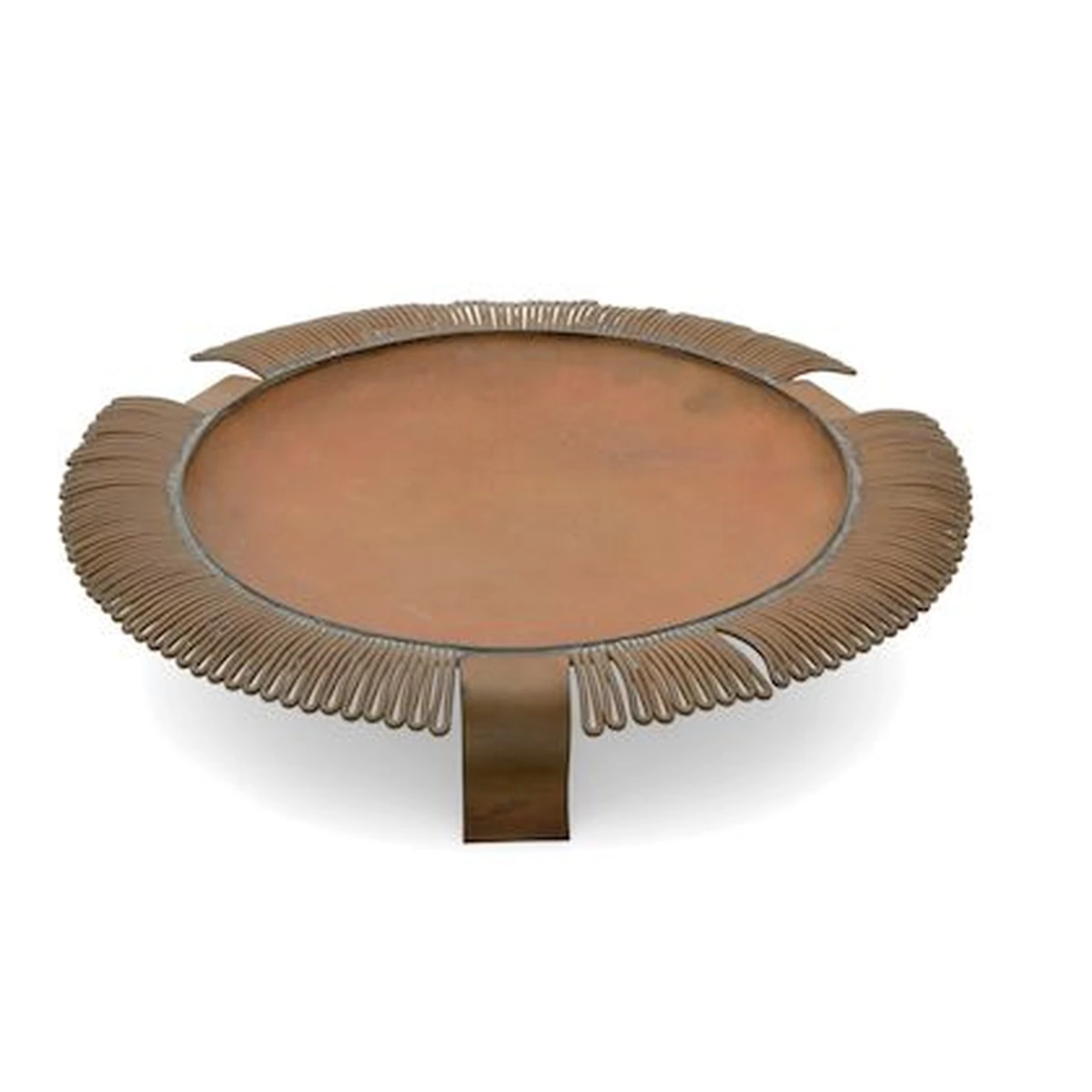
The scalloped rim organizes this footed copper bowl. A series of ribs fans outward from the body of the vessel and breaks the edge into a repeated wave, so that the plain hemisphere becomes a study in rhythm and shadow. Light gathers along each raised rib and settles into the hollows between them, and the warm patina of the copper deepens that alternation. The raised foot lifts the bowl clear of the surface it rests on, giving the form more standing presence than the shallower copper bowls that came from the same workshop.
The bowl is hollowware treated with the discipline that Taller Borda brought to its jewelry and silver. Working the rim into regular scallops requires the metal to be shaped consistently around the circumference, and the evenness of the intervals is the visible record of that control. Copper carries the design differently than silver would. It is warmer in tone, it takes a patina that darkens in the recesses and brightens on the ridges, and it rewards a surface left with the marks of hand finishing rather than polished to a mirror. The foot is a separate structural decision, raising the center of the form and letting the scalloped edge read as the widest and most active part of the vessel.
Héctor Aguilar directed the Taller Borda in the Casa Borda, where the workshop produced far more than jewelry. Morrill records candelabra, bowls, pitchers, and trays in copper and brass, materials Aguilar used for their strong surface character. Comparable scalloped-edge copper and brass bowls are recorded in Morrill's study of Aguilar and dated to around 1940 to 1945. This footed example sits within that group of copper hollowware, where the workshop applied its sense of proportion and edge to vessels meant for the table rather than the body.
As a single vessel, the bowl records a side of the Taxco renaissance that is easy to overlook when attention settles on silver jewelry. Copper hollowware from Taller Borda shows a major Taxco workshop applying modern design thinking to everyday objects, using an inexpensive metal for its color and its response to the hand rather than for monetary value. The scalloped rim and raised foot demonstrate how Aguilar's workshop could turn a functional bowl into a considered form, and the object holds a place in the broader account of Mexican decorative arts of the 1940s.
Museum of Mexican Silver. “Patinated Copper Footed Bowl with Scalloped Edges.” Catalog no. MoMS-001993. https://museumofmexicansilver.com/pieces/aguilar-patinated-copper-bowls-with-scalloped-edges-48
See something wrong with this record? Suggest a correction and the piece details fill in automatically.
Héctor Aguilar
Footed Bowl