Saves instantly, no account needed. Already a member? Sign in.
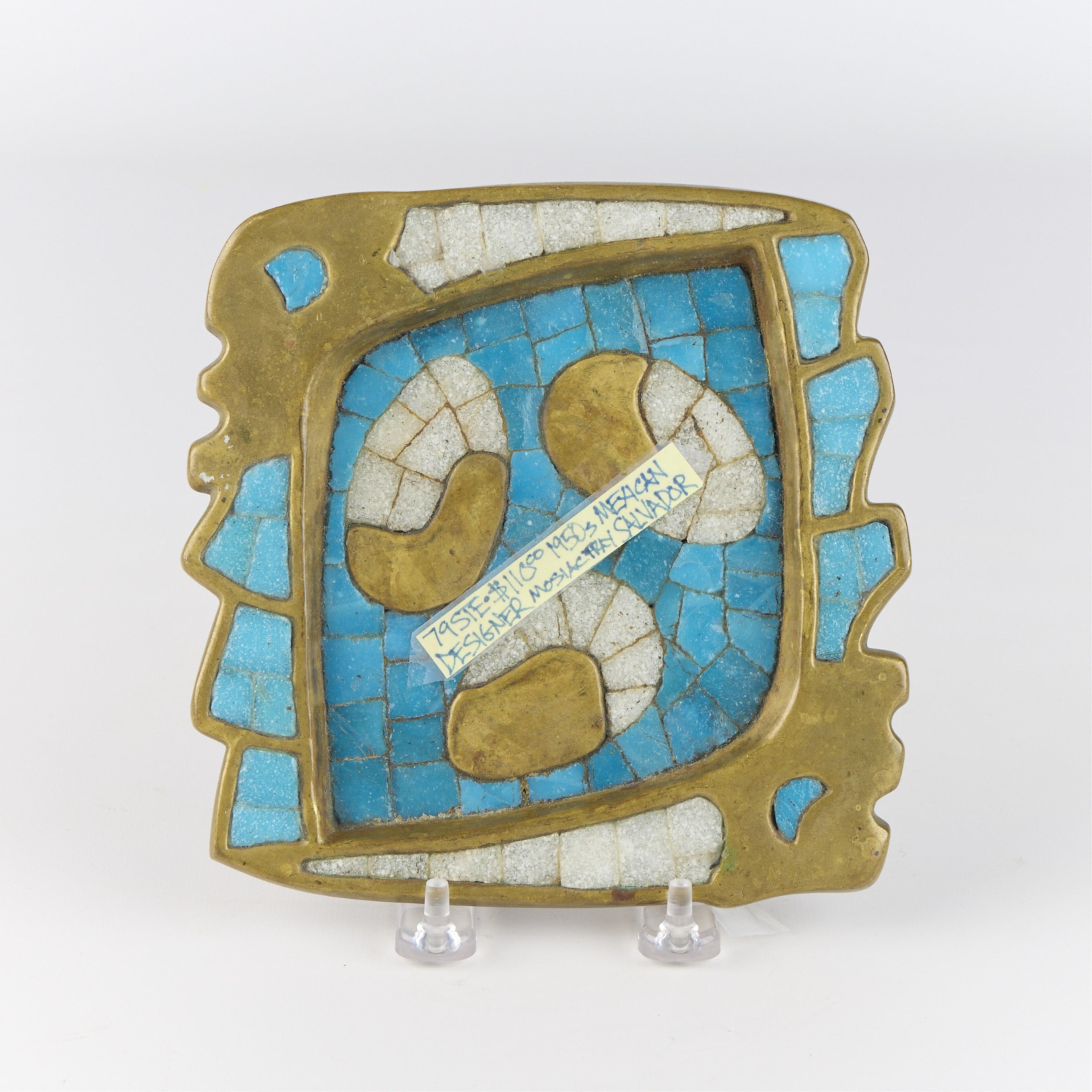
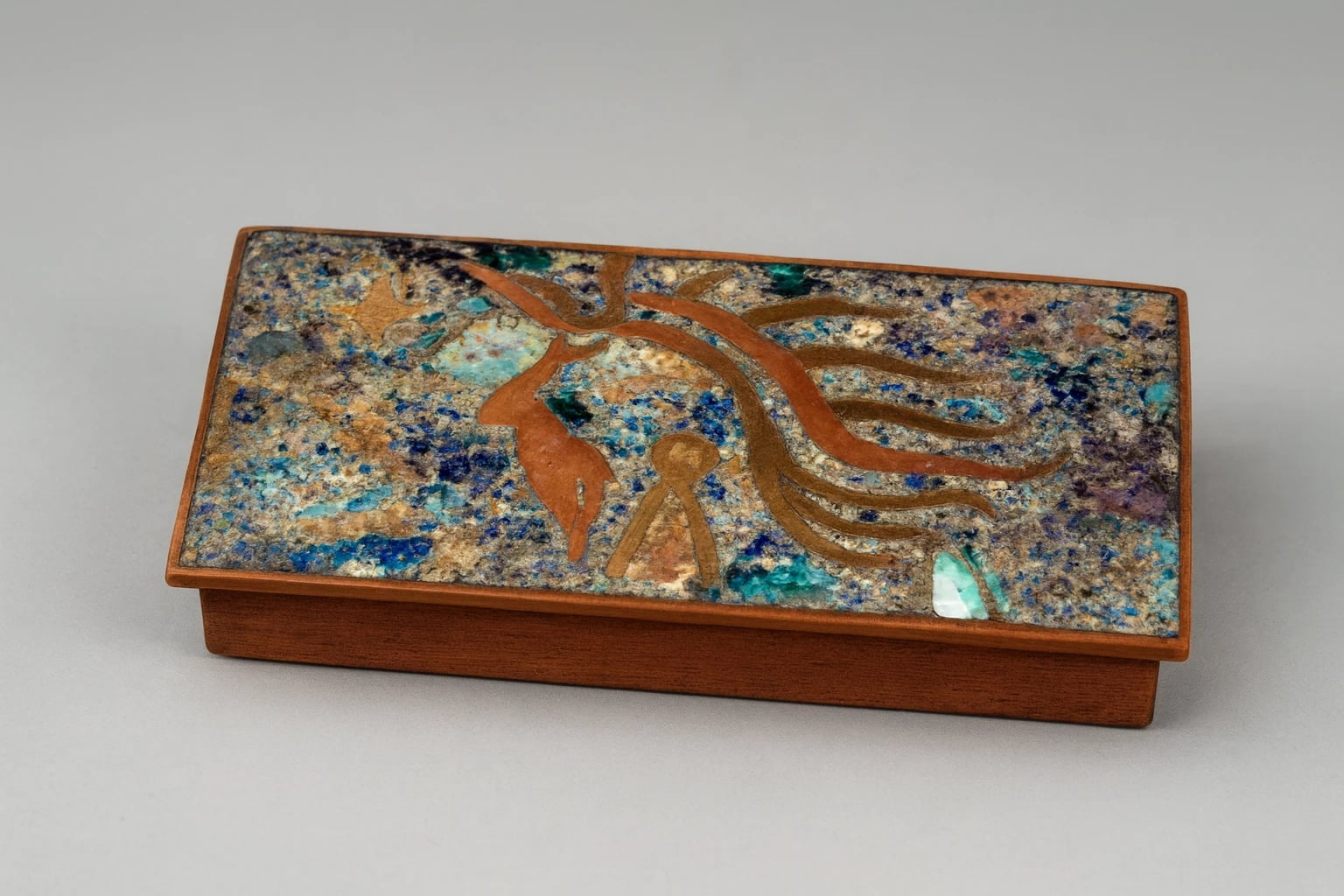
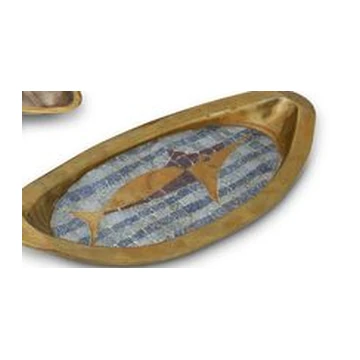
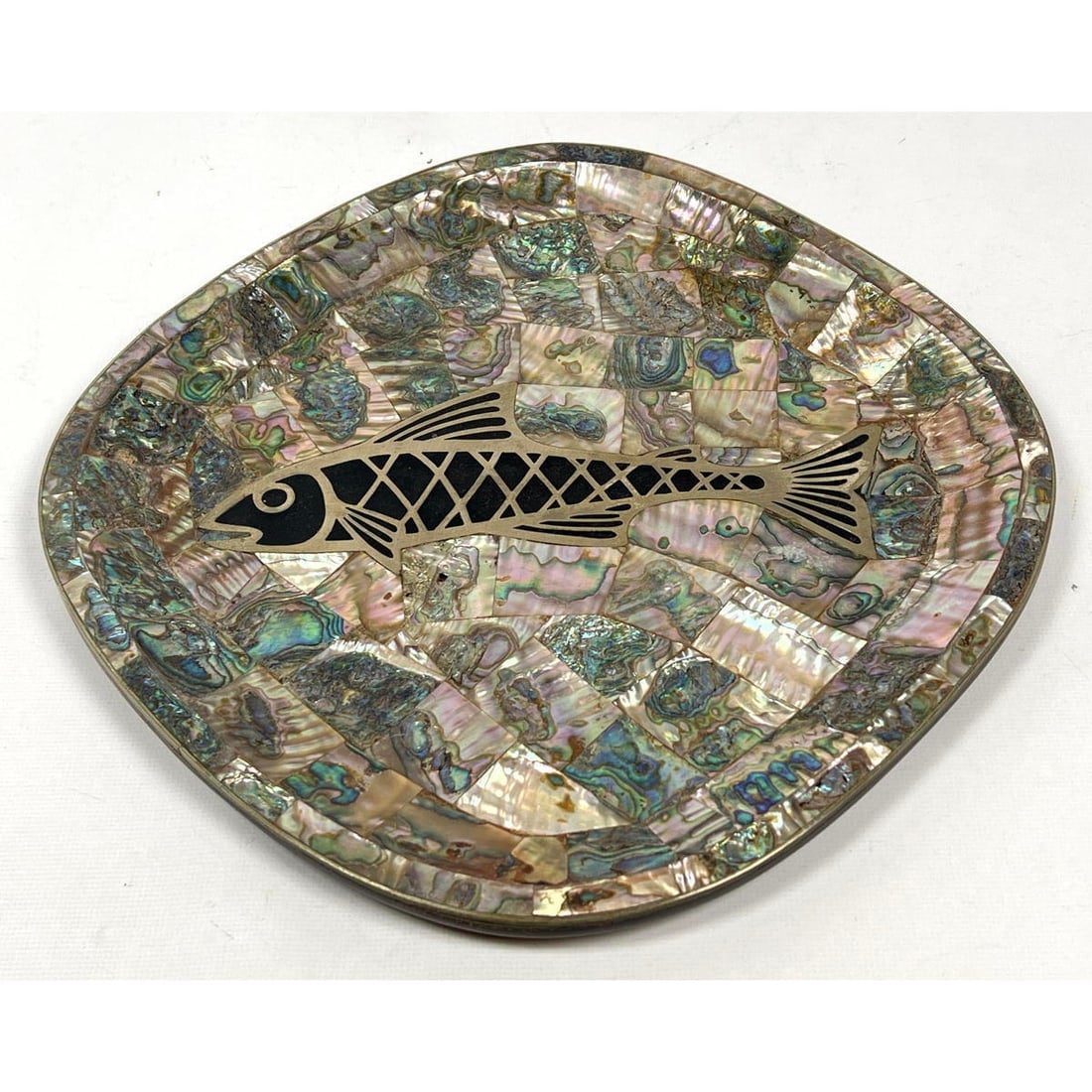
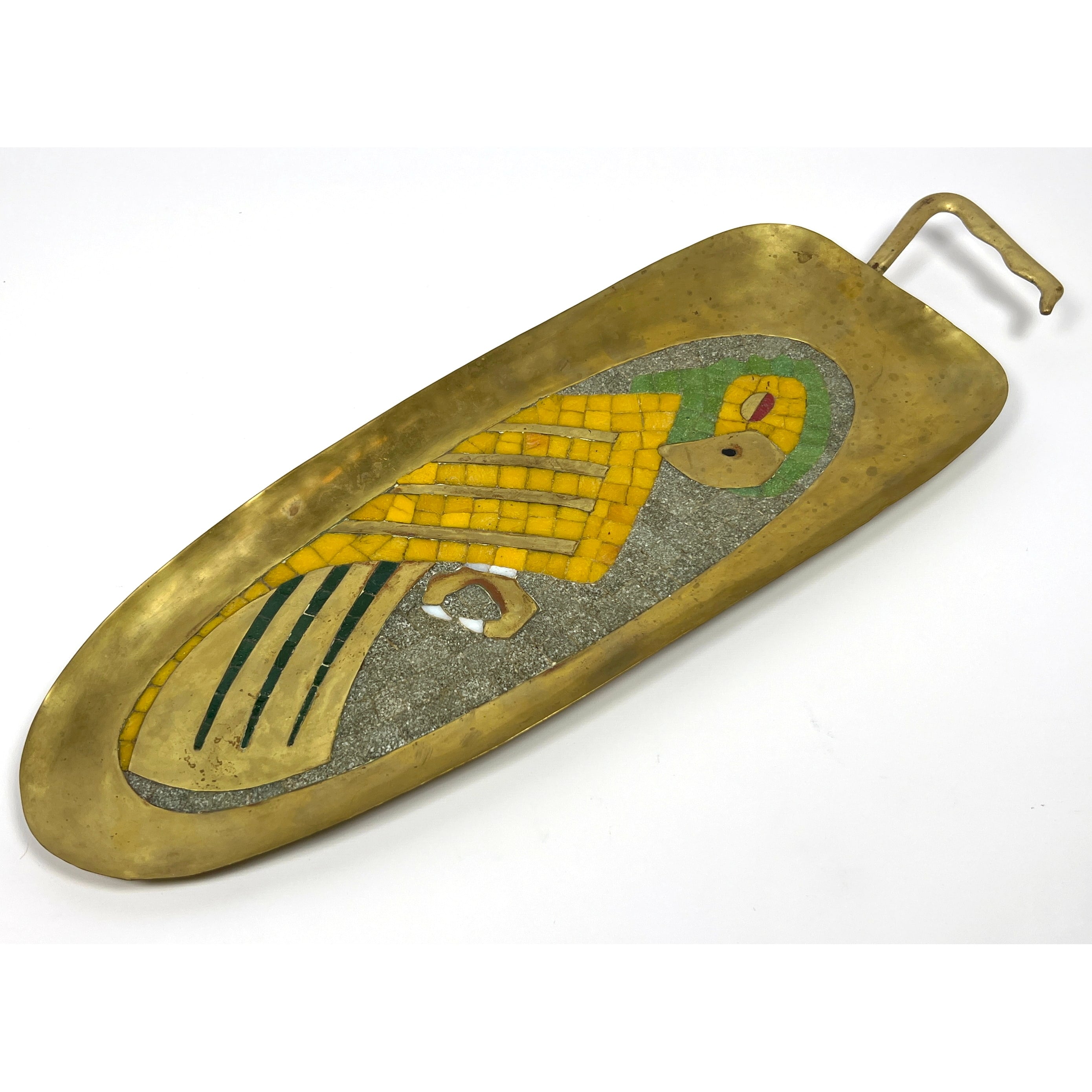
This parrot tray documents a side of his practice distinct from the glass-mosaic decorated objects most associated with his name. Morrill and Berk record in *Mexican Silver* (1994) that Terán — a cousin of the Castillo brothers and a member of the founding group at Los Castillo from 1939 — left in 1952 to establish his own taller in Mexico City, where he directed what Davis and Pack, writing in *Mexican Jewelry*, described as "a large workshop busy turning out boxes, trays, and other decorative objects," driven by his persistent interest in new materials and techniques.
Terán's documented brass output centers on trays, pitchers, and glasses used as grounds for glass mosaic — the plain brass form serving as a vehicle for color and texture, as Morrill's 1996 Aguilar book illustrates through his work of the mid-1950s to early 1960s. A fully figural tray, with an animal subject as its primary formal statement rather than a mosaic surface, stands apart from that central body of work and reflects the broader sculptural ambition visible across his practice.
Pieces from Terán's Mexico City years are stamped with eagle mark "36," which Morrill records as his number within the government hallmarking system active roughly from 1948 to 1970. Figural decorative objects from this studio remain a quiet, less-charted part of the Taxco school's output.
Museum of Mexican Silver. “Parrot Mosaic Brass Tray.” Catalog no. MoMS-001552. https://museumofmexicansilver.com/pieces/teran-tray-figural-parrot
See something wrong with this record? Suggest a correction and the piece details fill in automatically.
Salvador Terán
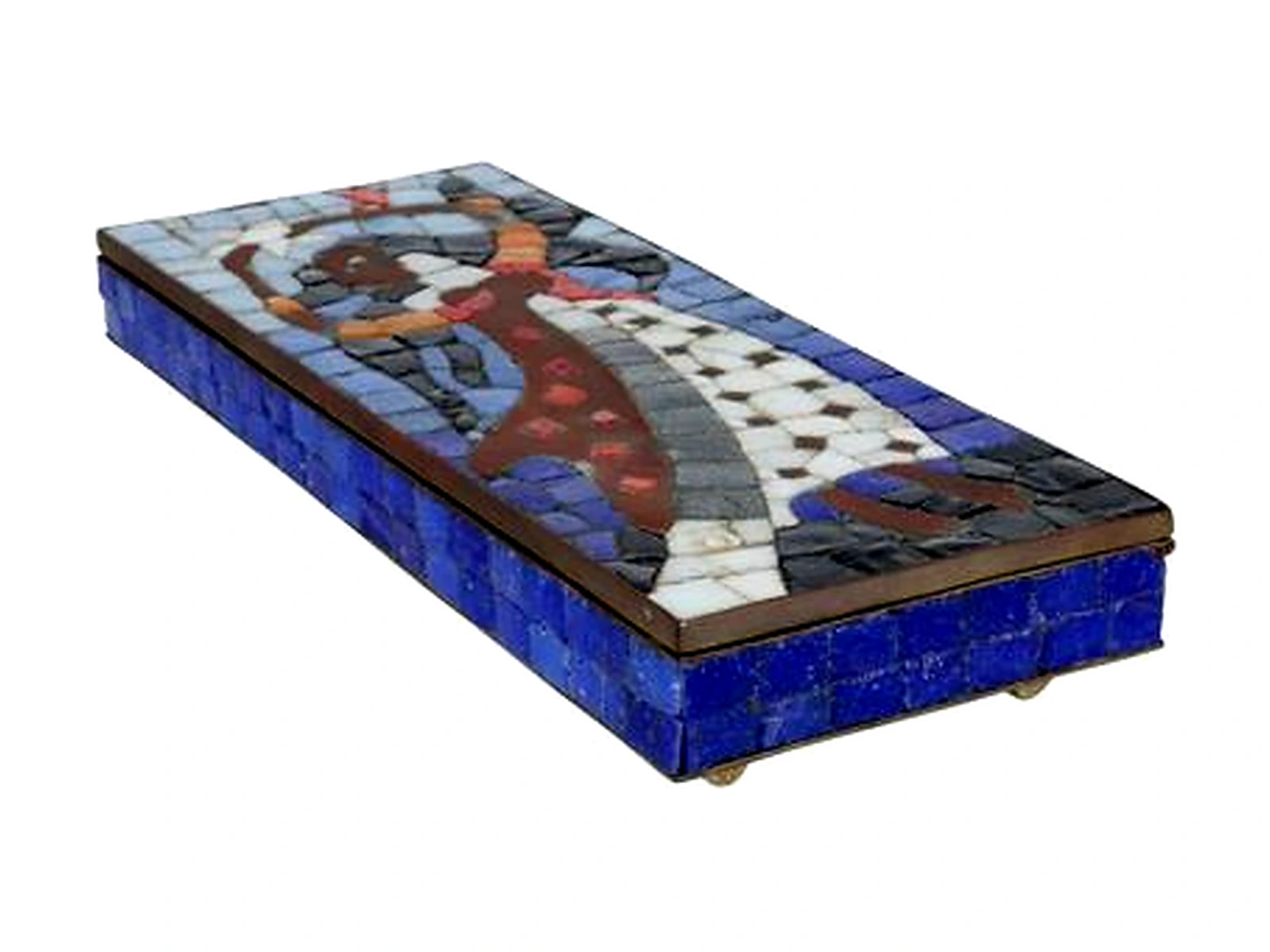
Woman with Star Mosaic Brass Box
1952-1974
Brass