Saves instantly, no account needed. Already a member? Sign in.
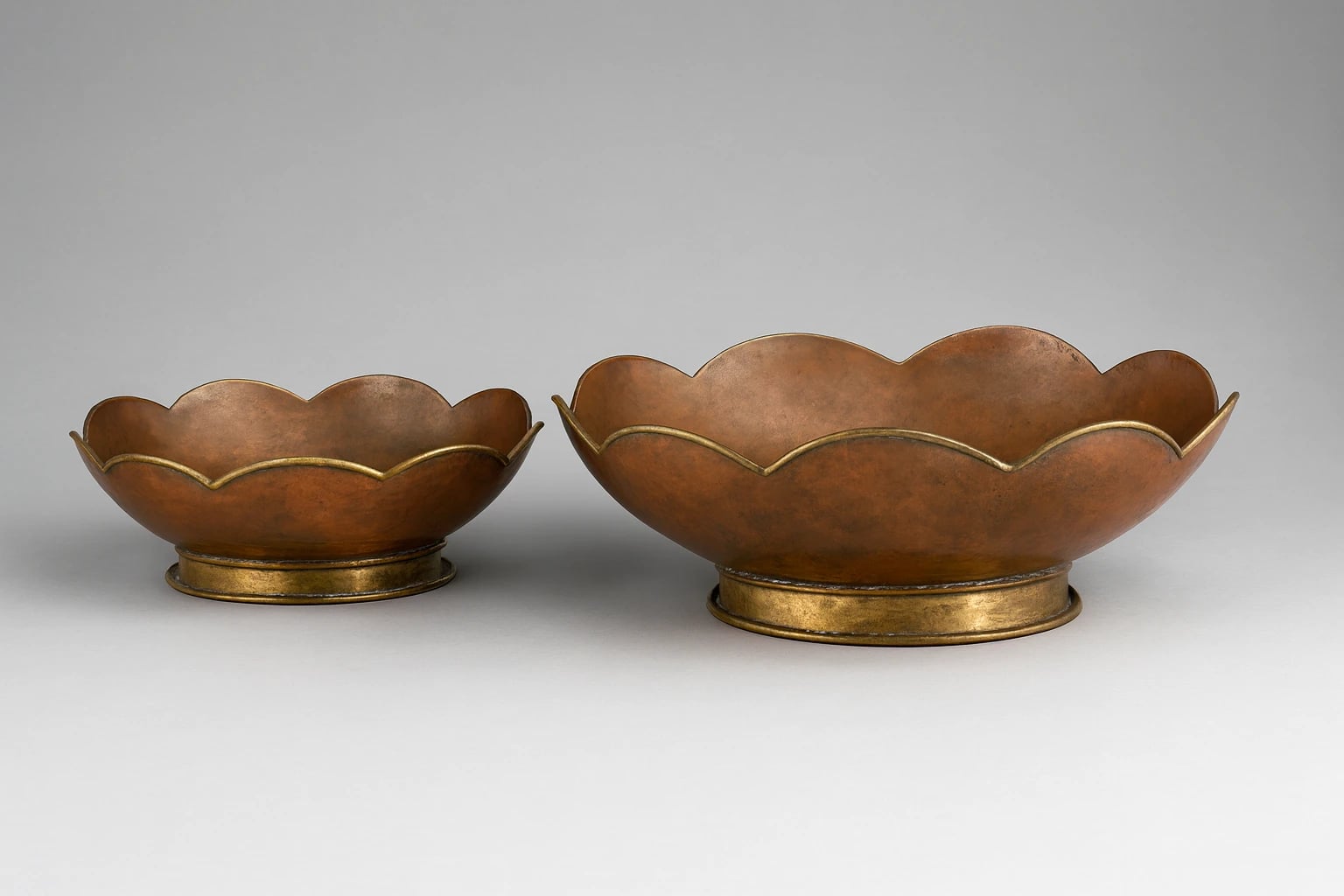
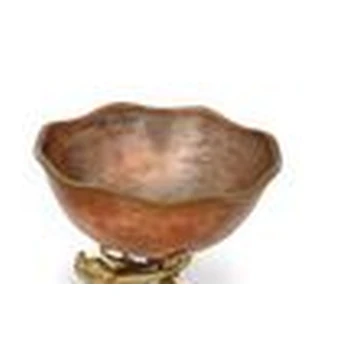
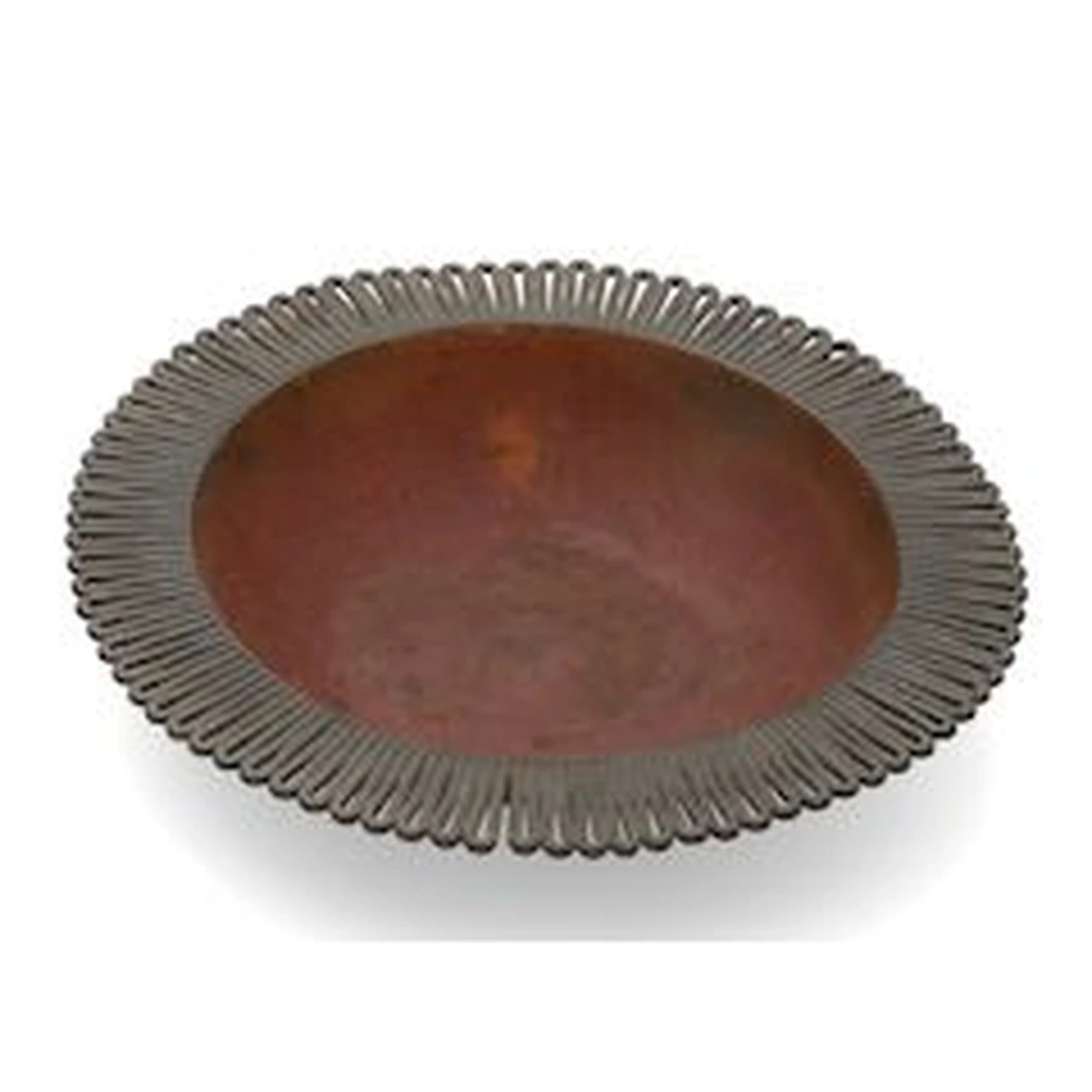
A ribbed, scalloped rim gives this small copper bowl its whole character. The vessel sits low and open, wider than it is deep, and the design concentrates its attention at the edge, where a series of repeated ribs breaks the circumference into a rhythmic border. Rather than finishing the bowl with a plain lip, Héctor Aguilar treated the rim as the element that organizes the form, letting the scalloping frame the shallow well and draw the eye around the vessel.
The copper carries a warm patina that varies across the surface, deepening the tonal range and keeping the metal from reading as a single flat sheet. On a form this simple, that surface matters. The ribs along the rim catch and release light as the bowl turns, so the outline appears to shift while the body stays still. Copper is a softer and more forgiving metal than silver, and its color gives Aguilar's table objects a domestic warmth distinct from the cooler brilliance of the workshop's silver. Here the material and the scalloped edge work together: the ribs give the copper something to do, and the copper gives the ribs their glow.
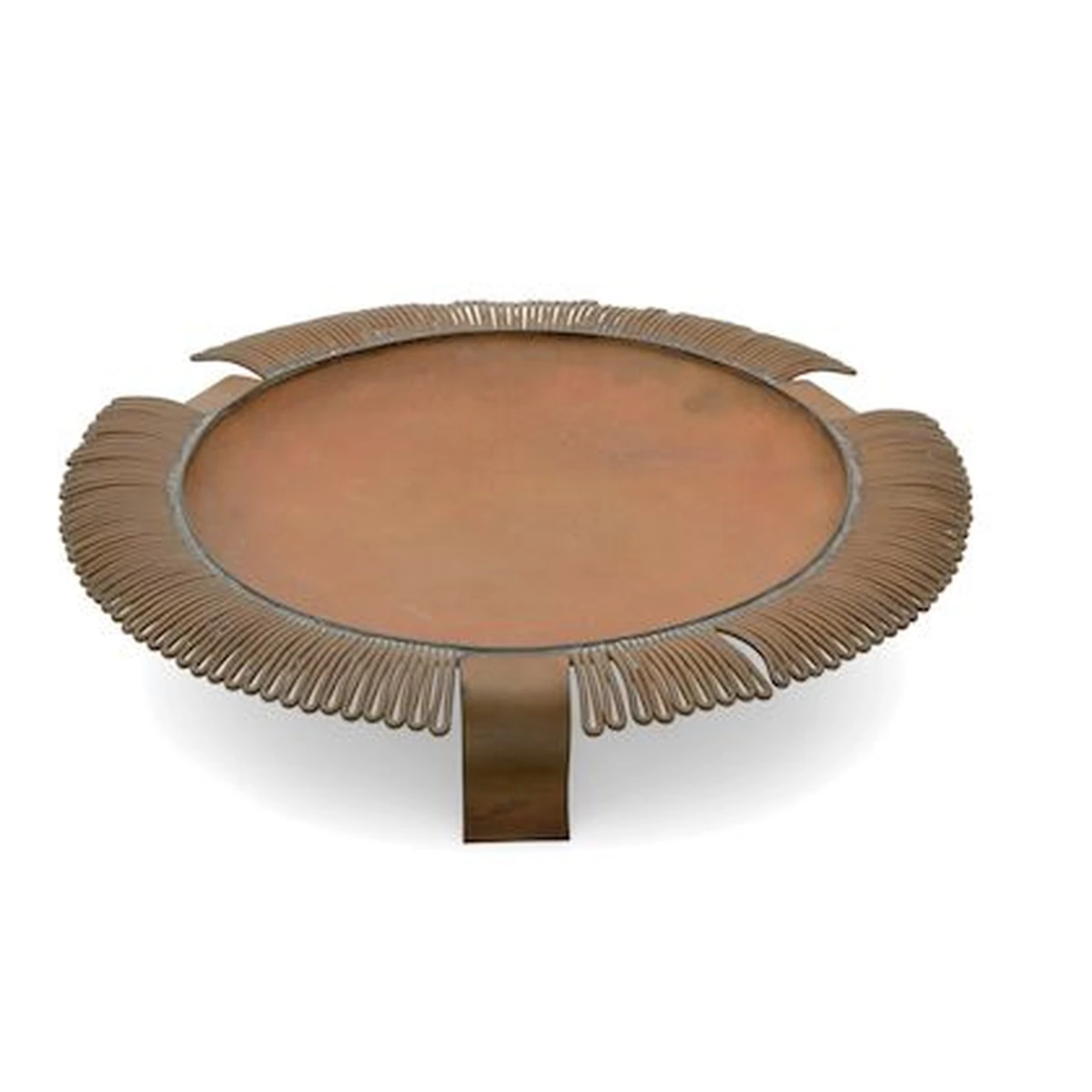
The bowl belongs to Héctor Aguilar's decorative-arts production at the Taller Borda, the Taxco workshop he directed from the Casa Borda, where copper and brass hollowware were made and sold alongside silver jewelry. Morrill's study of Aguilar records bowls, pitchers, candelabra, and trays among the workshop's non-jewelry output, including scalloped-edge copper and brass bowls dated to about 1940 to 1945. This example shares that scalloped vocabulary in a lower, more intimate scale. Aguilar's copper was known for its strong character, and the workshop applied the same design discipline to a table bowl that it brought to its silver, translating Taxco metalwork into objects meant for daily use.
Within a collection, a piece like this documents the breadth of the Taller Borda rather than a singular design achievement. It shows how Aguilar extended a consistent formal idea, the ribbed scalloped edge, from larger footed vessels down to a small bowl, and it records the workshop's investment in copper as a material worthy of the same attention as silver. That decorative-arts program is an underexamined part of the Taxco renaissance, and modest objects such as this one help preserve the record of how it reached the table.
Museum of Mexican Silver. “Small Patinated Copper Bowl with Scalloped Edges.” Catalog no. MoMS-002265. https://museumofmexicansilver.com/pieces/aguilar-small-patinated-copper-bowl-with-scalloped-edges
See something wrong with this record? Suggest a correction and the piece details fill in automatically.
Héctor Aguilar
Patinated Copper Footed Bowl with Scalloped Edges
Copper