Saves instantly, no account needed. Already a member? Sign in.
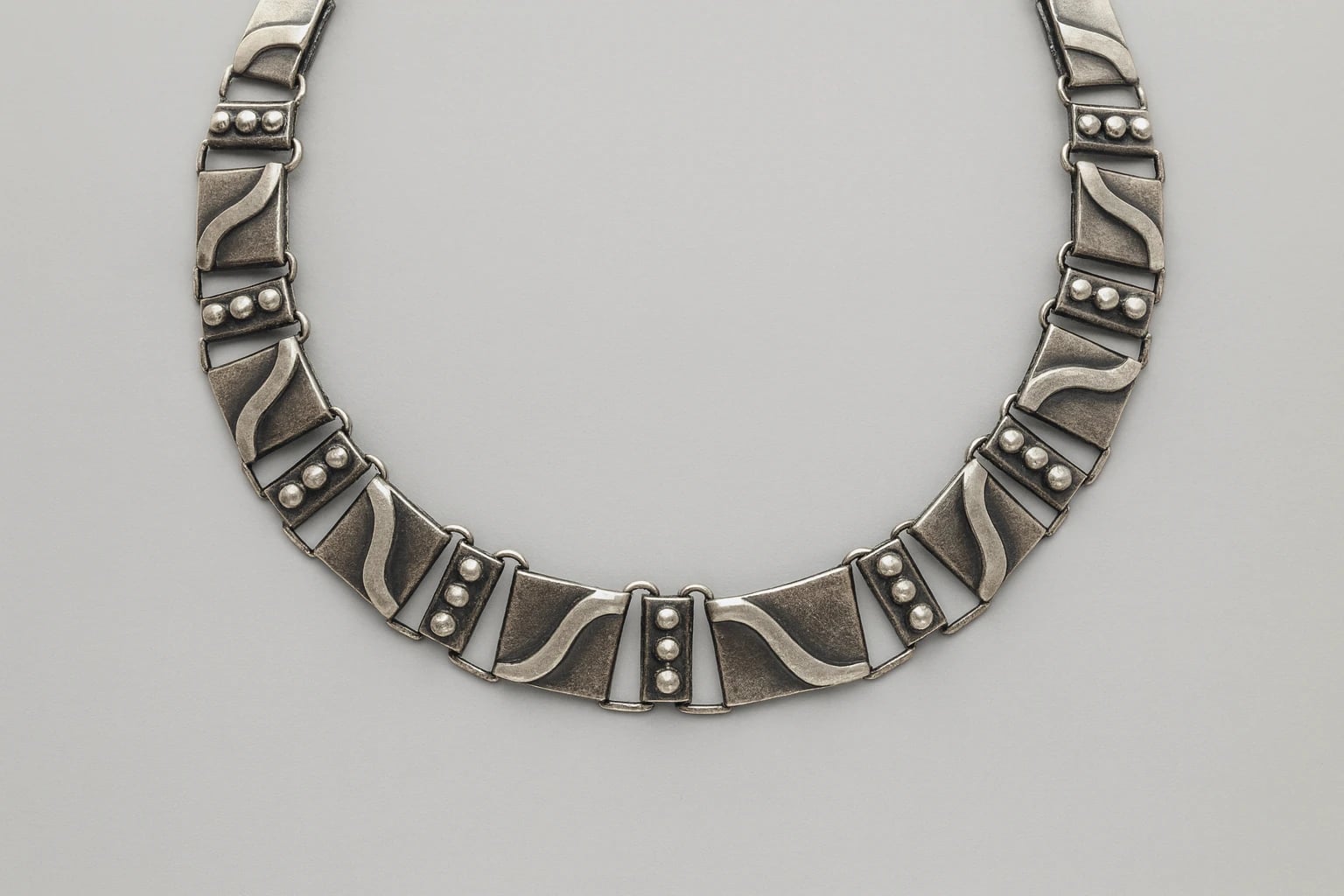
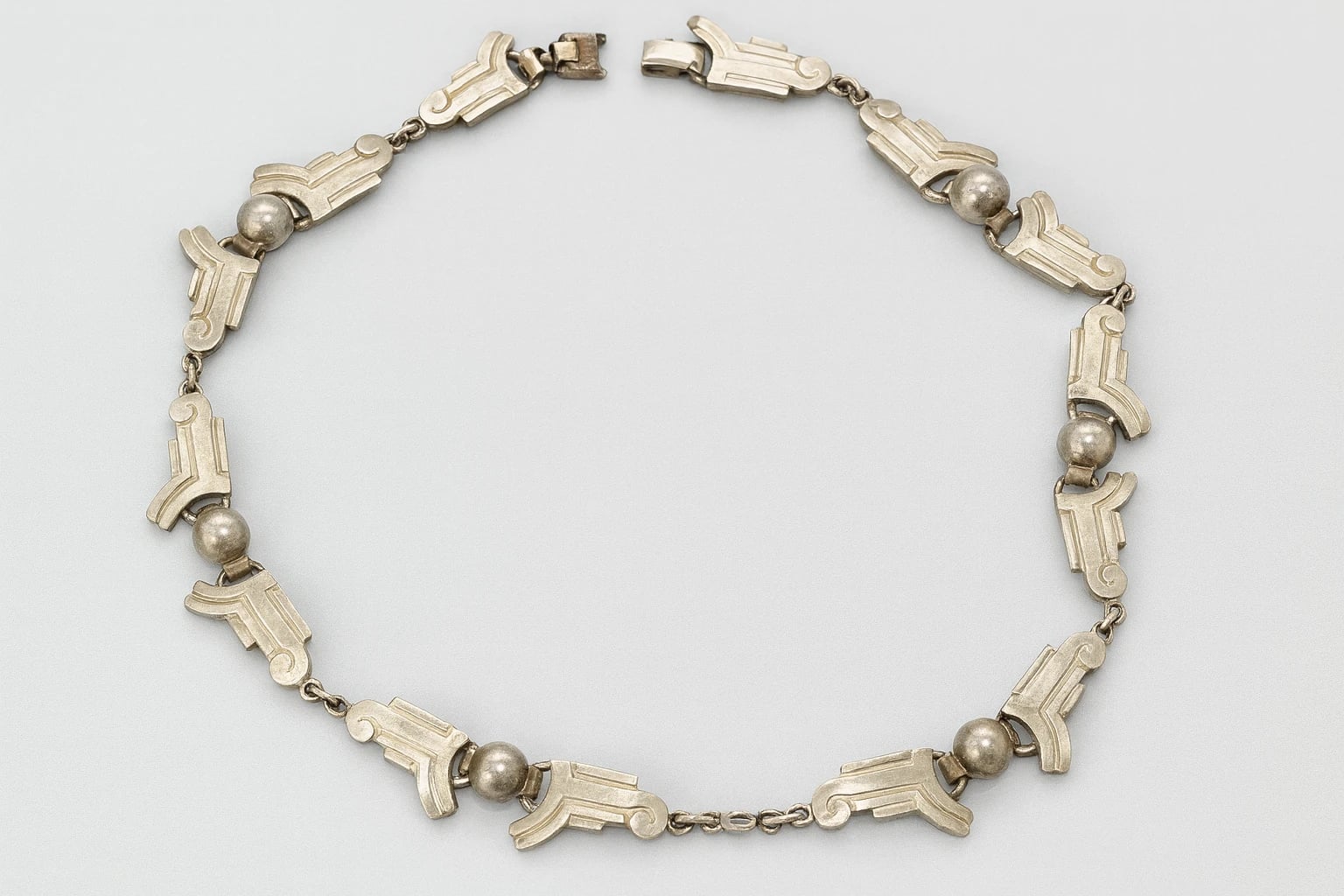
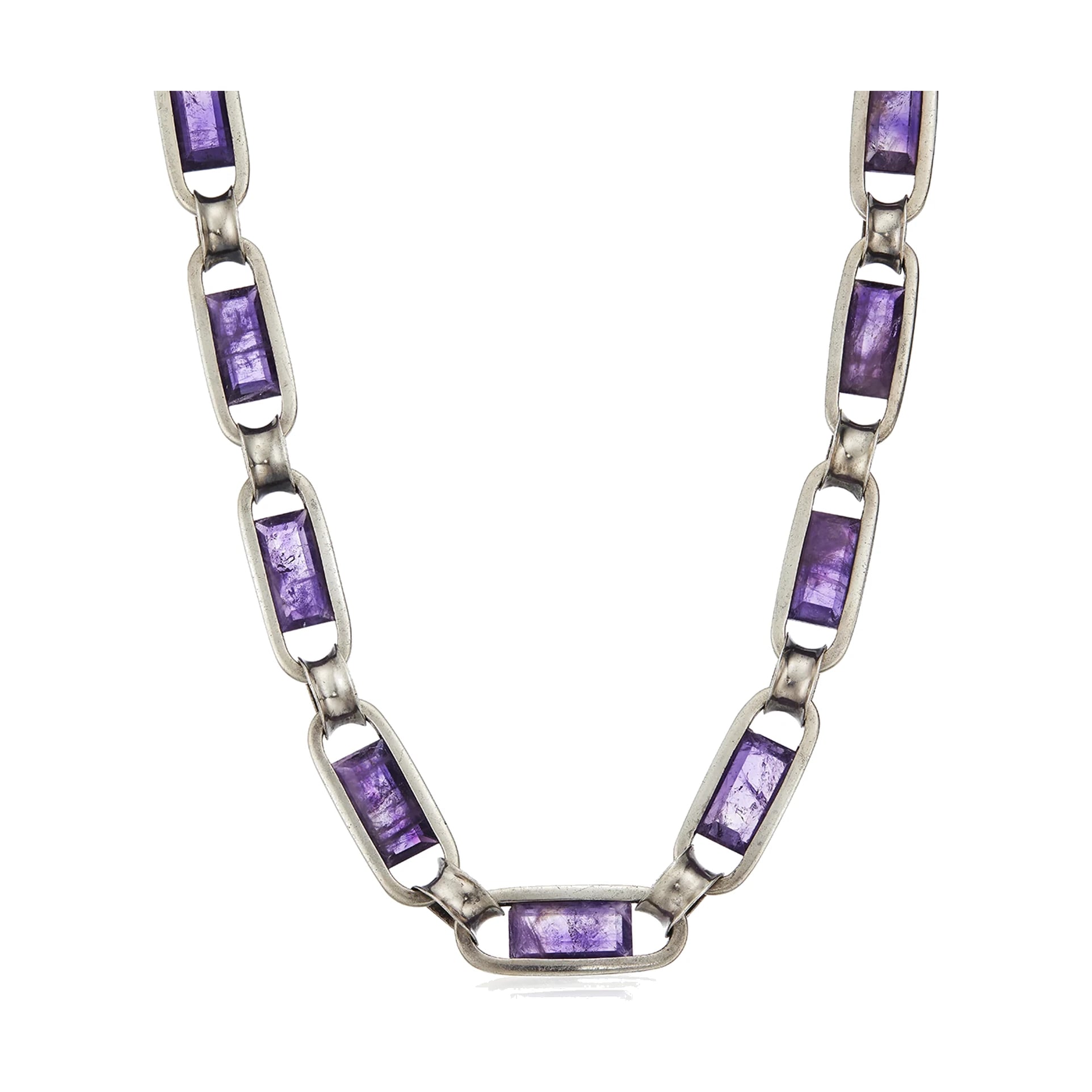
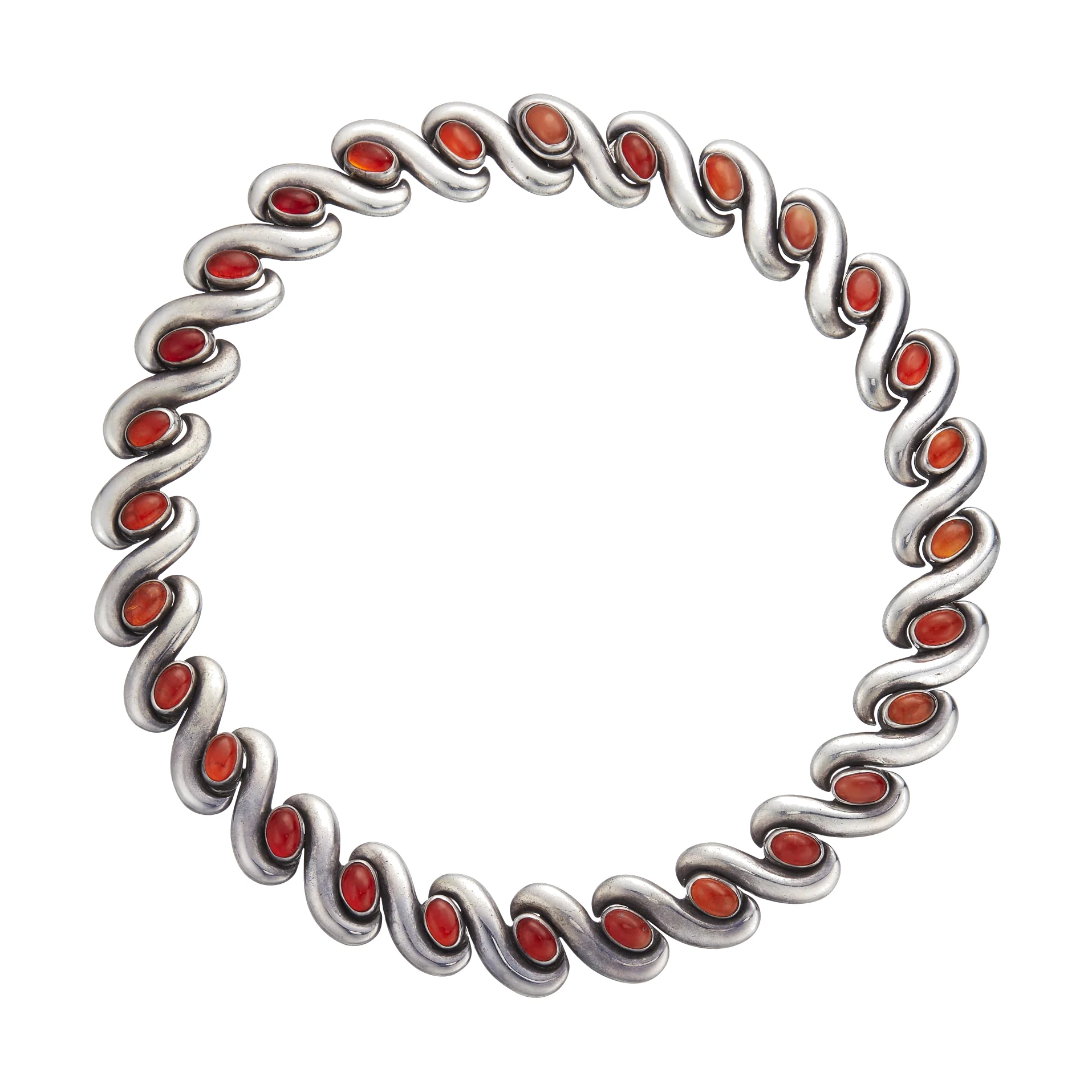
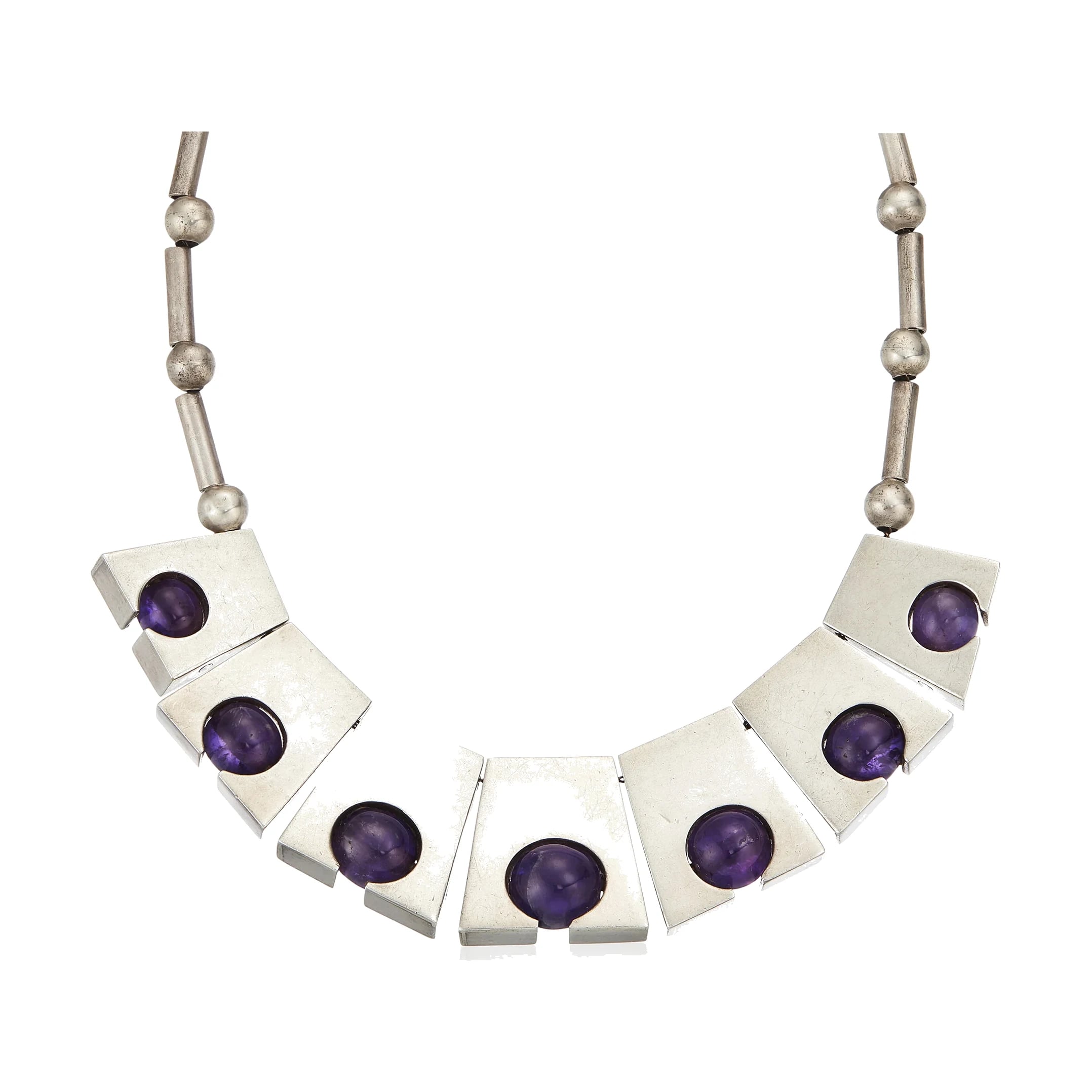
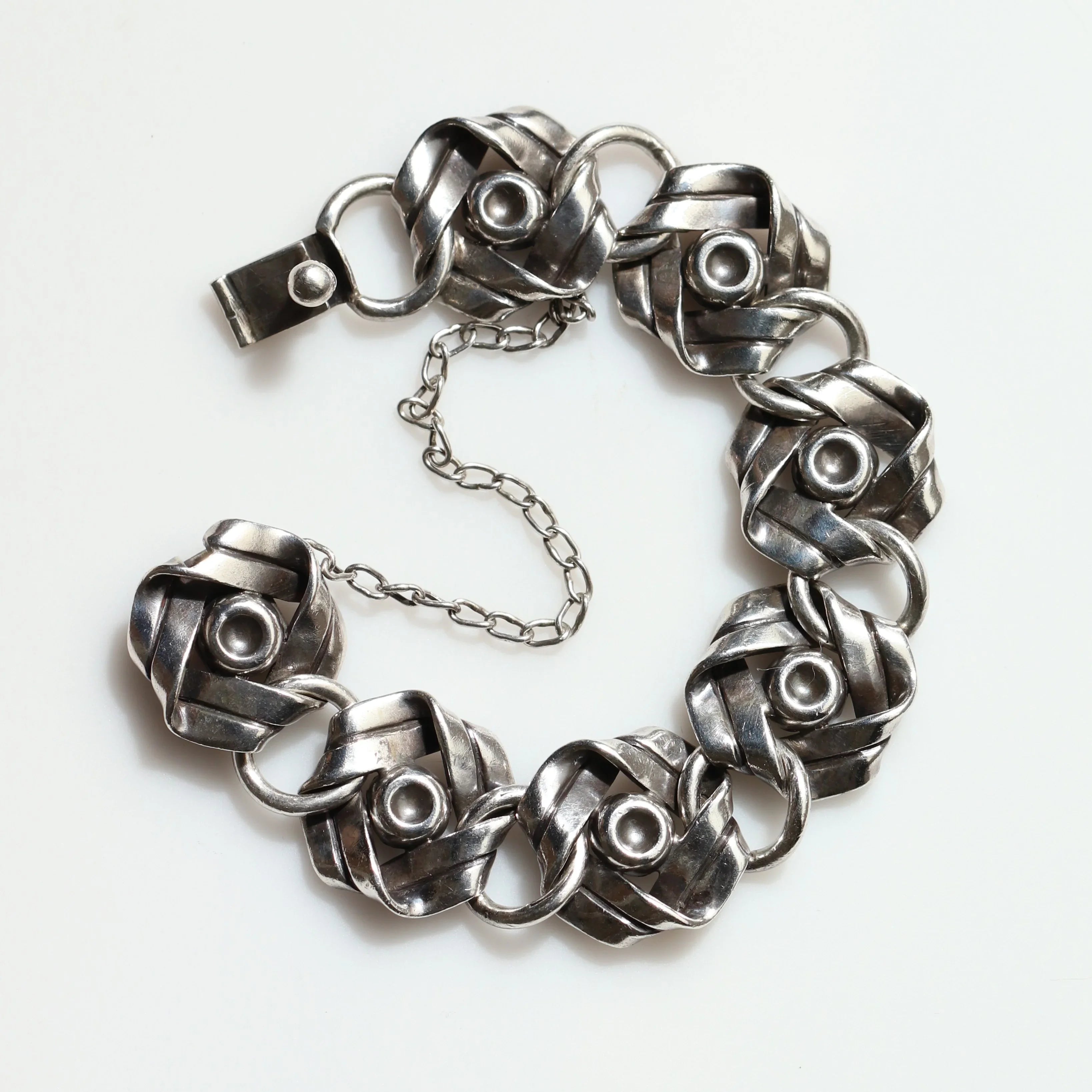
A repeated link becomes a moving surface in this necklace, where each element twists like a length of ribbon caught mid-turn. The design belongs to Héctor Aguilar's vocabulary of animated repetition, in which a single unit, multiplied and joined, generates rhythm through the way it catches and releases light. Each link presents a curved plane rather than a flat face, so that as the necklace settles the reflections shift from bright to shadowed along its length. The effect is kinetic without ornament, an economy of means that distinguishes Aguilar's approach to the silver chain.
The twisted ribbon depends on a consistent handling of the metal across every unit. Each link reads as a flat band given a half-turn, so that its silver surface alternately faces outward and edges away, breaking the continuity that a plain link chain would present. Joined in series, the twists create a subtle diagonal cadence around the neckline. Because the planes are curved rather than faceted, the reflections are soft and continuous rather than sharp, and the necklace reads as a fluid band rather than a row of discrete parts. This is a design organized around the behavior of a repeated form in motion, and it draws its interest from that repetition alone, without applied decoration or stone.
Aguilar established the Taller Borda in Taxco in 1939, and his output ranged from heavy, archaeologically inflected pieces to lighter, more naturalistic designs, the latter associated with his collaboration with Valentín Vidaurreta. The twisted-ribbon necklace occupies a middle register between those poles. It lacks the mass and severity of his more monumental work, such as the sphere-based necklaces, yet it avoids the floral and botanical motifs of the naturalistic designs. Instead it finds its animation in pure link geometry, softened and set in motion. Morrill's survey of Aguilar records comparable necklaces built from repeated silver elements, including drop and malachite-and-silver designs of the mid-1940s, which locate this kind of serial construction firmly within his practice of that decade.
Within a collection of the Mexican silver renaissance, the piece documents how a Taxco workshop could extract movement and light from a single repeated unit rather than from applied ornament or contrasting stone. It clarifies the breadth of Aguilar's range between his heavier and lighter modes, and it shows the taller's fluency with the chain as a design problem in its own right. The twisted ribbon is a measured, resolved expression of that fluency, valuable for what it reveals about Aguilar's handling of repetition and reflective silver surface.
Museum of Mexican Silver. “Twisted-Ribbon Link Necklace.” Catalog no. MoMS-001964. https://museumofmexicansilver.com/pieces/aguilar-twisted-ribbon-link-necklace-19
See something wrong with this record? Suggest a correction and the piece details fill in automatically.
Héctor Aguilar
Lyre Necklace
Sterling silver