Saves instantly, no account needed. Already a member? Sign in.
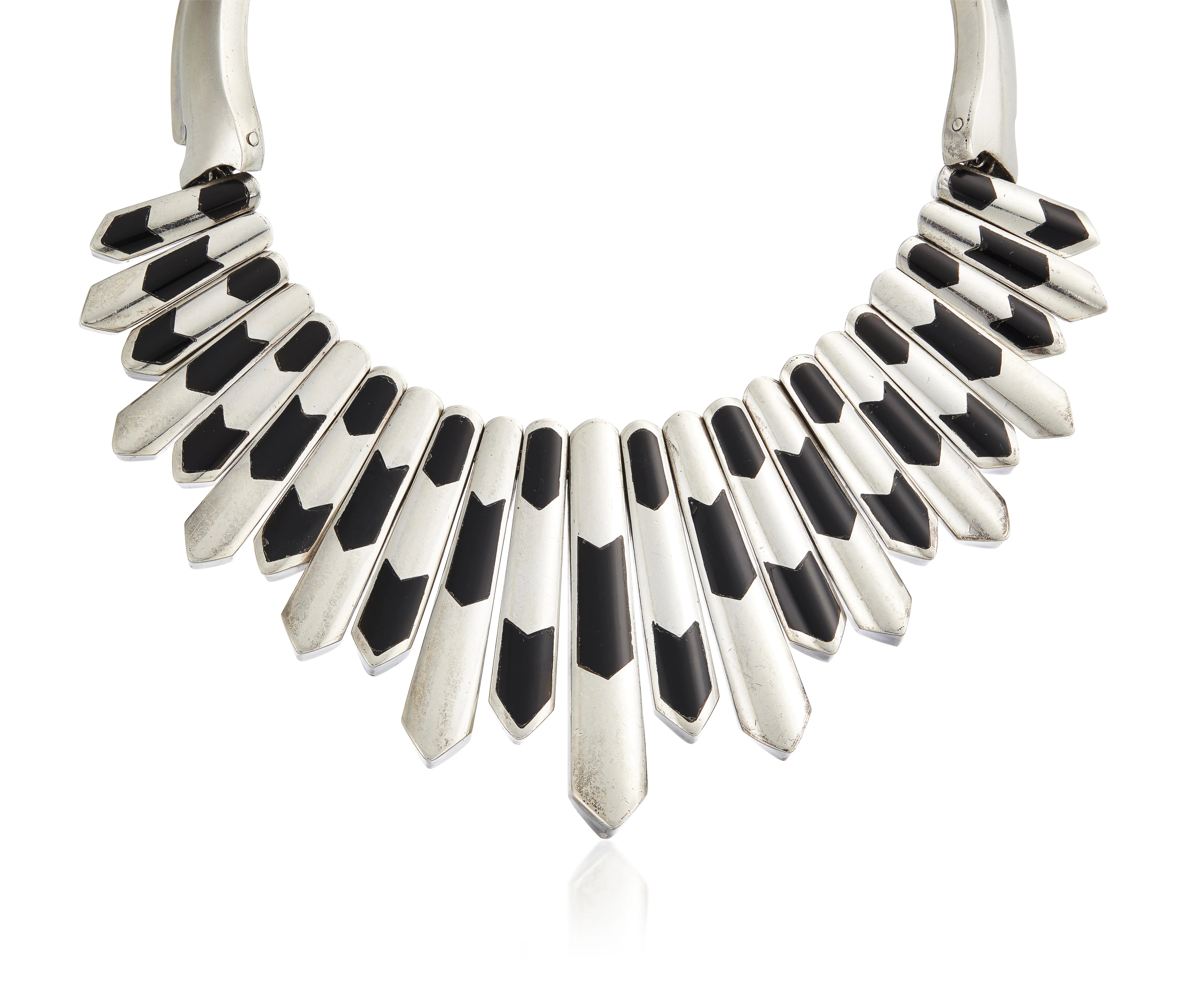
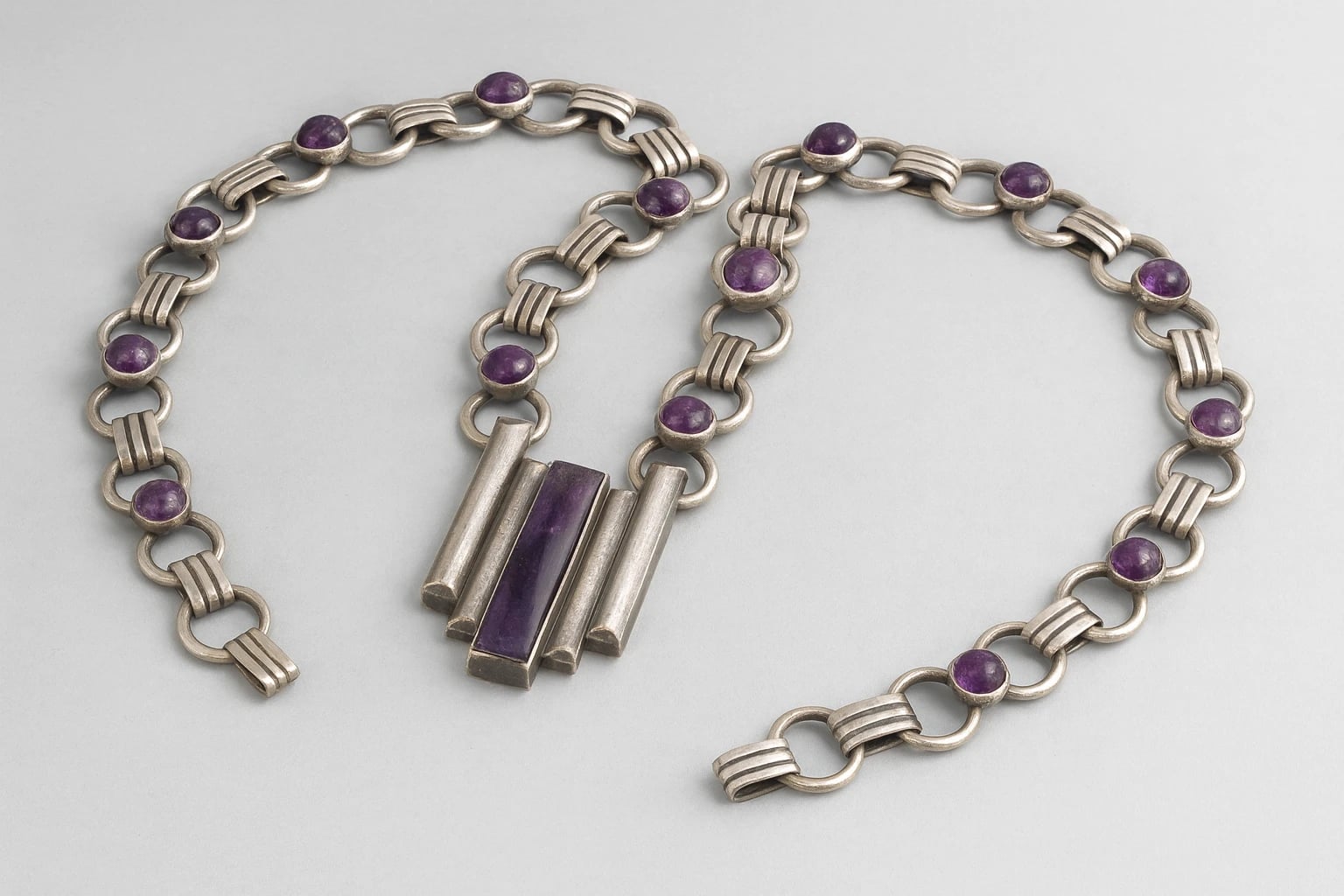
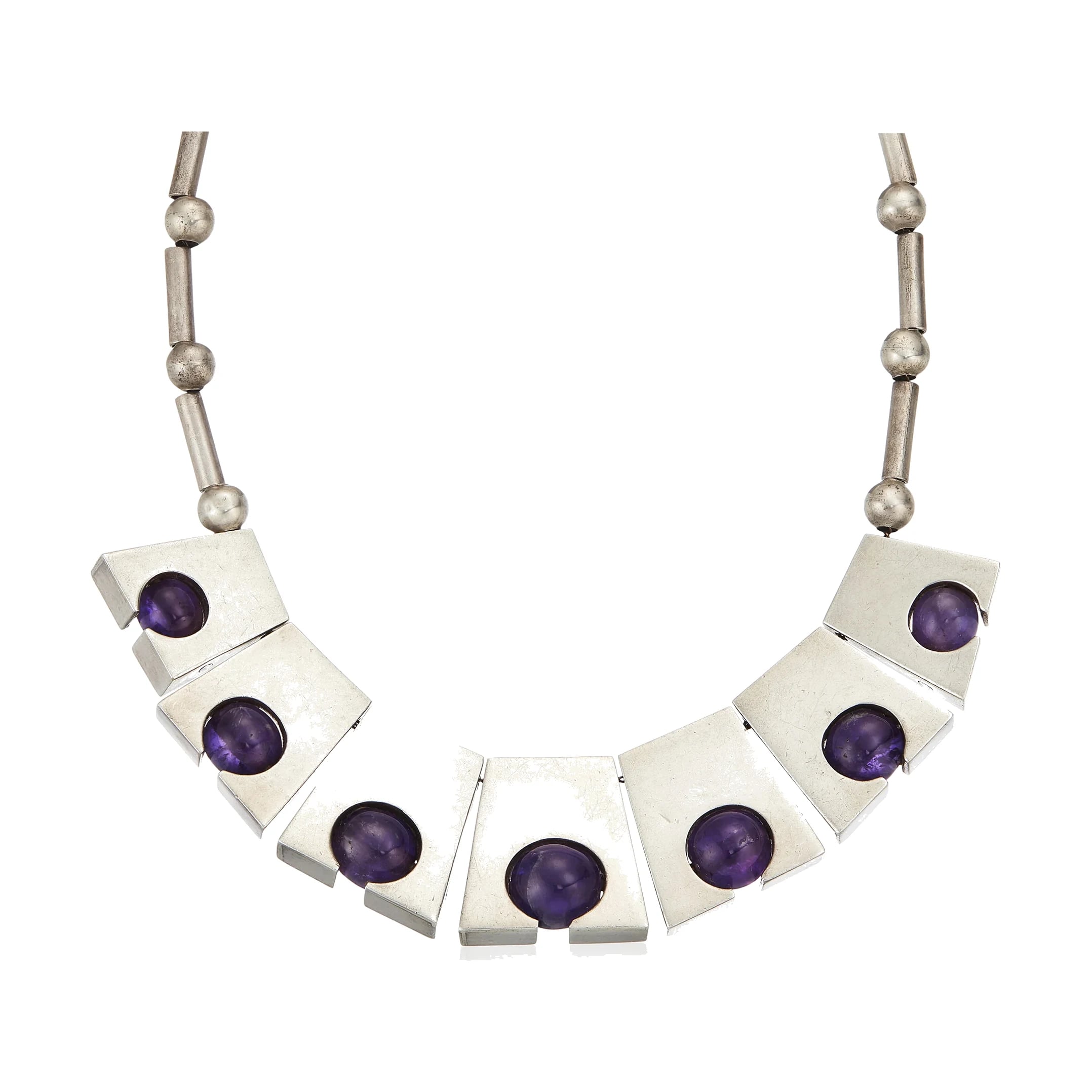
A graduated row of flat silver plaques, each a canted trapezoid centered on a single round amethyst cabochon, arcs across the collarbone, the largest panel sitting at the throat and the rest stepping down in size toward the chain. Set at angles to one another, the planes break the light into facets while the deep purple stones hold the eye at the center of each unit — geometry treated as sculpture, which is the signature of Antonio Pineda's modernist silver.
The discipline is in the repeat: one stone to a plaque, one idea carried across the front, with a small keyhole notch cut into the lower edge of each panel to lighten the metal. Behind the plaques the necklace resolves into a chain of alternating silver bars and round beads running to a hook clasp, the plain links a deliberate foil to the faceted front.
The necklace is struck with Pineda's Antonio-Taxco crown mark and the inventory code YY209; in the shop's numbering system recorded by Stromberg, the YY prefix designated necklaces, a trace of the production scale his Taxco house reached by the 1950s. Each cabochon is a smooth dome of amethyst, set so its color reads as pure mass against the bright planes.
Pineda opened his own workshop and store on the Taxco zócalo in 1941 and built it into one of the town's major silver houses. Work like this — flat planes, hard angles, a single stone per unit — carried his jewelry of the period away from the school's flowers and figures toward something closer to abstract design.
Museum of Mexican Silver. “Trapezoid and Amethyst Shadow-Box Necklace.” Catalog no. MoMS-002117. https://museumofmexicansilver.com/pieces/antonio-pineda-geometric-amethyst-and-silver-necklace
See something wrong with this record? Suggest a correction and the piece details fill in automatically.
Antonio Pineda
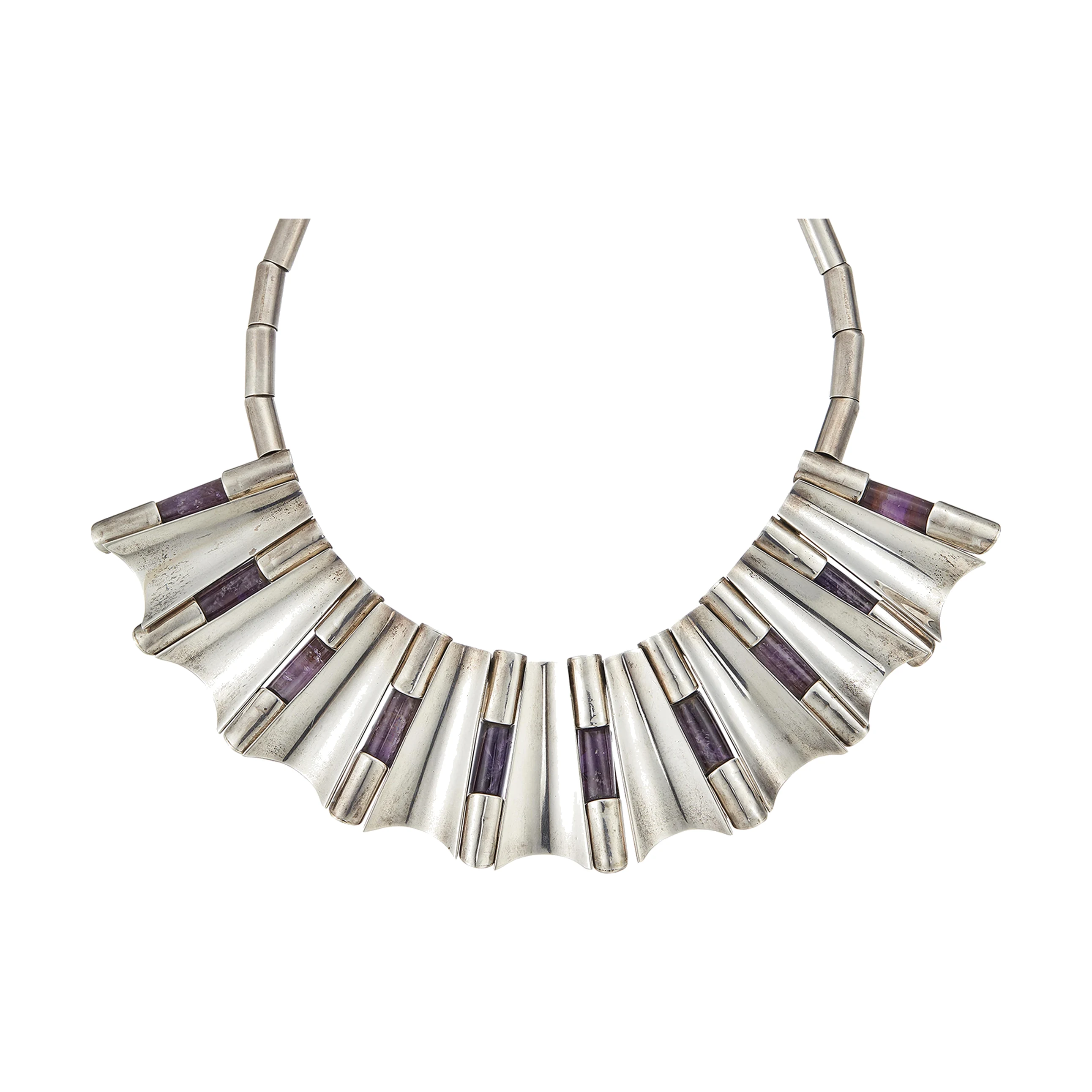
Roof-Tile Amethyst and Silver Necklace
1953 or later
970 silver