Saves instantly, no account needed. Already a member? Sign in.
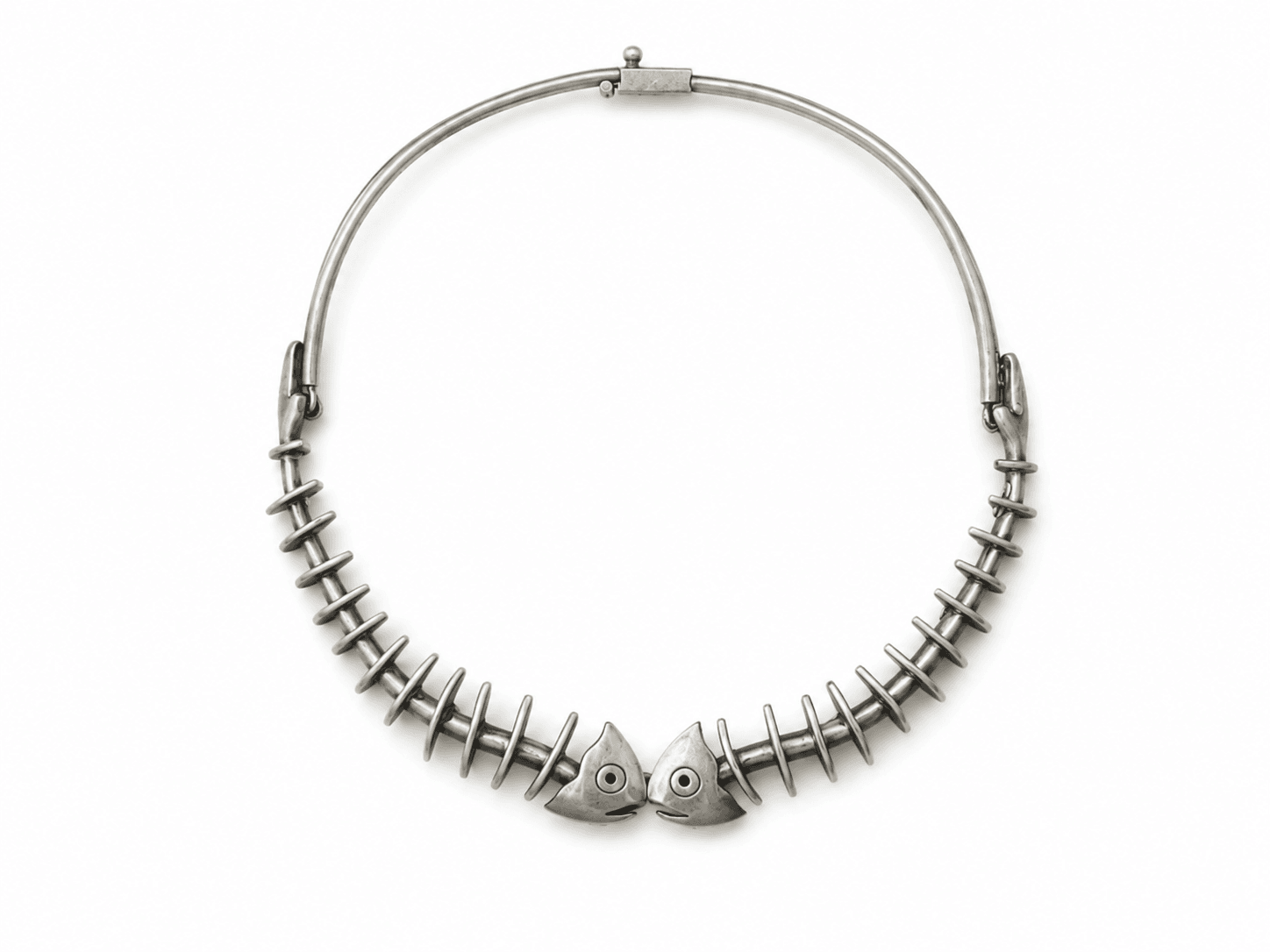
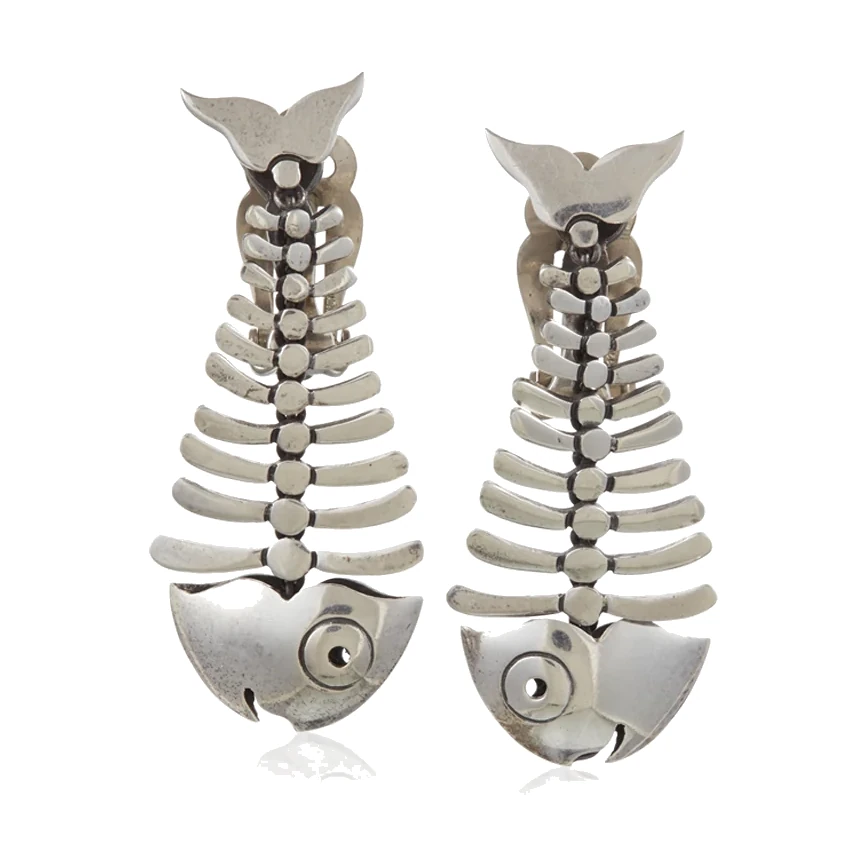
A fish reduced to its skeleton hangs from each ear: a flared tail-fin at the top, then a spine of graduated vertebrae stepping down through splayed ribs to a rounded head with a single coiled eye. The spine is hinged rather than rigid, so the whole length sways and turns when worn, catching light bone by bone. It is one of the wittiest conceits in Taxco silver, and a clear instance of the sculptural instinct Antonio Pineda brought to jewelry.
Worked as a mirrored pair, the two fish read as a matched set, their ribs splaying in symmetry to either side of the face. The silhouette looks open and skeletal, but the metal is built up with real relief, the vertebrae beaded and the head swelling into a small domed form, so the earrings have weight and sculptural presence rather than the flatness of cut outline.
The pair is struck in 970 silver under the ANTONIO TAXCO crown, with TAXCO MEXICO and a Mexican eagle assay stamp visible on the fish-head terminal. Morrill records this same combination, the Antonio crown over the 970 standard with the eagle mark, across the documented work of the 1950s, the period and standard these earrings sit within.
Alongside the crown the pair carries a VJ mark, and that pairing is itself telling. The large Taxco talleres relied on master silversmiths to meet demand: Pineda conceived the designs while these maestros executed them in silver, striking their own hallmark beside his, a practice Stromberg sets out plainly. The VJ is that workshop hand, the maker who realized the skeletal fish while the crown carries the design and the house.
Museum of Mexican Silver. “Skeletal Fish Earrings.” Catalog no. MoMS-002109. https://museumofmexicansilver.com/pieces/antonio-pineda-skeletal-fish-earrings
See something wrong with this record? Suggest a correction and the piece details fill in automatically.
Antonio Pineda
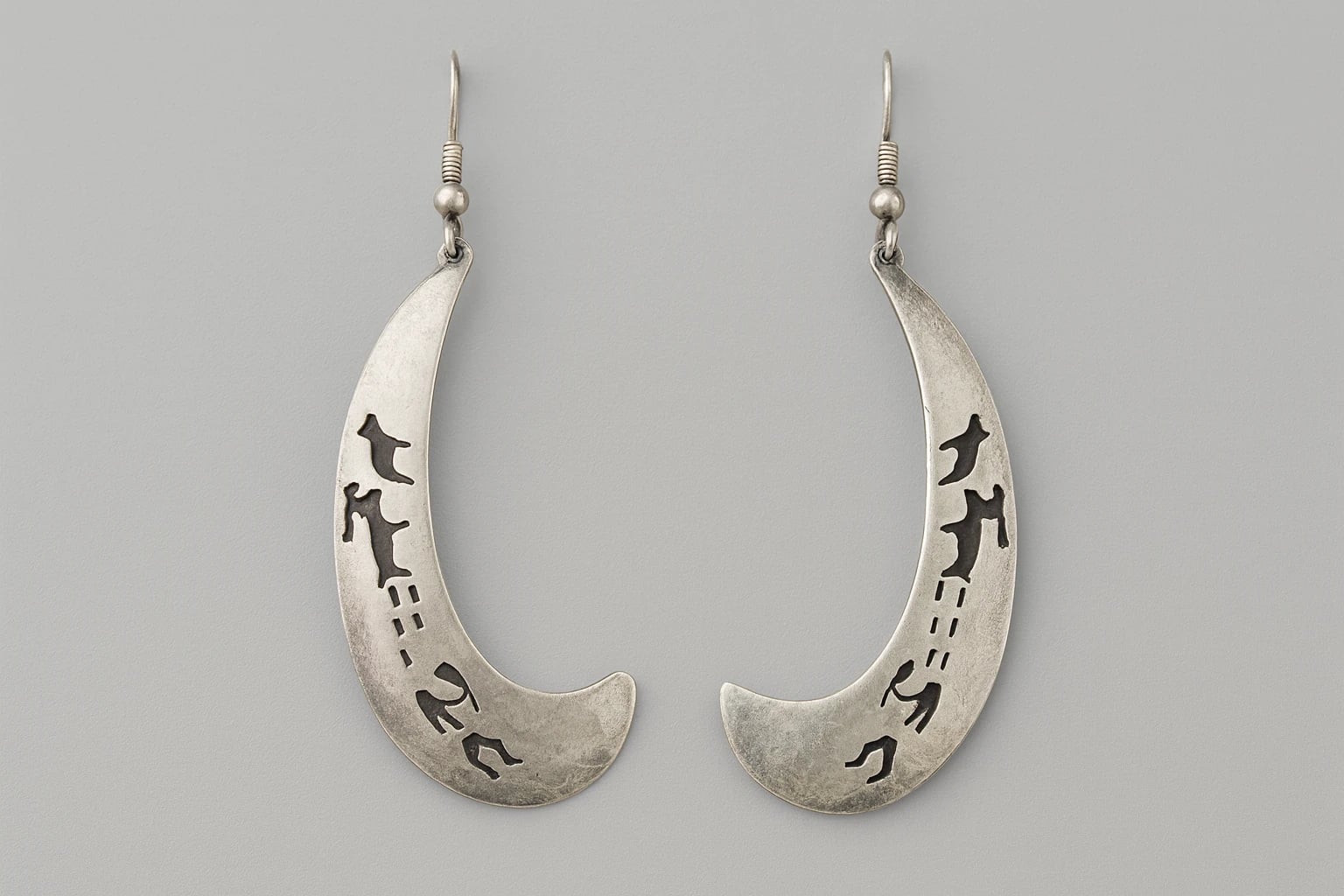
Petroglyph Silver Earrings
Silver