Saves instantly, no account needed. Already a member? Sign in.
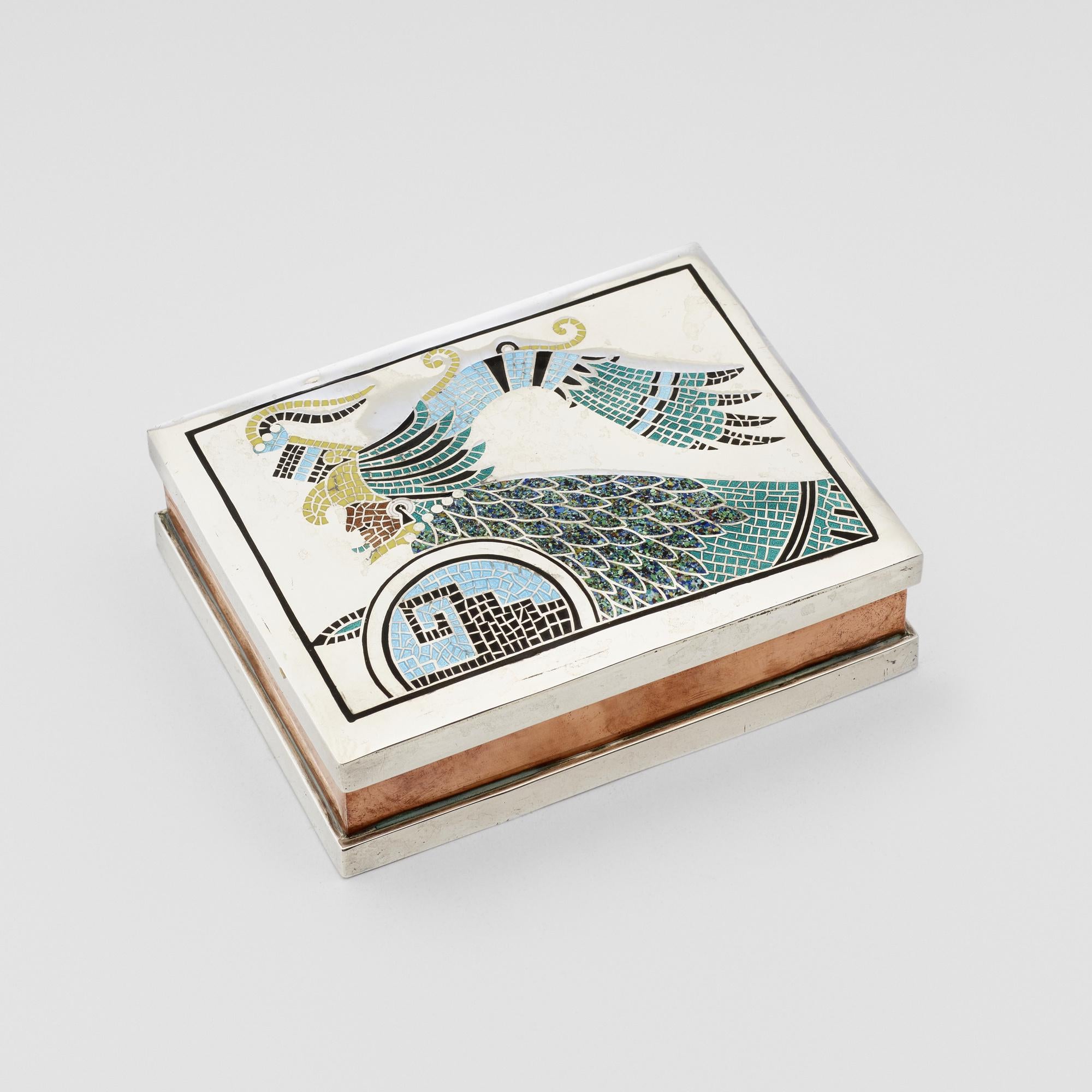
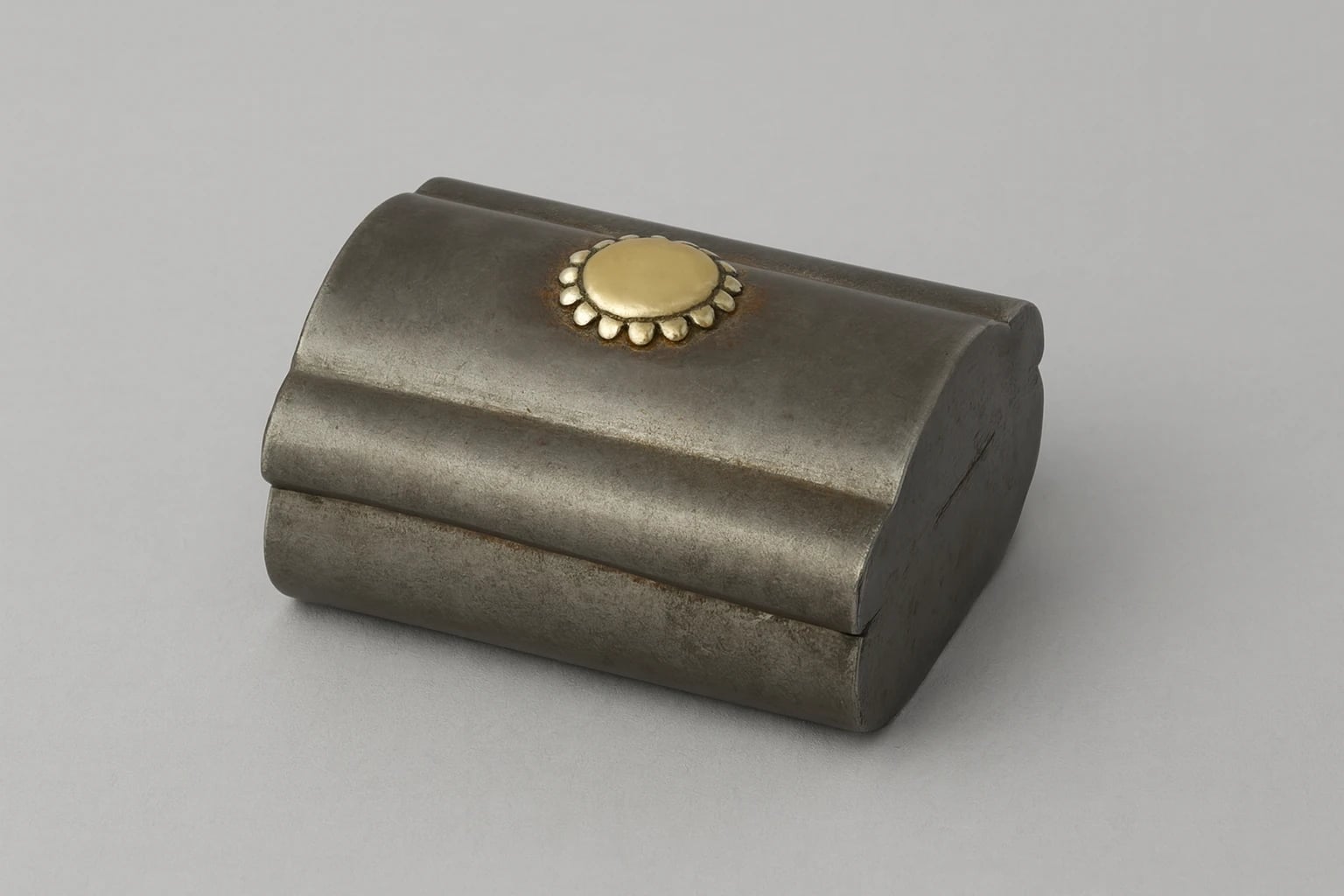
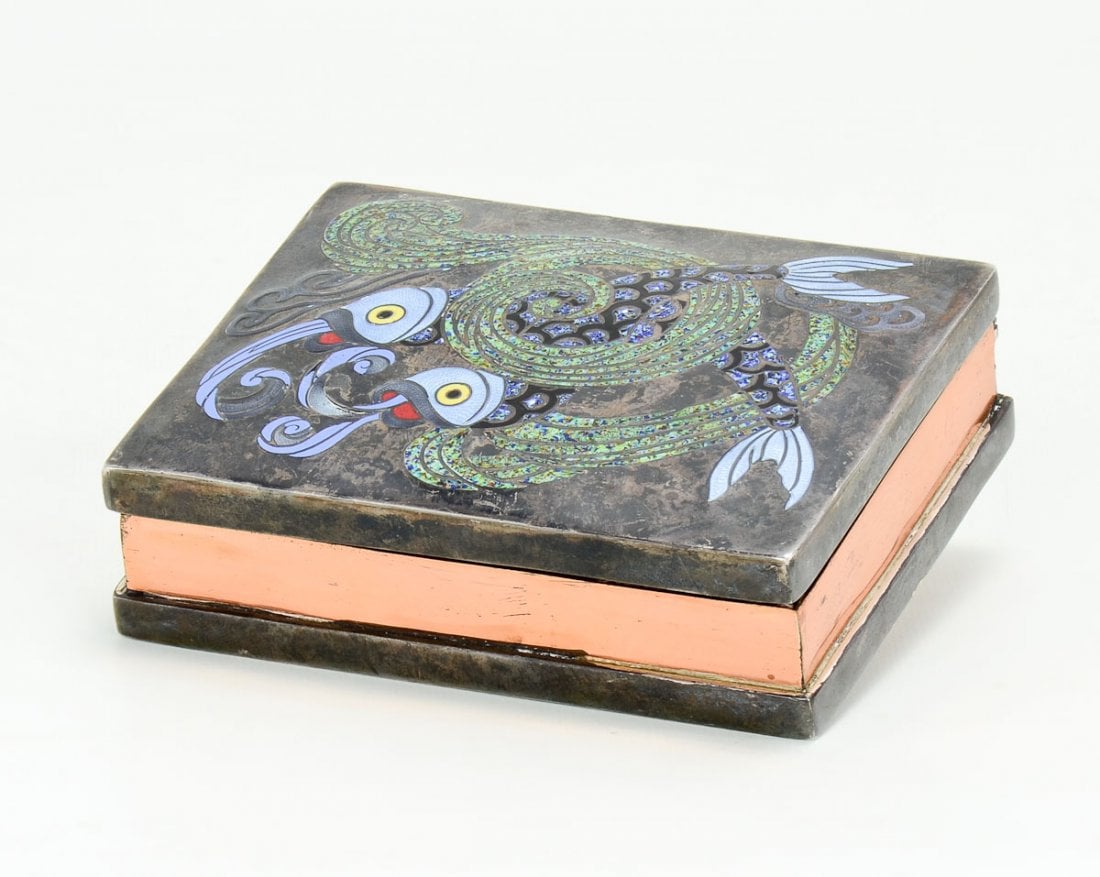
This box is centered on a paired-owl composition, not a fish. The design sets two facing birds into a mixed-metal and enamel surface, using the lid as a compact picture field rather than treating the box as a neutral container. That makes the object important within Margot de Taxco's production because it carries her enamel vocabulary into a functional form.
The mixed materials are part of the design's force. Sterling silver gives the box its structure and bright boundaries, while copper, wood, and enamel add warmth, ground, and color. The design number visible in the hallmark photograph identifies it as Design No. 5569, tying the object to Margot's numbered workshop inventory rather than to a later descriptive label.
For the Museum of Mexican Silver, this correction matters because it restores the actual iconography of the piece. The box belongs with Margot's best mixed-metal enamel objects, where animal imagery, surface pattern, and utility meet in a single carefully numbered design.
Museum of Mexican Silver. “Paired-Owl Mixed-Metal Box with Enamel, Design No. 5569.” Catalog no. MoMS-001109. https://museumofmexicansilver.com/pieces/margot-box-fish
See something wrong with this record? Suggest a correction and the piece details fill in automatically.
Margot de Taxco
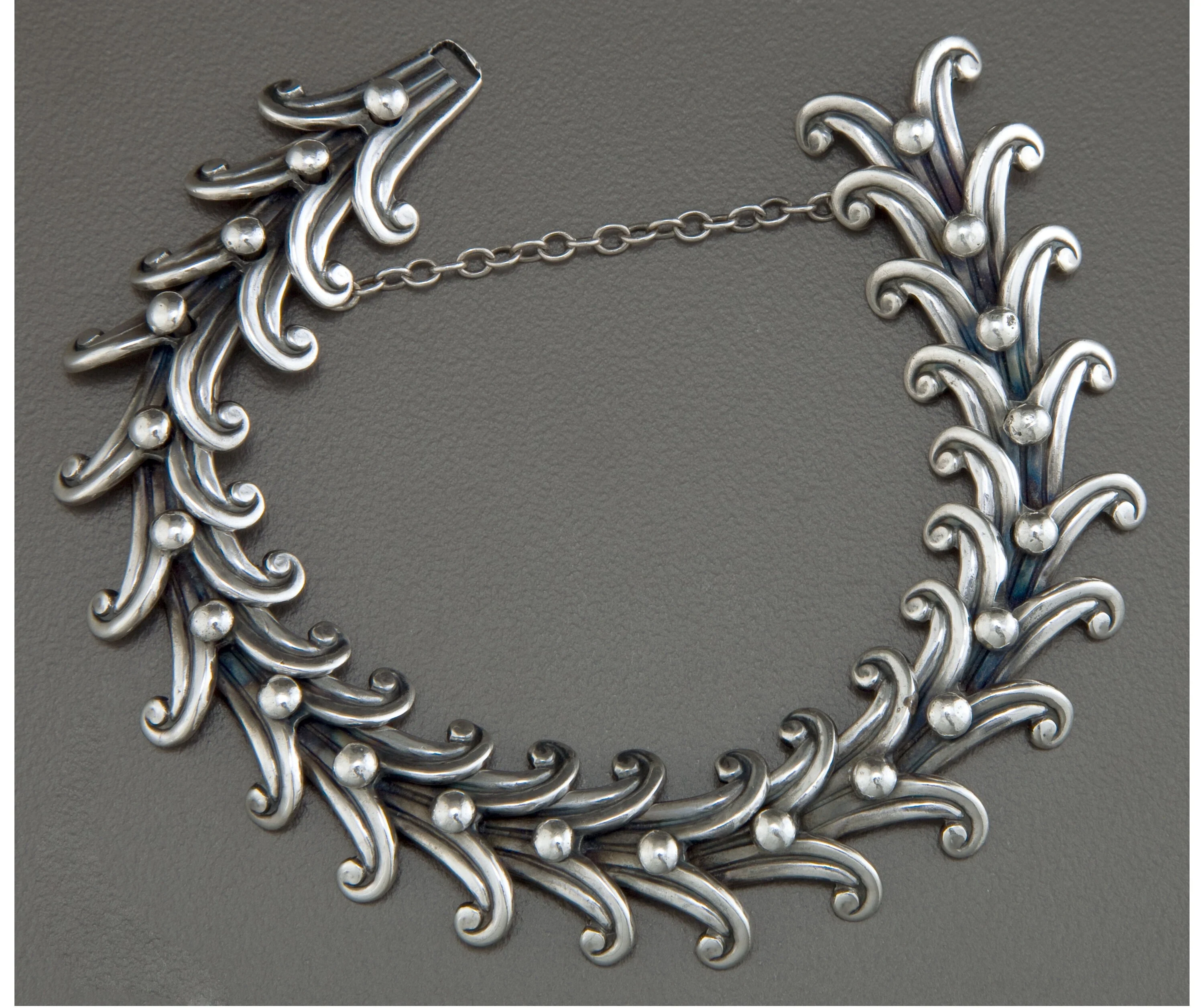
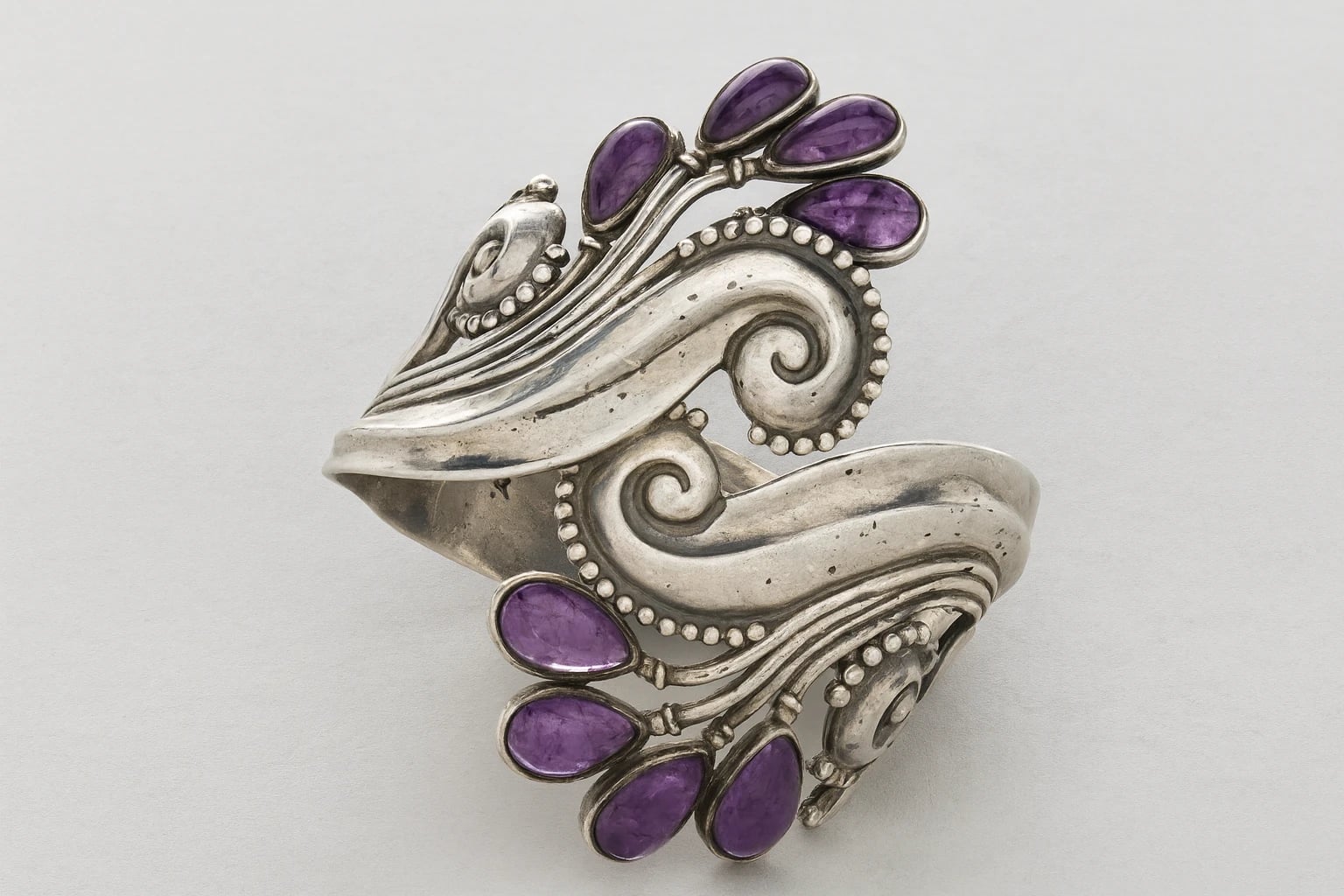
Design 5102 Bracelet
Sterling silver