Saves instantly, no account needed. Already a member? Sign in.
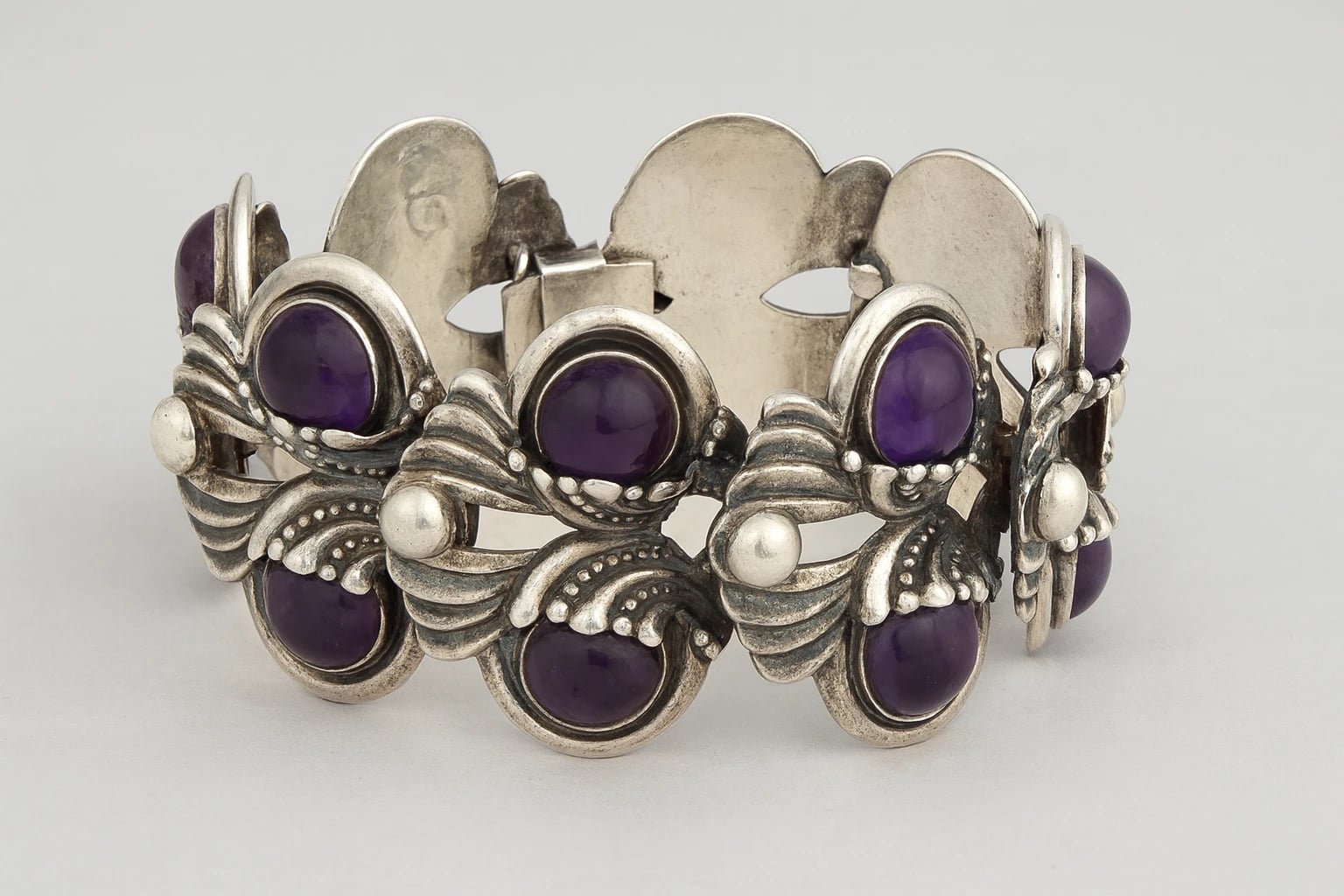
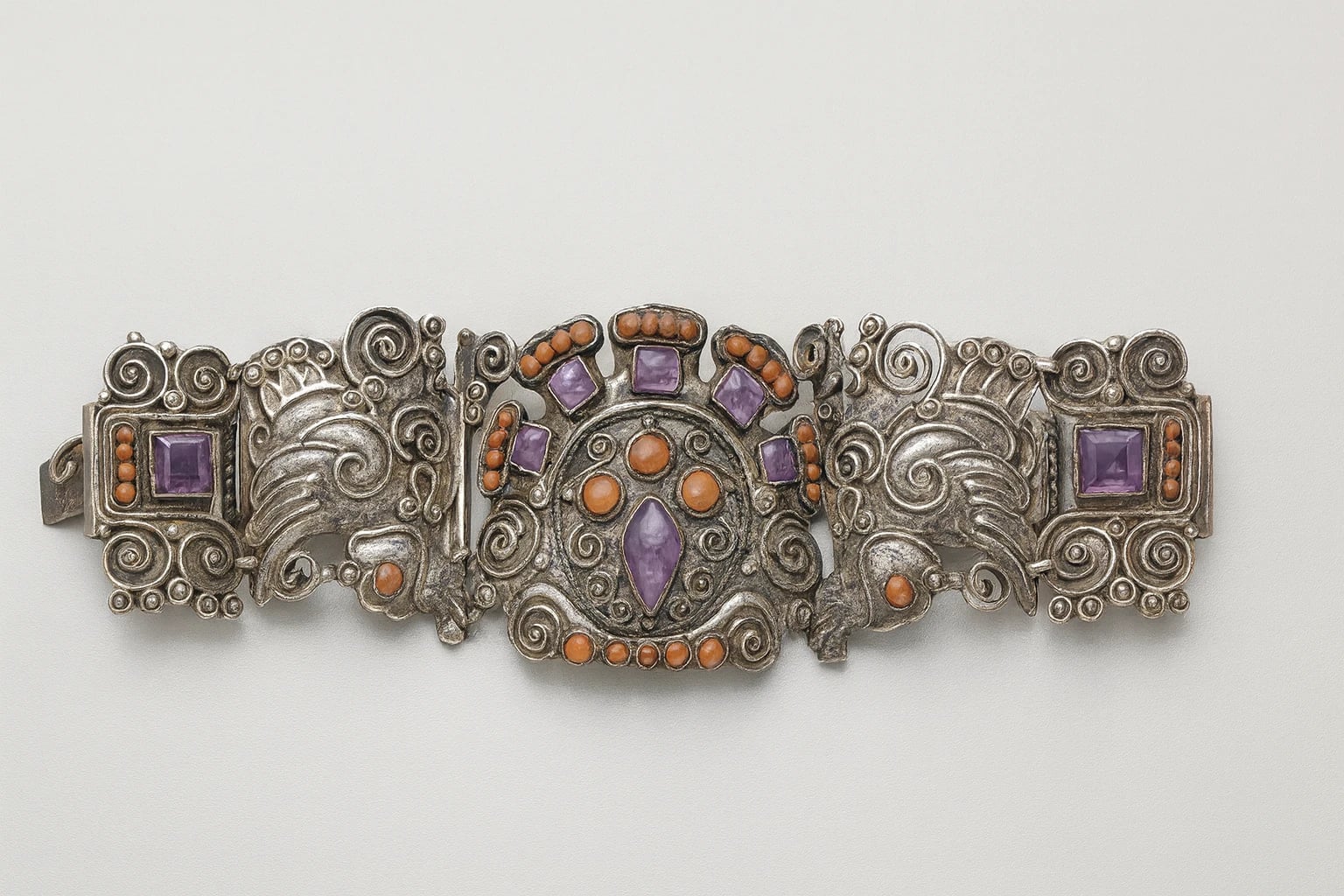
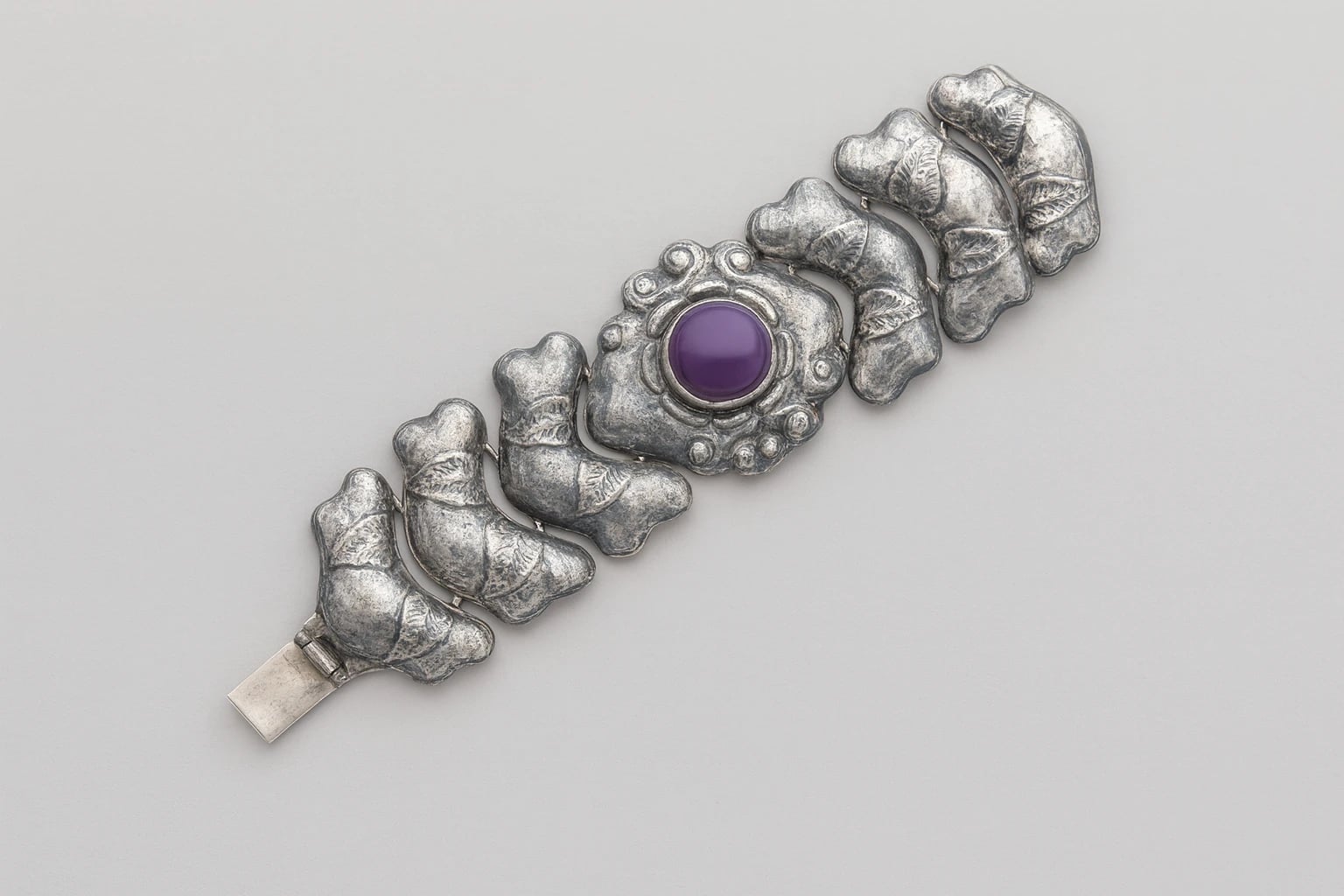
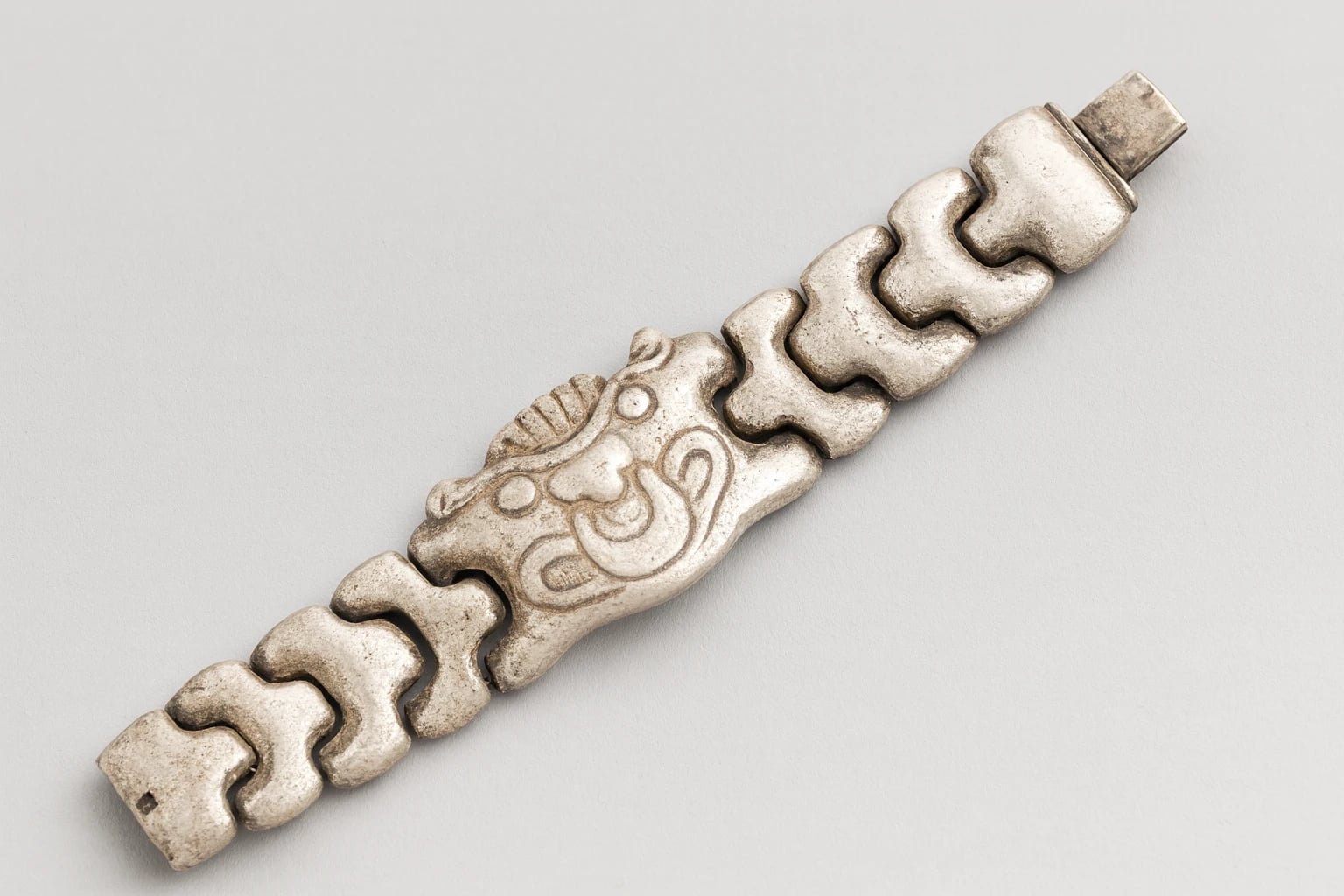
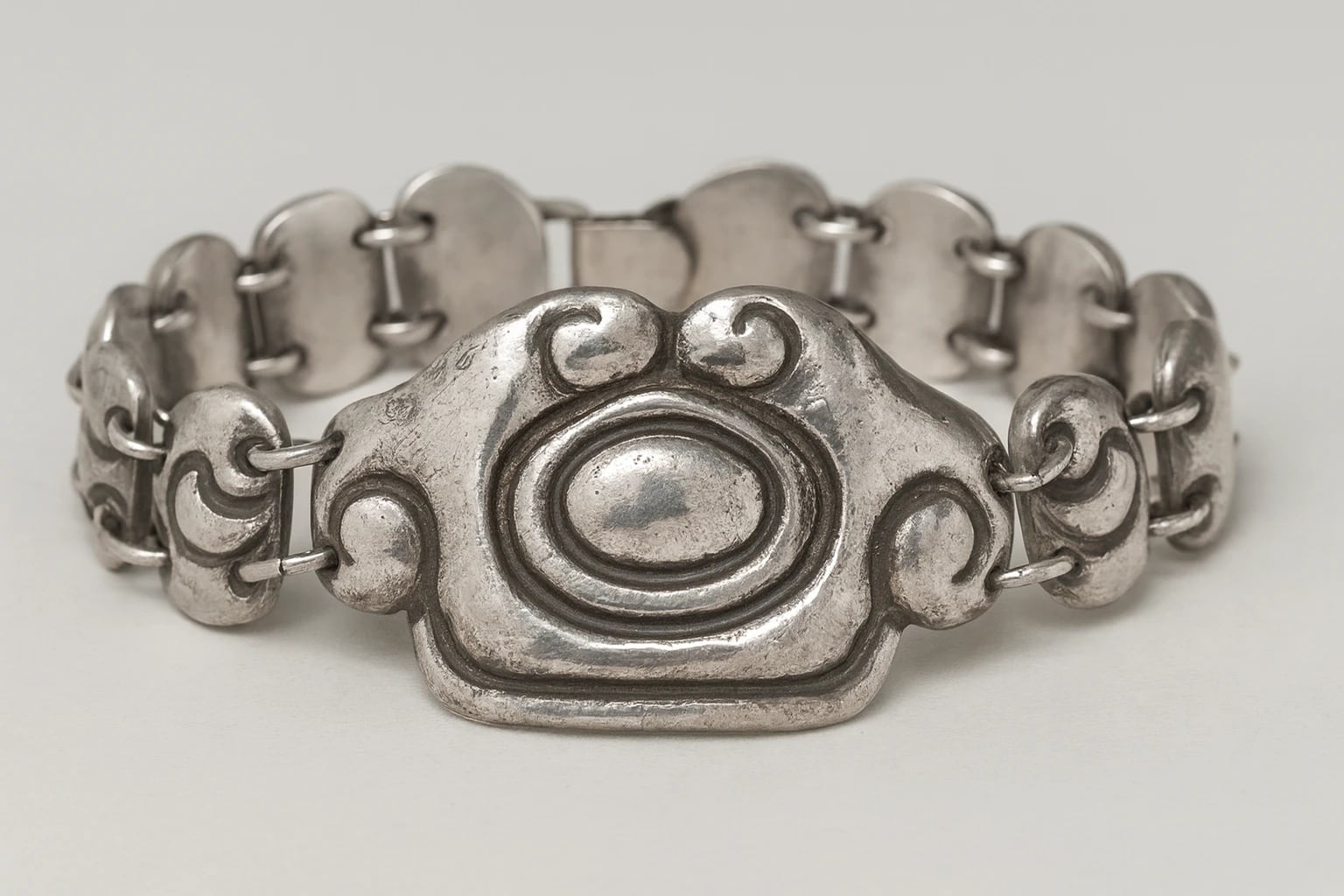
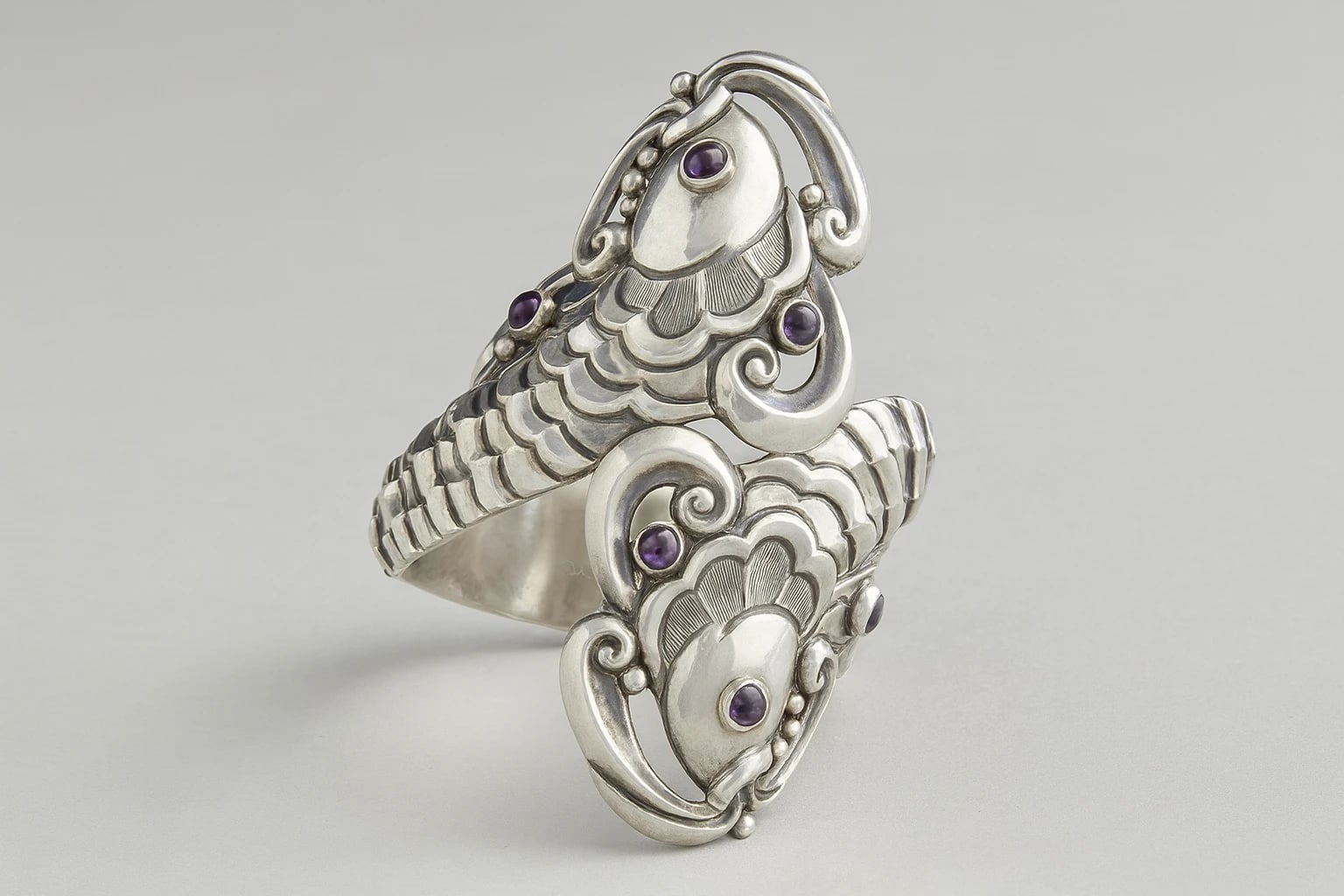
The two paired relief forms at the heart of design 5207 — each a rounded figure with engraved scale-like patterning, trailing scrolled extensions, and set with a rounded violet enamel accent ringed by small silver granules — bring together defining threads of Margot de Taxco's sculptural language in a single wide cuff. That the design carries its own number within her catalogued system confirms its standing as a considered, repeating model rather than a one-off exercise, produced over the long span of the Taxco taller that Margot opened in 1948 (Morrill, Mexican Silver, 1994, p. 168).
Morrill records that Margot's dramatically modeled, curling forms drew on two pictorial sources in particular: the churrigueresque facade of Taxco's Santa Prisca, which her workshop overlooked, and the organic line of Parisian Art Nouveau jewelry, whose vocabulary she studied extensively. Her wider interest in Japanese art, documented across two research trips in the late 1950s, "was revealed in the choice of subject and approach to form" (Morrill, p. 168). In design 5207, those currents converge: the opposed, mirrored placement of the two relief forms and the fluid articulation of their scrolled peripheries reflect a compositional logic shaped by all three traditions. Subsidiary enamel accents at the outer scrollwork extend the chromatic note without displacing the massed silver that dominates the cuff.
Margot formalized her enamel-on-silver production in 1955, adding it as a named line to the taller's output (Morrill, p. 168), and numbered designs like 5207 represent the period when the workshop's technical range was at its broadest. It speaks to a more sculptural, relief-forward dimension of a studio more often encountered in its vivid enamel palette work.
Museum of Mexican Silver. “Design 5207 Bracelet.” Catalog no. MoMS-001087. https://museumofmexicansilver.com/pieces/margot-bracelet-5207
See something wrong with this record? Suggest a correction and the piece details fill in automatically.
Design 5240 Bracelet
Sterling silver