Saves instantly, no account needed. Already a member? Sign in.
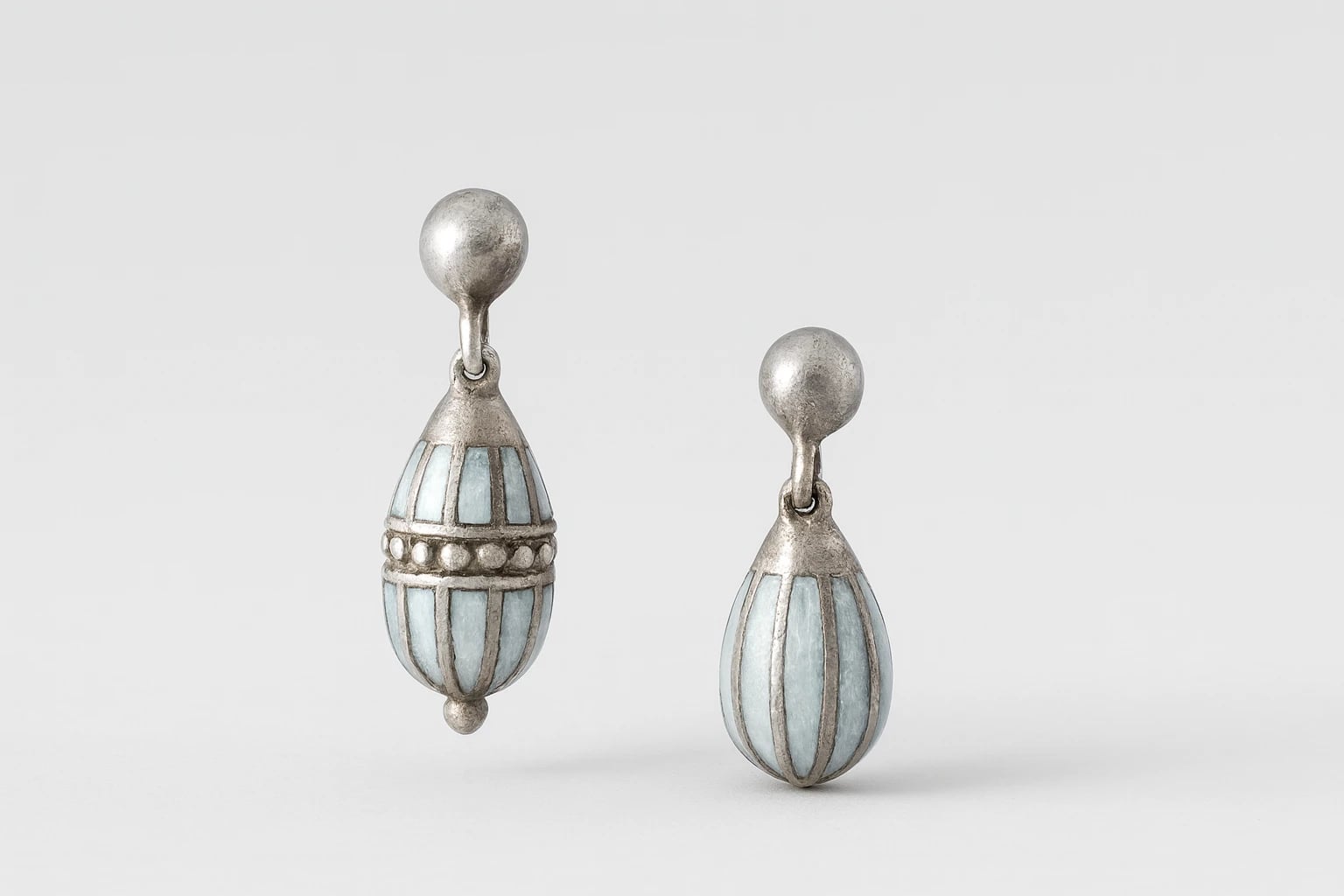
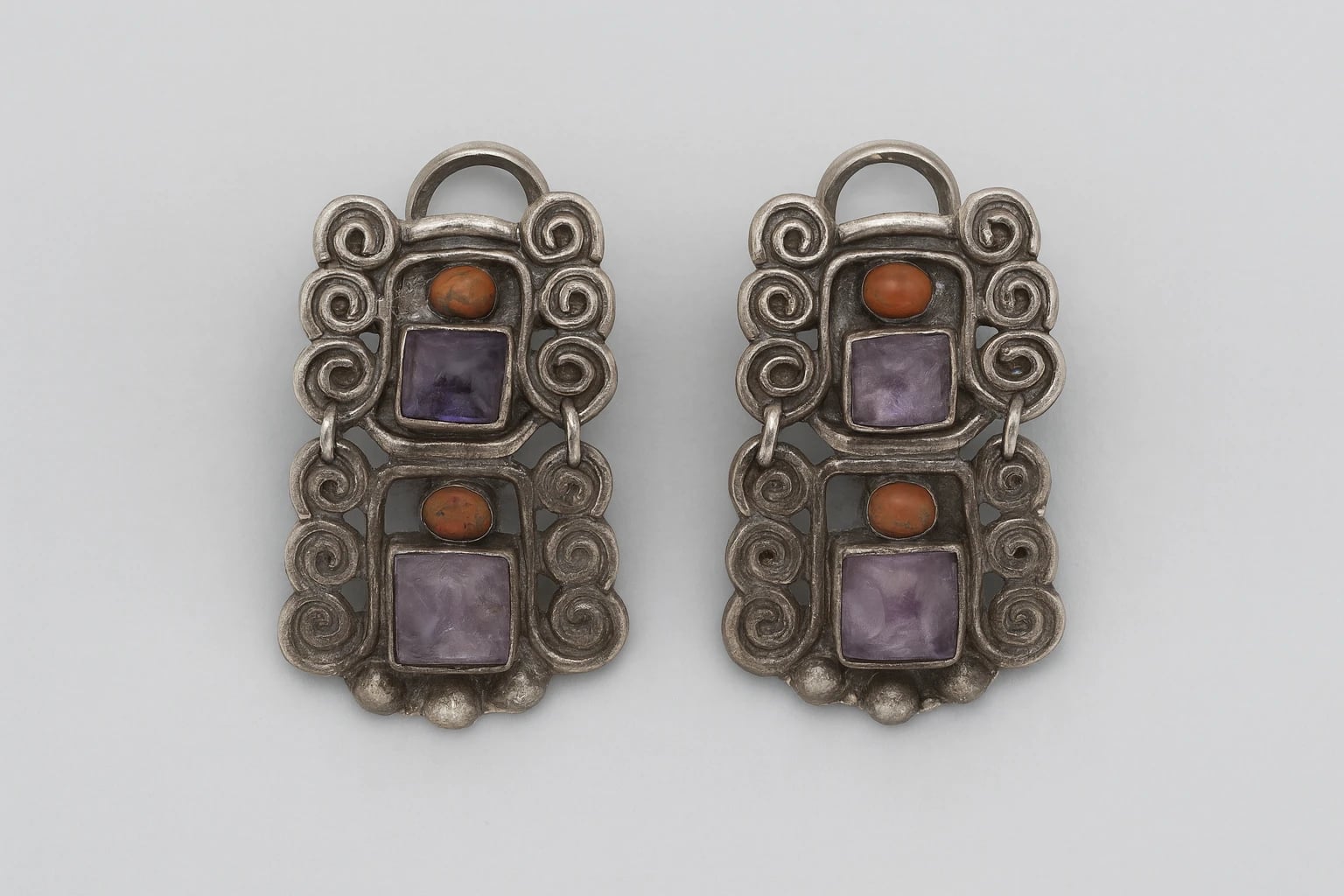
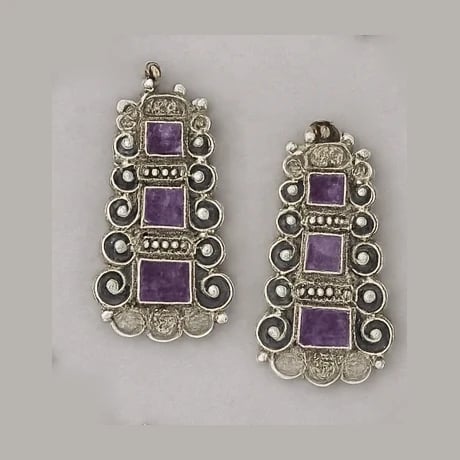
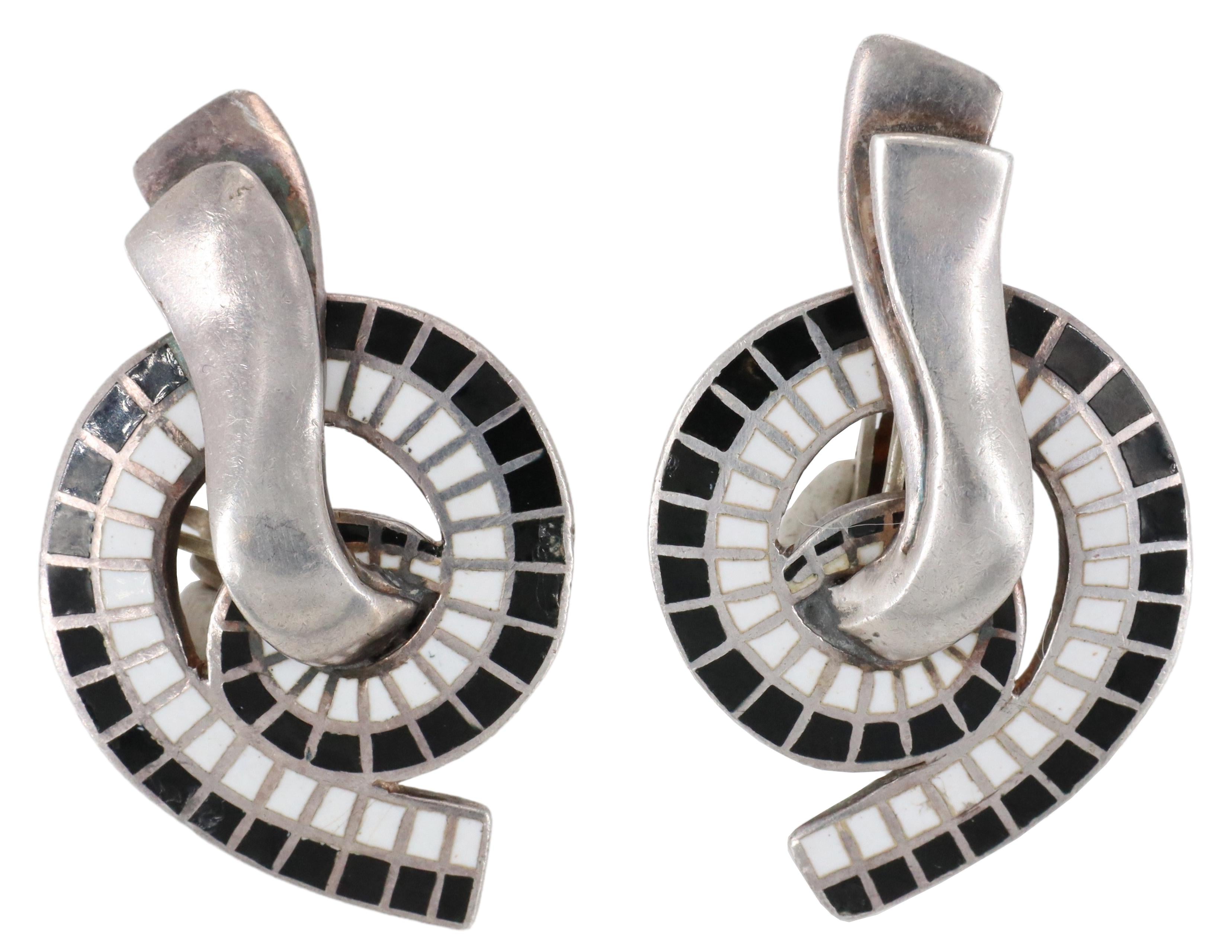
The design number is itself a document. Margot de Taxco stamped inventory numbers on the backs of her jewelry throughout her career, and the pattern holds: the smaller the number, the earlier the piece, placing these earrings in the later sustained output of a practice she maintained from 1948 through the 1980s (Morrill & Berk, Mexican Silver, 1994). Among Taxco's mid-century workshops, that systematic numbering was the exception rather than the rule — a discipline that reflects the same organizational rigor she brought to her design process.
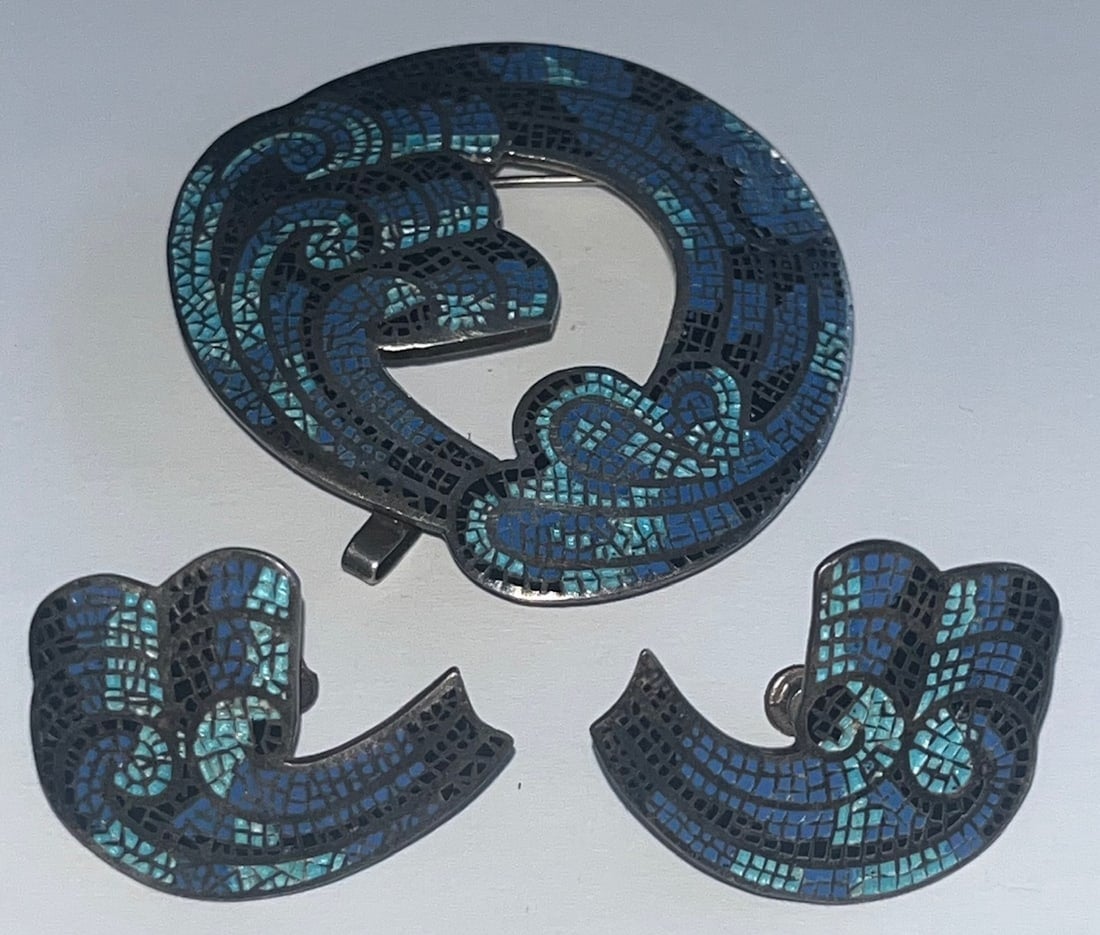
Her earrings are among the most characteristic expressions of her method. Morrill & Berk describe "her champlevé necklaces, bracelets and earrings" as "glittering displays of color, texture, and technical perfection" — vitreous color inlaid into recessed sterling silver cells, producing the graphic precision and depth her designs required (p. 166). The formal vocabulary she drew on was unusually broad: Pre-Columbian geometries, the curling ornamental lines borrowed from Parisian Art Nouveau jewelry, and the Baroque facade of Taxco's Santa Prisca all fed a design language she sustained consistently across the full numbered series (Morrill & Berk, p. 168).
Numbered earring designs from the upper ranges of the series offer a measure of how reliably her formal language held across decades of production. The inventory number also anchors attribution with a specificity that is less common in Taxco silver generally, allowing collectors to trace variant examples of a single model.
Museum of Mexican Silver. “Design 5556 Earrings.” Catalog no. MoMS-001057. https://museumofmexicansilver.com/pieces/margot-earrings-5556
See something wrong with this record? Suggest a correction and the piece details fill in automatically.
Margot de Taxco
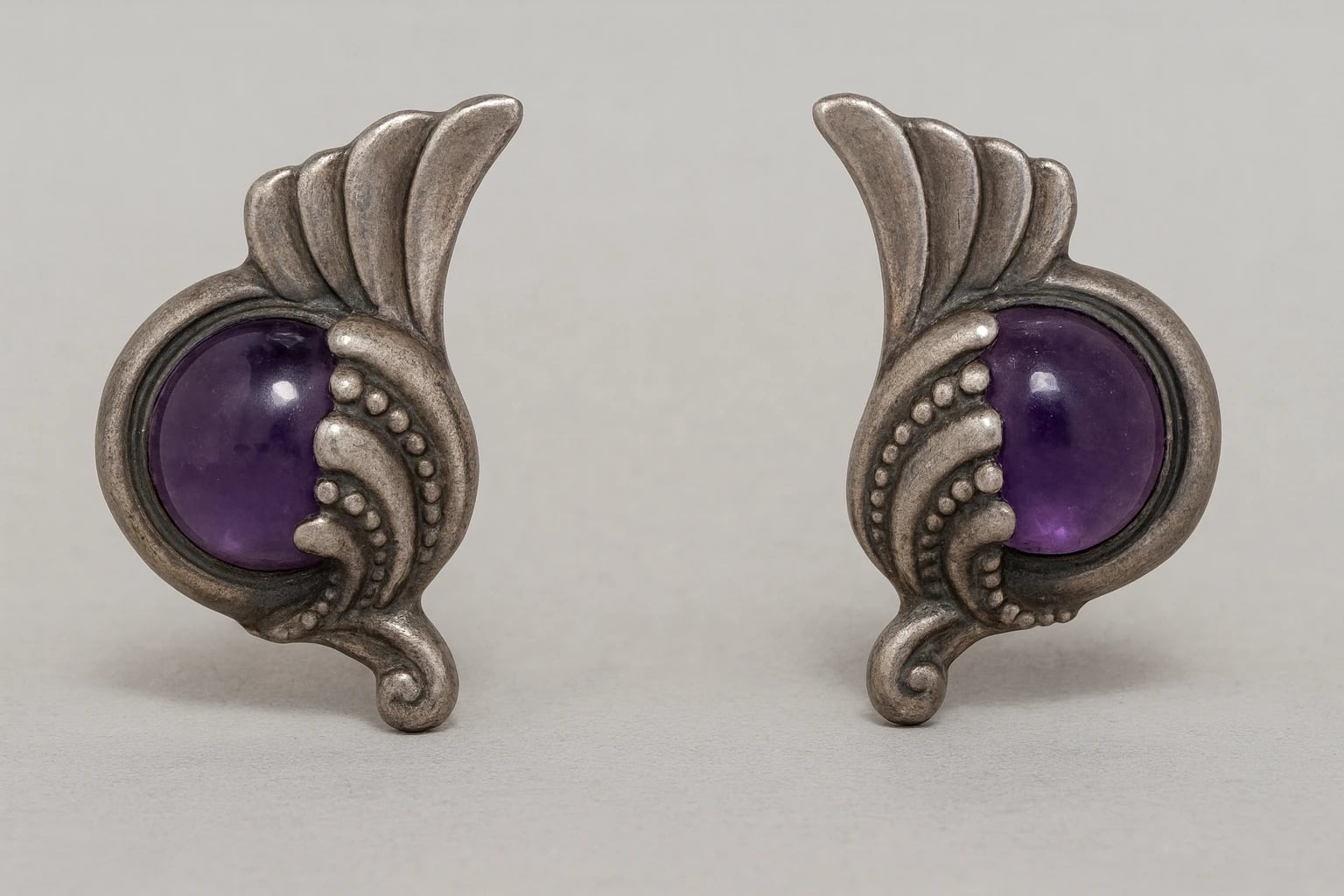
Design 5240 Winged Cornucopia Earrings