Saves instantly, no account needed. Already a member? Sign in.
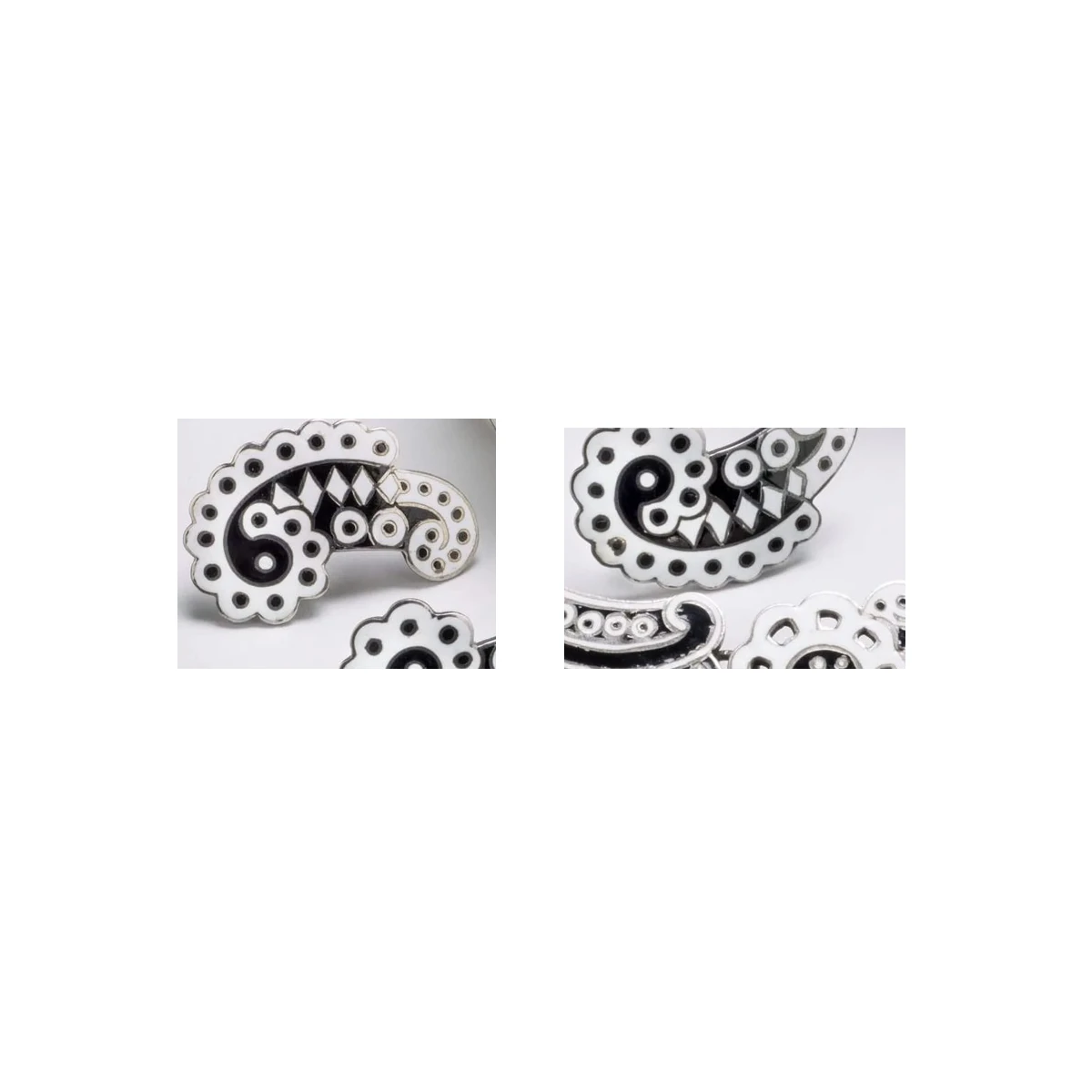
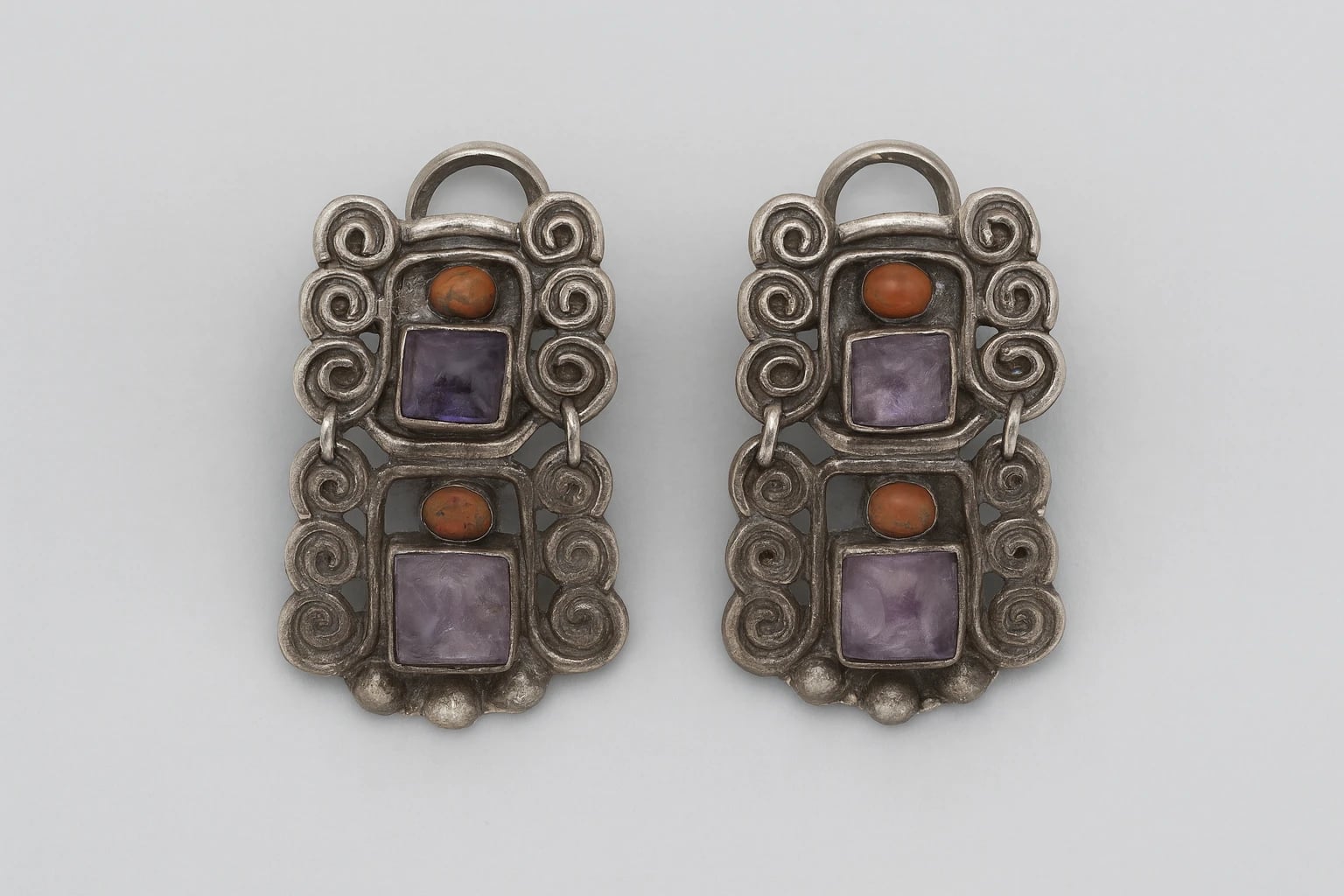
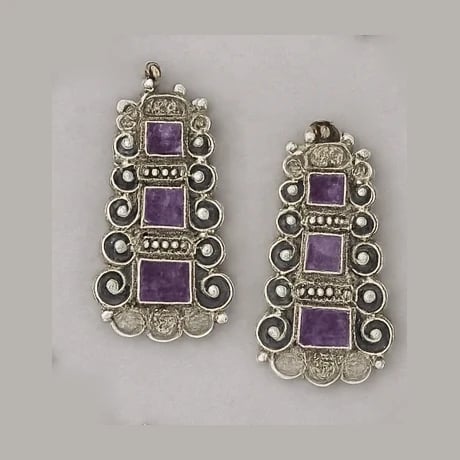
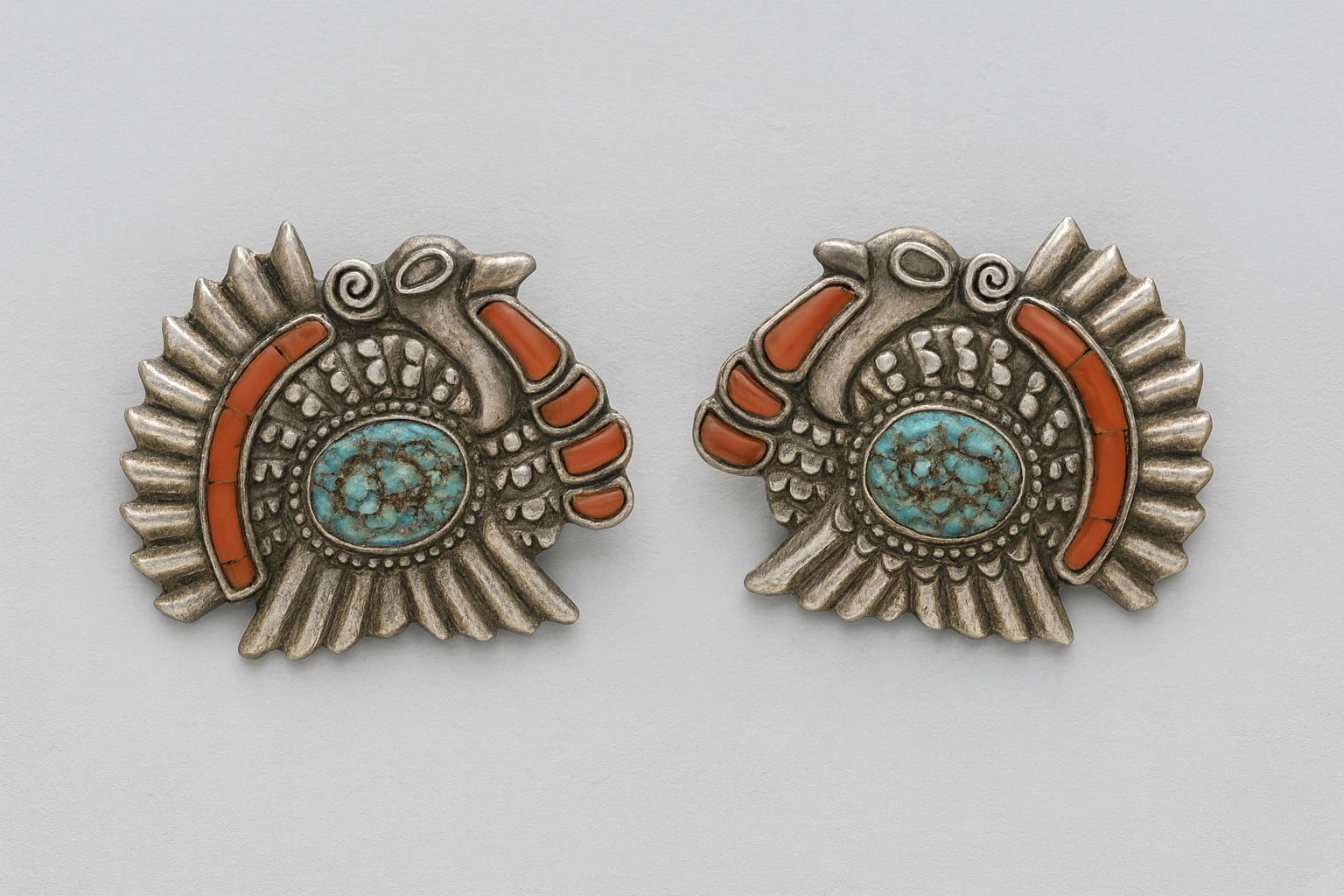
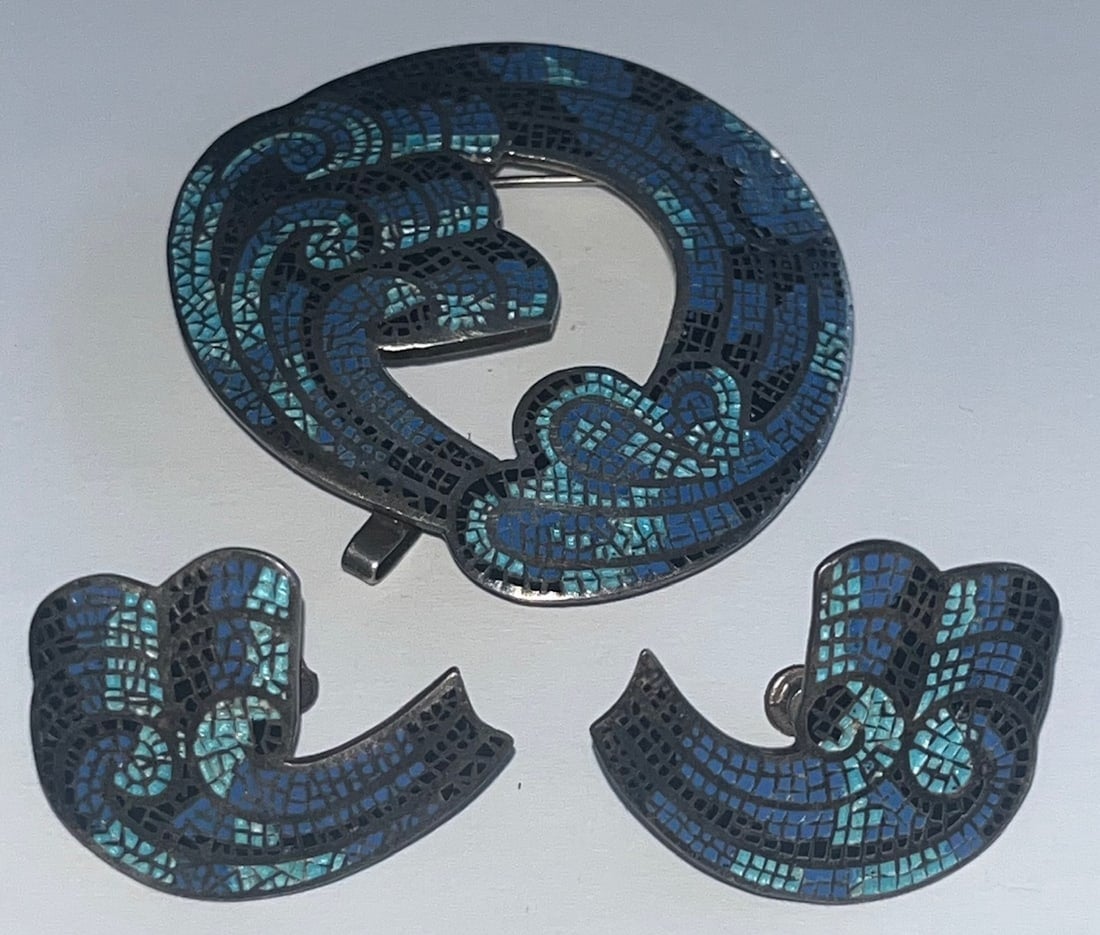
The "mosaic" title in Margot de Taxco's enamel line is not decorative shorthand but a design designation: each model in her output carried a name linked to specific color instructions and production notes that she herself maintained in a workbook covering every piece her studio produced. Earrings are among the forms most closely identified with her enamel range; Morrill and Berk, writing in Mexican Silver (1994), describe her champlevé earrings as "glittering displays of color, texture, and technical perfection." A matched pair from the mosaic series brings into view the same chromatic discipline that defined her larger jewels.
Sterling silver formed from molds in the Taxco workshop provides the structure into which the enamel is set, the metal functioning both as container for the color fields and as a compositional element in its own right. The mosaic format, with color organized in discrete adjacent zones rather than as a continuous wash of vitreous pigment, reflects a sensibility Morrill and Berk trace through Margot's Pre-Columbian field research and her two trips to Japan in the late 1950s: she saw in ancient geometric patterning a compatibility with Art Deco discipline, and her trained eye for adaptable motifs carried that synthesis directly into her enamel vocabulary (Mexican Silver, 1994).
Her calling card phrase, "As the stars are to the night, so are jewels to the woman," captures the intent behind even the smallest pieces in her signed range. A pair of earrings in the mosaic format makes that ambition wearable.
Museum of Mexican Silver. “Wave Mosaic Brooch and Earrings.” Catalog no. MoMS-001102. https://museumofmexicansilver.com/pieces/margot-earrings-mosaic
See something wrong with this record? Suggest a correction and the piece details fill in automatically.
Margot de Taxco
The AM PM Necklace