Saves instantly, no account needed. Already a member? Sign in.
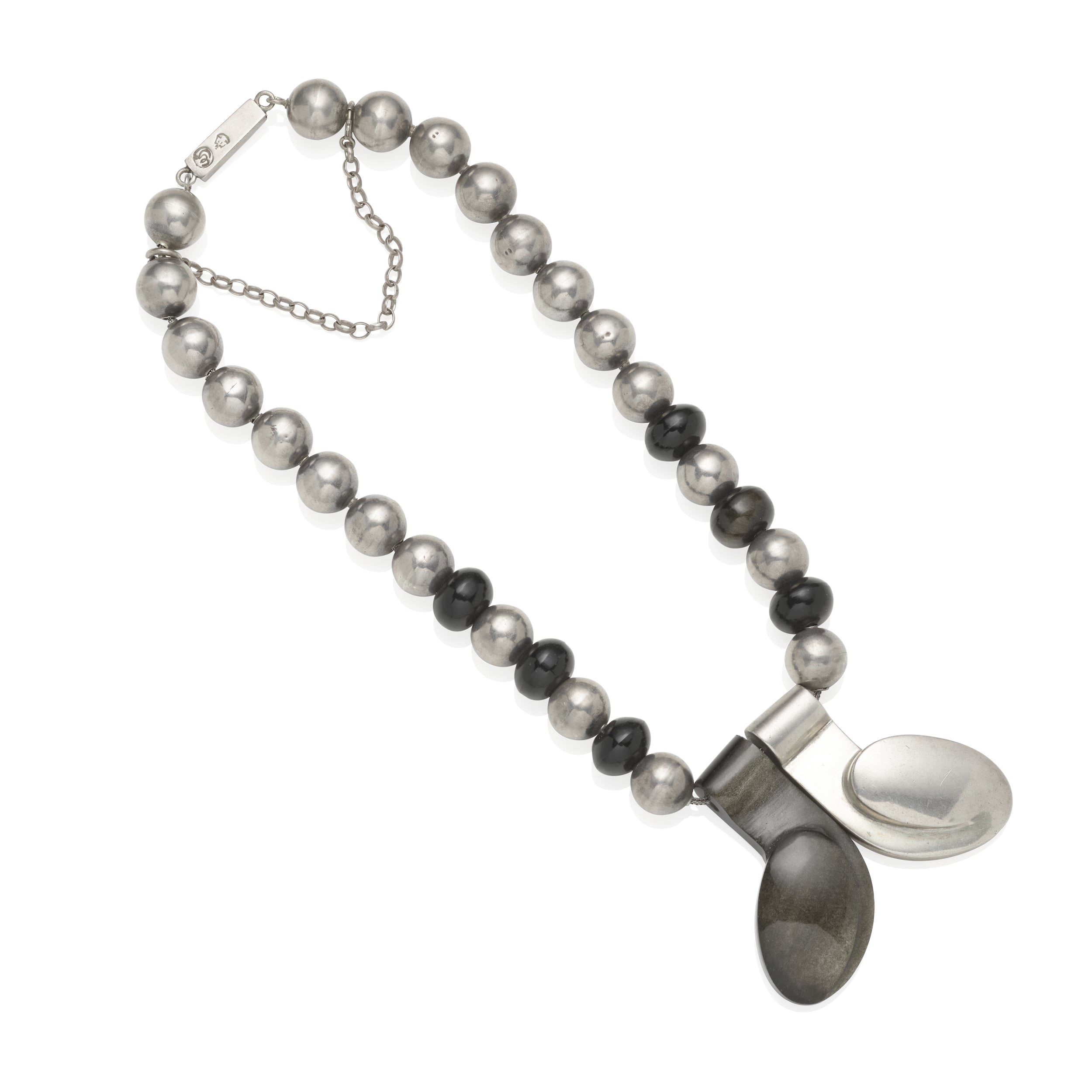
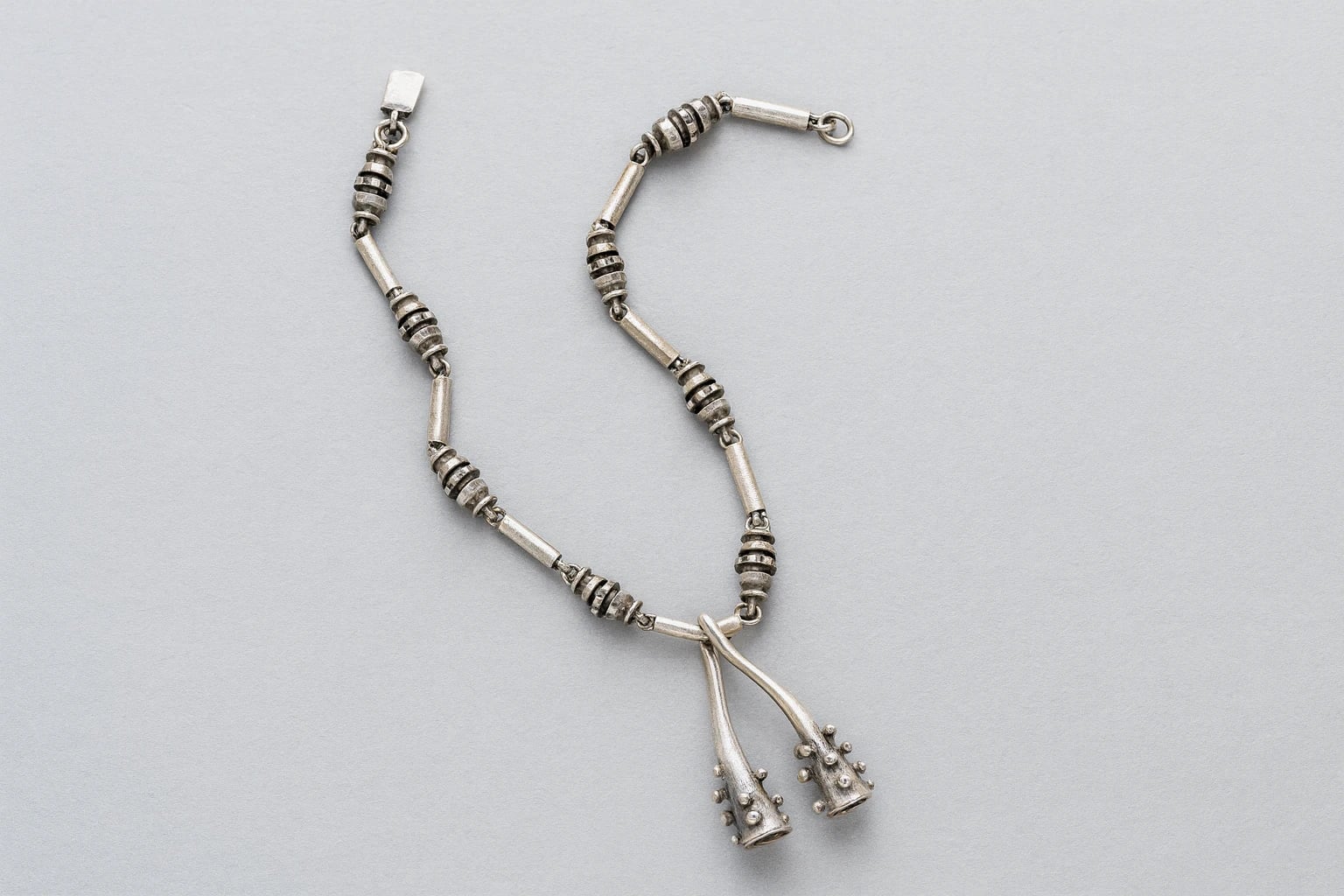
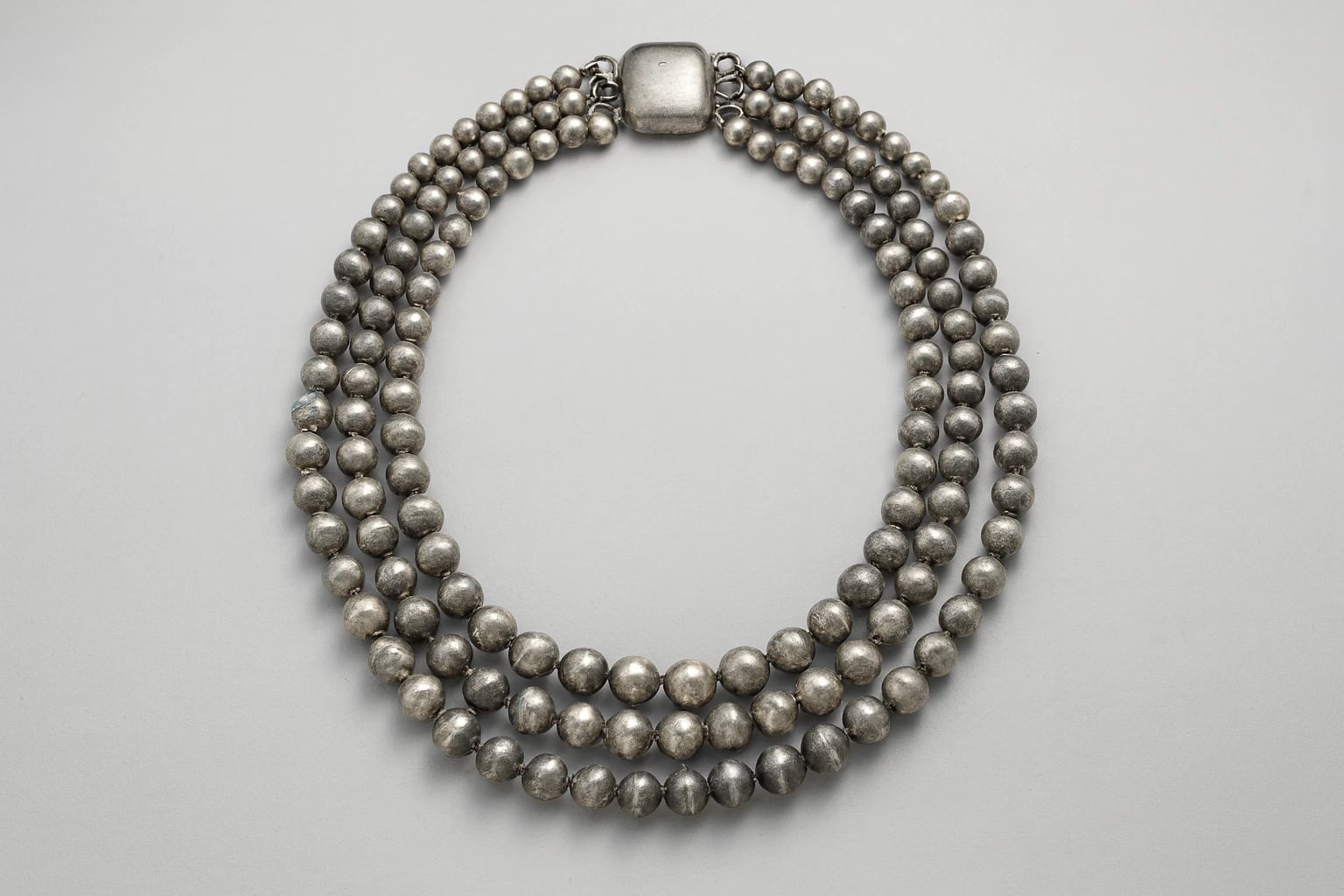
Three strands of hand-formed silver beads — each graduated from smaller spheres near the clasp to fuller rounds at the center front — make their case entirely in material and mass. The form embodies a recurring instinct in Spratling's design vocabulary: letting the metal speak for itself, with no applied ornament, no mixed materials, and no color beyond the silver.
Bead production was among the more demanding exercises in the Spratling workshop. Morrill & Berk record that silversmiths rolled silver as thin as twenty-four or twenty-eight gauge expressly for bead work — repeated passes through a rolling mill — before shaping each sphere by hand (Morrill & Berk, Mexican Silver, 1994, p. 36). The three strands converge at a substantial rectangular box clasp, giving the bracelet formal symmetry and a clean functional close. The alloy is 980 silver, the fineness above sterling that Spratling preferred from the workshop's founding years for the warmth and density it brought to hand-formed surfaces (Morrill & Berk, p. 39).
Bead jewelry carried real prestige within the taller. When Spratling organized an in-house design competition in 1935, the first prize went to a suite of bead work — evidence of how seriously the workshop pursued the form (Morrill & Berk, p. 83). The joined WS stamp and TAXCO mark on the clasp back confirm workshop origin.
Museum of Mexican Silver. “Graduated Bead Necklace of Three Strands.” Catalog no. MoMS-000119. https://museumofmexicansilver.com/pieces/spratling-2363
See something wrong with this record? Suggest a correction and the piece details fill in automatically.
William Spratling
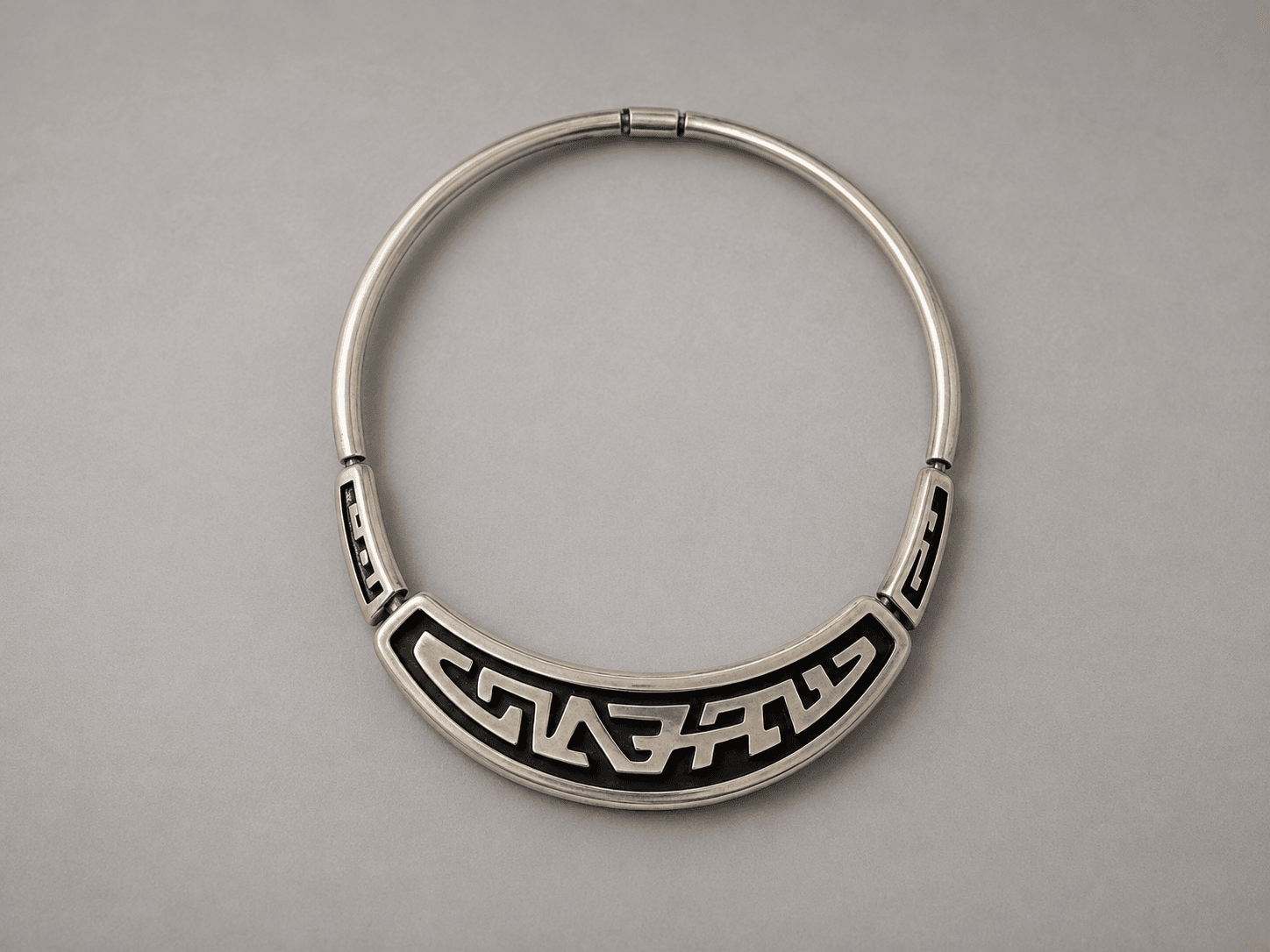
Obsidian Lenguas Necklace
Silver