Saves instantly, no account needed. Already a member? Sign in.
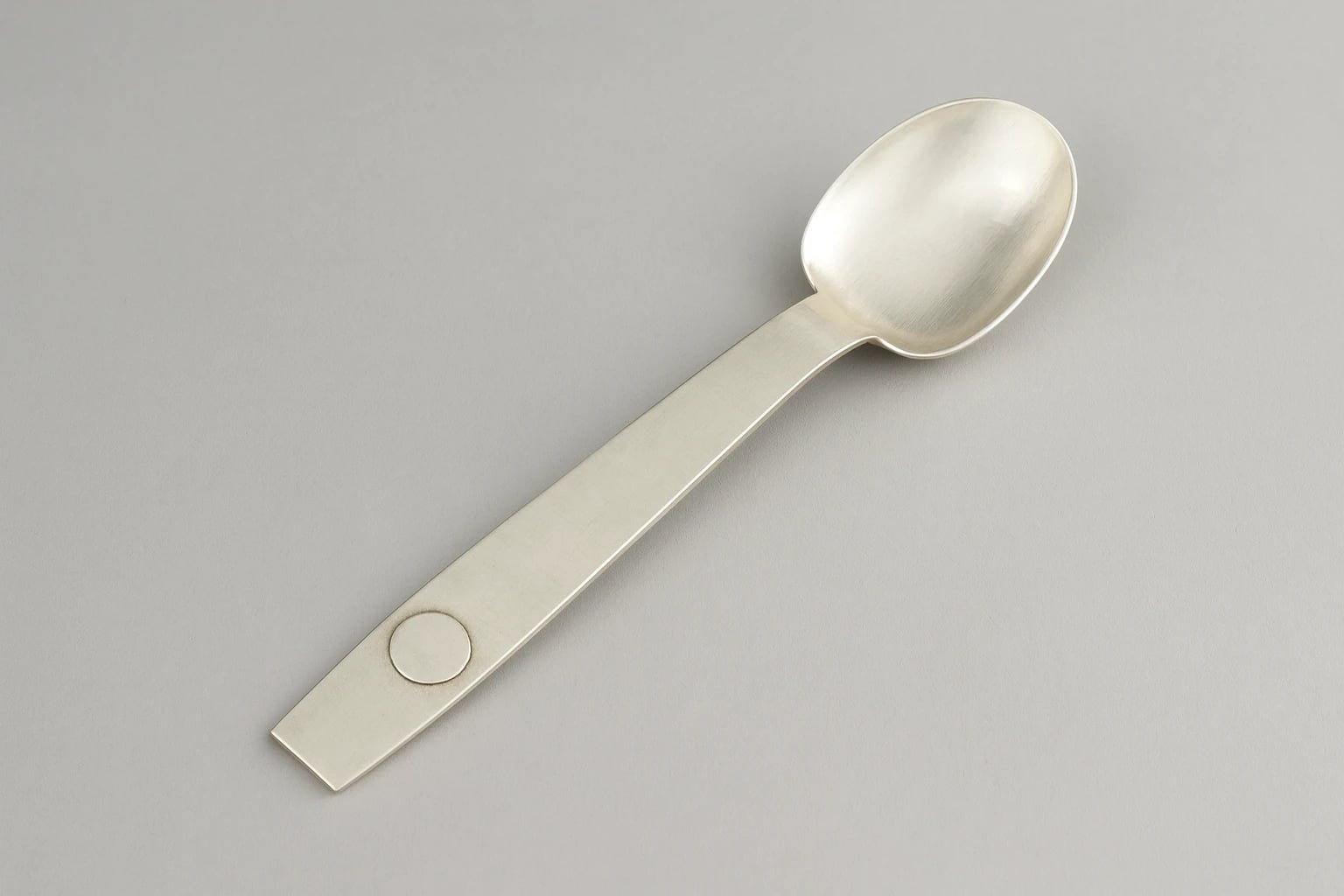
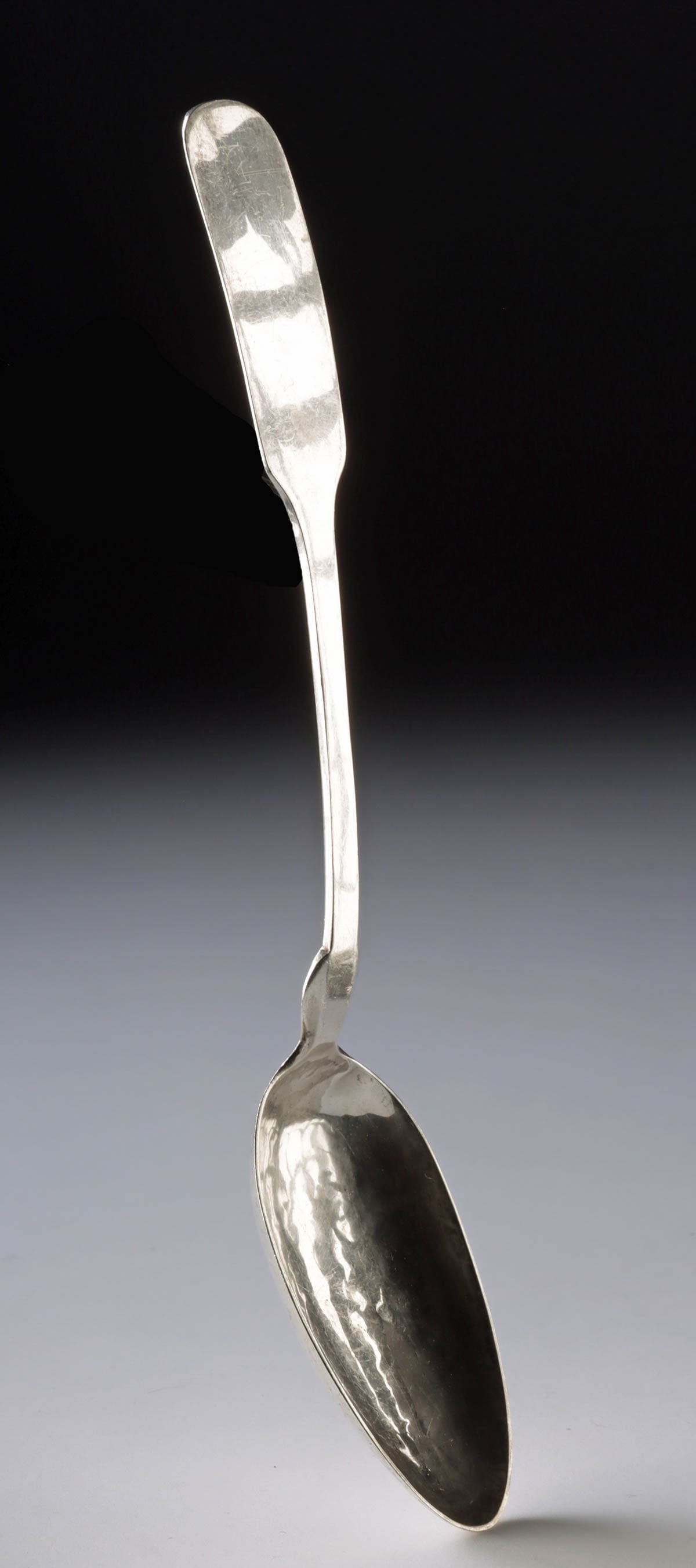
Flatware in Spratling's numbered design range appears far less often than his celebrated jewelry, and a tablespoon carrying design 2525 represents an uncommon category of his output. The piece dates to the Second Design Period, when Spratling continued studio production under a reorganized workshop and brought the same modernist reduction he applied to brooches and bracelets to bear on domestic silverware.
The form is uncompromising in its discipline. A long, flat handle widens toward a broad oval terminal, narrows to a clean step at the shoulder, then meets the hammered bowl with no flourish at the join. The entire surface is hand-worked, leaving a lively, irregular faceting that animates the sterling in changing light. No applied ornament, chasing, or carved motif interrupts the planes — the interest is held entirely in the proportions and the evidence of the maker's hand. Morrill notes that Spratling's hand-wrought flatware and holloware maintained production methods that changed little across the decades, a consistency visible in every hammer mark here. The circular SPRATLING / MADE IN MEXICO workshop stamp and the Eagle 30 assay mark — the government quality guarantee Morrill describes — together confirm sterling composition and Second Period attribution.
Examples carrying legible double hallmarks in this condition offer an unusually clear record of the workshop's functional output at its most stripped-down.
Museum of Mexican Silver. “Large Silver Serving Spoon.” Catalog no. MoMS-000846. https://museumofmexicansilver.com/pieces/spratling-2525
See something wrong with this record? Suggest a correction and the piece details fill in automatically.
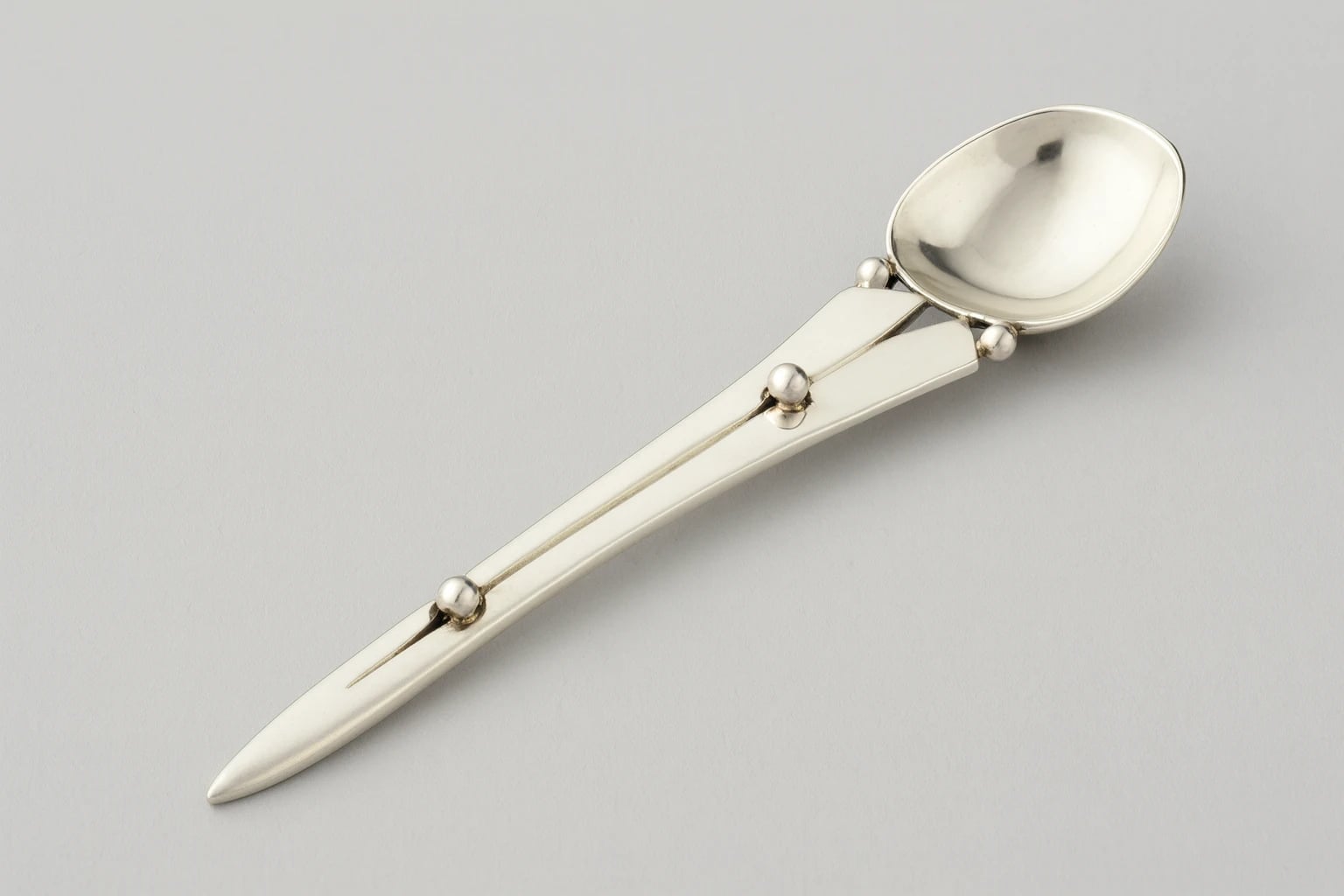
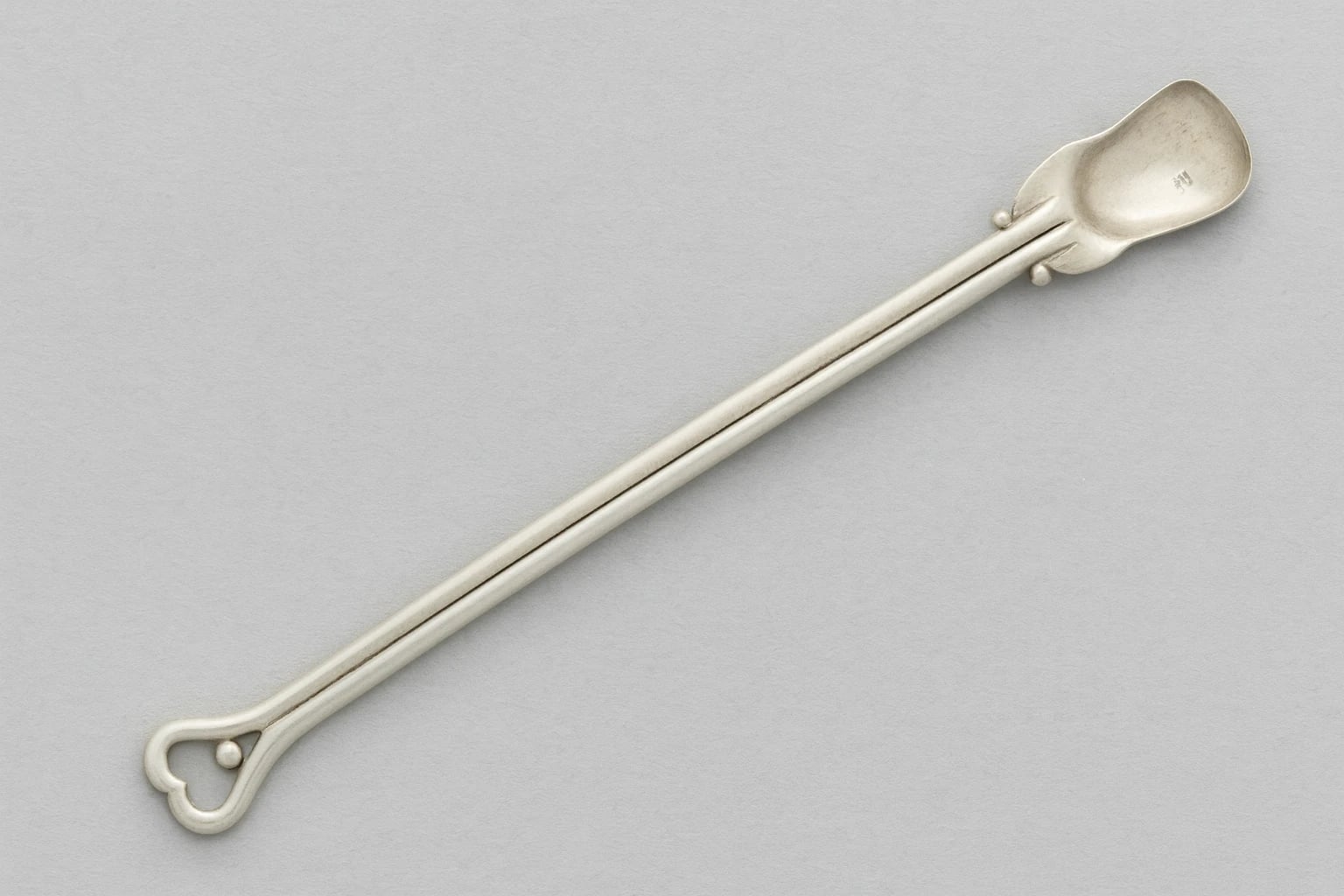
Long Tapered Silver Spoon
First Design Period: 1931 - 1946
Silver