Saves instantly, no account needed. Already a member? Sign in.
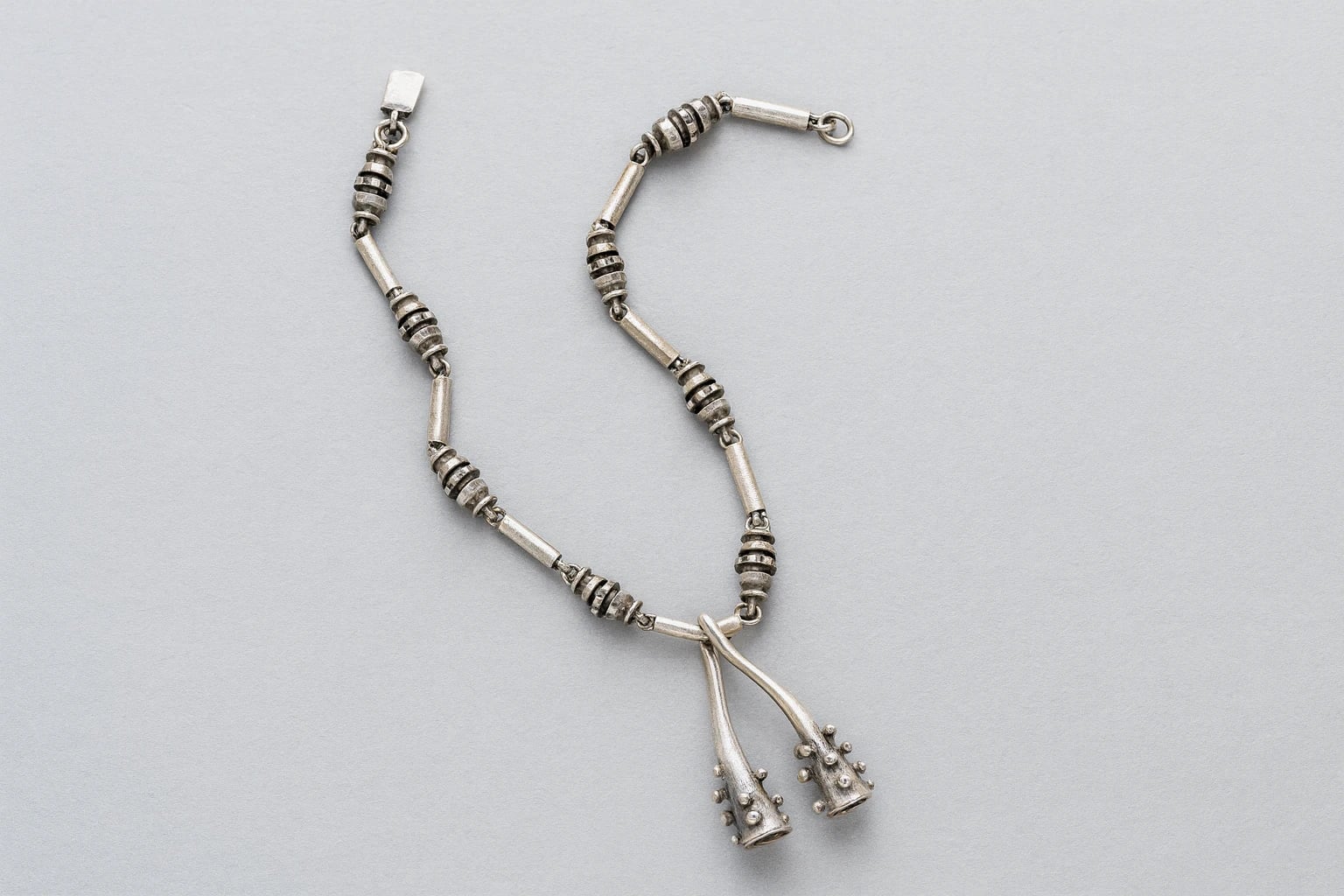
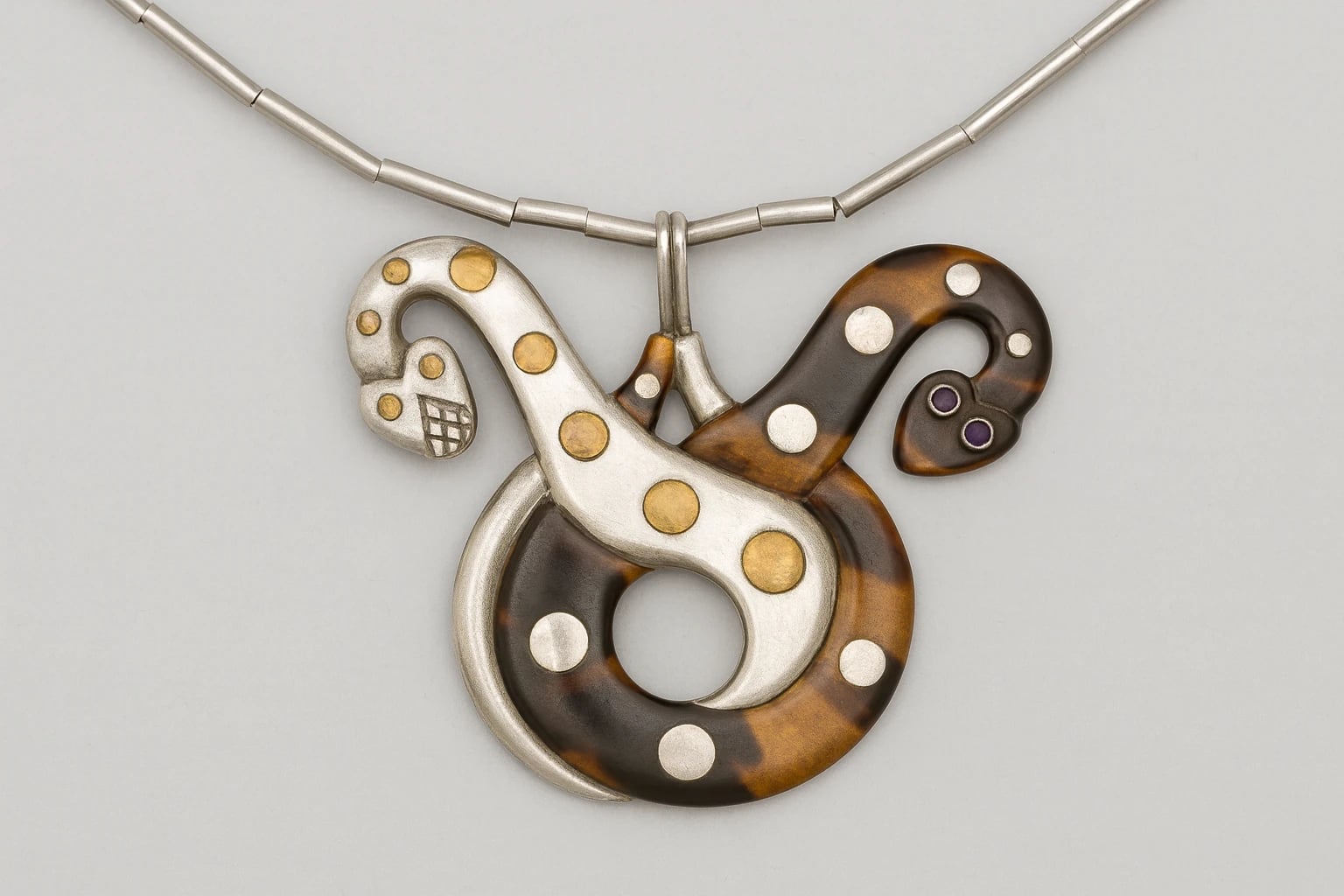
A twisted serpent of tortoise shell and silver, hung on a chain of silver tubes, is a late chapter in the motif that ran through Spratling's entire career. The serpent appears across his work, but its execution shifted decisively in the 1950s, and this pendant belongs to that later moment.
Before the early 1950s Spratling's serpents were silver alone, made as ashtrays, a box, buttons, pins, and a money clip; from the early 1950s to 1967 the range widened to bottle openers, boxes, a domino set, a bookmark, and pendants like this, with the serpents now appearing in tortoise shell, azur malachite, or rosewood combined with silver. The serpent itself descends from the pre-Columbian sources Spratling mined from the start, when ancient motifs served as a point of departure for new work (Morrill, pdf p. 39).
The silver tube-link chain is typical of this design and period. The pendant is recorded in the Centennial Edition of Cederwall and Riney's Spratling Silver, and tortoise-shell serpents of these years come to market only occasionally.
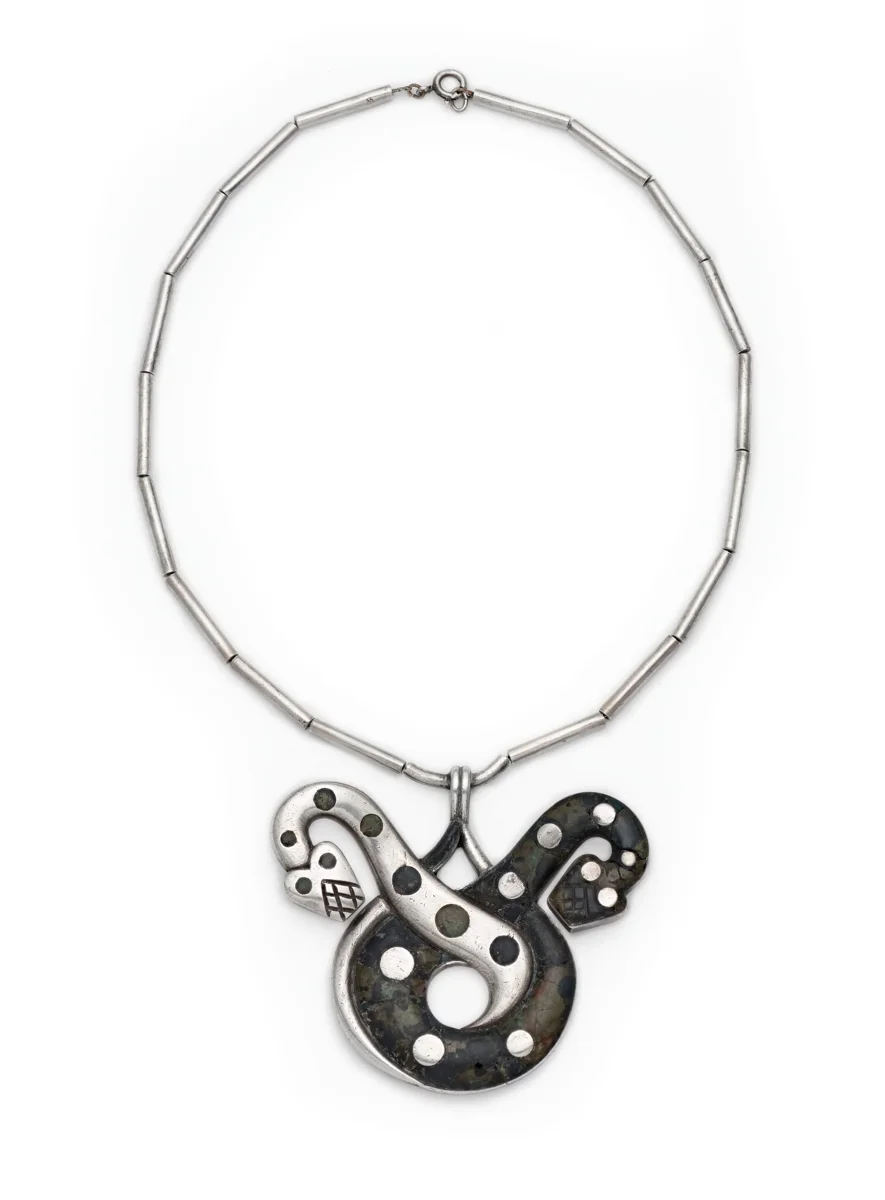
Entwined Serpent Pendant, circa 1965
Accession M.2018.68.2. Official museum record Photo: Los Angeles County Museum of Art.
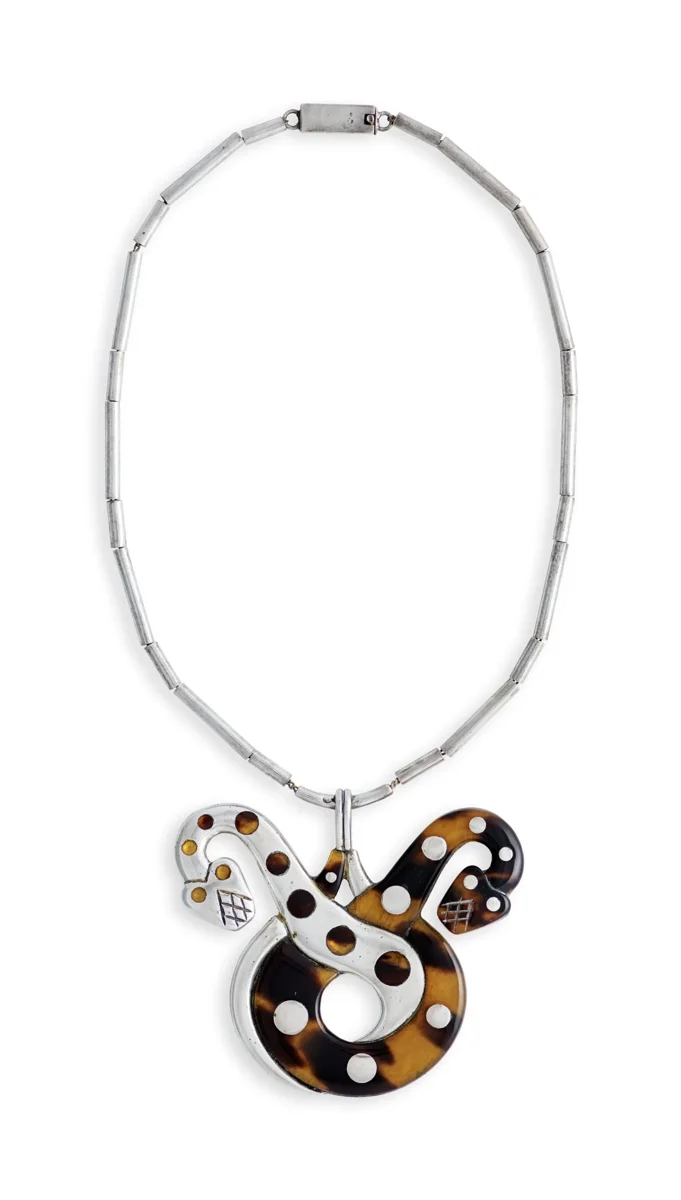
Snake Pendant, early 1960s
Accession M.2017.167.2. Official museum record Photo: Los Angeles County Museum of Art.
Verified against each institution's own collection records. All museum collections
Museum of Mexican Silver. “Tortoise and Silver Double Serpent Pendant.” Catalog no. MoMS-000615. https://museumofmexicansilver.com/pieces/spratling-2552
See something wrong with this record? Suggest a correction and the piece details fill in automatically.
William Spratling
Silson Necklace Heavy
Silver Plate