Saves instantly, no account needed. Already a member? Sign in.
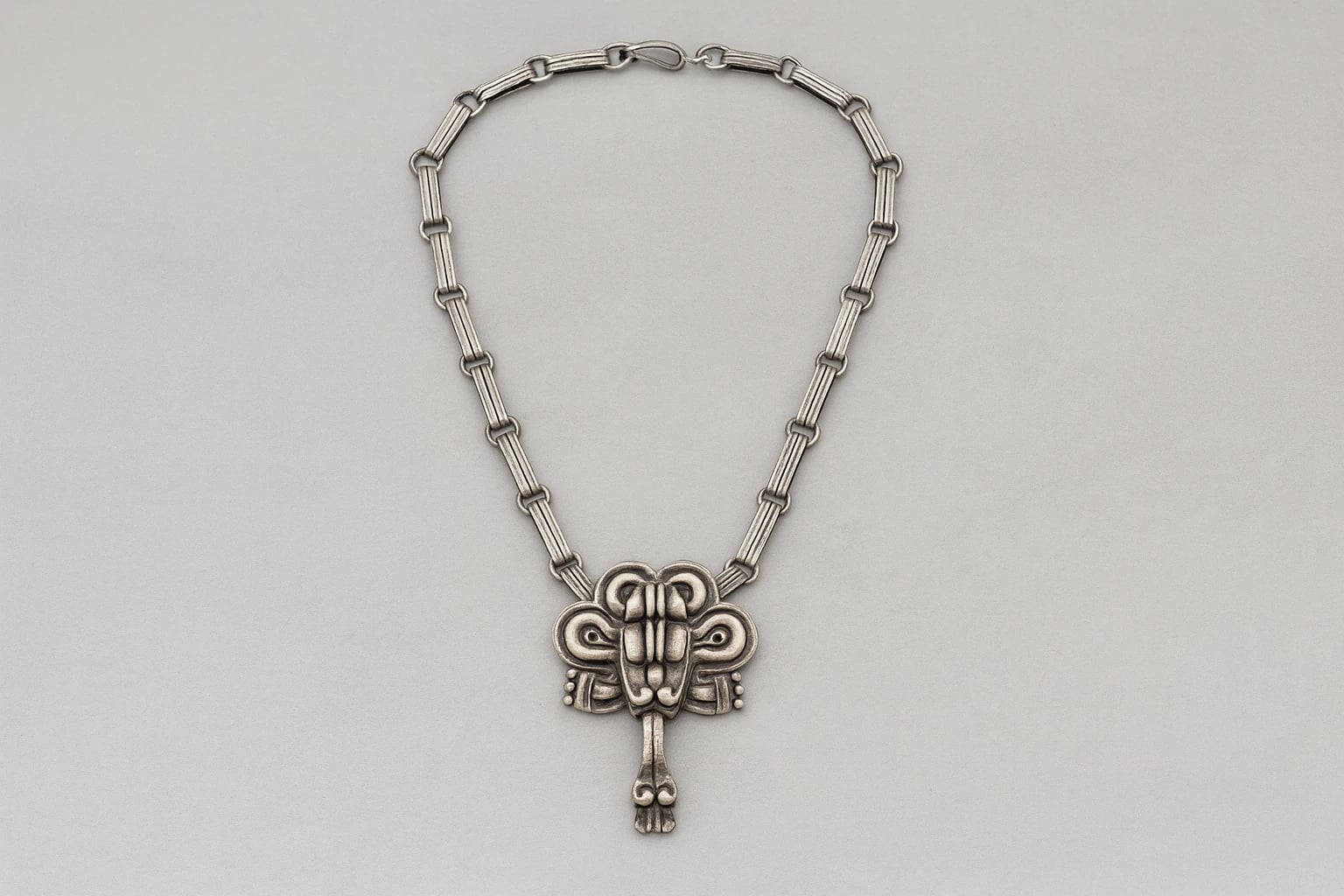
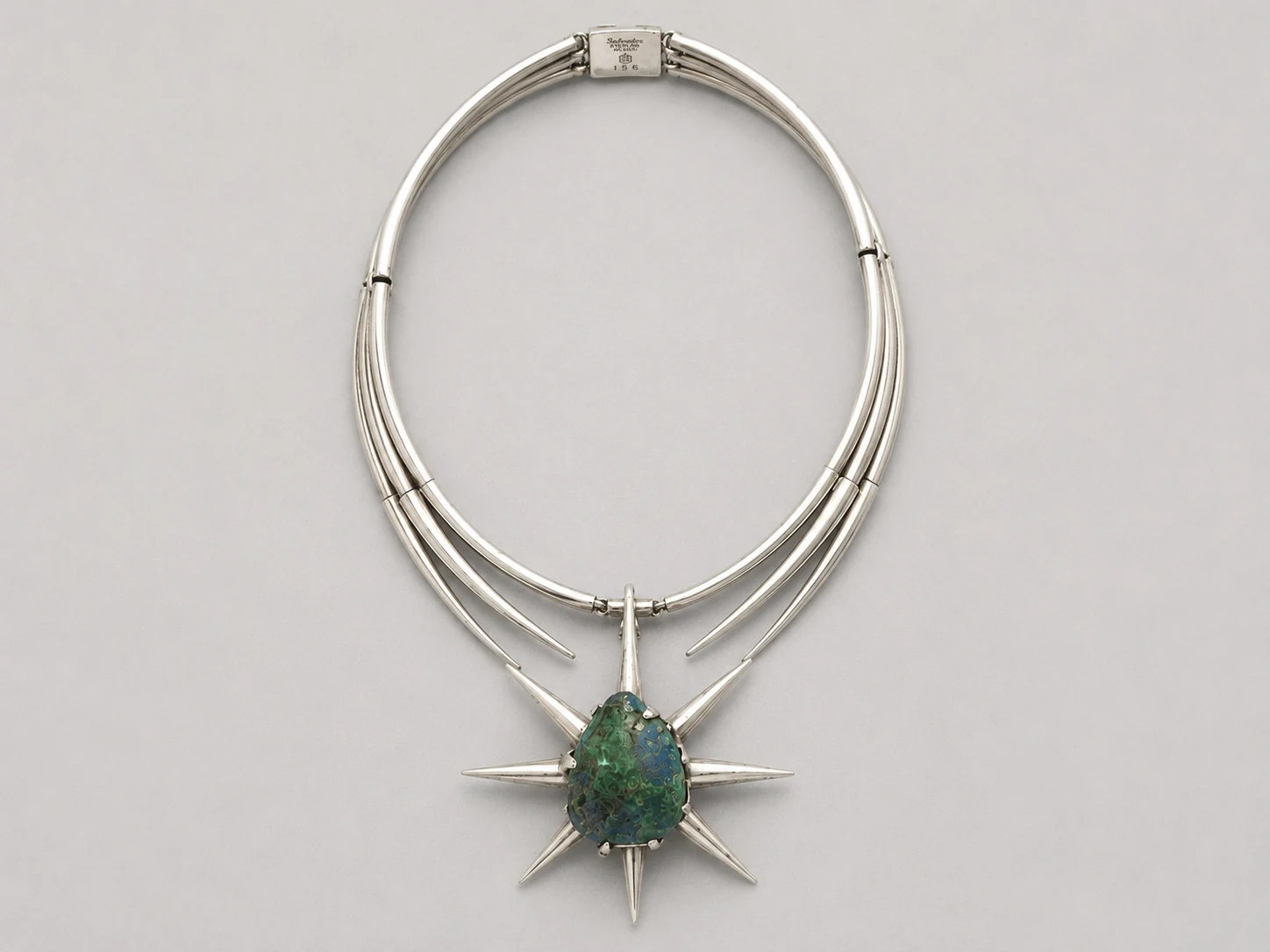
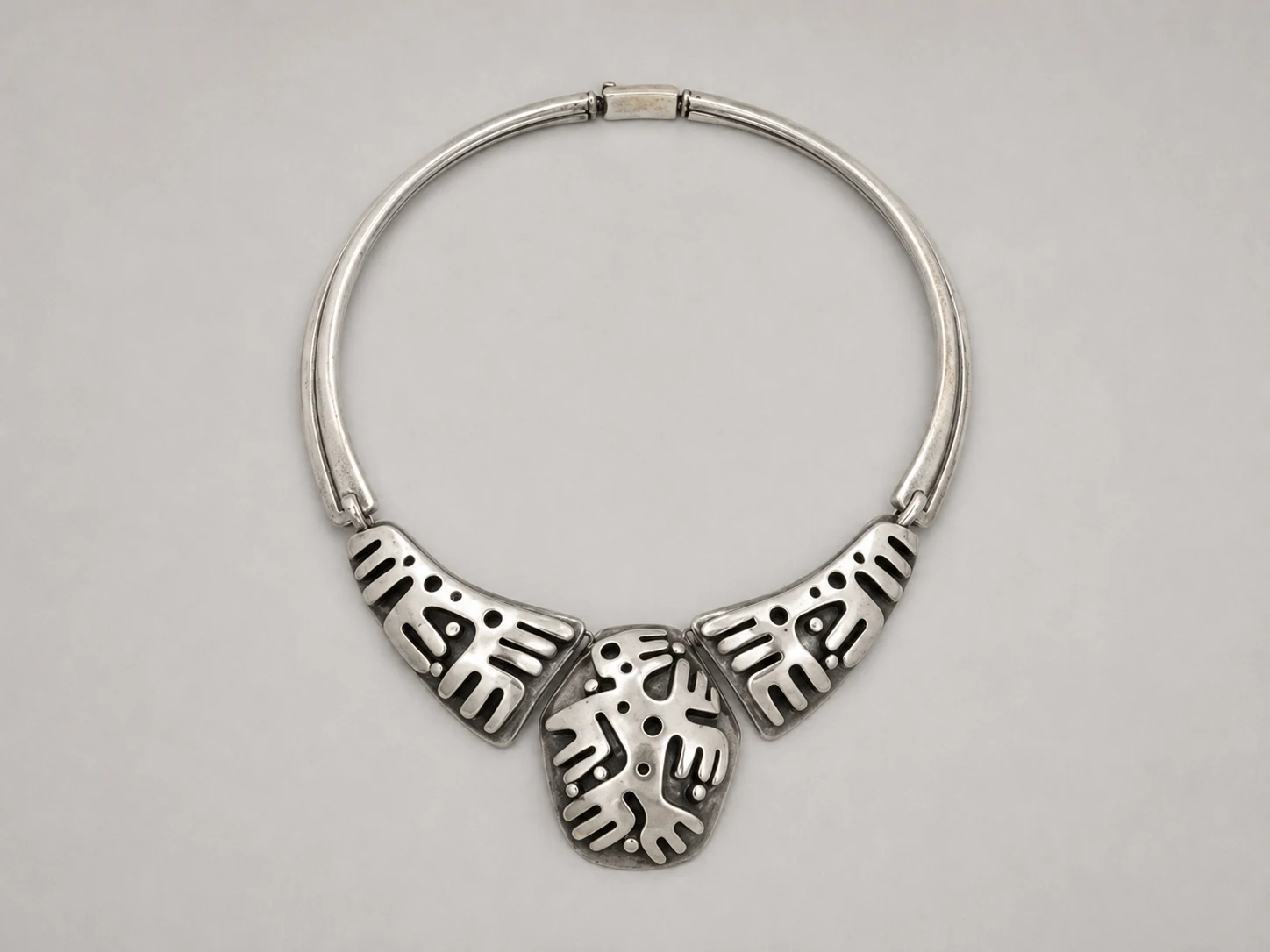
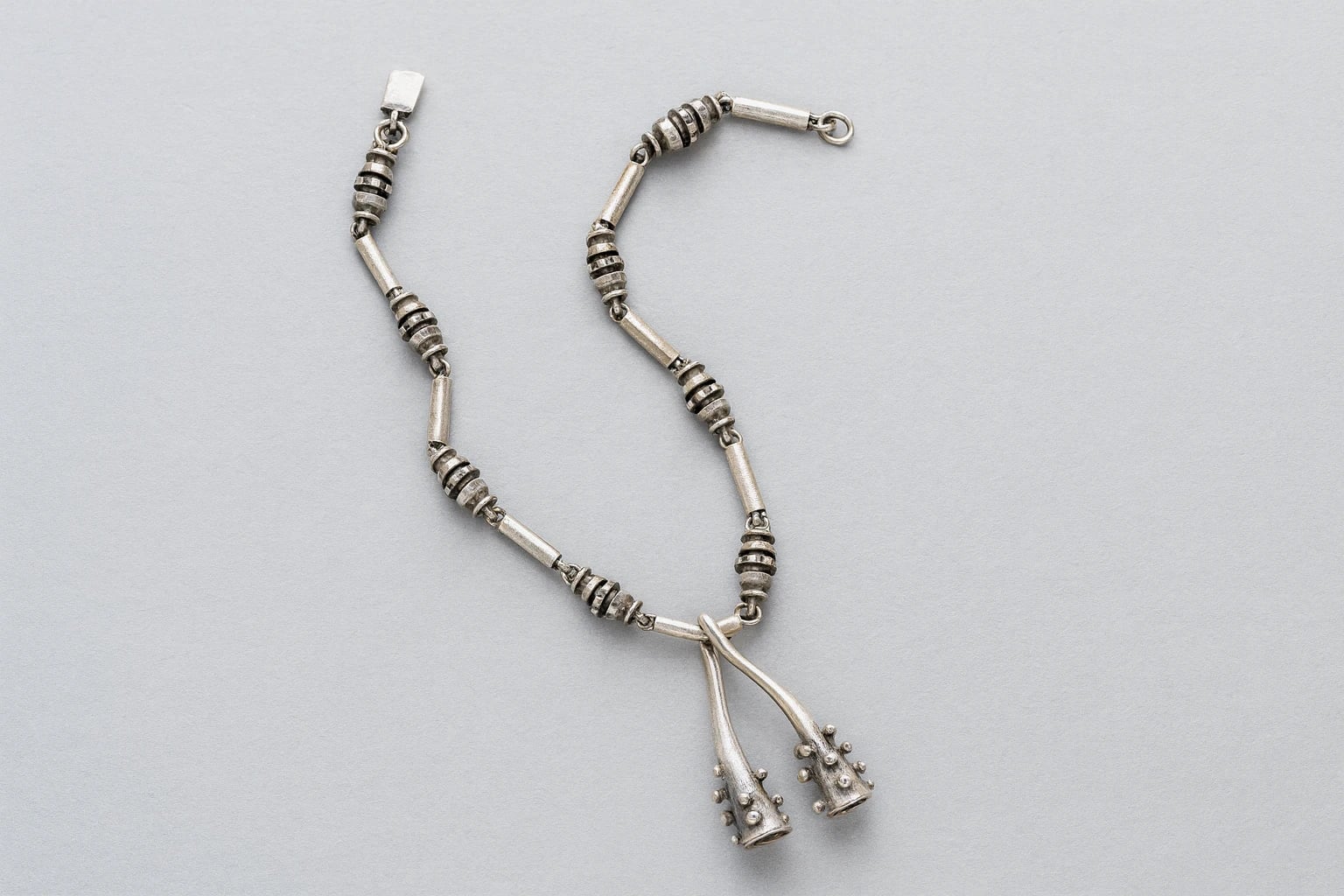
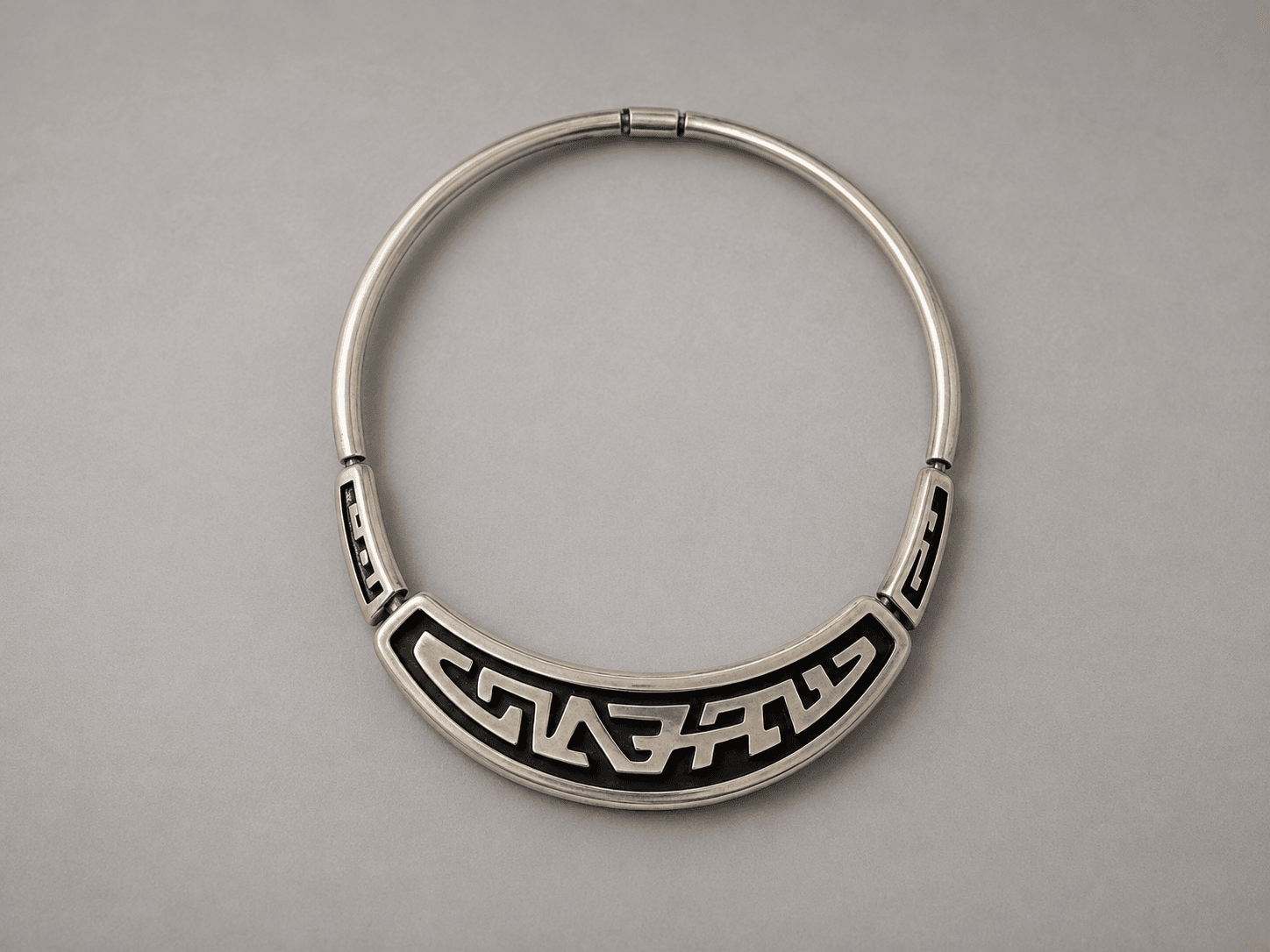
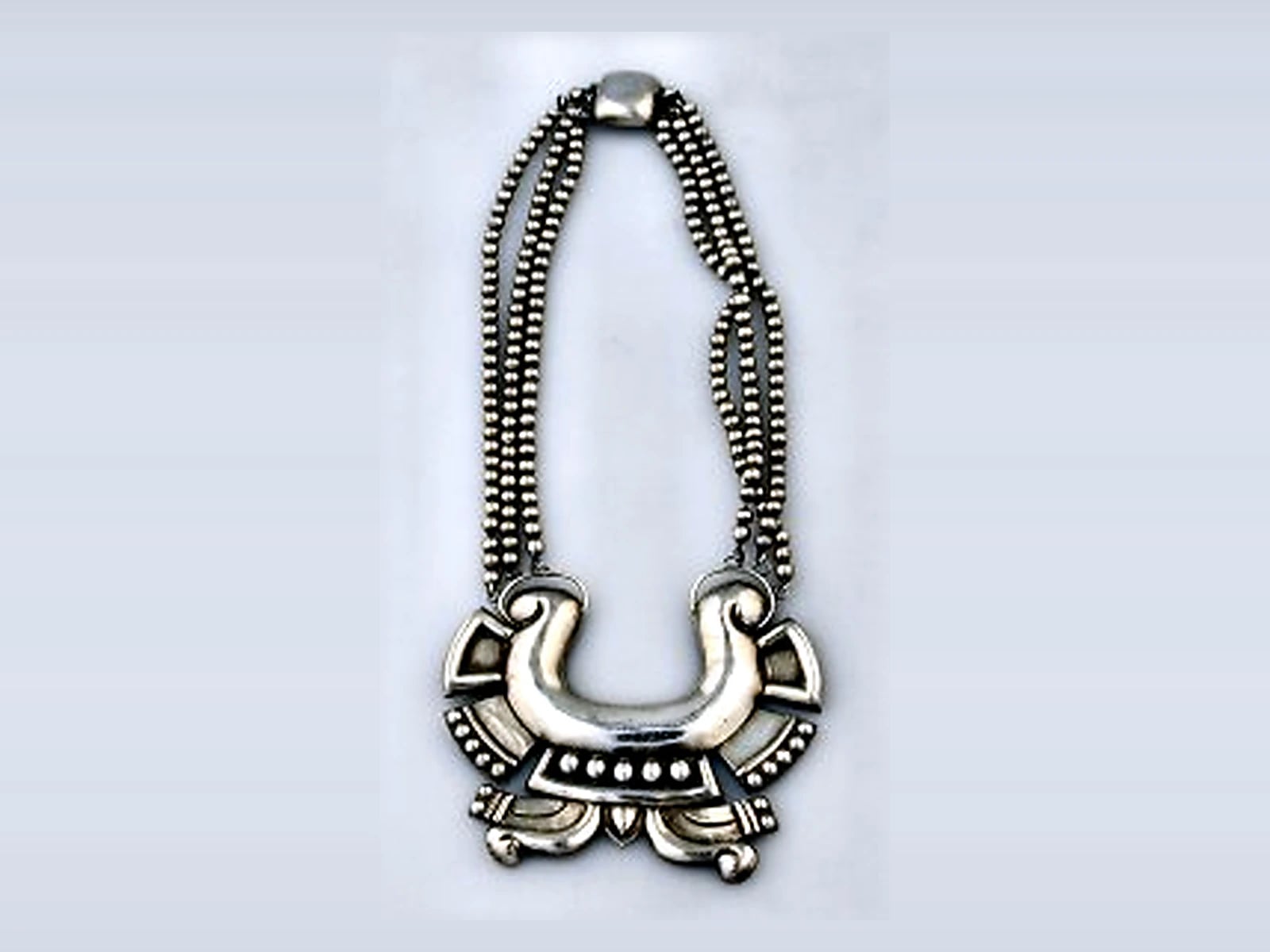
A triple chain of hollow silver beads gathered into a large box clasp, the Chupamirto Azteca necklace is one of Spratling's substantial First Design Period statements, and it carries a name he gave it himself. The pendant element was important enough to Spratling that he also designed a separate pin from it, a sign of how much he valued the motif.
The piece sits at the heart of what Spratling was doing in the 1930s and early 1940s. Morrill frames his whole project as reviving a traditional craft and an "ancient iconographic vocabulary" by adopting Pre-Columbian forms and interpreting them in silver (Morrill, Mexican Silver, 1994, p. 14). The Aztec reference in the name and the heavy, hand-built beadwork are exactly that vocabulary made wearable.
The hollow silver beads point to workshop technique of the period. Early Taxco production was done by hand without rolling mills, the silver hammered and worked by elbow grease, and small balls were formed by melting cut rings of wire (Morrill, pp. 36, 39). A triple chain of hollow beads on this scale was a serious undertaking by those methods.
The necklace is recorded in both the Spratling Silver Centennial Edition by Sandraline Cederwall and Hal Riney and in Phyllis M. Goddard's field guide, placing it firmly in the documented core of Spratling's jewelry. Major early necklaces like this come to market only occasionally.
Museum of Mexican Silver. “Chupamirto Azteca Necklace.” Catalog no. MoMS-000126. https://museumofmexicansilver.com/pieces/spratling-3094
See something wrong with this record? Suggest a correction and the piece details fill in automatically.
William Spratling
Carved Obsidian Aztec Sunburst Necklace
Silver