Saves instantly, no account needed. Already a member? Sign in.
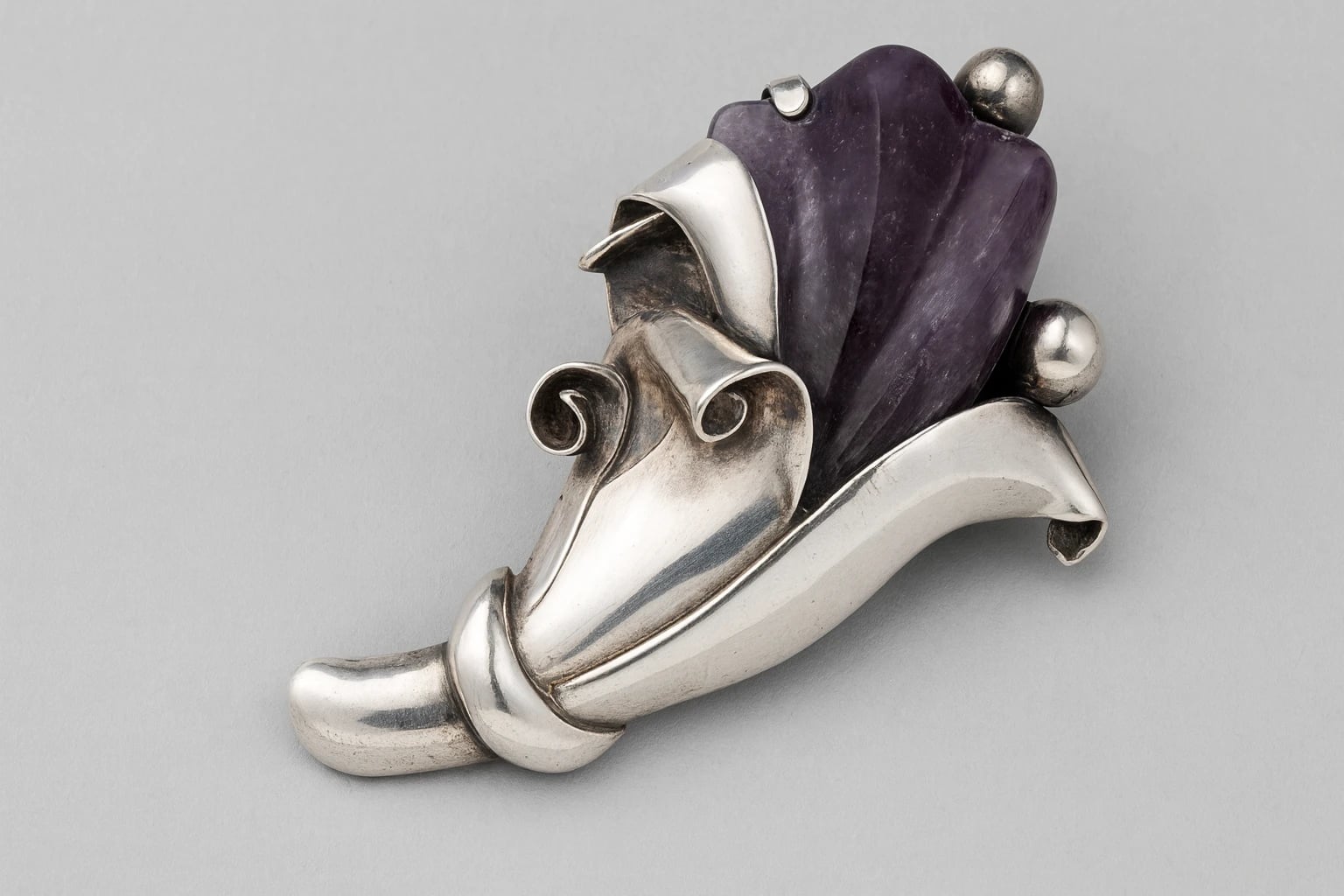
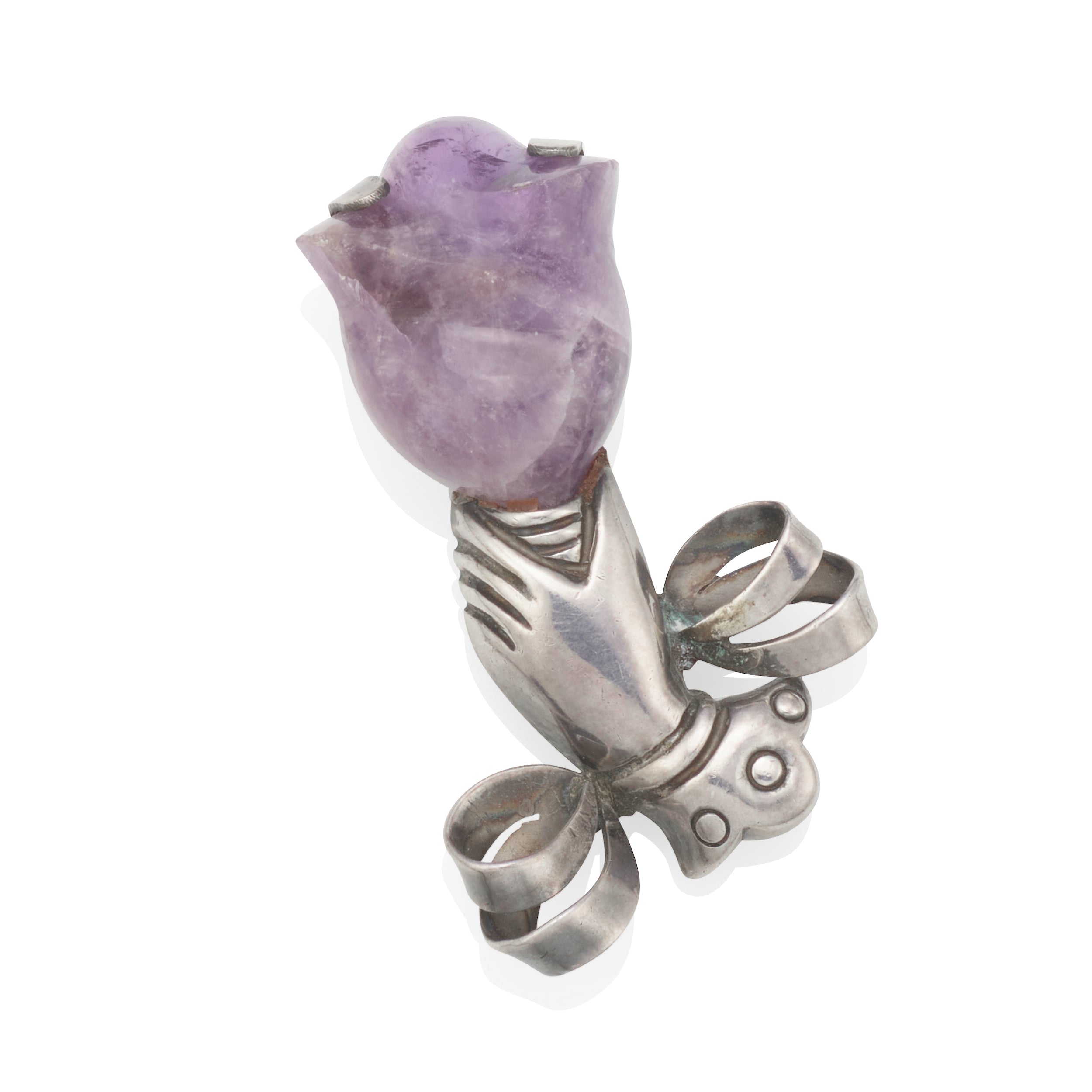
A cast silver hand cradling a carved amethyst blossom, this brooch reads as an apparition from a different design vocabulary than the pre-Columbian geometry that dominated Spratling's output through the 1930s. The hand is modeled with quiet realism: etched lines delineating the fingers, a looping ribbon bow at the wrist, and the amethyst cut as a rounded tulip bud, its lavender surfaces polished smooth against the oxidized silver palm. Within the First Design Period of the Taller de las Delicias, few forms are as figurative or as openly lyrical as this one.
Penny C. Morrill notes that the Taller began issuing a series of hand-and-flower brooches, cuffs, and necklaces in the late 1930s, and that Valentín Vidaurreta, a silversmith whose baroque sensibility and affinity for floral forms set him apart from the workshop's usual pre-Columbian idiom, may have contributed the design before moving on to other workshops (Morrill, Silver Masters of Mexico, 1996). The same scholar records that comparable hand-and-flower work appeared concurrently under a different hallmark and was sold to Fred Davis in Mexico City, lending weight to the attribution. The hand's departure from the Aztec register of the Taller gave it an almost colonial-period feeling, closer in spirit to Mexican Baroque ornament than to the codex imagery more typical of Spratling's early production.
The design extended into a small suite: brooch, cuff bracelet, and earrings sharing the same motif. Within the brooch form itself, both left- and right-hand configurations were produced in mirror image, with the left-hand variant appearing to account for most surviving examples. The piece here is a left-hand example.
Offered through Montgomery Ward in 1943 at $17.95, this brooch reached the American retail market at the height of wartime demand for Taxco silver. That commercial distribution placed it within the accessible tier of Spratling's range without diminishing the care of the casting and stone-setting. Hand-bouquet pins in this condition, with the carved amethyst intact and the silver retaining its original patina, remain among the more memorable figurative designs from Spratling's early decades.
Museum of Mexican Silver. “Amethyst Tulip Brooch.” Catalog no. MoMS-000328. https://museumofmexicansilver.com/pieces/spratling-331
See something wrong with this record? Suggest a correction and the piece details fill in automatically.
William Spratling
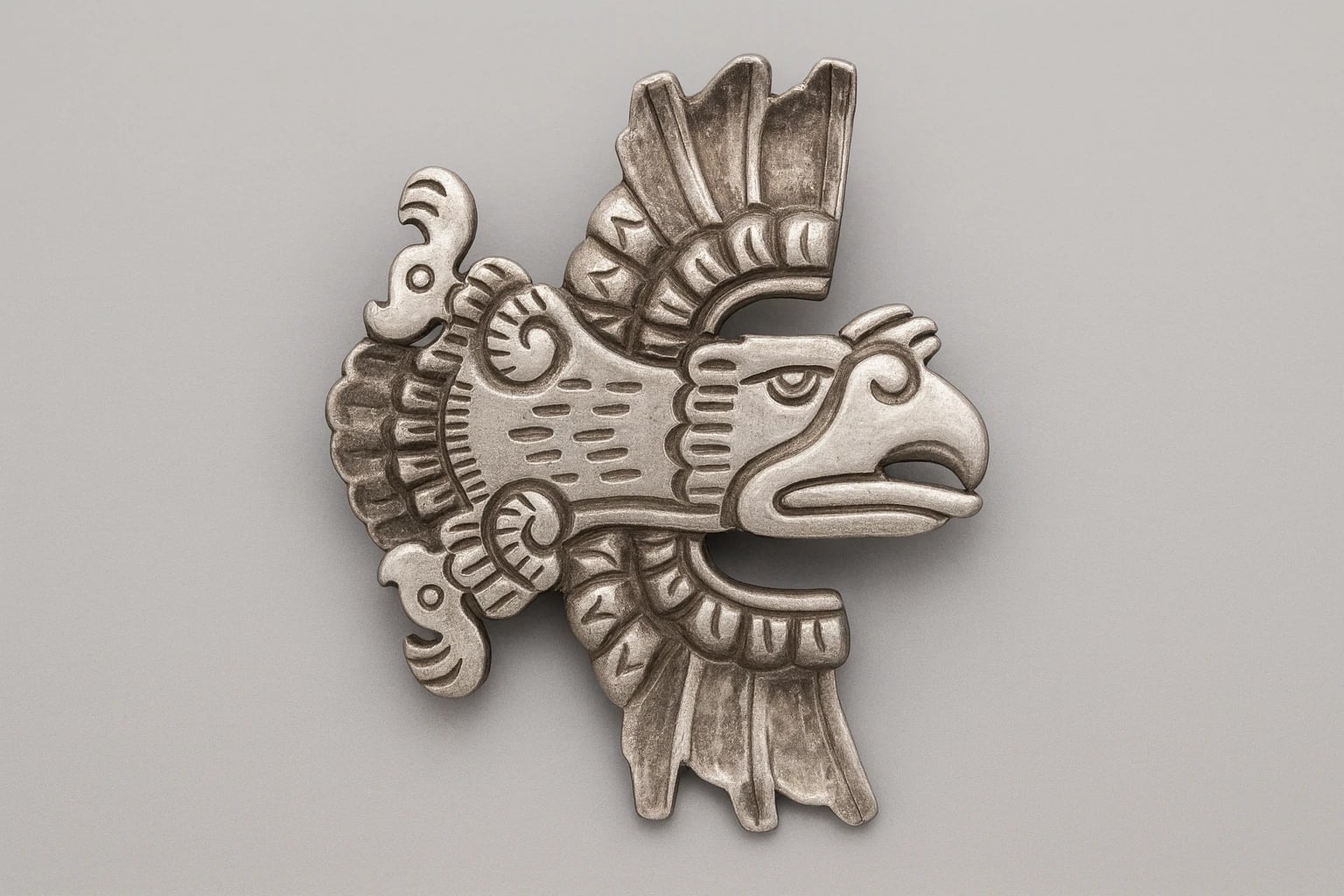
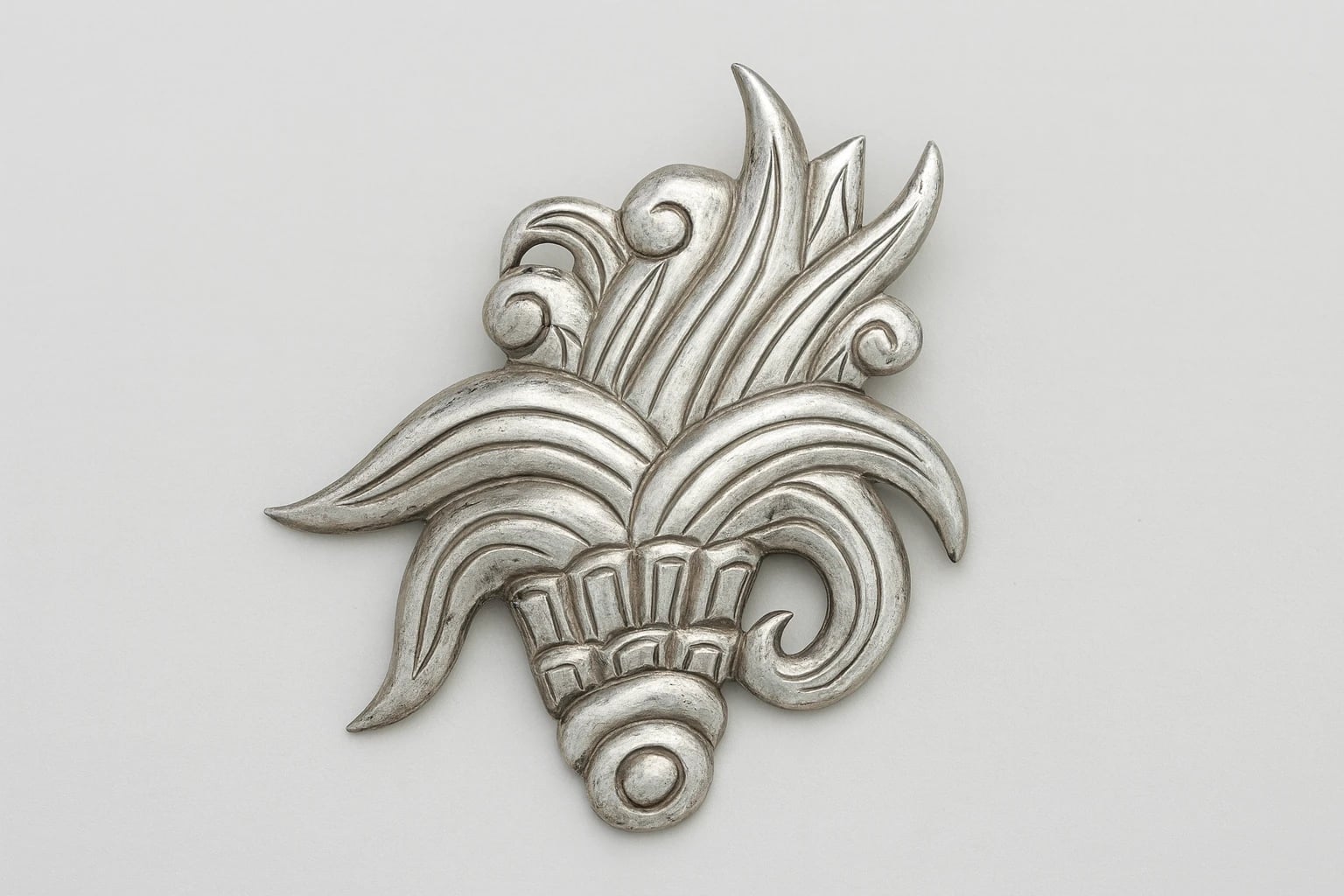
Codex Nuttall Eagle Brooch
First Design Period: 1931 - 1946
Silver