Saves instantly, no account needed. Already a member? Sign in.
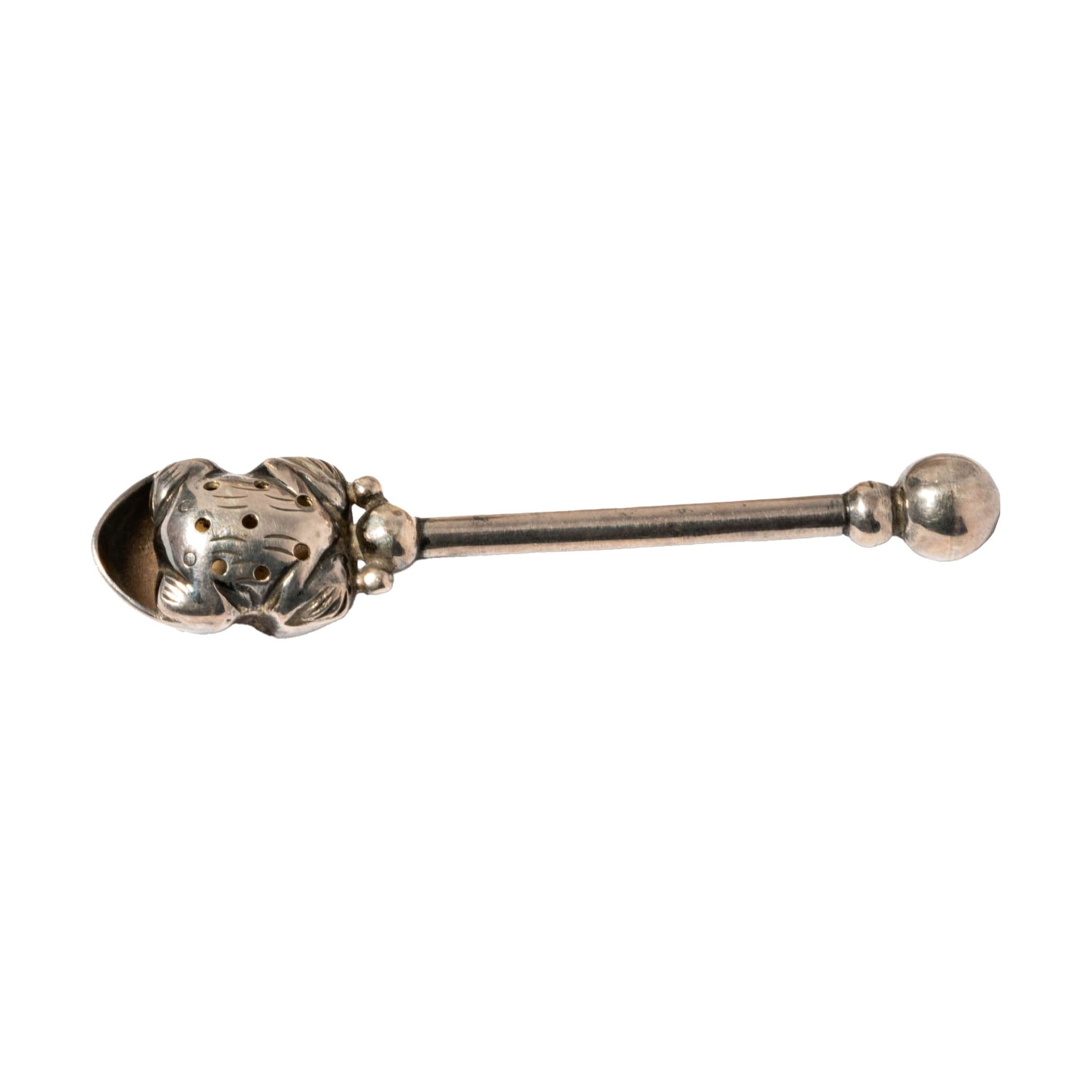
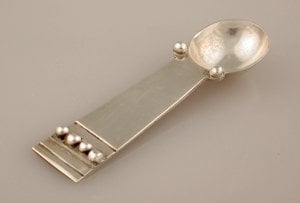
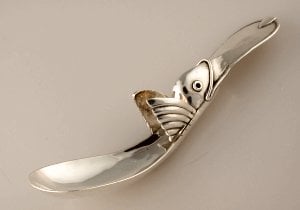
Spratling described this design as a handwrought Aztec duck sugar spoon, and the name points to the deepest current in his work: the translation of Pre-Columbian form into objects made for a modern table. Stromberg notes that Spratling took motifs from Pre-Columbian design and rendered them into a style accessible to an American audience and clientele (Stromberg, p. 27), and the duck spoon is that practice at its most direct.
The form is handwrought rather than cast, and Spratling's own drawing of it survives in the William Spratling Folio of Drawings, placing the object inside his documented design process rather than at its margins.
Few of Spratling's pieces are as widely recorded as this one, which appears across the major references including Morrill's Maestros de Plata, Morrill and Berk's Mexican Silver: 20th Century Handwrought Jewelry and Metalwork, Cederwall and Riney's Spratling Silver and its Centennial Edition, Littleton's The Color of Silver, and Goddard's field guide. Its catalog price ran from $6.80 in 1958-59 to $8.40 in 1967.
The design has been reissued. Original handwrought examples remain the focus for collectors, valued for carrying the Pre-Columbian source that defined Spratling's contribution to Mexican silver.
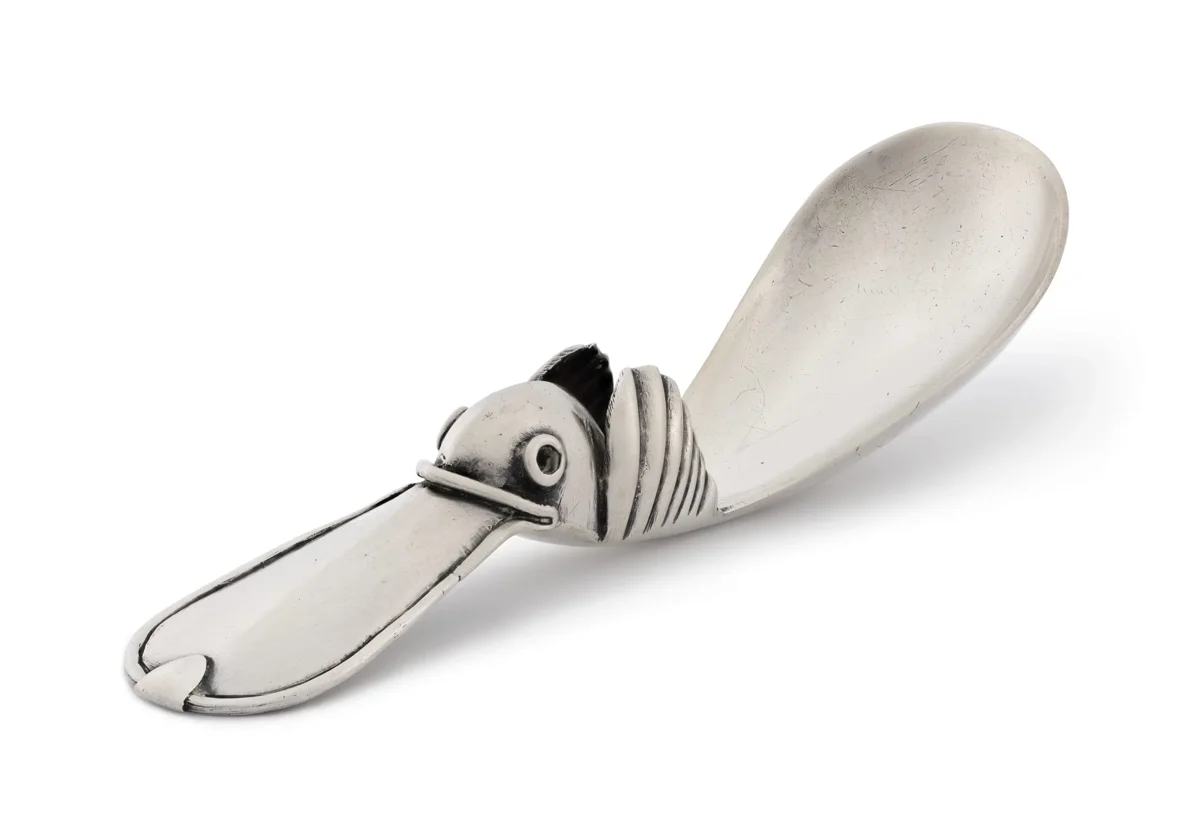
Aztec Duck Sugar Spoon, circa 1951
Accession M.2018.68.37. Official museum record Photo: Los Angeles County Museum of Art.
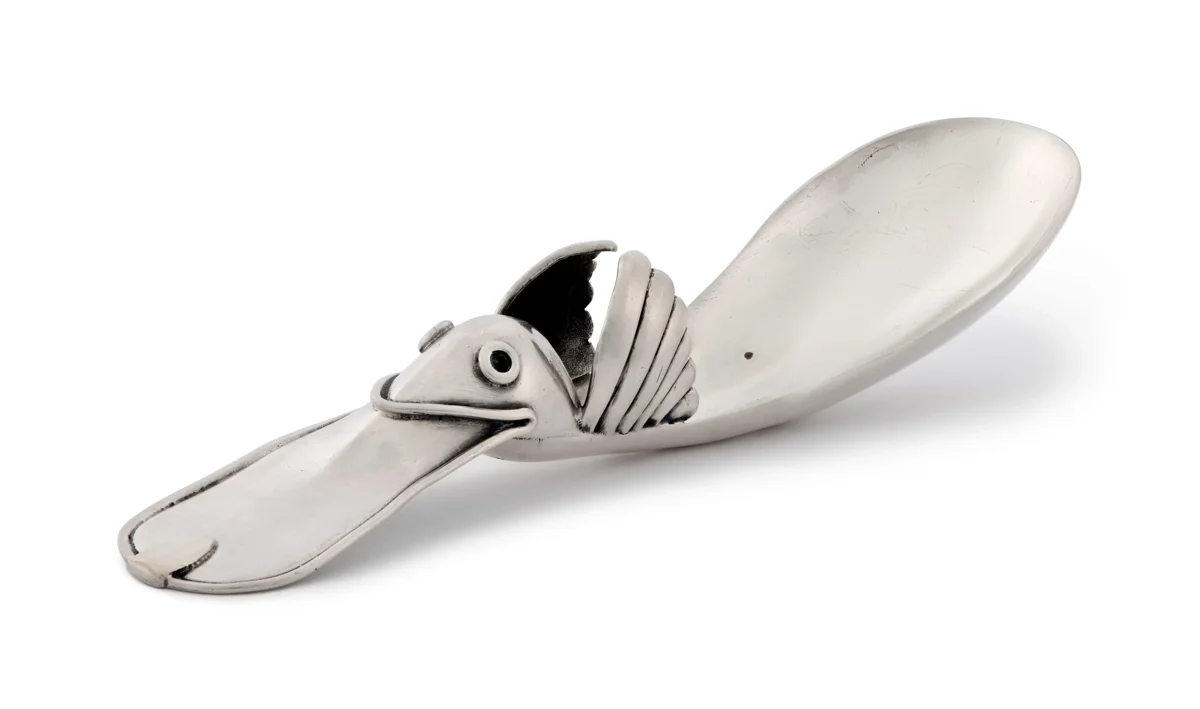
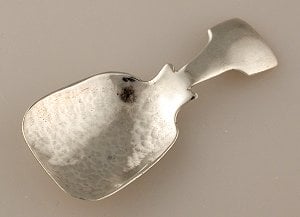
Aztec Duck Sugar Spoon, circa 1964-1966
Accession M.2018.68.60. Official museum record Photo: Los Angeles County Museum of Art.
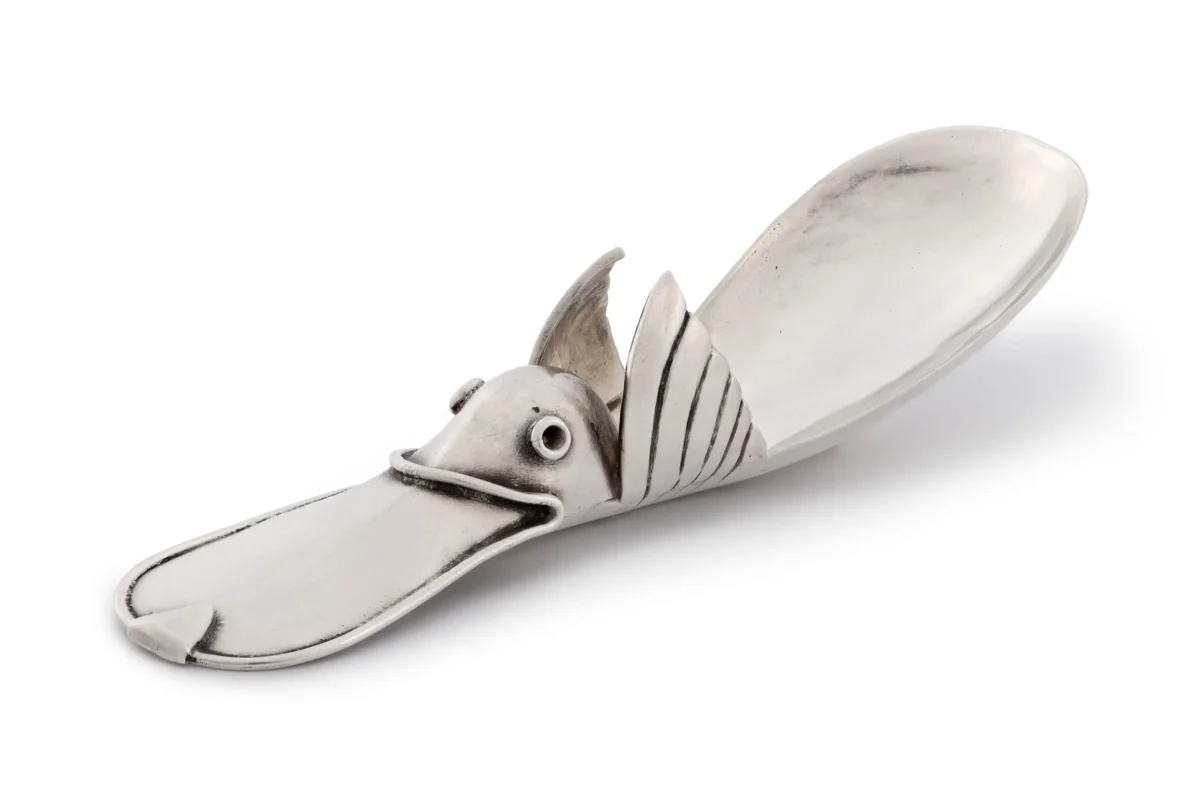
Museum of Mexican Silver. “Aztec Duck Spoon.” Catalog no. MoMS-000519. https://museumofmexicansilver.com/pieces/spratling-426
See something wrong with this record? Suggest a correction and the piece details fill in automatically.
Aztec Duck Sugar Spoon, circa 1965-1967
Accession M.2018.68.38. Official museum record Photo: Los Angeles County Museum of Art.
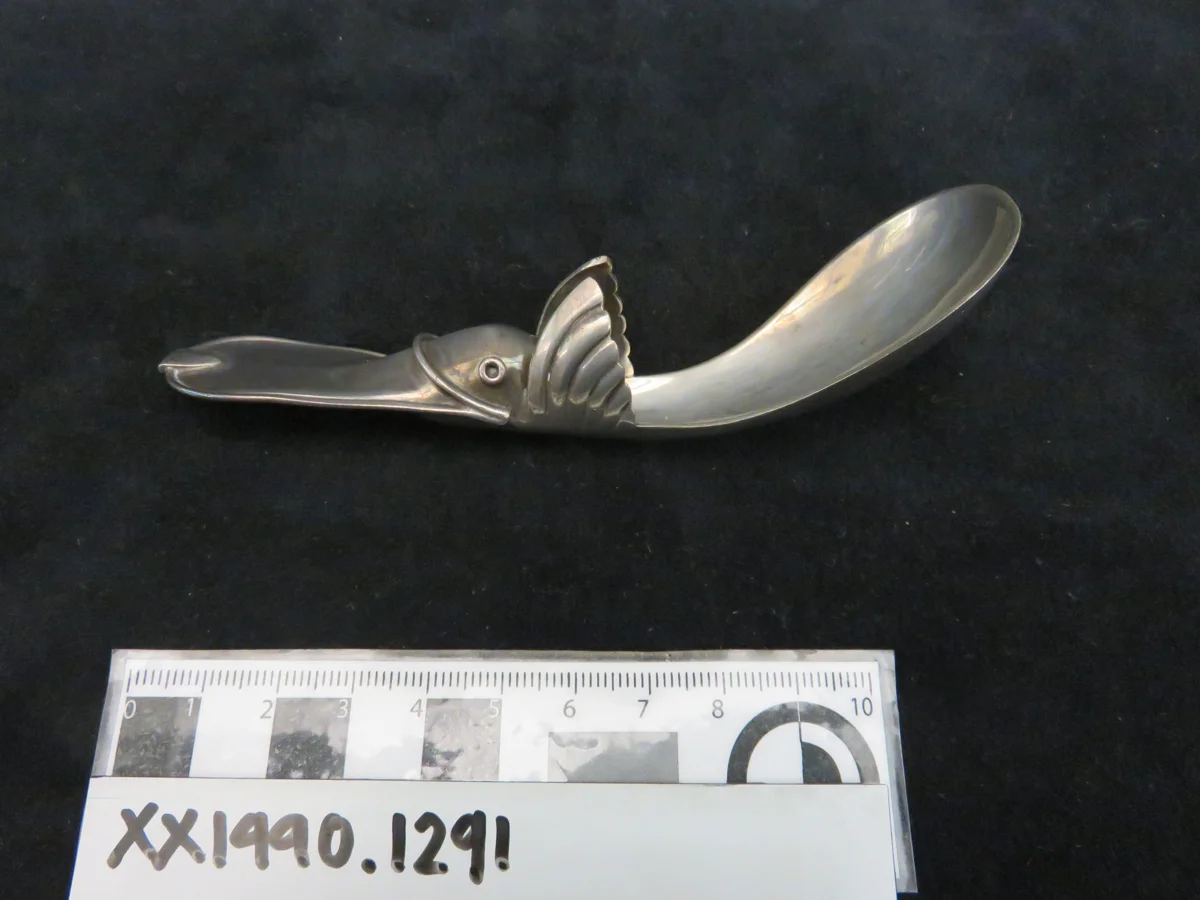
Sugar spoon: duck form, 1947-1967
Accession XX1990.1291. Official museum record Photo: The Wolfsonian-FIU.
Verified against each institution's own collection records. All museum collections
William Spratling
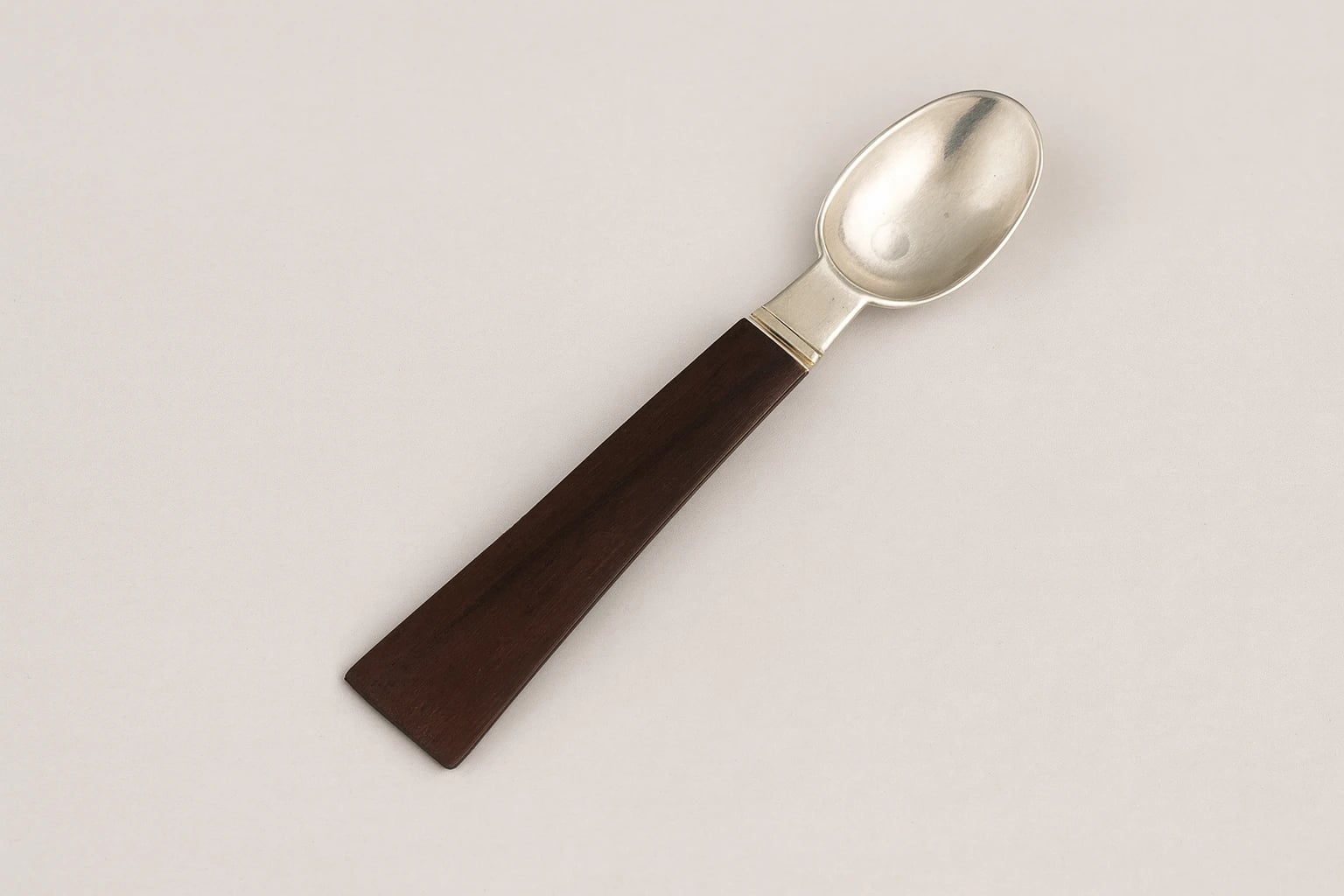
Rosewood Demitasse Spoon
First Design Period: 1931 - 1946
Silver