Saves instantly, no account needed. Already a member? Sign in.
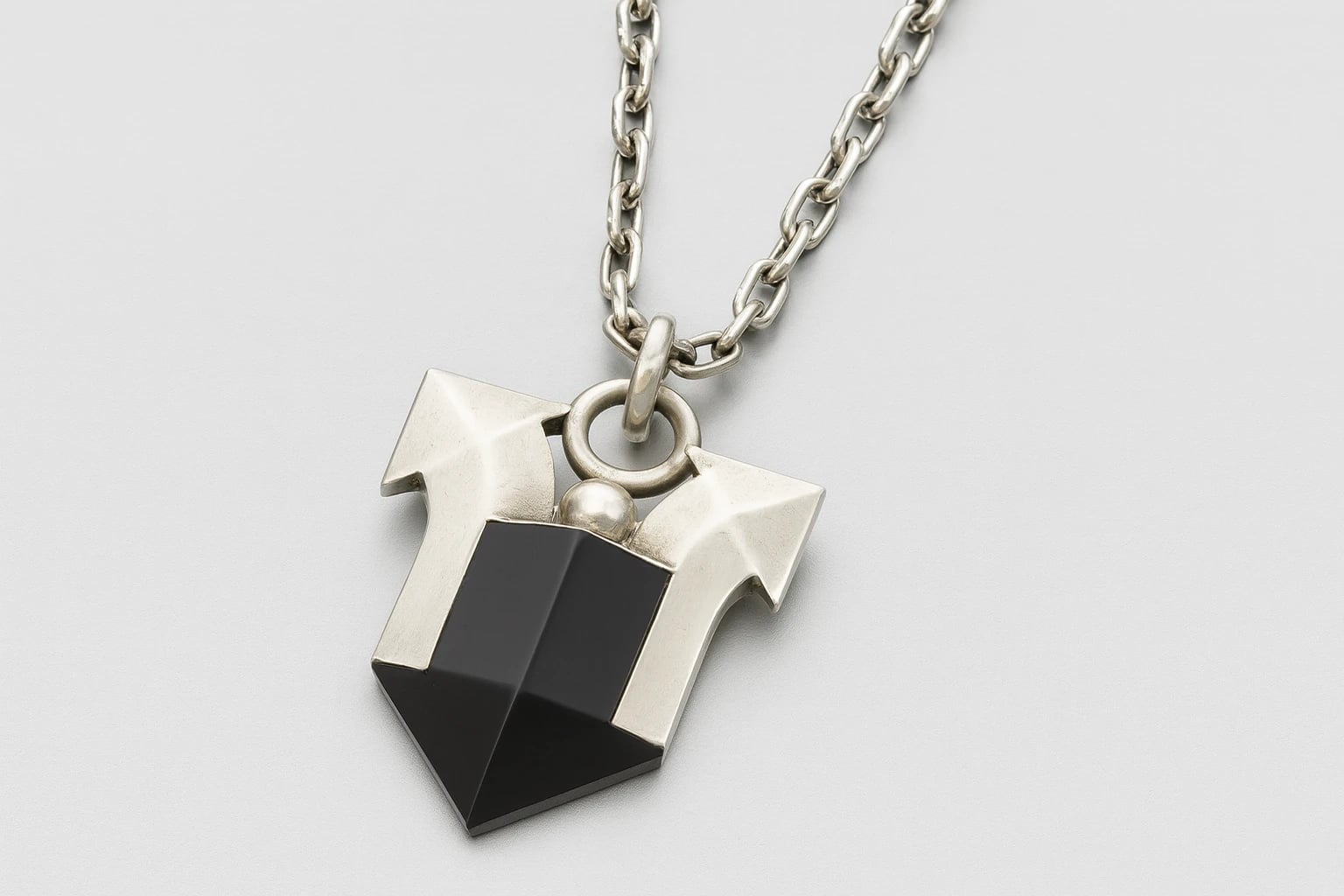
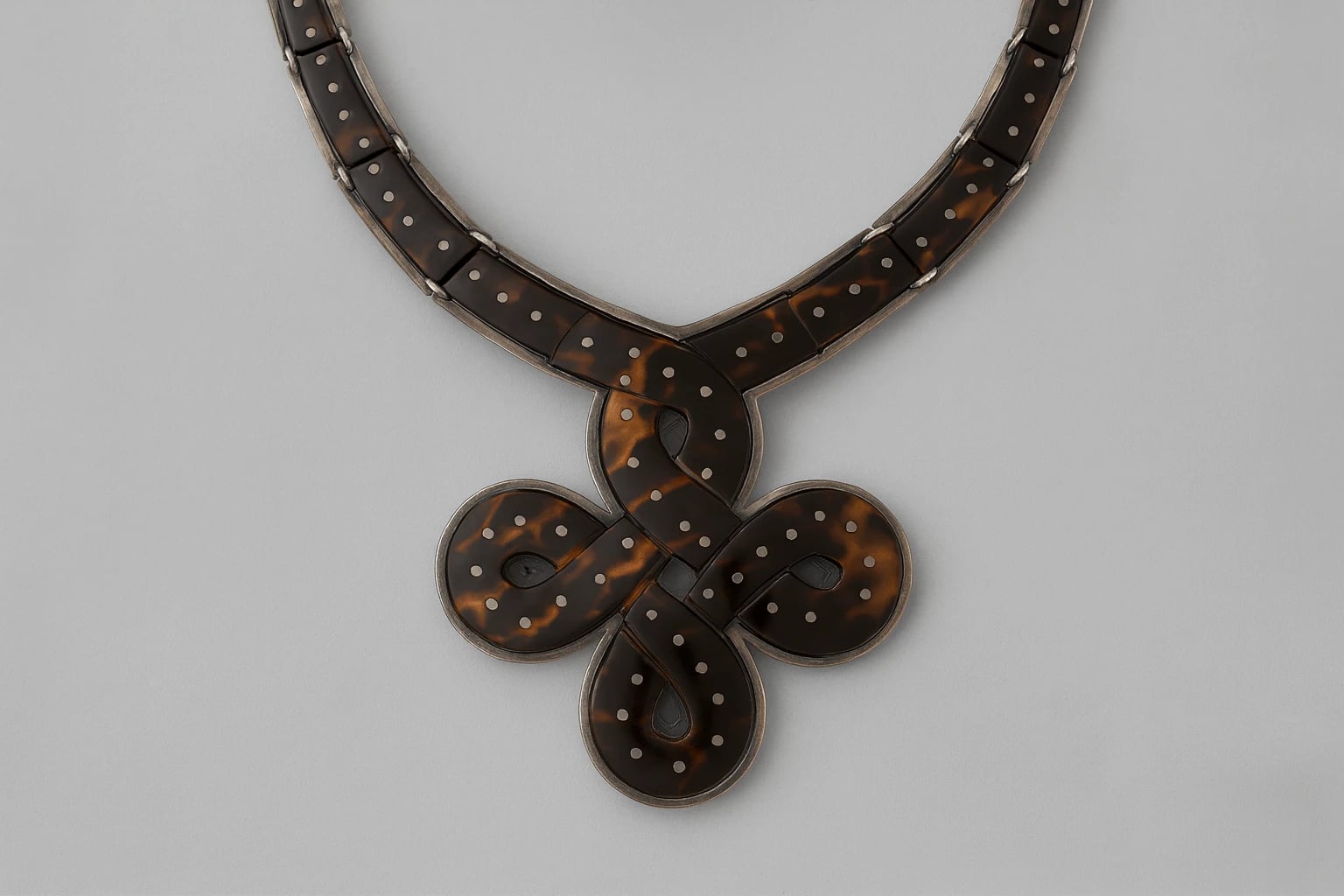
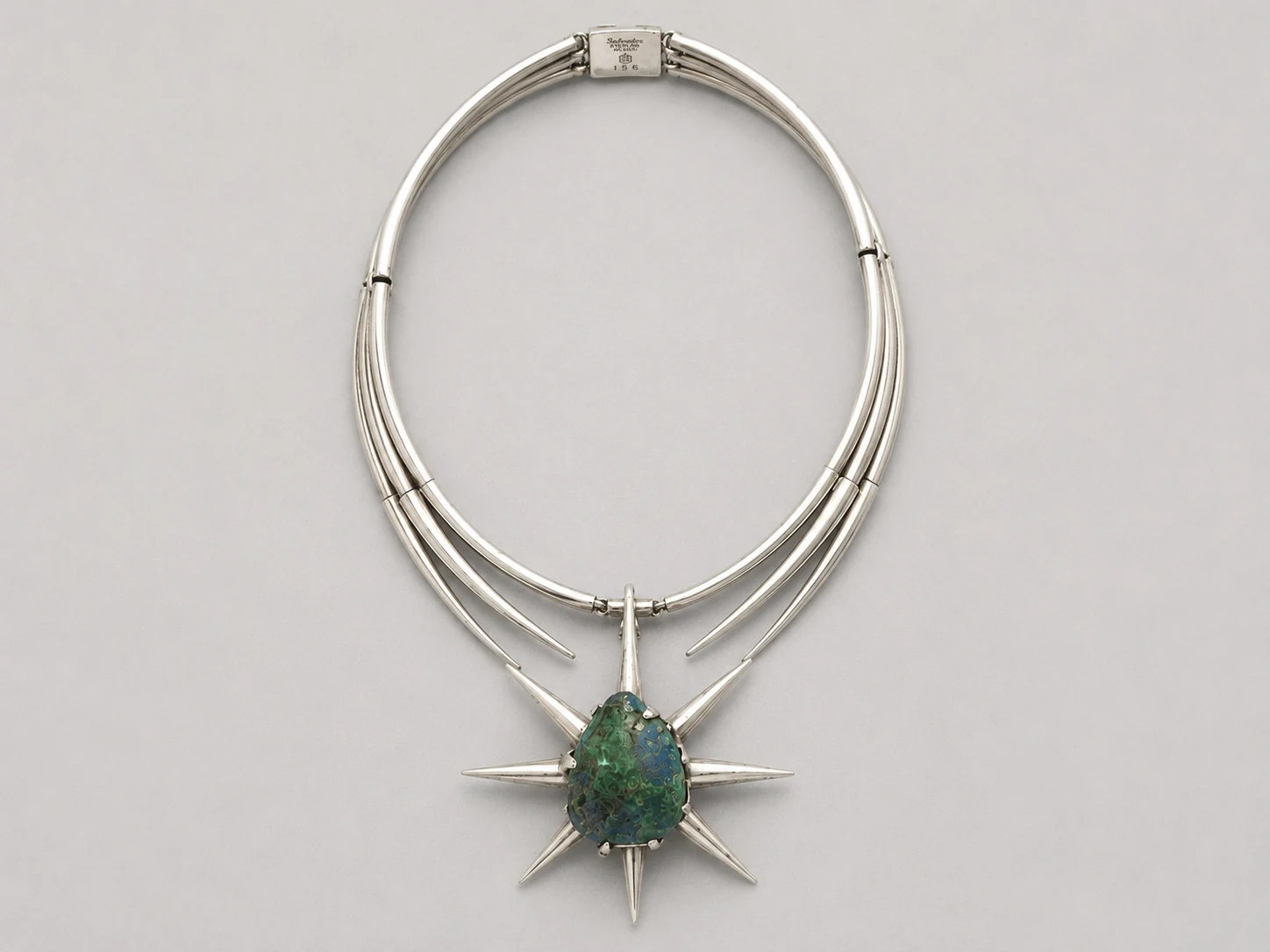
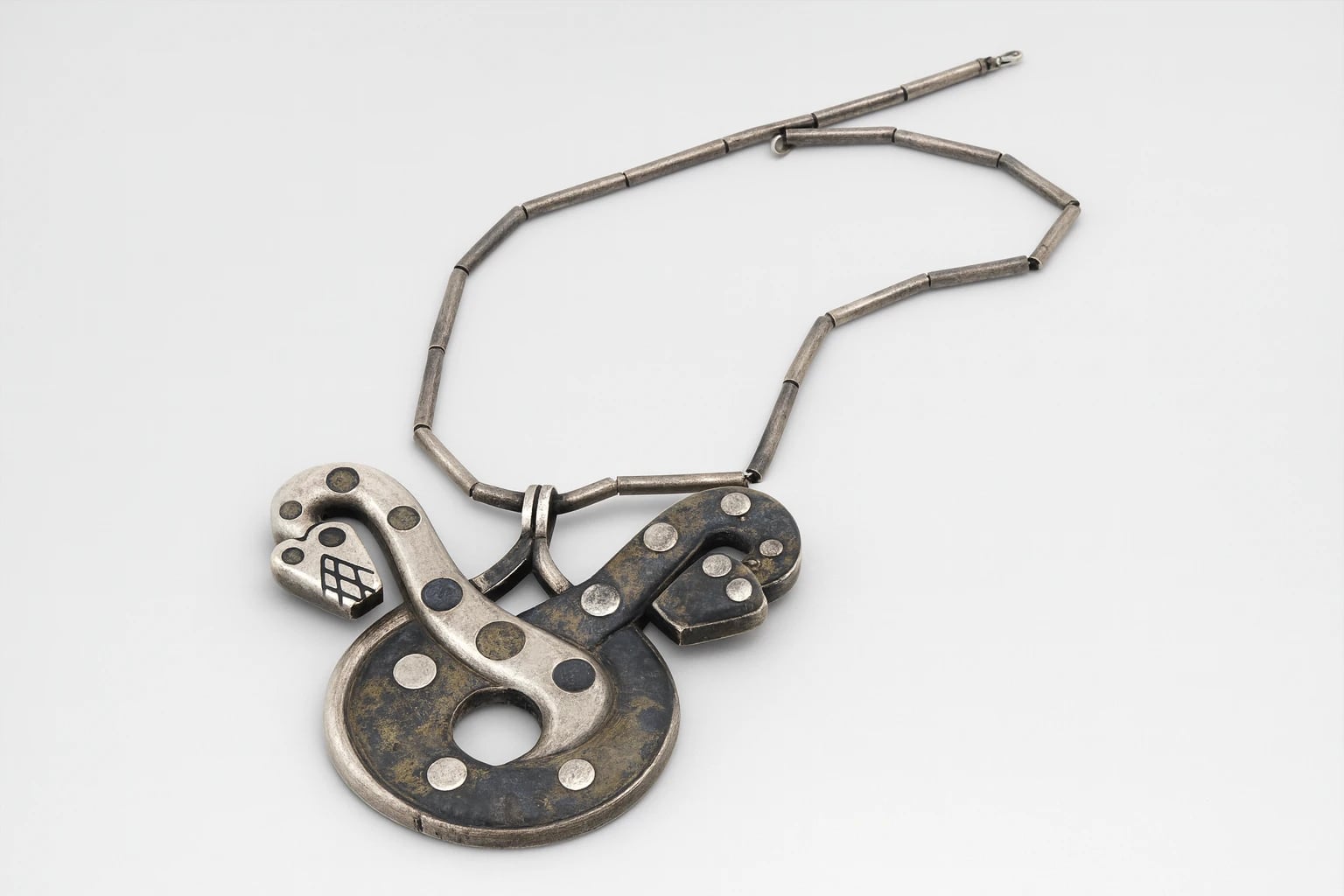
A necklace of twined serpents feeding into a silver tube chain brings Spratling's double-serpent motif into wearable form, the snakes stylized into pure pattern in the manner Morrill describes, where the flattened serpents read as design rather than as the power of Quetzalcoatl and the interest lies in the textural contrast of silver with its accent material (Morrill, p. 73). Here that accent is azur malachite, the stone Spratling himself called azurite.
The motif crossed his whole output: it was also made in tortoise shell, appears on the lids of both silver and rosewood boxes, and a very similar tortoise-shell version survives among his drawings in the William Spratling Folio of Drawings. The azur malachite necklace was only mentioned in a pre-1958 catalog, placing it narrowly in time.
The necklace is recorded in Morrill and Berk's Mexican Silver, in Morrill's Maestros de Plata, and in Goddard's field guide. It has been reissued, so an original with its malachite intact and an early mark is the period piece.
Museum of Mexican Silver. “Twin Serpents Necklace.” Catalog no. MoMS-000795. https://museumofmexicansilver.com/pieces/spratling-746
See something wrong with this record? Suggest a correction and the piece details fill in automatically.
William Spratling
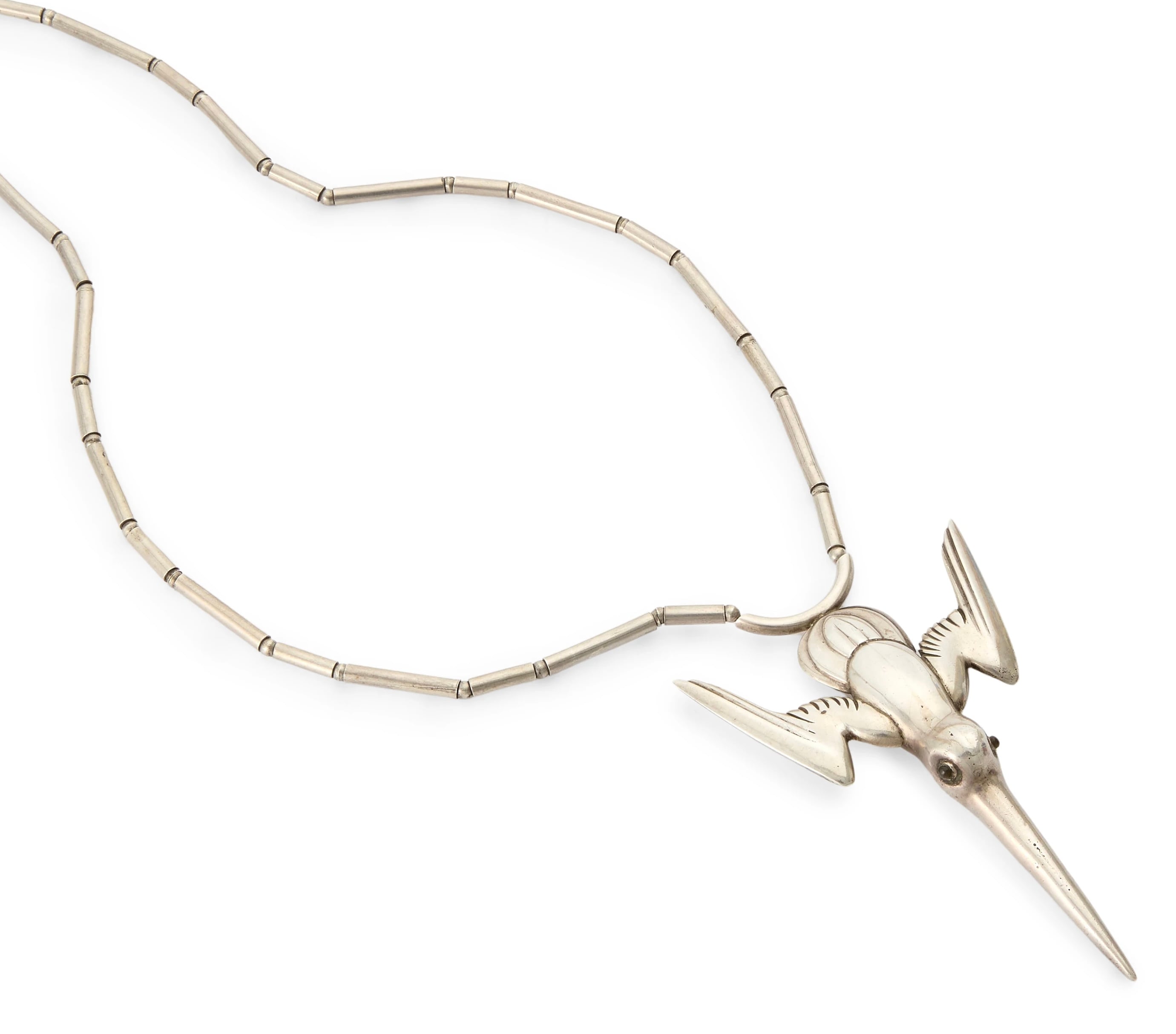
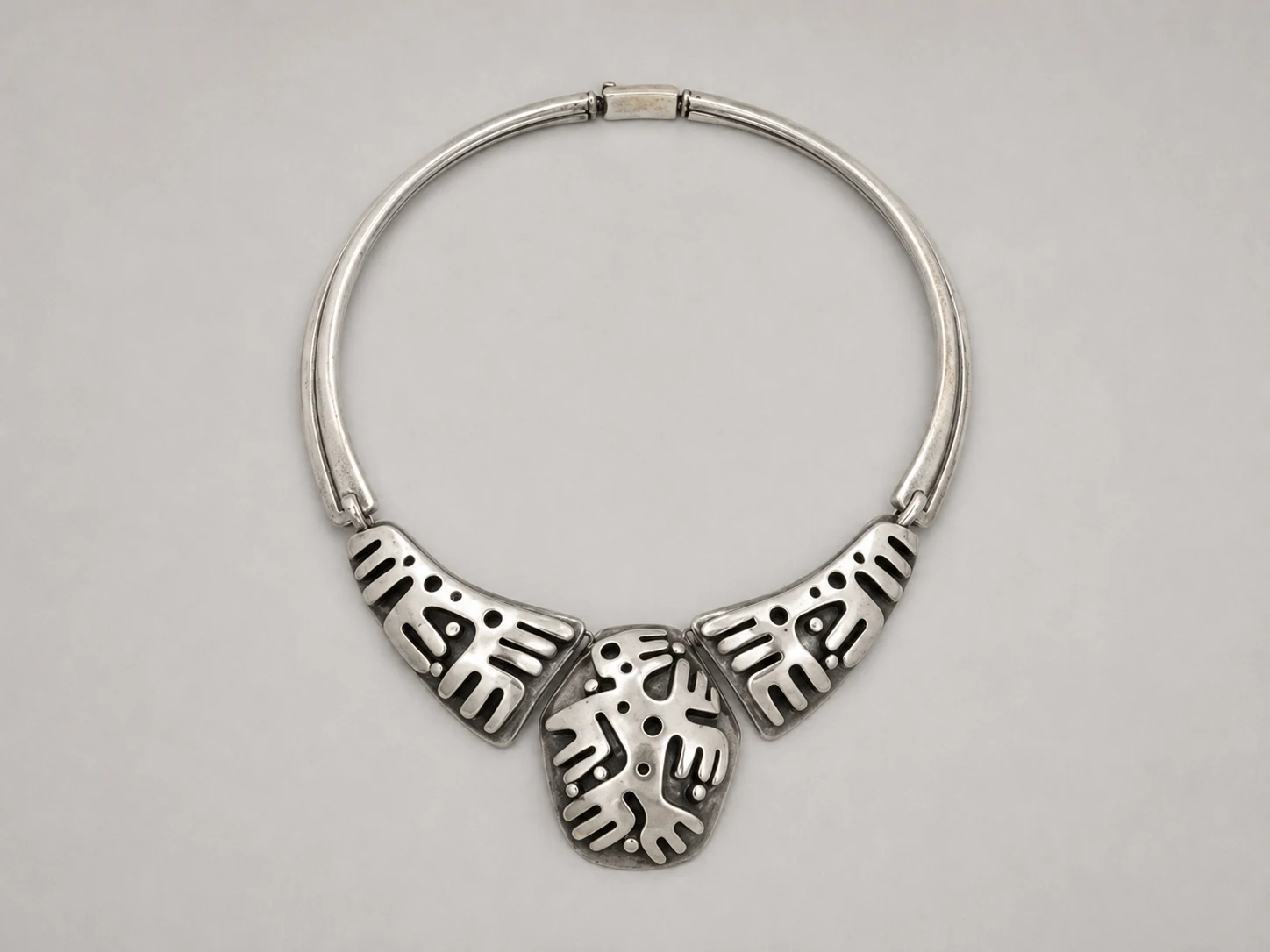
Silver Hummingbird Necklace
Silver