Saves instantly, no account needed. Already a member? Sign in.
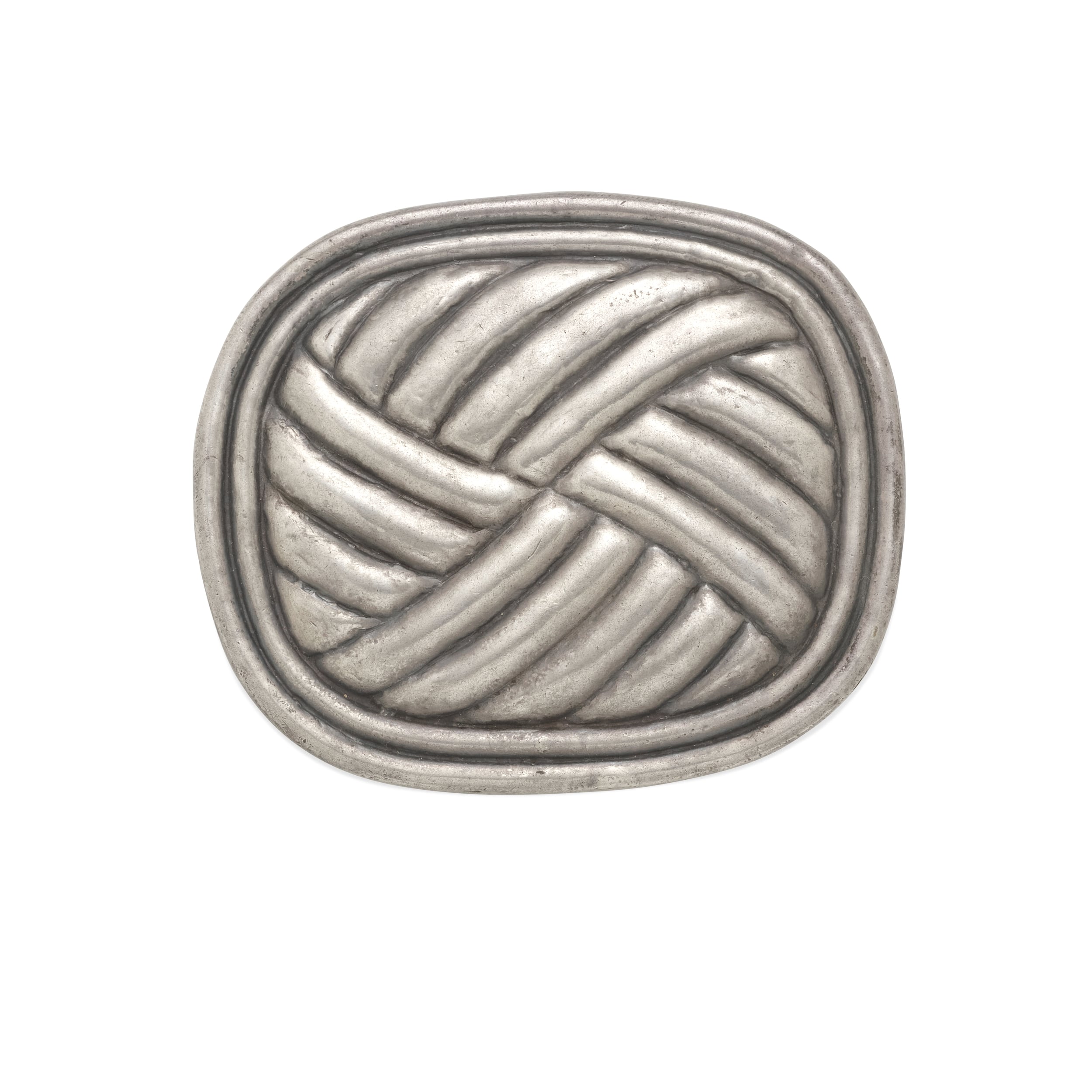
The petate — the simple woven palm mat of Mexican daily life — is rendered in this brooch with a fidelity that makes the silver seem to plait and fold. Thick, rounded bands cross in two diagonal directions across a cushion-shaped ground, gathering at center into a tight herringbone knot; a restrained raised border frames the composition without competing with the weave. The result is at once vernacular and formally complete: a common household object that loses nothing of its character in translation into metal.
William Spratling established his Taxco workshop in 1931, and by the early 1940s his design vocabulary ranged from pre-Columbian iconography to the vernacular forms of everyday Mexican life. The petate belongs to that second current, and examples are consistently dated to the 1940–46 window, placing this brooch squarely within Spratling's First Design Period. The design proved durable enough to sustain a small suite — earrings and a large bracelet share the same motif — and all three forms have seen reissues, testimony to how thoroughly the original struck a chord.
The contained cushion scale and the integrity of a single, unhurried motif have given it lasting appeal.
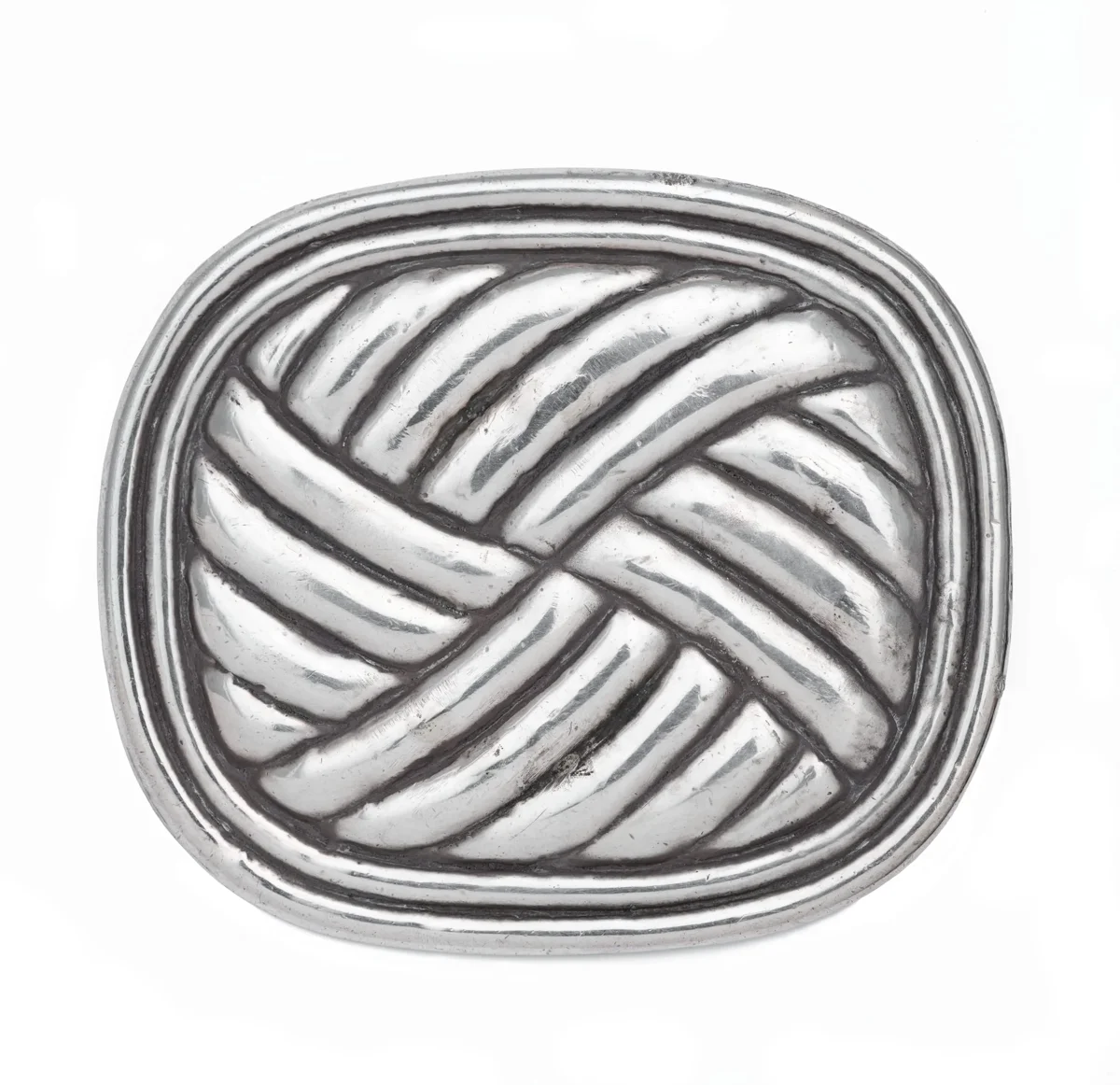
Petate Brooch, circa 1944
Accession M.2018.68.54. Official museum record Photo: Los Angeles County Museum of Art.
Verified against each institution's own collection records. All museum collections
Museum of Mexican Silver. “Petate Brooch.” Catalog no. MoMS-000381. https://museumofmexicansilver.com/pieces/spratling-812
See something wrong with this record? Suggest a correction and the piece details fill in automatically.
William Spratling
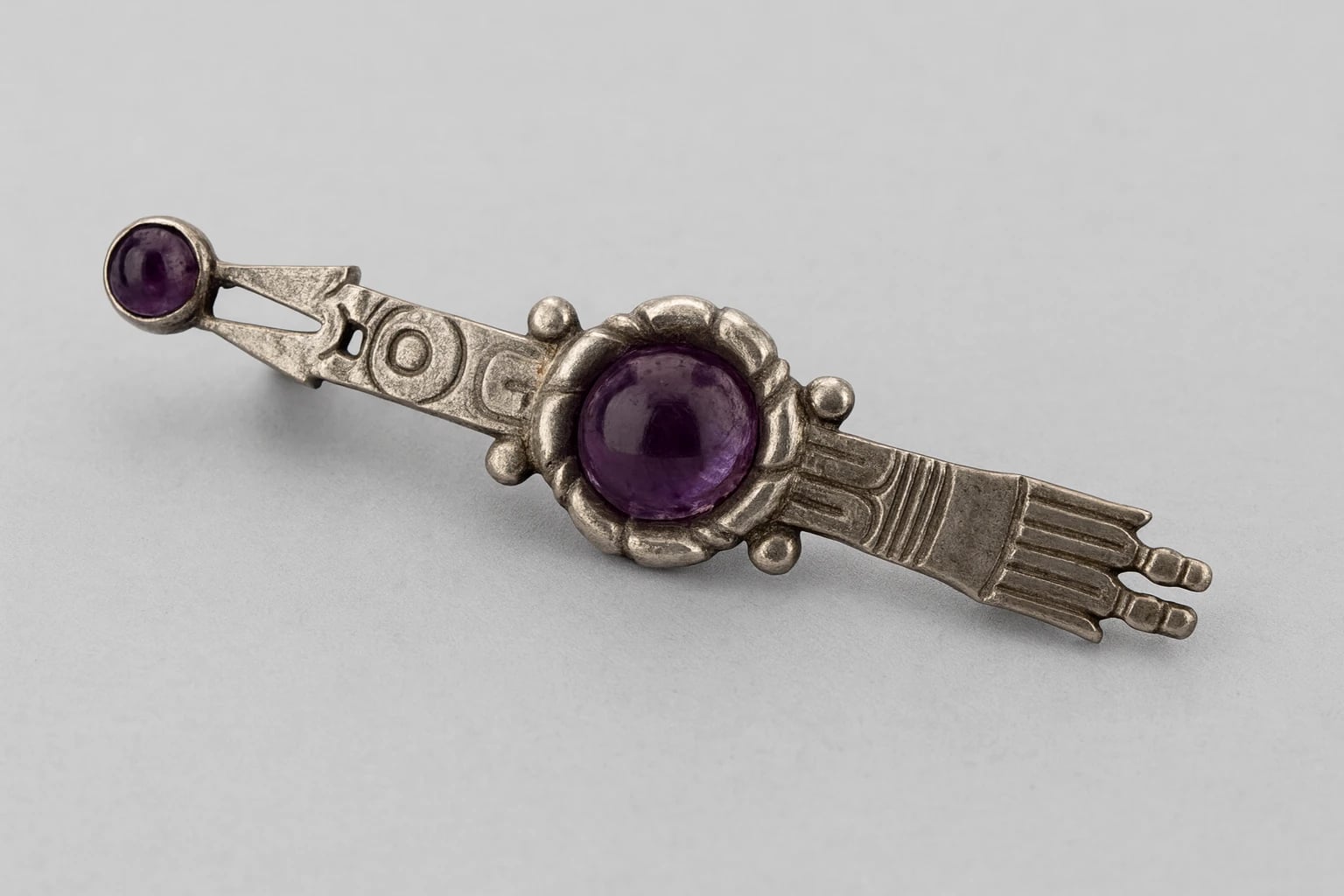
Double Arrow Brooch with Amethyst
First Design Period: 1931 - 1946
Silver