Saves instantly, no account needed. Already a member? Sign in.
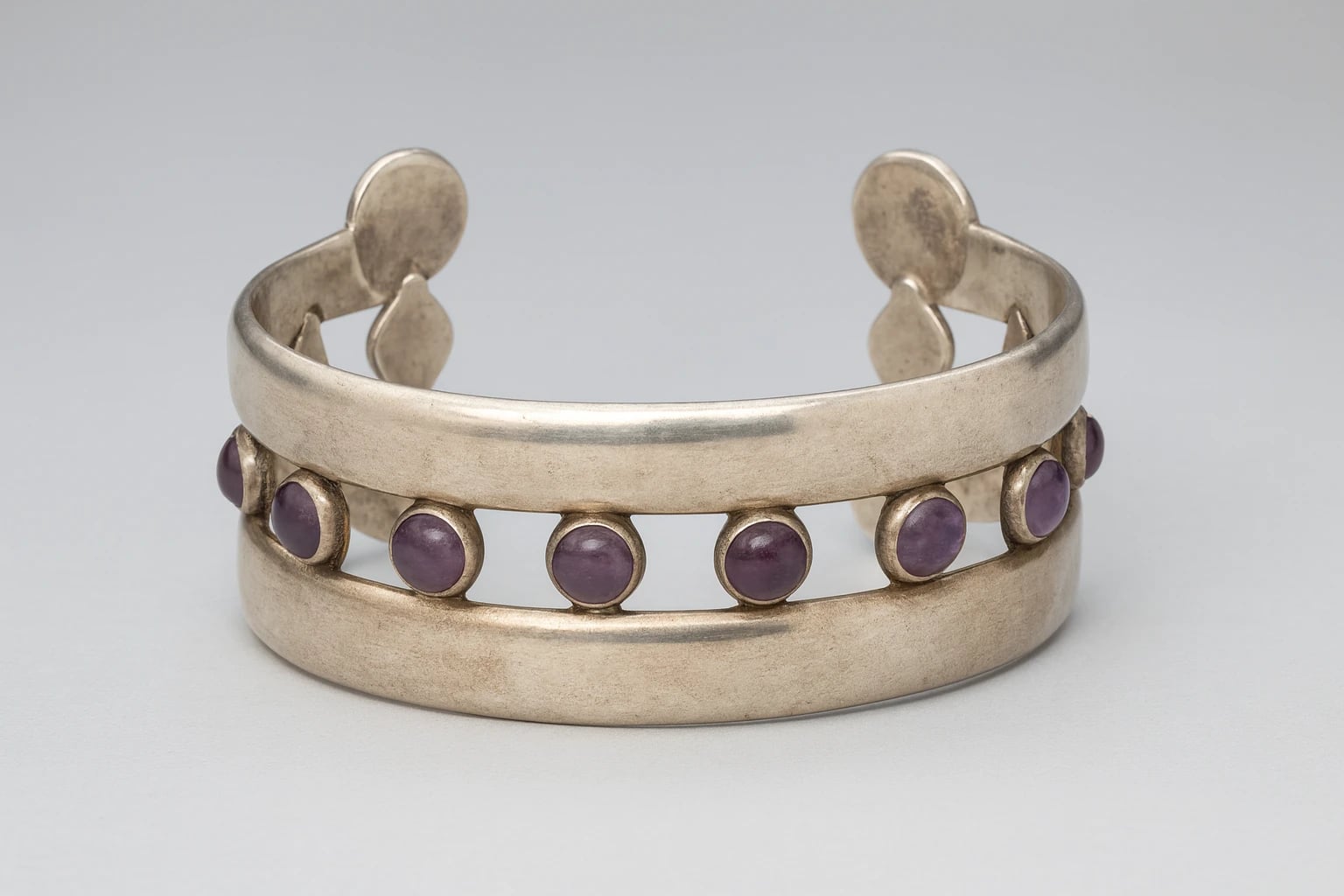
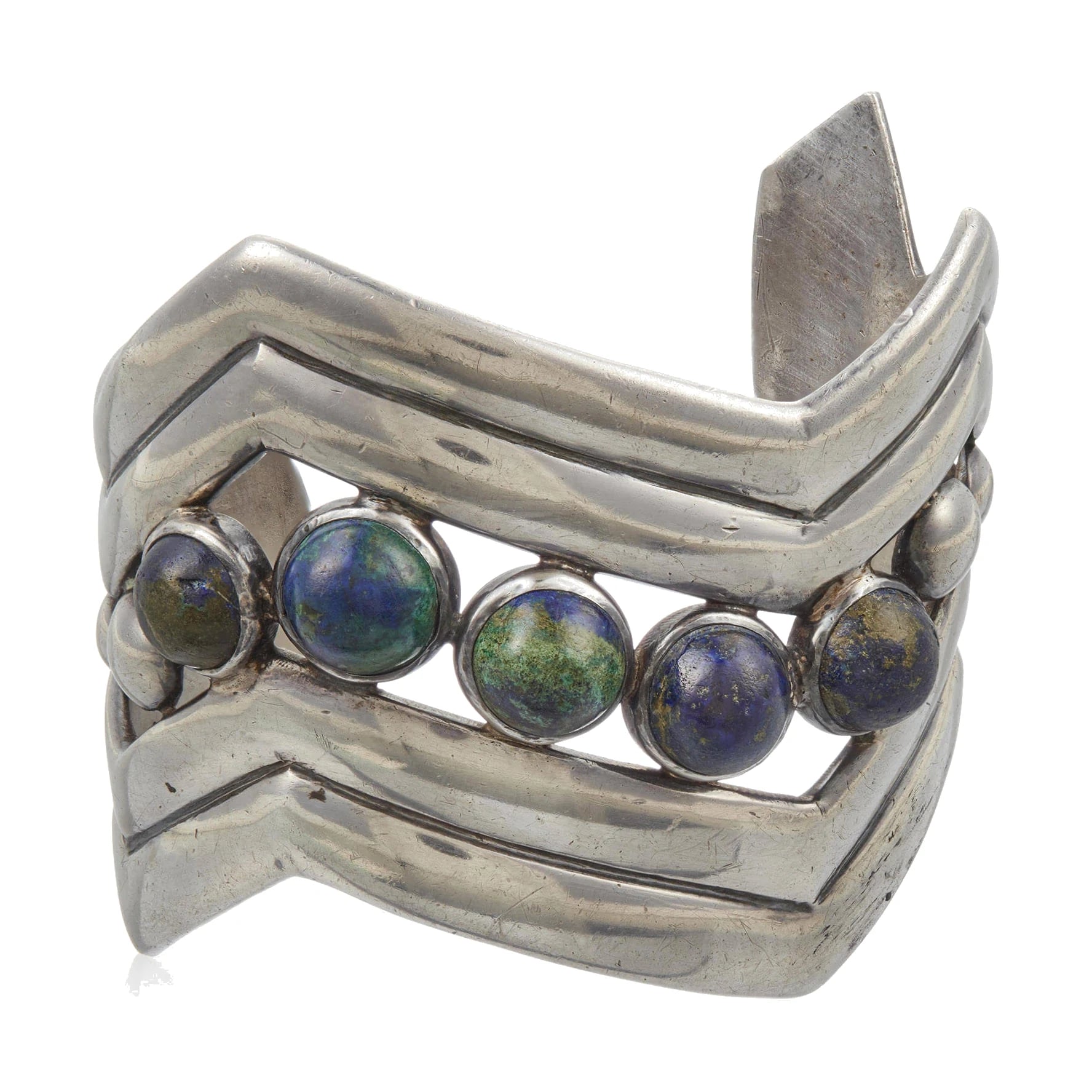
Stacked silver bands break into a hard zig-zag around the wrist, and between them runs a row of five azurmalachite cabochons, their blue and green mottling caught against the bright metal. The chevron is carried the whole way around, the open terminals meeting in matched points, so the cuff reads as pure rhythm before the eye ever reaches the stones. It is an early piece of William Spratling's Taxco workshop, where heavy hand-raised silver and a strong geometric motif were made to do the work that applied ornament does elsewhere.
The bands are raised and chamfered by hand, each chevron a clean ridge with a shadowed valley beside it, and the cabochons sit in plain round bezels along the central channel, flanked by small silver beads that pick up the same repetition. Worn open on the wrist, the form has real presence, the weight of the metal balanced by the dark band of stone.
It carries the SPRATLING MADE IN MEXICO WS mark, placing it around 1940 to 1946. Azurmalachite, a natural intergrowth of azurite and malachite, gave Spratling a single stone whose color shifts from deep blue to green across the row, pairing a Mexican mineral with the spare modern form.
Spratling stands at the head of the Taxco silver revival, and the chevron and the hand-raised band are among the signatures of his early output. Conceived as one of a closely matched pair, the cuff shows how he could build an entire design from one repeated geometric idea and the play of native stone against silver.
Museum of Mexican Silver. “Azurmalachite Zig-Zag Cuff.” Catalog no. MoMS-002155. https://museumofmexicansilver.com/pieces/william-spratling-azurmalachite-zig-zag-cuff
See something wrong with this record? Suggest a correction and the piece details fill in automatically.
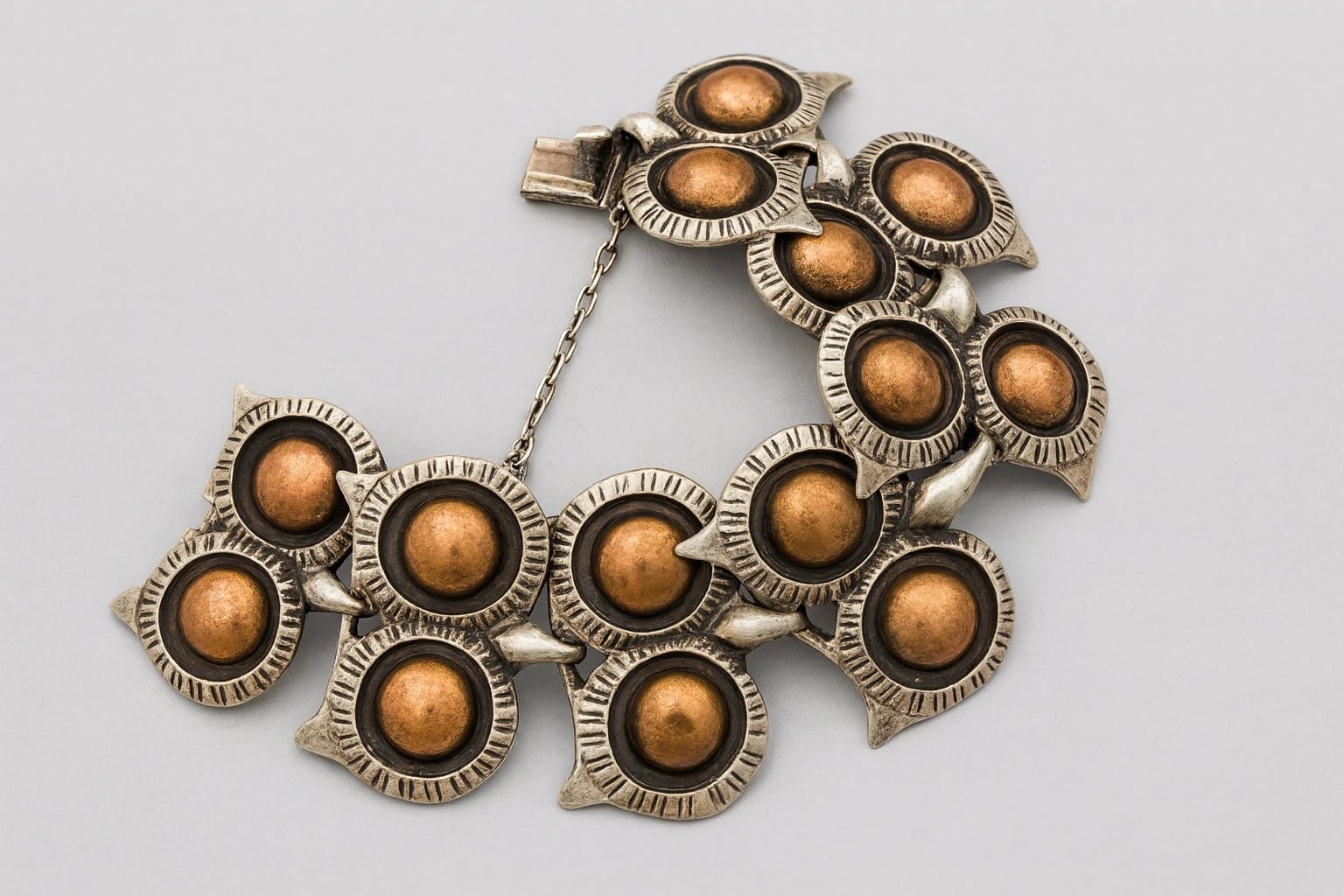
William Spratling
Owl Bracelet with Copper Eyes
First Design Period: 1931 - 1946
Silver