Saves instantly, no account needed. Already a member? Sign in.
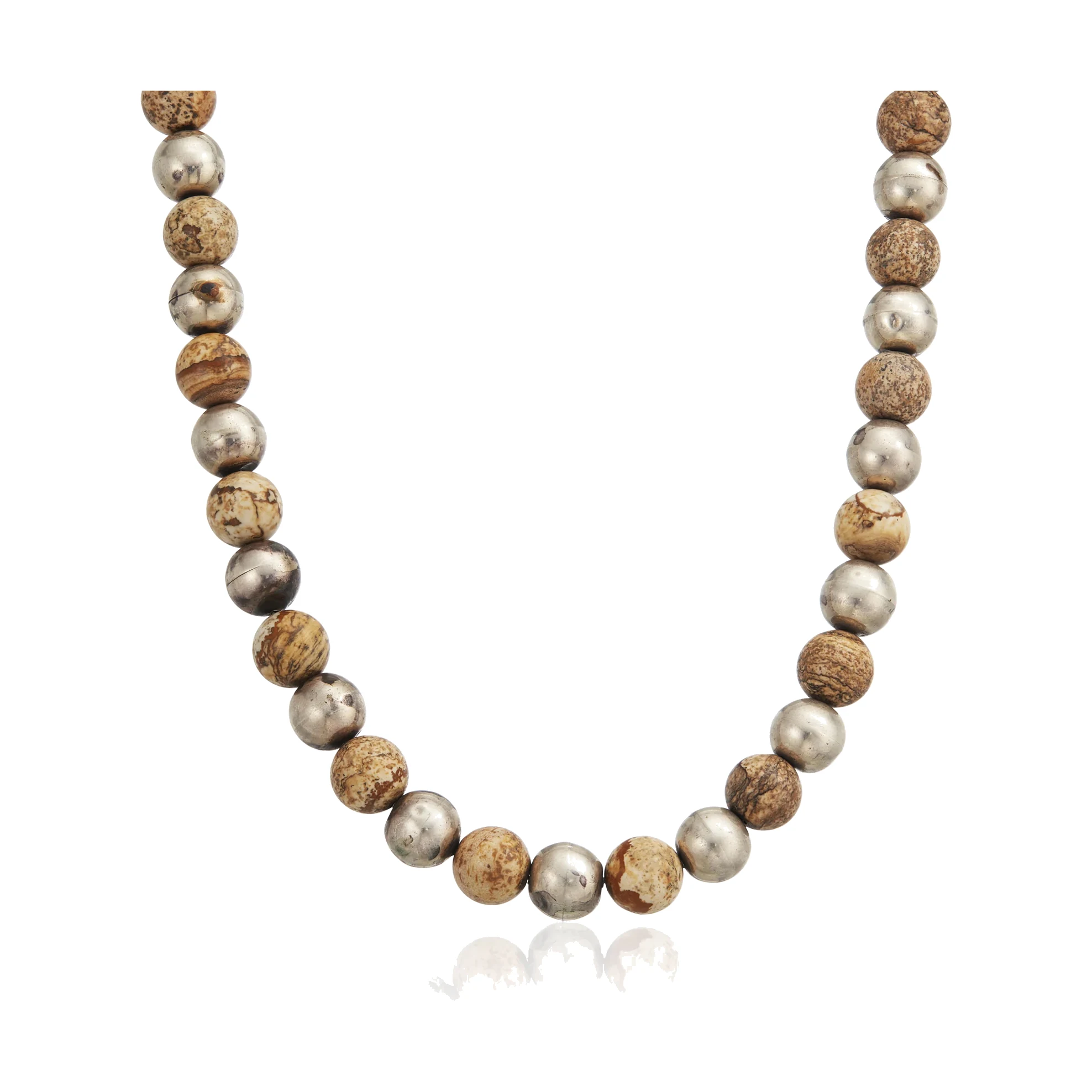
Round beads of picture jasper alternate with smooth domed silver beads down a long single strand, each stone banded in its own pattern of tan, ochre, and umber so that no two repeat along the necklace. The arrangement is plain on purpose: the warm, landscape-like markings of the hardstone carried against the cool sheen of the metal, with nothing else added. It is the kind of restraint William Spratling trusted, letting good native stone and well-raised silver do the whole of the work.
Worn, the strand reads as a steady beat of warm and cool, the matte earth of the jasper answered bead for bead by the bright dome of the silver. The metal beads are hollow-raised and lightly polished, their surface catching the light where the stone absorbs it, so the rhythm is as much about texture as color.
The necklace fastens with a rectangular tab-and-box clasp struck with the WS mark and the eagle assay stamp, placing it in the years from roughly 1949 to 1956. Spratling, the American who launched the Taxco silver revival in the 1930s, drew steadily on Mexican materials, and strands of native hardstone strung with hand-raised silver beads run throughout his output.
A long, easily worn piece, it shows Spratling at his simplest: the natural figure of the jasper, never twice the same, doing the work that ornament does elsewhere.
Museum of Mexican Silver. “Picture Jasper and Silver Bead Necklace.” Catalog no. MoMS-002152. https://museumofmexicansilver.com/pieces/william-spratling-picture-jasper-and-silver-bead-necklace
See something wrong with this record? Suggest a correction and the piece details fill in automatically.
William Spratling
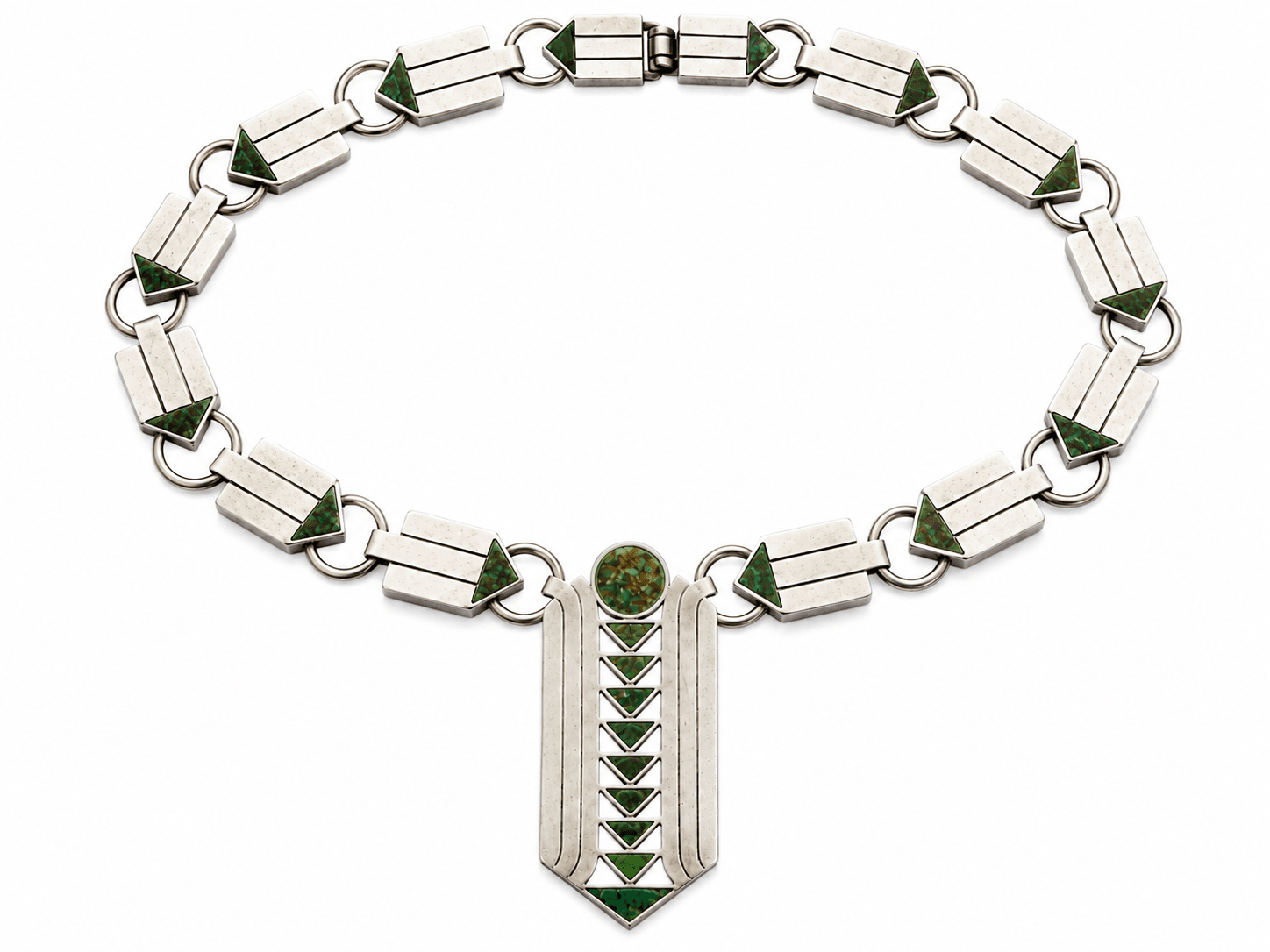
Azur Malachite Arrow Necklace
Silver