Saves instantly, no account needed. Already a member? Sign in.
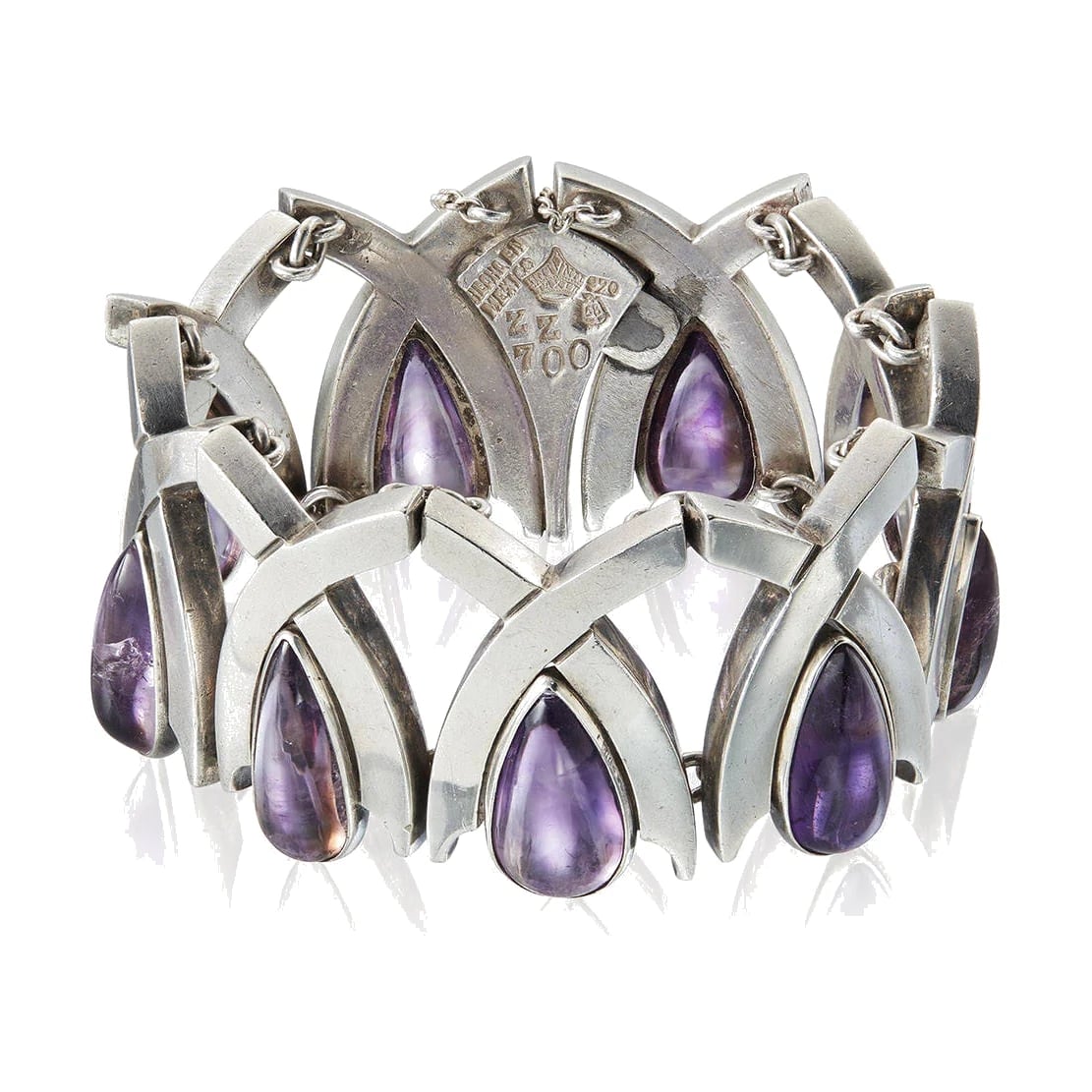
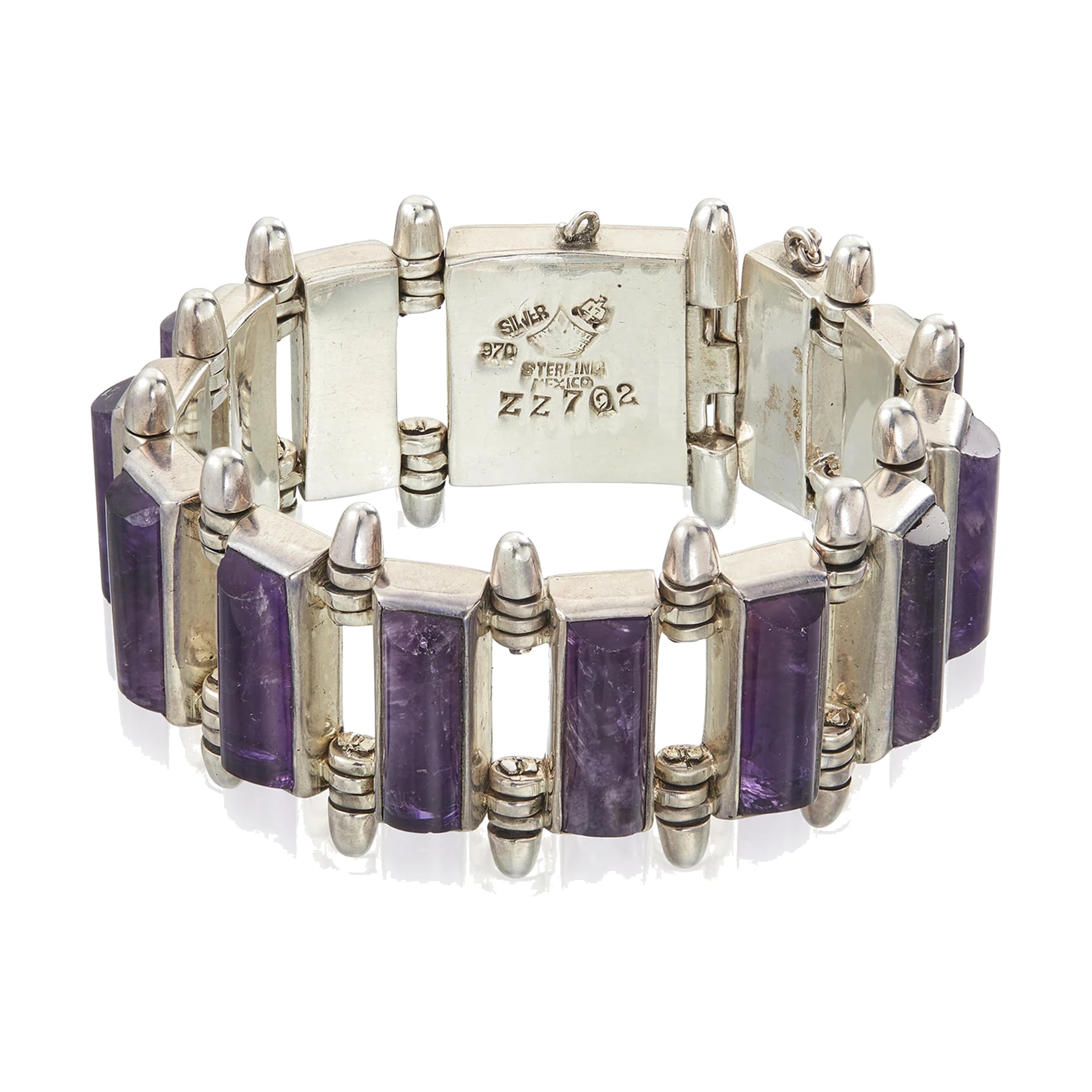
A dozen blocks of violet quartz stand upright around the wrist, each a bar-form amethyst cabochon set on end and held apart by silver batons, so the band flexes and the stones move together as one luminous surface. A single disciplined idea, the amethyst bar repeated as a structural module, is carried across the whole form without ornament. This is the sculptural modernism Antonio Pineda pursued further than most of the Taxco school, serious jewelry built from color, rhythm, and restraint.
The bar is the unit and the baton the joint, and rhythm does the decorative work that engraving or repoussé would have done on an earlier piece. Each amethyst sits in a clean silver channel with rounded, capsule-like terminals at the spacers that soften the grid. Nothing competes with the stone; the metal exists only to frame and connect it.
The clasp plate carries the full workshop signature: SILVER, 970, STERLING, and MEXICO, with the eagle-17 assay and the Antonio-Taxco crown that Stromberg records as Pineda's own mark. The 970 standard, richer than sterling, was his signature alloy. Beside it is the inventory number ZZ702, and in his internal coding the ZZ prefix designates a bracelet, so the number both names the model and confirms the form.
Morrill illustrates a run of closely comparable Pineda bracelets carrying the same crown, eagle, and 970 marks from the productive years around 1955-60. This one belongs to that moment and idiom, treating a band of stone as small architecture.
Museum of Mexican Silver. “Amethyst Bar-Link Bracelet.” Catalog no. MoMS-002110. https://museumofmexicansilver.com/pieces/antonio-pineda-amethyst-bar-link-bracelet
See something wrong with this record? Suggest a correction and the piece details fill in automatically.
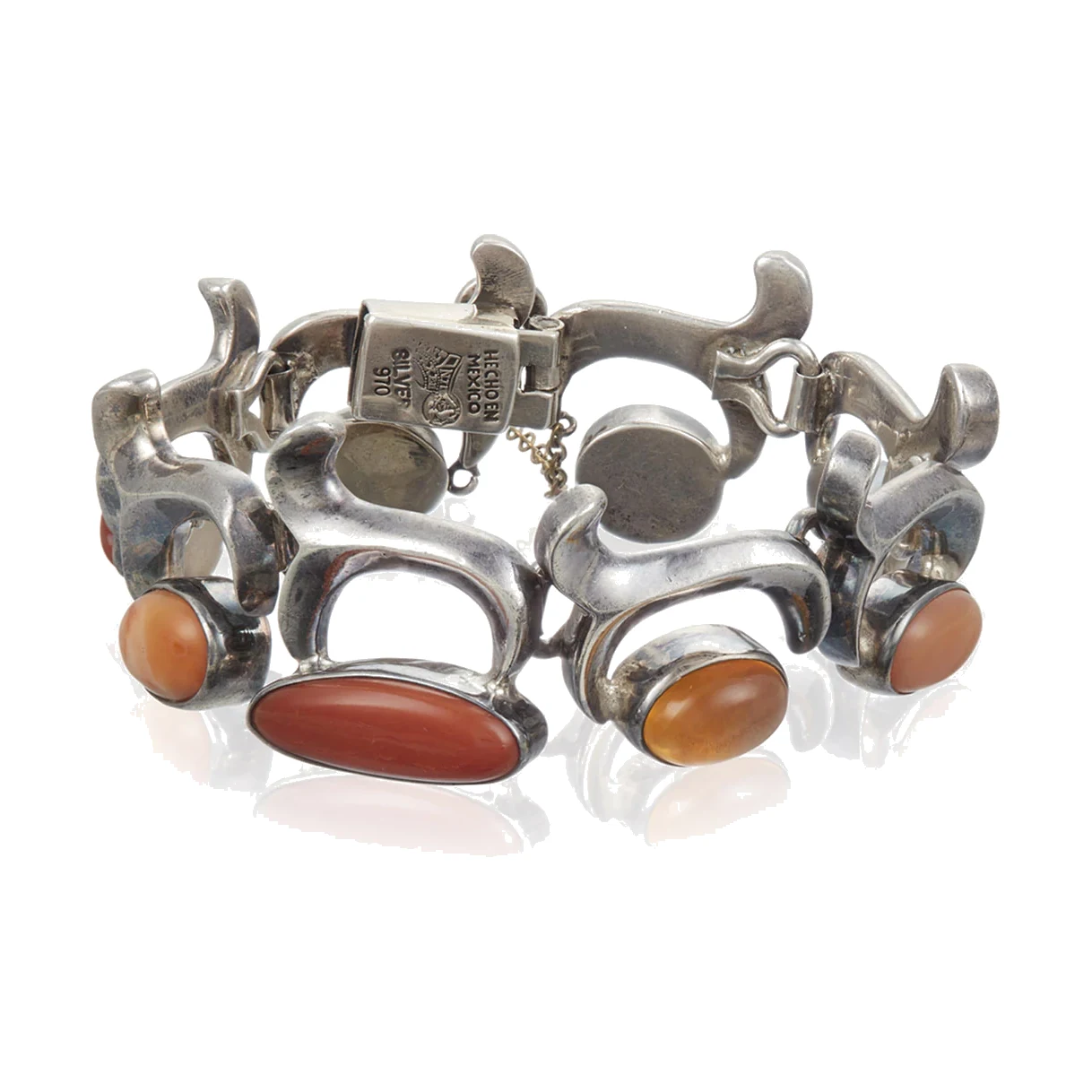
Antonio Pineda
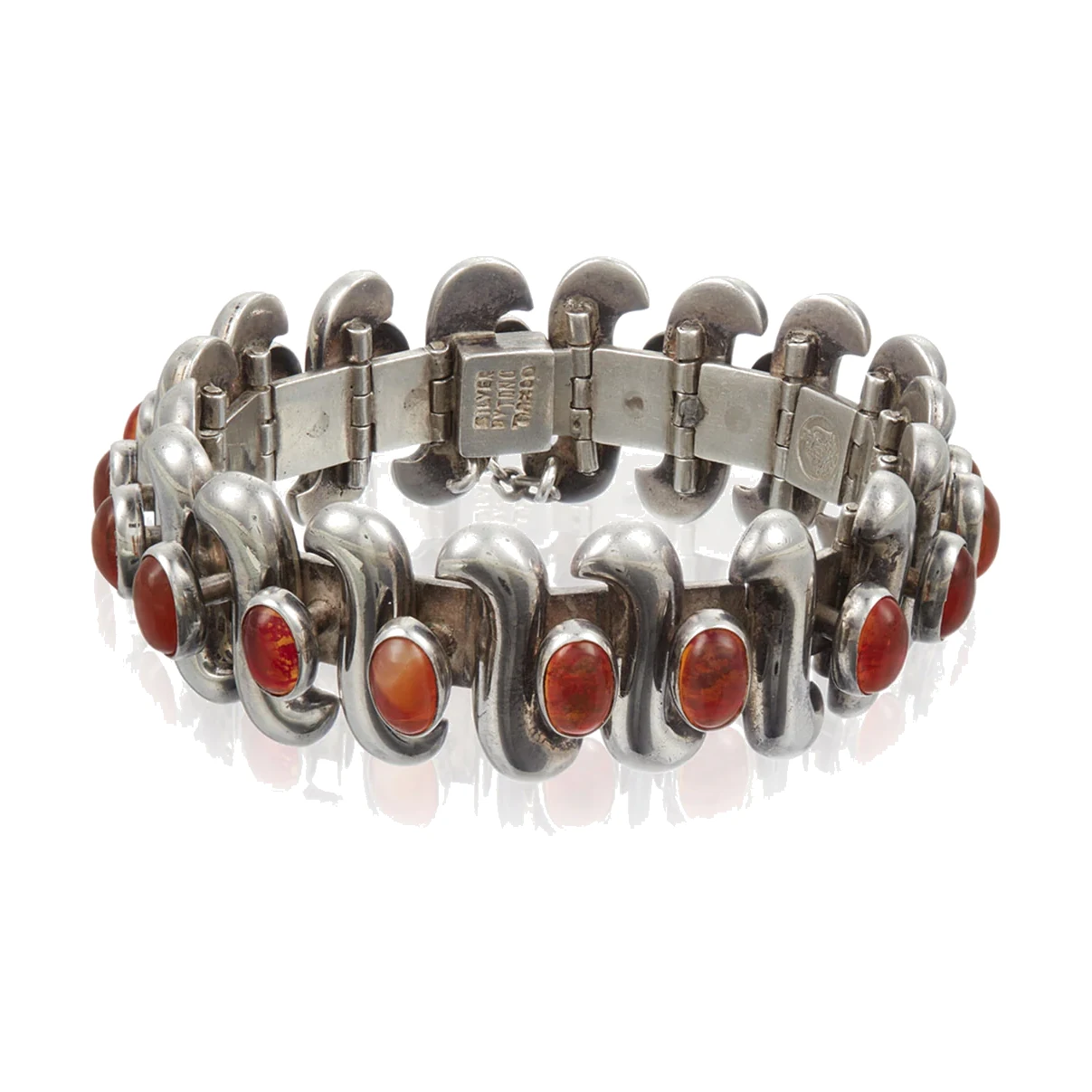
Fire Opal and Silver Linked-Crescent Bracelet
Silver