Saves instantly, no account needed. Already a member? Sign in.
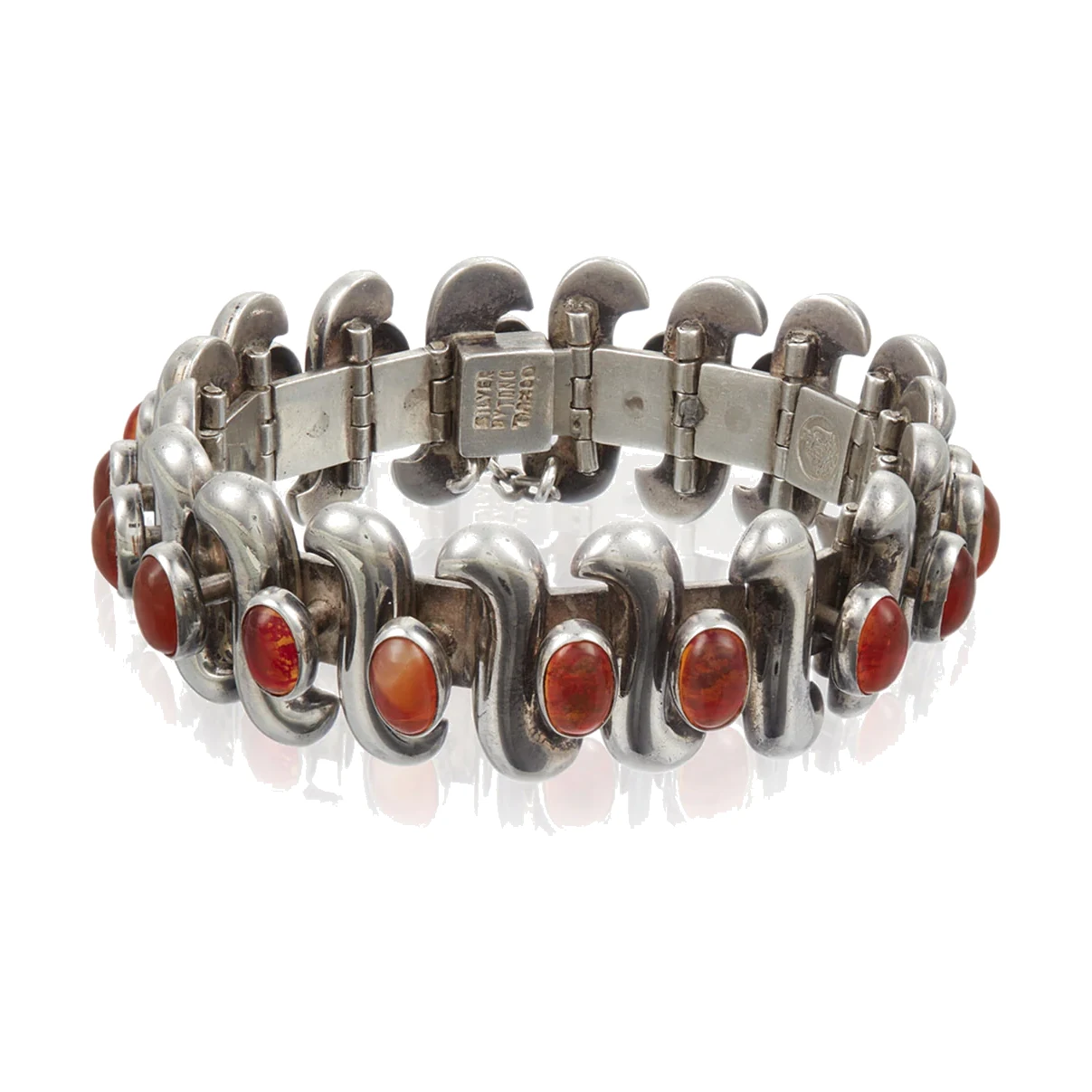
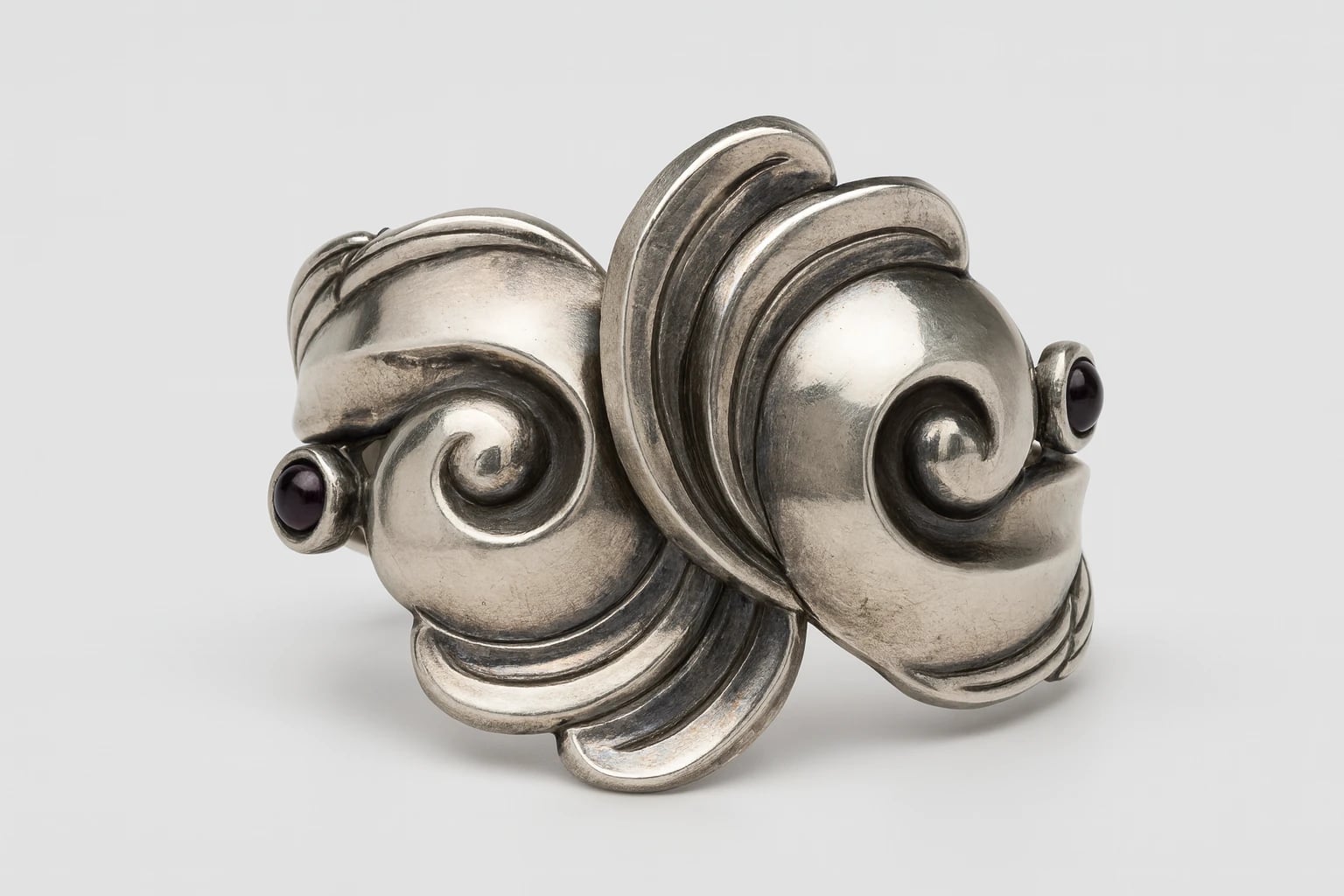
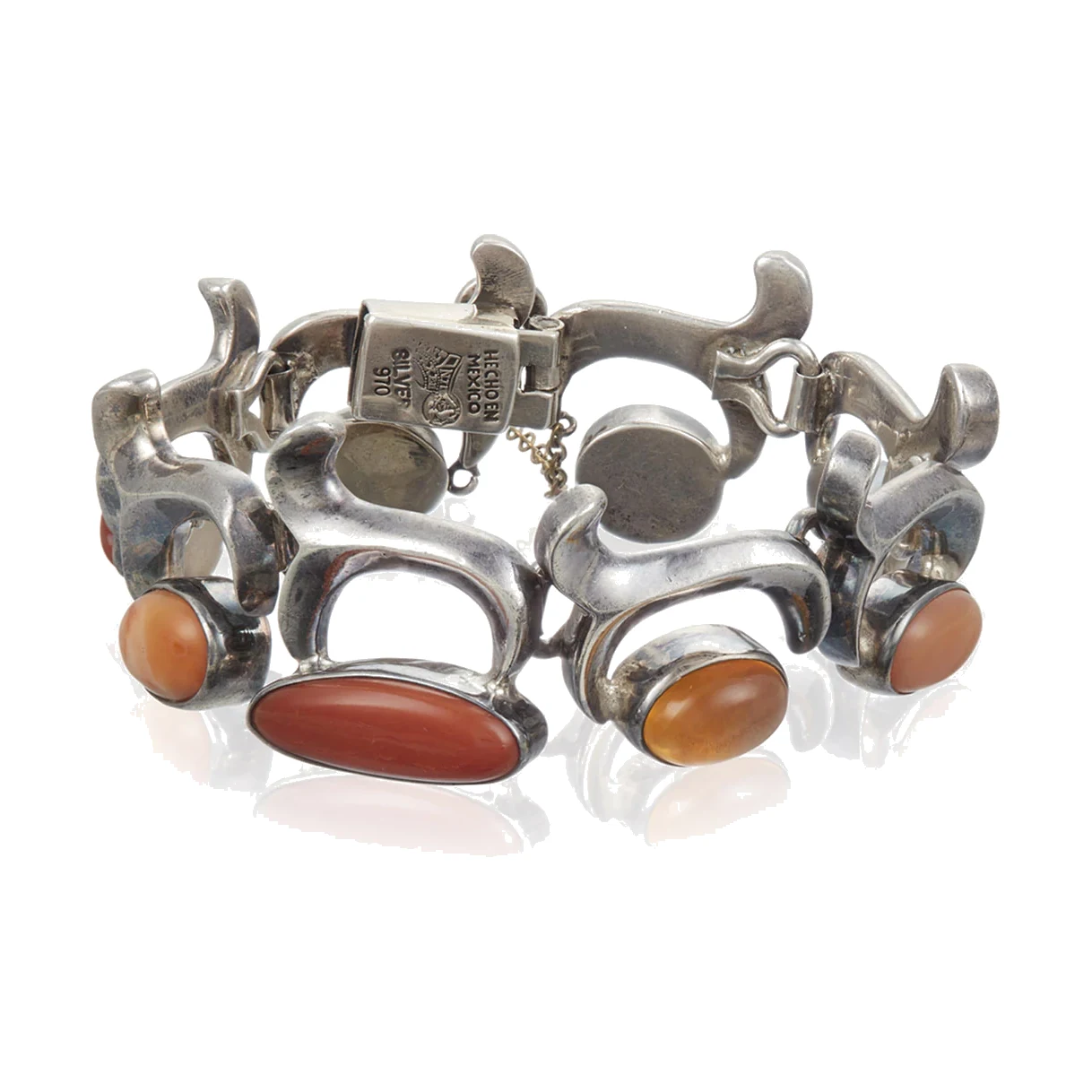
Heavy silver links curl and scroll around the wrist, each one cradling an oval fire opal cut as a smooth cabochon, the eight stones running from deep carnelian red through warm honey amber. The cabochons are given room to breathe, set at intervals so every opal reads on its own rather than dissolving into a continuous band. The result is frankly sculptural, and a characteristic example of the way Antonio Pineda built a bracelet around bold form and a single native stone.
The links are chunky and curvilinear, framing each bezel in broad sweeping curves, with the largest and most elongated cabochon anchoring the front. Light catches the alternating matte and polished silver while the opals hold their warm translucence at the center of each link, so the eye moves stone to stone along the band.
The bracelet is worked in 970 silver, the high-grade fineness Pineda favored through his Taxco years as recorded by Morrill, and struck HECHO EN MEXICO with the SILVER 970 standard and the Antonio crown mark of his workshop on the zócalo. Fire opal, quarried in Mexico, supplies the color, a native stone whose glow Pineda set off against the cool weight of the metal.
It belongs to a fire-opal grouping Pineda conceived with a matching necklace and a companion bracelet, this piece carrying the largest stones of the three. Built from eight cabochons and a handful of curling links, it is Pineda treating a bracelet as a setting for color and form, and little else.
Museum of Mexican Silver. “Fire Opal and Silver Linked-Crescent Bracelet.” Catalog no. MoMS-002139. https://museumofmexicansilver.com/pieces/antonio-pineda-fire-opal-and-silver-cabochon-bracelet
See something wrong with this record? Suggest a correction and the piece details fill in automatically.
Antonio Pineda
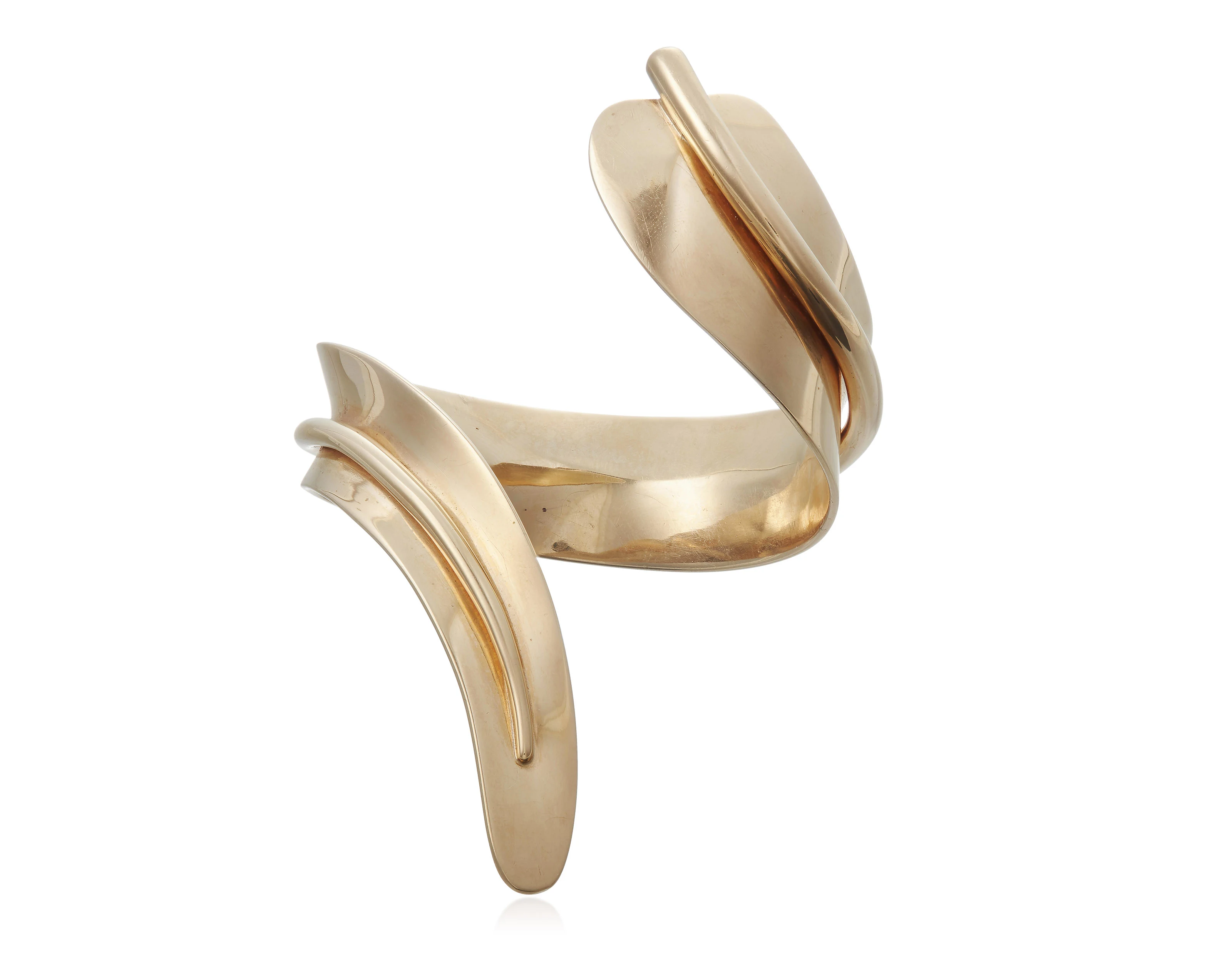
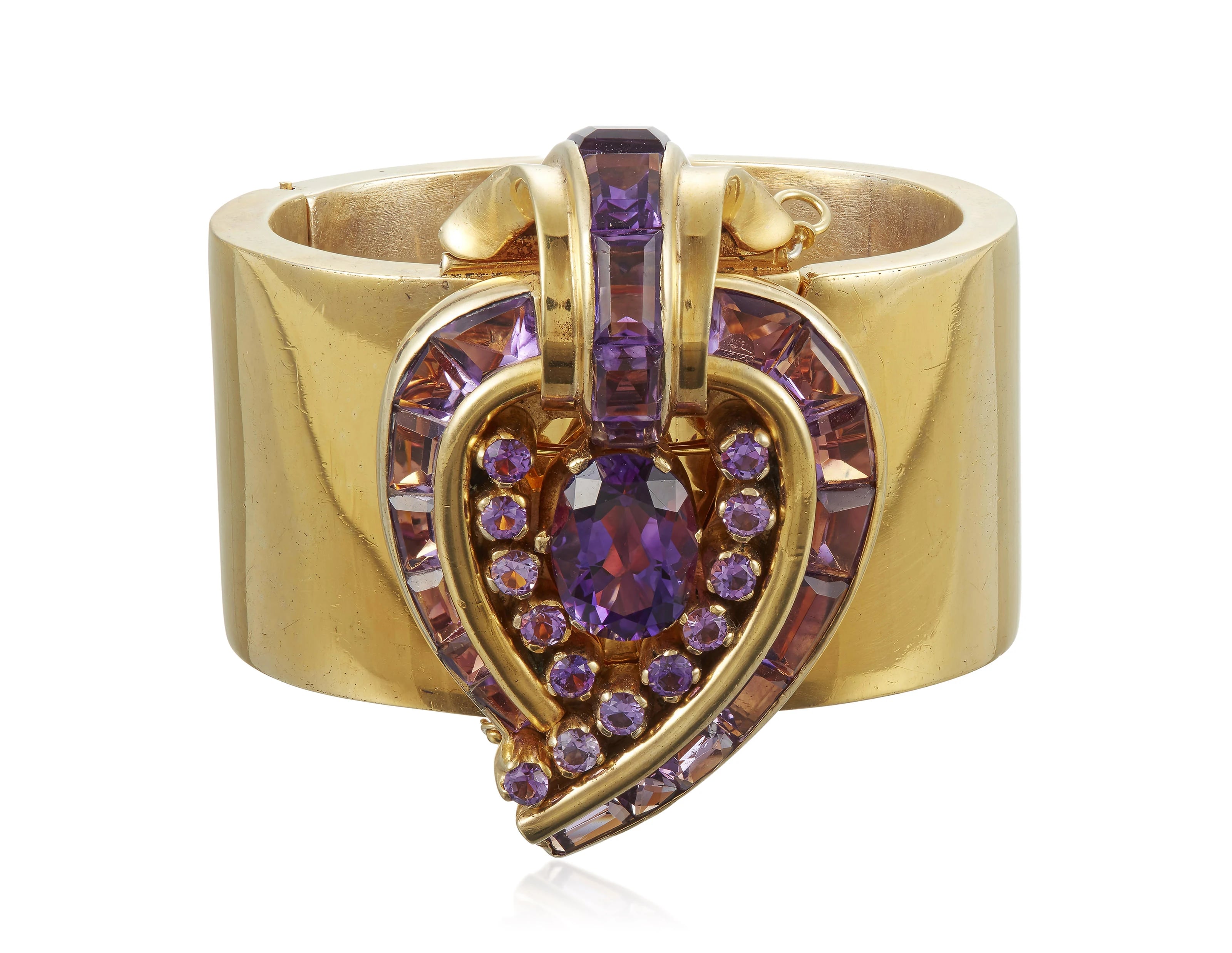
Gilt Silver and Amethyst Brooch Bangle Bracelet
Gilt silver