Saves instantly, no account needed. Already a member? Sign in.
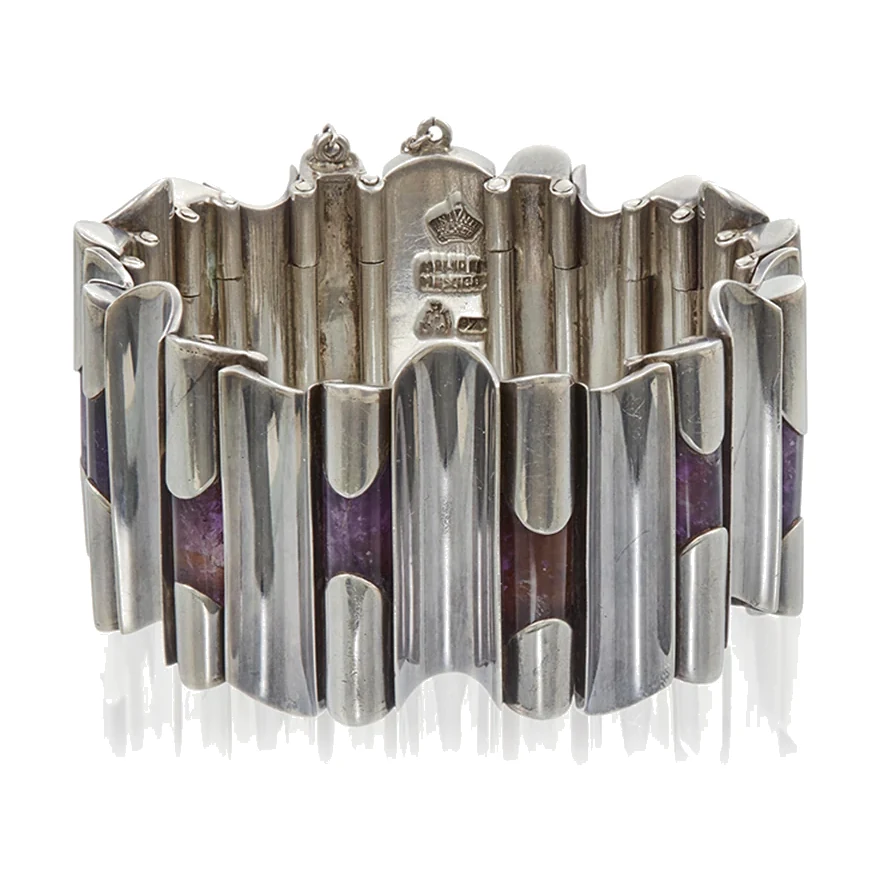
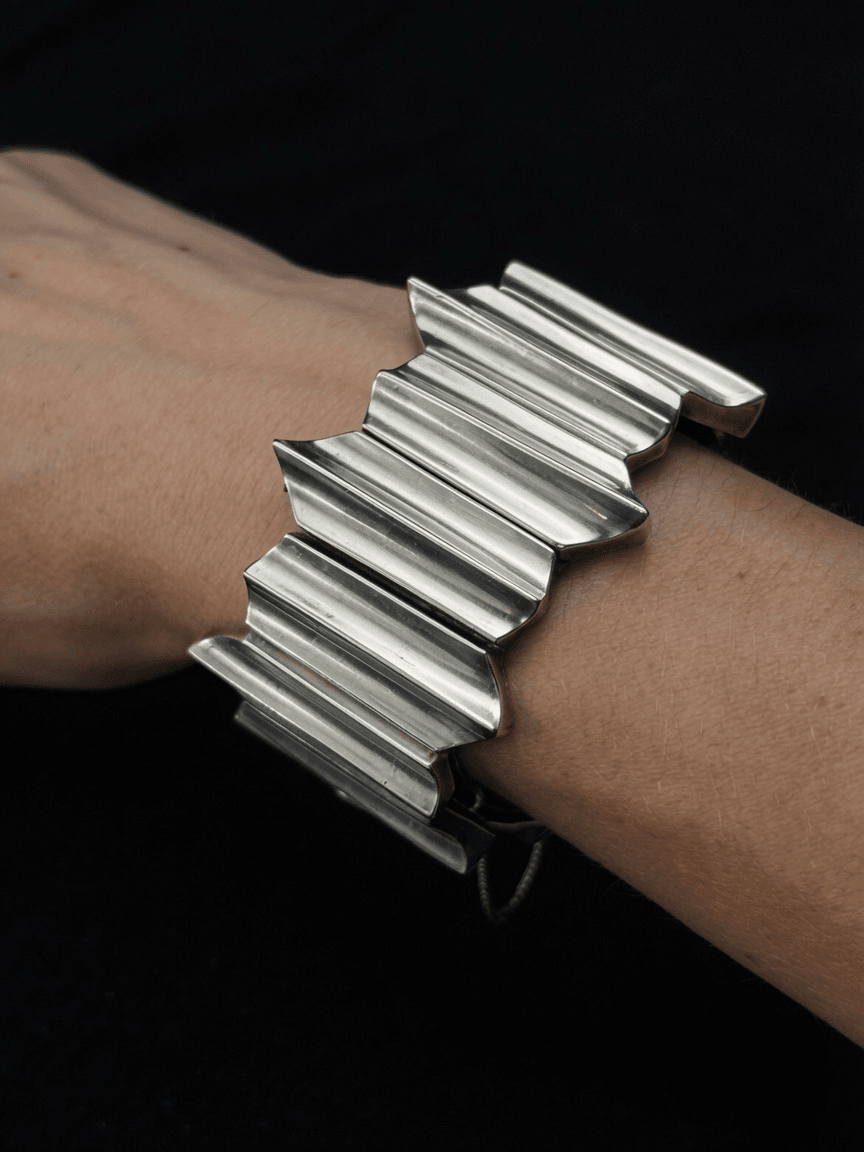
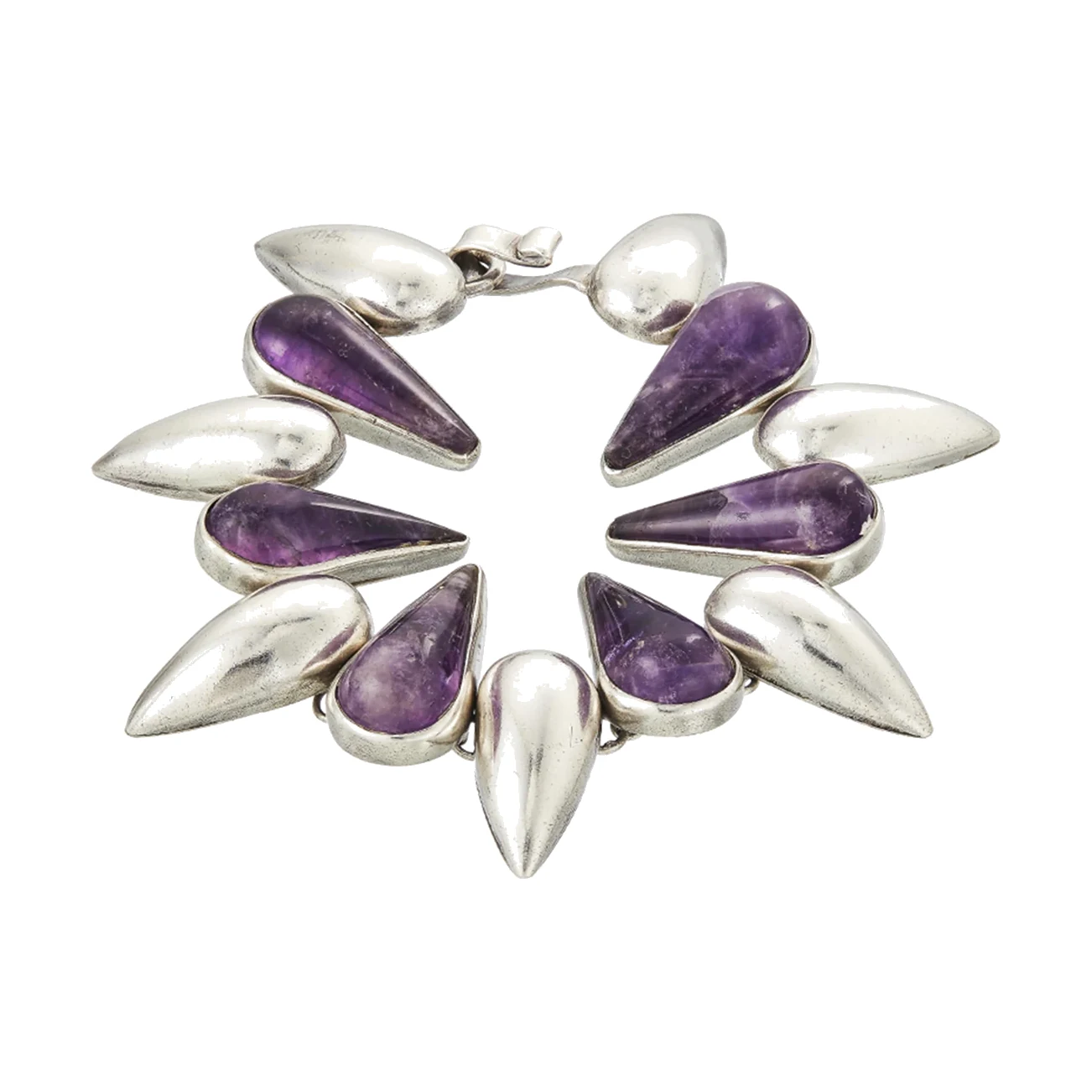
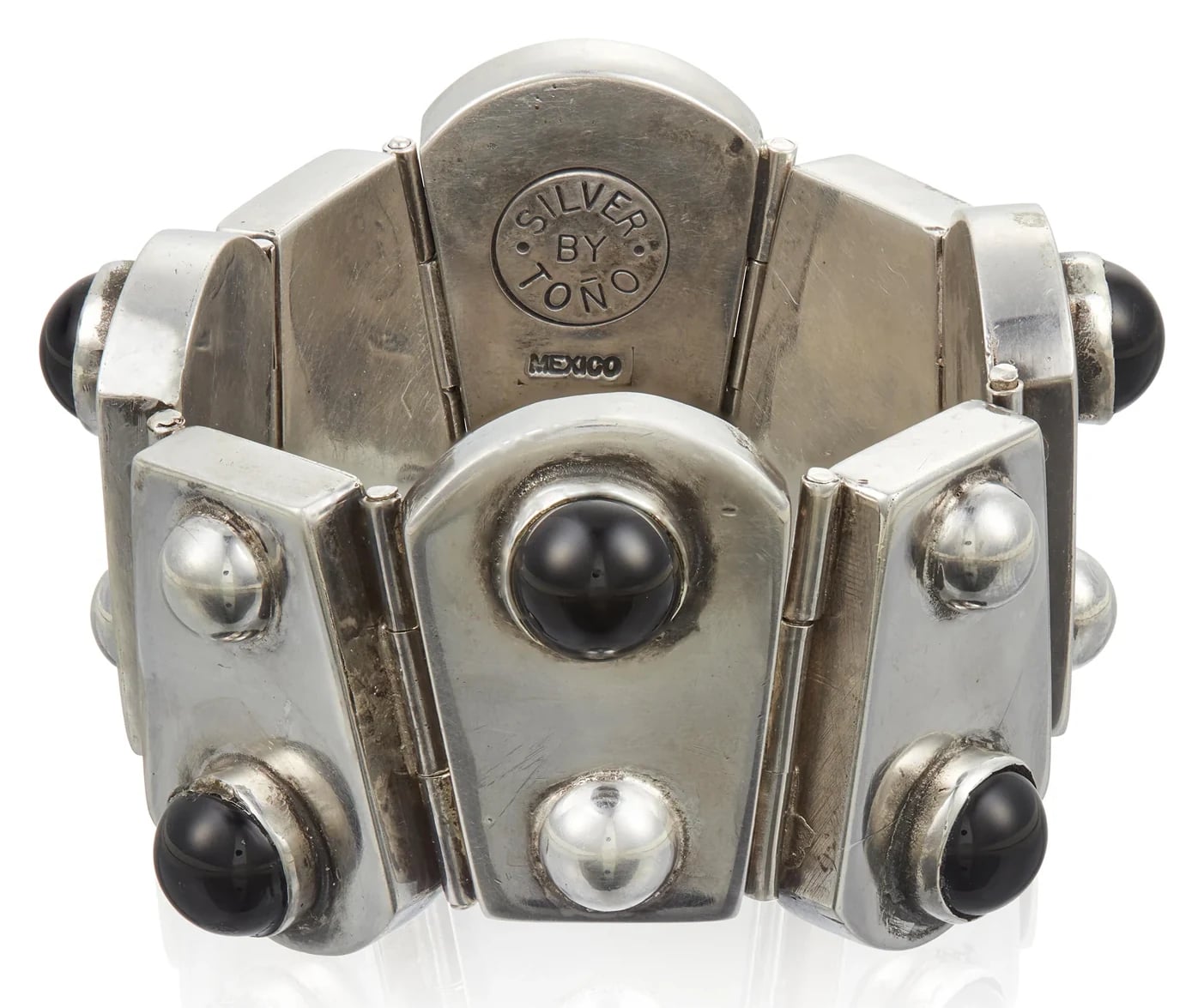
Broad squared links of silver run the length of the wrist, each one either rising to a smooth domed boss or cradling a cabochon of black onyx, so that bright metal and matte stone trade places in a steady beat down the band. The links are fully articulated, hinged edge to edge, and the bracelet bends as one continuous architecture rather than a string of charms. It is a sculptor's notion of jewelry, built on the alternation of mass and void.
The vocabulary is mid-century Taxco at its most architectural, the bold idiom that distinguished Antonio Pineda's taller and helped define what Stromberg calls the "Silver Age" of Taxco design in the 1940s and 1950s. Onyx was a favored foil for Pineda, its flat black swallowing the light the surrounding silver throws back.
A circular cartouche stamps the piece SILVER BY TOÑO, with MEXICO alongside and a 970 silver standard. "Toño" is the familiar diminutive of Antonio, and this script signature belongs to the moment before he settled into the crowned "Antonio" hallmark that was in place by 1953. Morrill records that Pineda opened his own workshop on the Taxco zócalo in 1941; the "Silver by Toño" mark with the 970 standard sits squarely in that turn-of-the-decade window.
The substantial silver and the engineering of the hinged links speak to the sophistication of Pineda's taller in these years, where master silversmiths executed his designs to a high standard. An early "Silver by Toño" piece stands near the beginning of that mature output, when the workshop's modern language was already fully formed.
Museum of Mexican Silver. “Onyx and Silver Link Bracelet.” Catalog no. MoMS-002106. https://museumofmexicansilver.com/pieces/antonio-pineda-onyx-and-silver-link-bracelet
See something wrong with this record? Suggest a correction and the piece details fill in automatically.