Saves instantly, no account needed. Already a member? Sign in.
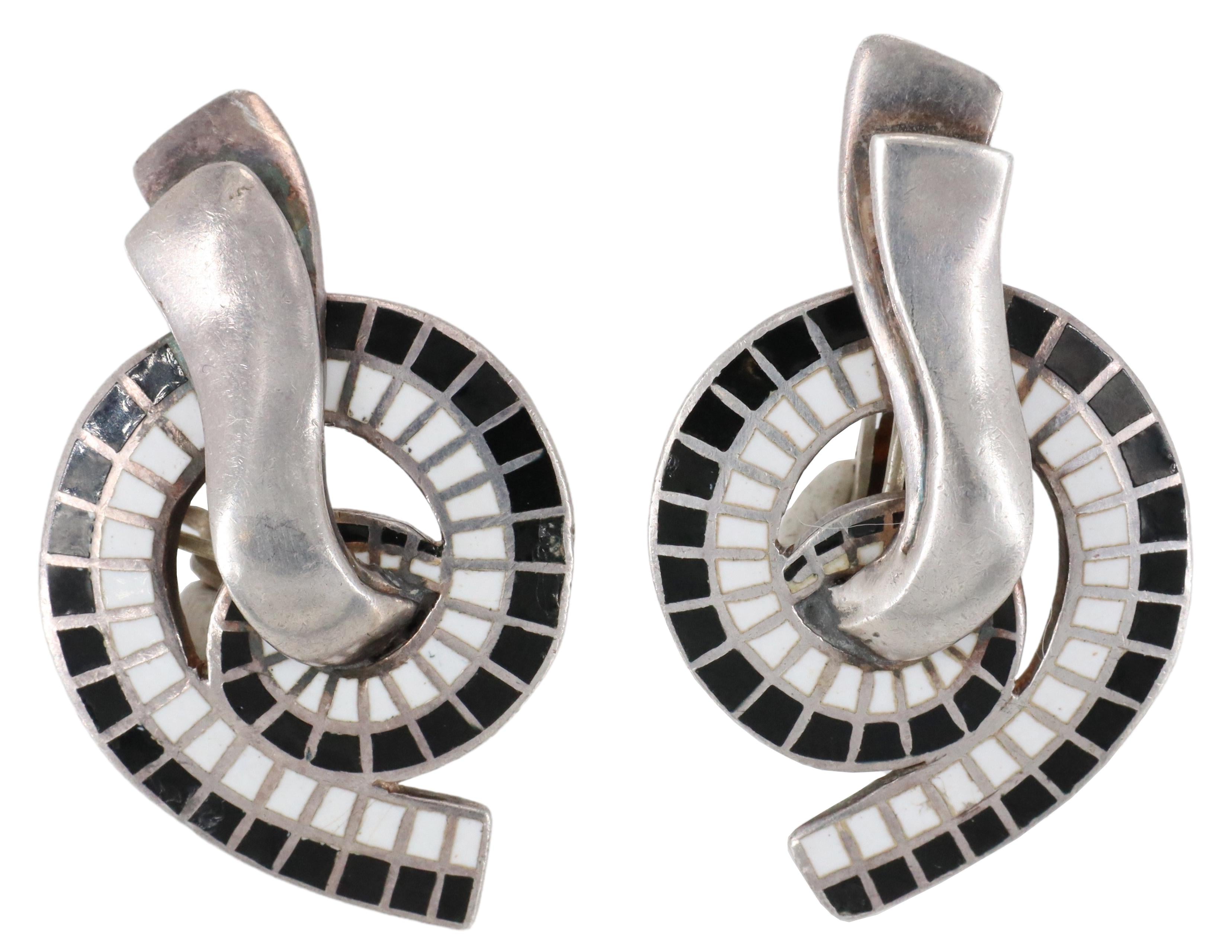
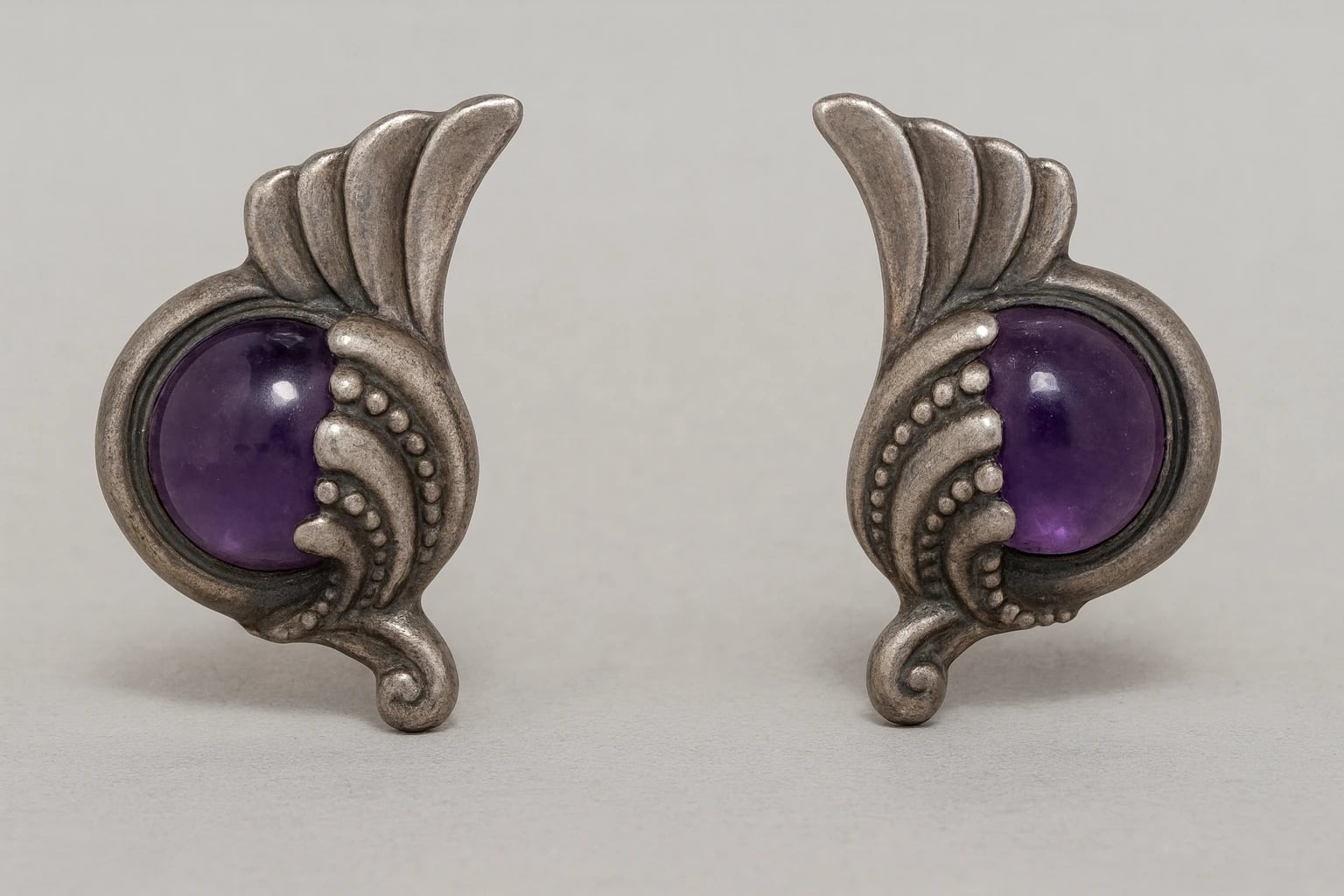
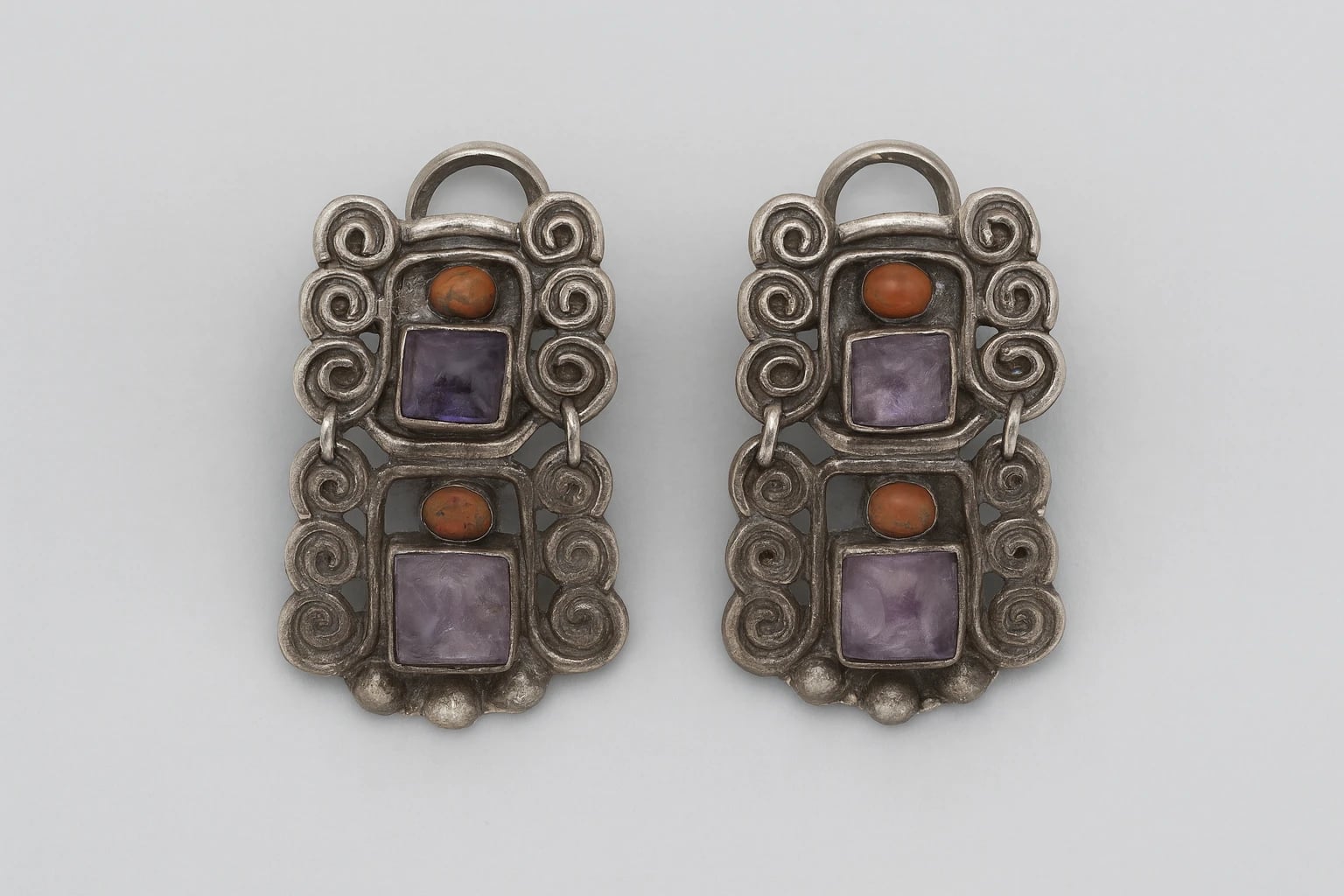
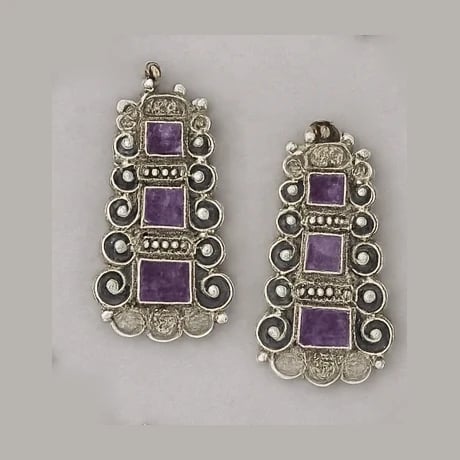
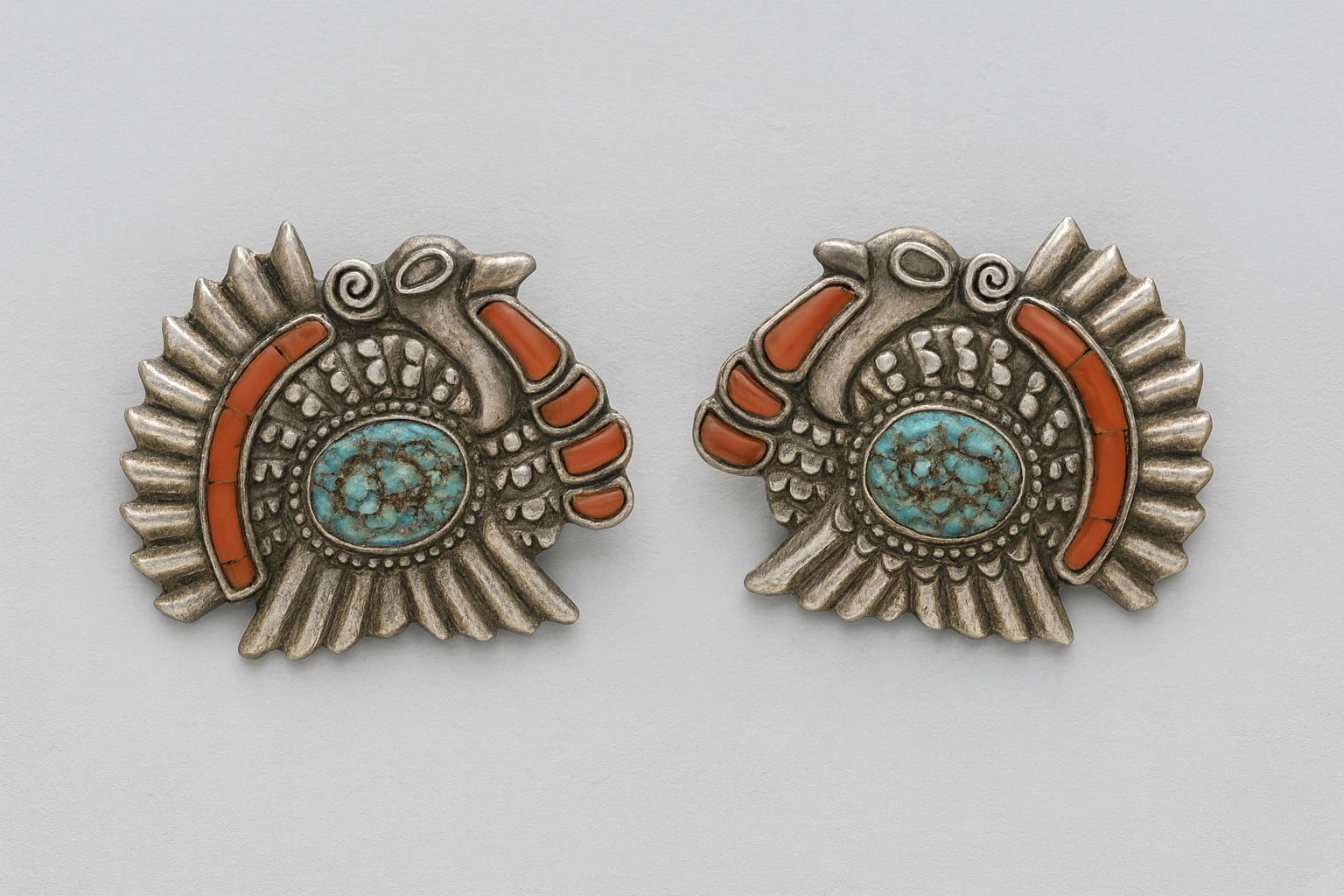
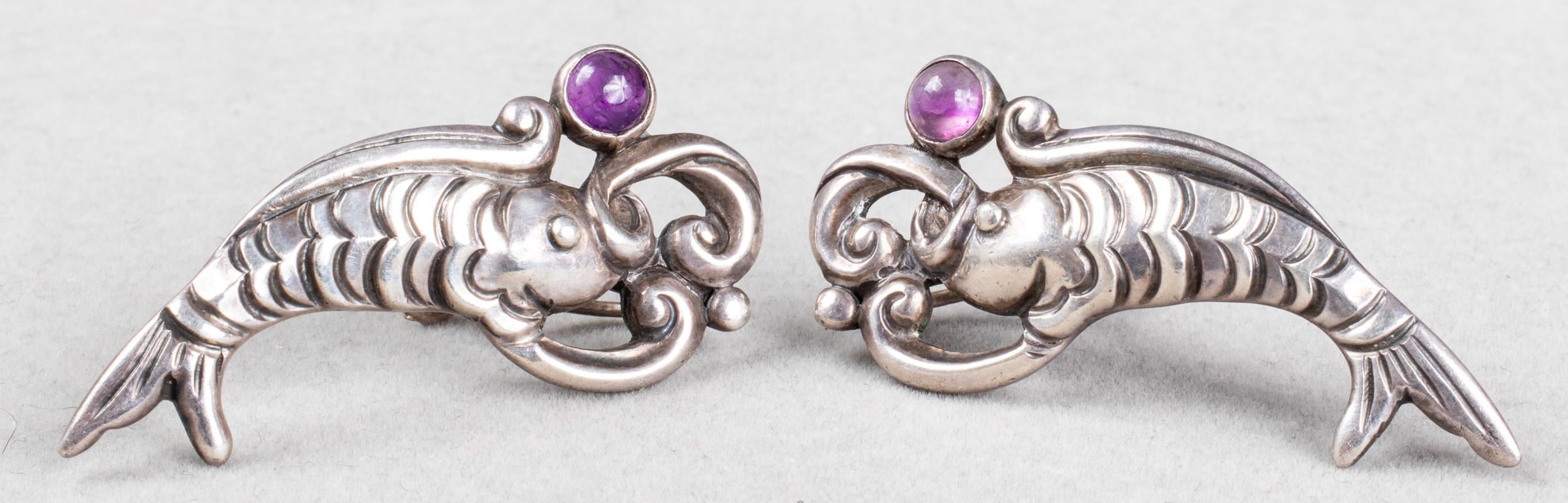
Champlevé enamel earrings occupy a central place in Margot de Taxco's output, and design 5207 is a representative instance of the form she made her signature. The numbered inventory system she applied to her jewelry — a practice Morrill notes was shared by only a handful of Taxco workshops — provides a reliable point of identification, and since higher numbers generally indicate later designs, this pair belongs to the mature phase of her independent workshop (Morrill & Berk, Mexican Silver, 1994, p. 15).
The champlevé technique that defines these earrings traces its origins in Taxco to Reveriano Castillo and Miguel Melendez, who introduced it at the Los Castillo workshop during the years Margot was there — but it was Margot who perfected and developed it into one of her major lines, carrying it with her when she established her own taller (Morrill & Berk, p. 166). Drawing on an unusually wide library of sources — Pre-Columbian patterns, the driving line of Art Deco, and after two trips to Japan in the late 1950s, Japanese compositional motifs — she built a body of work in sterling and enamel that Morrill describes as "glittering displays of color, texture, and technical perfection" (Morrill & Berk, p. 166, 168).
The design number stamped on the reverse remains the primary tool collectors use to trace individual models and is the surest point of attribution for pieces from her taller.
Museum of Mexican Silver. “Design 5207 Earrings.” Catalog no. MoMS-001024. https://museumofmexicansilver.com/pieces/margot-earrings-5207
See something wrong with this record? Suggest a correction and the piece details fill in automatically.
Margot de Taxco
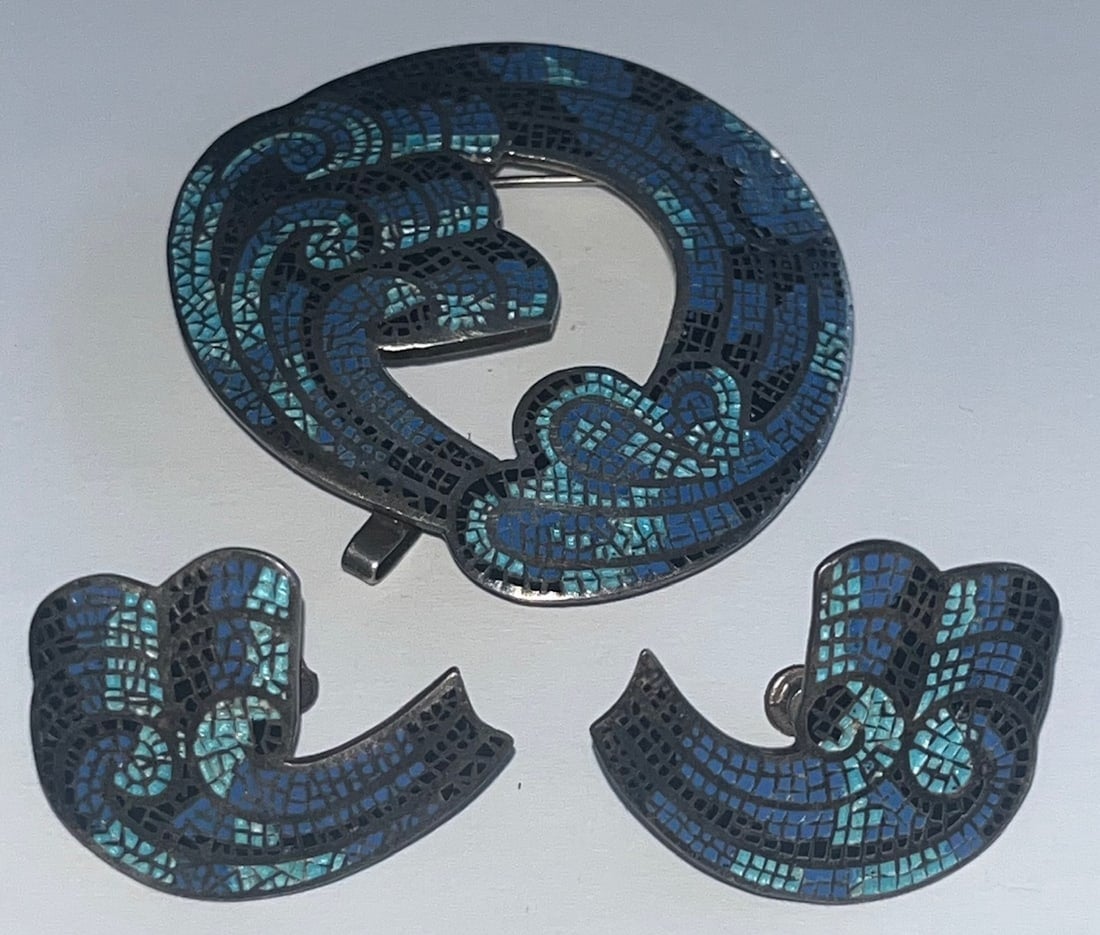
Wave Mosaic Brooch and Earrings
Sterling silver